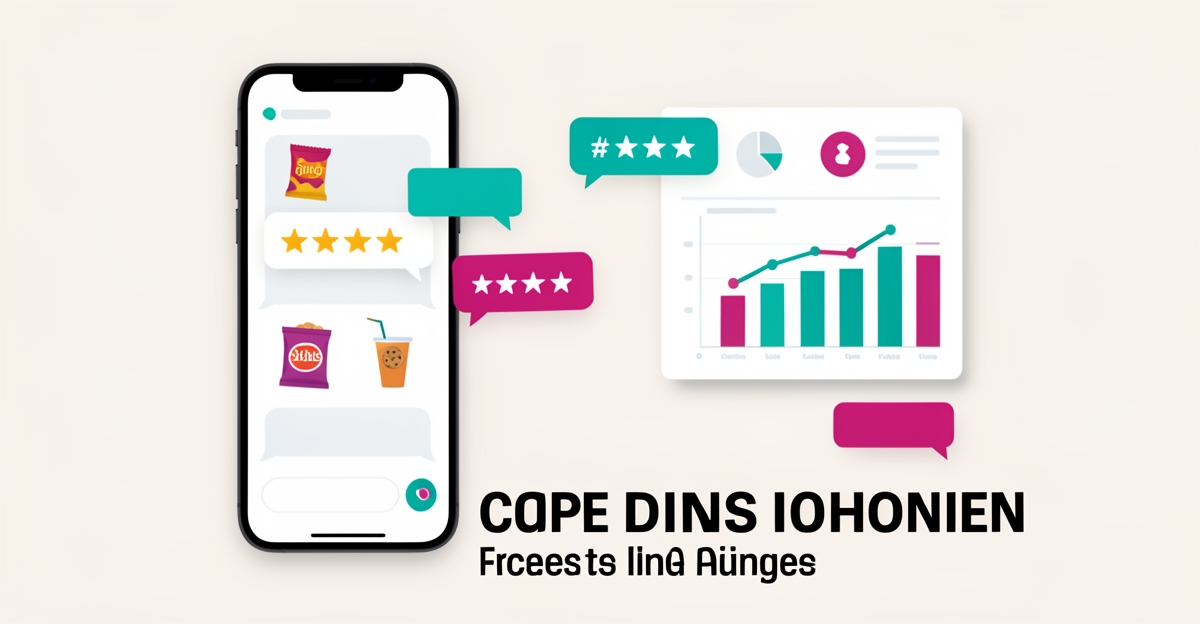
How AI Can Automate Customer Feedback Collection in Snack Food Retail
Key Facts
- The AI chatbot market has grown rapidly through 2025–2026, with adoption spreading from Fortune 500 companies to mid-market retailers as tools have become cheaper to deploy.
- AI-powered sentiment classification typically achieves accuracy in the low-to-mid 80 percent range, well beyond what manual review can sustain at scale.
- Retailers using AI for customer feedback commonly report meaningful reductions in customer service costs as issues are flagged before they escalate to support.
- AI-driven feedback programs are frequently linked to gains in customer lifetime value when insights are acted on quickly.
- Modern AI workflow automation lets teams build multi-step routing processes from plain-English instructions, eliminating manual routing delays.
Hire a team member that works 24/7 — for less than a part-time wage.
AI receptionists, SDRs, dispatchers and 99+ roles. Trained on your business, fully managed.
Not sure where to start? Ask our AI planner
Why Manual Feedback Collection Fails Snack Food Retailers
Snack food retail moves fast, and manual feedback systems can't keep up with the pace of changing tastes. When insights lag, brands miss the window to adjust flavor, packaging, or price before sales slip.
Traditional surveys and in-store comment cards create a slow feedback loop. Teams collect responses in batches, clean the data manually, and wait weeks for a report. By then, consumer preferences have already shifted.
Low response rates make the problem worse. Paper surveys and email blasts rarely reach the shoppers who just tried a new snack. The volume and velocity of feedback in today's digital landscape present a significant challenge that manual methods cannot resolve.
Delayed insights cost more than time. Retailers using AI for feedback analysis commonly report meaningful reductions in customer service costs, along with gains in customer lifetime value when feedback is acted on quickly. Manual processes prevent that velocity.
Snack brands face specific friction points with legacy collection:
- Survey fatigue and low participation limit sample size and bias results toward highly motivated shoppers
- Manual tagging of flavor, packaging, and price comments delays thematic analysis
- Disparate channels, POS, social, email, stay siloed, so no holistic view emerges
- Human review cannot scale with high-volume, real-time input during promotions
The scale of the gap is clear. AI chatbot adoption has expanded steadily through 2025 and into 2026, moving well beyond large enterprises to mid-market retailers. Always-on collection is becoming the norm because manual outreach cannot match it.
Sentiment classification accuracy also favors automation. Modern AI feedback systems typically classify sentiment with accuracy in the low-to-mid 80 percent range, far beyond what manual reading can deliver consistently at scale. Without automated analysis, nuanced signals about packaging appeal or price sensitivity get lost.
This is where AI-powered chatbots and in-app feedback forms change the dynamic. Real-time input on flavor, packaging, and price can be captured at the moment of purchase or consumption, then analyzed for sentiment and themes immediately. AIQ Labs builds AI workflow builds that analyze sentiment and surface trends directly to R&D teams, closing the loop between shopper voice and product decisions.
Manual feedback collection forces snack brands to react instead of anticipate. Speed to insight becomes the competitive edge, and traditional methods simply cannot deliver it.
How AI Chatbots and In-App Forms Capture Real-Time Snack Feedback
Snack shoppers rarely wait until checkout to form an opinion, and retailers that miss the moment lose the insight. AI-powered chatbots and embedded in-app forms now capture flavor, packaging and price reactions at point-of-sale or post-purchase, turning fleeting impressions into structured data.
The scale is accelerating. AI chatbot adoption has grown steadily from 2025 into 2026, spreading from Fortune 500 companies to mid-market retailers as deployment costs have fallen. That adoption reflects a demand for real-time, contextual feedback rather than delayed surveys.
Chatbots placed on product pages, mobile apps and kiosks ask one or two contextual questions right after interaction. In-app forms triggered by purchase events collect immediate input on taste, packaging convenience and perceived value while the experience is fresh. Natural language processing then classifies sentiment and extracts themes without manual tagging.
Sentiment classification with AI now typically reaches accuracy in the low-to-mid 80 percent range, enabling reliable triage of positive, negative and neutral comments at scale. Thematic analysis surfaces recurring issues such as "too salty" or "resealable pack needed" and links them to SKU, store and customer segment. AIQ Labs builds custom systems that analyze sentiment and surface trends directly to R&D teams, closing the loop between shopper voice and product iteration.
Real-time capture changes operational outcomes. Retailers using AI for feedback analysis commonly see meaningful reductions in customer service costs as issues are flagged before they escalate to support. The same analysis is tied to loyalty and retention, with AI-driven feedback programs frequently linked to gains in customer lifetime value.
Effective deployment typically combines:
- Point-of-sale chat prompts that ask for instant flavor or price feedback after scan
- Post-purchase in-app forms with smart branching based on basket contents
- NLP sentiment and thematic analysis that tags feedback by product attribute
- Automated workflow creation that routes critical themes to R&D or merchandising
The result is immediate, contextual input that feeds product decisions while the shopper context is still valid. By embedding collection in the journey and automating analysis, snack retailers move from periodic surveys to continuous listening, and from listening to action.
Turning Snack Feedback into R&D Action with AI Workflow Automation
Customer feedback is only valuable when it drives action, yet many snack brands collect insights that sit untouched in spreadsheets or dashboards. AI changes this by transforming raw feedback into automated workflows that route specific product issues directly to R&D teams, accelerating iteration cycles on flavor, packaging, and pricing.
When customers mention a chip is too salty or packaging tears easily, AI systems can instantly tag these comments by sentiment and theme, then trigger predefined actions based on severity and frequency. For example, recurring negative feedback about a specific flavor profile might automatically create a ticket in the product development backlog, while positive mentions of a new snack concept could flag it for expanded testing. Modern AI workflow automation enables teams to build multi-step processes from plain-English instructions, reducing manual routing delays and ensuring insights reach the right teams faster.
This closed-loop system doesn't just inform internal teams, it also responds to customers. After submitting feedback about a snack's texture or price point, shoppers can receive automated updates acknowledging their input and sharing how it influenced product decisions, such as "Thanks to your feedback, we're testing a lower-sodium version." Businesses that close the feedback loop this way commonly report gains in customer lifetime value and reductions in service costs through faster issue resolution.
By integrating feedback analysis with CRM and product management tools, AI creates a continuous improvement cycle where every customer comment becomes a data point for smarter snack innovation, turning passive listening into active product evolution. AIQ Labs approaches this in two ways: a fixed-price Workflow Build that rebuilds the one feedback workflow costing you the most, or a full AI Operating System that connects collection, analysis and routing in one layer you own outright. For snack retailers aiming to stay agile in a competitive market, this automation turns everyday customer voices into a direct line to better products.
Still paying for 10+ subscriptions that don’t talk to each other?
We build custom AI systems you own outright. No vendor lock-in. Full control.
Not sure where to start? Ask our AI planner
Frequently Asked Questions
How can AI chatbots collect real-time feedback from snack shoppers without disrupting their experience?
What specific benefits do snack retailers see from using AI for feedback analysis compared to manual methods?
Is it true that AI feedback tools only work for large enterprises with big budgets?
How does AI turn snack feedback into actual product changes like adjusting salt levels or improving packaging?
Can AI accurately understand nuanced feedback about snack preferences, like subtle taste differences or packaging frustrations?
What's the difference between using an AI chatbot for feedback and just adding a survey after purchase?
Turn Snack Feedback into Your Next Competitive Edge
Snack food retailers can no longer afford to rely on slow, manual feedback methods that miss real-time shifts in taste, packaging preferences, and price sensitivity. AI-powered chatbots and in-app forms now capture shopper insights at the moment of experience, using NLP to classify sentiment and surface actionable themes like 'too salty' or 'resealable pack needed.' By automating workflows that route this feedback directly to R&D teams, brands close the loop between customer voice and product iteration, commonly reducing service costs and lifting customer lifetime value along the way. The result is faster innovation, stronger loyalty, and a continuous improvement cycle driven by actual shopper input. To see how AI can transform your feedback process into a strategic advantage, take the 2-minute Fit Check and book a free 30-minute strategy call to map your biggest bottleneck and identify high-ROI automation opportunities.
Make AI your competitive advantage — not just another tool.
Strategy, implementation and ongoing optimization. One partner, end to end.
Not sure where to start? Ask our AI planner