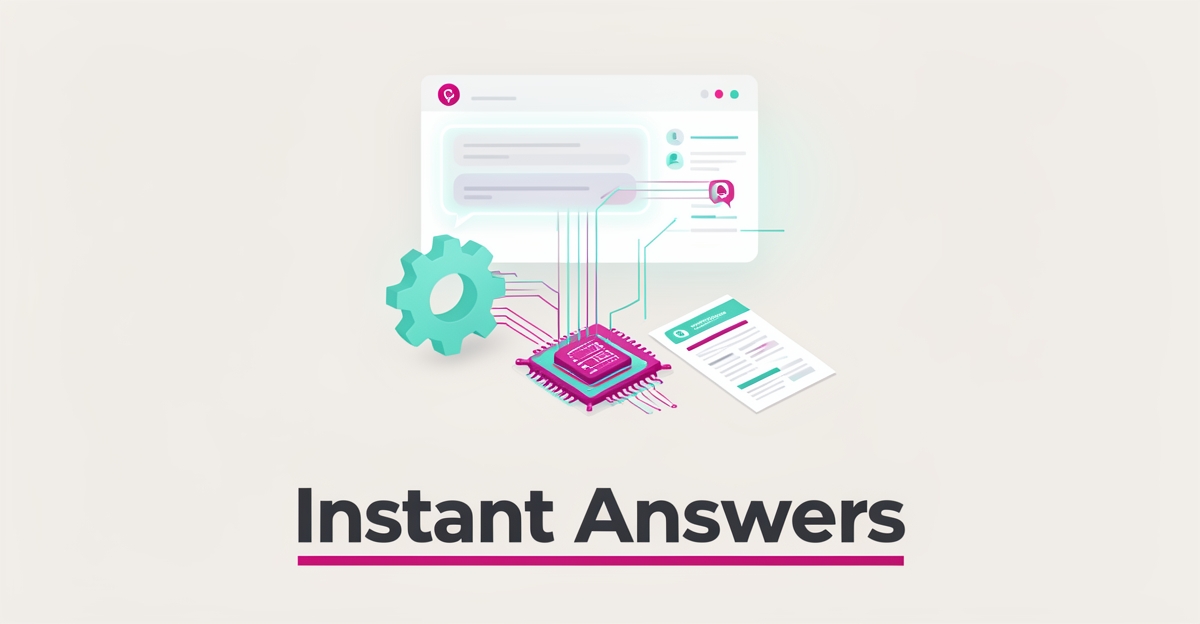
How AI Can Automate Customer Inquiries About Product Specifications
Key Facts
- 73% of procurement professionals now start vendor research using AI search engines.
- AI engines cite technical documentation 4.2x more often than marketing content.
- Custom AI employees cost 75–85% less than human equivalents.
- Jortt deployed an AI agent that autonomously resolves 92% of customer inquiries.
- Gartner predicts 25% of enterprise GenAI apps will face security incidents annually by 2028.
- DeepSeek V4 Flash API runs roughly 35x cheaper per token than GPT-5.5.
- Gartner predicts AI will autonomously resolve 80% of common service issues by 2029.
What if you could hire a team member that works 24/7 for $599/month?
AI Receptionists, SDRs, Dispatchers, and 99+ roles. Fully trained. Fully managed. Zero sick days.
The Trust Crisis: Why Generic AI Fails Technical Support
Hardware customers demand precision, not guesswork. When asking about load ratings or material types, a hallucinated answer can lead to costly procurement errors and shattered trust. Generic LLMs fail here because they lack your specific technical context, often inventing plausible-sounding but incorrect data.
According to Georg Dlubal, CEO of Dlubal Software, hallucination in technical documentation is a "trust-destroying event with operational consequences" as reported by Dlubal Software. This creates a critical gap between what customers expect and what standard AI delivers.
The solution lies in shifting from opaque chatbots to transparent, citation-backed systems. Purpose-built agents retain "organizational memory," ensuring responses are grounded in verified company documentation rather than generic training data.
Standard AI models start every conversation fresh, lacking the nuance of your specific product lines. They may produce grammatically correct answers that miss critical technical constraints entirely.
- Lack of Context: Generic models cannot distinguish between similar hardware specs without specific training.
- Hallucination Risk: Confident but incorrect answers erode buyer confidence instantly.
- No Verification: Customers cannot trace answers back to source manuals or datasheets.
This limitation is why 73% of procurement professionals now start vendor research with AI search engines according to CiteScope AI. They expect answers derived from structured data, not marketing fluff.
Retrieval-Augmented Generation (RAG) constrains AI to answer only from verified source corpora. This architecture eliminates hallucinations by forcing the AI to cite its sources.
Key Benefits of Citation-Backed AI:
- Verifiable Accuracy: Customers can click citations to view original PDFs or schemas.
- Trust Building: Transparency transforms AI from an "oracle" into a reliable assistant.
- Reduced Liability: Minimizes risk of deploying incorrect hardware due to AI error.
Research indicates that AI engines cite technical documentation with structured markup 4.2x more often than marketing content citing CiteScope AI analysis. This preference underscores the need for clean, structured technical data.
AIQ Labs avoids the "widget" trap by building custom-trained AI Employees that understand your specific hardware ecosystem. We deploy agents that integrate with your CRM and helpdesk, handling Tier 1 inquiries with surgical precision.
Unlike off-the-shelf solutions, our systems:
- Ingest Complex Data: Process PDFs, APIs, and JSON specs seamlessly.
- Maintain Context: Retain conversation history for multi-step technical troubleshooting.
- Scale Reliably: Handle high-volume queries while preserving human oversight.
This approach aligns with the industry shift toward agentic AI that not only answers questions but takes action as noted by Tidio. By combining custom development with managed AI employees, we ensure your technical support is both accurate and available 24/7.
Ready to eliminate hallucinations and build unshakeable customer trust? Let’s architect your precision AI solution.
The Solution: RAG Architecture and Structured Data
Generic AI chatbots often fail with technical questions because they lack "organizational memory" and context. They start fresh with every conversation, leading to generic or inaccurate answers that frustrate customers seeking specific hardware details.
Purpose-built agents, however, retain context across sessions, compounding knowledge over time. This capability reflects specific organizational conventions and ensures responses are grounded in your actual product data rather than vague generalizations.
Retrieval-Augmented Generation (RAG) is the dominant architectural standard for technical support. By constraining the AI to answer only from a verified company source corpus, RAG eliminates the "hallucination" risk inherent in broad language models.
For hardware customers asking about material types or load ratings, accuracy is non-negotiable. Research confirms that enterprise reliability now requires every AI response to include a citation linking back to the specific source document. This transforms the AI from an opaque oracle into a transparent interface.
Without source attribution, technical AI erodes customer trust instantly. Customers can verify the answer against the PDF manual or spec sheet, ensuring the information is factual. This transparency is critical for B2B procurement decisions where errors carry financial consequences.
B2B procurement behavior has shifted dramatically toward AI-driven research tools. In 2025, 73% of procurement professionals started vendor research with AI search engines rather than traditional search methods. These engines prioritize structured technical documentation over marketing copy.
AI search engines cite technical documentation with structured markup 4.2x more often than traditional marketing content. This preference exists because structured data reduces ambiguity and allows for precise data extraction.
To compete in this environment, businesses must implement schema markup (such as Product or TechnicalArticle) across their technical documentation. This ensures AI engines can easily parse and prioritize your specs.
Key benefits of structured data implementation include:
- Enhanced AI Discoverability: AI engines prioritize schema-rich pages for accurate data extraction.
- Reduced Ambiguity: Structured fields (e.g., weight, dimensions) prevent misinterpretation.
- Higher Citation Rates: Technical docs are cited 4.2x more often than marketing copy.
- Improved Trust: Customers receive precise, verifiable facts rather than vague descriptions.
The most effective AI chatbots for technical support do not replace existing helpdesks but act as an intelligent "first line of response" layer. This approach handles Tier 1 volume while preserving existing workflows and ticket history.
Native helpdesk bots are often limited to their own platform's knowledge base. They cannot ingest external technical documentation like Confluence pages or external PDFs. This creates significant knowledge gaps when customers ask complex questions about compatibility or material science.
An integration-first approach solves this by ingesting vast amounts of external technical content. It connects directly with existing CRMs and ticketing systems to provide context-aware support. This method preserves your current tech stack while dramatically expanding the AI's capabilities.
AIQ Labs leverages this architecture to build agents that understand technical specs and provide accurate, reliable answers—24/7. By combining RAG with structured data and seamless integration, we ensure your AI agents resolve inquiries with precision. This foundation sets the stage for deploying managed AI employees who can handle complex, multi-step technical workflows.
Implementation: Integration-First and Data Hygiene
Successful AI deployment for technical support begins with a strategic "integration-first" mindset rather than a disruptive rip-and-replace strategy. Instead of discarding existing infrastructure, AI agents should act as an intelligent layer atop your current helpdesk systems like Zendesk or Freshdesk. This approach allows you to handle Tier 1 volume immediately while preserving critical ticket history and established workflows.
Integration-first deployment prevents workflow disruption.
Research indicates that native helpdesk bots are often limited to their own internal knowledge bases, creating significant gaps when customers ask about external technical documentation. By integrating with external sources, you ensure your AI can access the full breadth of your product specifications.
Key benefits of this layered approach include:
- Preserving existing helpdesk ticket history and context.
- Handling high-volume Tier 1 inquiries without human intervention.
- Accessing external documentation like PDFs and Confluence pages.
- Maintaining a single source of truth for customer data.
As reported by Wonderchat, this method allows AI to act as a "first line of response" that seamlessly hands off complex issues to human agents. This ensures that customers receive instant answers to simple questions while keeping your support team focused on high-value problems.
The reliability of your AI agent is directly tied to the quality of the data it ingests. In technical support, "garbage in, garbage out" is a strict rule; inaccurate or outdated specifications will lead to frustrated customers and damaged trust. Before deployment, you must audit your product data for errors, duplicates, and obsolete information.
Data hygiene is the foundation of accurate AI responses.
Procurement professionals increasingly rely on structured data to make purchasing decisions. In 2025, 73% of procurement professionals started their vendor research using AI search engines rather than traditional methods. These engines prioritize structured technical documentation over marketing copy because it reduces ambiguity and allows for precise data extraction.
To maximize visibility and accuracy, implement the following data strategies:
- Structure Markdown: Use schema markup like
ProductorTechnicalArticlefor clarity. - De-duplicate Records: Remove conflicting specs from multiple sources.
- Segment by Use Case: Tailor data paths for new customers versus existing clients.
- Verify Sources: Ensure every data point links back to an approved manual.
AI search engines cite technical documentation with structured markup 4.2x more often than traditional marketing content, according to CiteScope AI. This statistical preference highlights why clean, structured data is not just an internal preference but a customer-facing necessity.
Accuracy alone is not enough; customers need to trust the source of the information. Generic AI models often "hallucinate" technical details, generating confident but incorrect answers that can have serious operational consequences. To prevent this, AI agents must use Retrieval-Augmented Generation (RAG) to ground every response in verified company documentation.
Citation-backed answers transform AI from an oracle into a transparent tool.
When an AI agent provides a load rating or material type, it should automatically include a link to the specific PDF or manual where that data was found. This transparency allows users to verify the information themselves, building confidence in the automated response.
Implement these trust-building measures in your deployment:
- Mandatory Citations: Require source links for every technical claim.
- Confidence Thresholds: Escalate to humans if the AI is uncertain.
- Human-in-the-Loop: Allow experts to validate complex query resolutions.
- Regular Audits: Periodically review AI responses against source documents.
By combining rigorous data hygiene with transparent, citation-backed interactions, you create an AI experience that customers rely on rather than question. This foundation sets the stage for scaling your support operations efficiently.
Strategic Advantage: Custom AI Employees vs. Off-the-Shelf
Hardware customers demand precision when asking about material types, load ratings, or compatibility. Generic off-the-shelf widgets often fail here because they lack the specific organizational memory required for technical nuance. As noted in industry analysis, standard AI models start fresh with every conversation, leading to outputs that miss critical context (https://www.productboard.com/blog/ai-tools-for-writing-product-specs/).
AIQ Labs solves this by deploying custom-trained AI Employees that understand your unique technical specifications. Unlike basic chatbots, our agents are built on Retrieval-Augmented Generation (RAG) architecture, ensuring every answer is grounded in your verified documentation.
Key differences between our approach and standard widgets:
- Context Retention: Custom AI employees maintain session history, compounding knowledge over time rather than resetting with each query.
- Citation-Backed Trust: Every response includes a direct link to the source PDF or manual, eliminating hallucination risks.
- Action-Oriented: Our agents don’t just answer; they integrate with your CRM to place orders or schedule follow-ups automatically.
Research indicates that accuracy is the primary driver of adoption for technical support. For instance, Jortt, a Dutch accounting platform, deployed a Wonderchat AI agent that autonomously resolves 92% of all customer inquiries (https://wonderchat.io/blog/ai-chatbots-technical-support/). This high resolution rate highlights the power of specialized agents over generic tools.
Consider a hardware distributor facing 500 weekly inquiries about bolt load ratings. An off-the-shelf bot might guess or provide vague marketing copy. In contrast, an AIQ Labs AI Employee ingests your specific engineering PDFs, answers instantly with citations, and logs the query for your sales team.
The market is shifting toward this level of specificity. In 2025, 73% of procurement professionals began vendor research using AI search engines rather than traditional search (https://www.citescopeai.com/blog/how-to-build-a-product-specification-markup-strategy-when-ai-search-engines-prioritize-schema-rich-t/). These engines prioritize structured, technical documentation over generic marketing content, citing it 4.2x more often (https://www.citescopeai.com/blog/how-to-build-a-product-specification-markup-strategy-when-ai-search-engines-prioritize-schema-rich-t/).
Furthermore, cost efficiency drives the move toward managed AI staff. While generic chatbots may seem cheaper initially, they often require expensive customizations to handle complex data. AIQ Labs’ model offers a transparent, predictable cost structure. Our AI Employees cost 75–85% less than human equivalents while working 24/7/365 without sick days or vacation time.
This strategic advantage extends beyond simple Q&A. By using custom development services, we build systems that own the data, eliminating vendor lock-in. Clients receive full ownership of the code and IP, ensuring long-term control over their customer experience infrastructure.
Ultimately, the choice between a widget and an AI Employee is a choice between obstruction and enablement. AIQ Labs provides the engineered, reliable workforce that modern hardware customers expect.
Governance and Next Steps
Section: Governance and Next Steps
Preventing hallucinations is the single most critical risk in technical AI support. Without strict guardrails, AI systems may invent load ratings or material types, destroying customer trust instantly. Research confirms that citation-backed answers are non-negotiable for technical accuracy (https://pollthepeople.app/best-ai-chatbot-technical-documentation-support/).
To mitigate these risks, AIQ Labs implements rigorous validation layers before every AI response is published. We ensure agents only reference verified source documents rather than relying on general training data. This approach transforms the AI from an "opaque oracle" into a transparent, reliable interface.
Key Governance Strategies
- Retrieval-Augmented Generation (RAG): Constrains AI to answer only from verified company documentation.
- Source Attribution: Every response includes a link to the specific PDF or manual.
- Human-in-the-Loop: Configurable escalation for queries exceeding AI confidence thresholds.
- Graceful Degradation: Systems admit when they lack data rather than inventing answers.
Security and Compliance Risks
The stakes for data security are high, especially in regulated industries. Gartner predicts that 25% of enterprise GenAI apps will face security incidents annually by 2028 (https://www.productboard.com/blog/ai-tools-for-writing-product-specs/). This statistic underscores the necessity of embedding trust and ethics guidelines directly into your AI architecture.
AIQ Labs addresses these threats through our AI Transformation Partner model. We don’t just build tools; we establish comprehensive governance frameworks that ensure compliance and data privacy. Our systems include audit trails and documentation for complete transparency and accountability.
From Pilot to Production: The AIQ Labs Advantage
Most businesses get stuck at the "pilot" stage, where AI projects stall before scaling. AIQ Labs helps you move from experimentation to transformation by providing end-to-end partnership. We combine custom development with managed AI employees to deliver sustainable results.
Consider Jortt, a Dutch accounting platform that deployed an AI agent to resolve 92% of customer inquiries autonomously (https://wonderchat.io/blog/ai-chatbots-technical-support/). This level of automation is achievable when AI is trained on specific business data, not generic internet knowledge.
Your Next Steps for AI Automation
Ready to eliminate manual support loads and improve customer experience? AIQ Labs offers clear pathways to get started:
- Free AI Audit & Strategy Session: Assess your current systems and identify high-ROI opportunities.
- Targeted AI Workflow Fix: Start with a single critical workflow for immediate results.
- AI Employee Pilot: Deploy a managed AI agent to prove the concept with minimal risk.
Contact AIQ Labs today to discover how we can architect your competitive advantage through secure, accurate, and scalable AI solutions.
Still paying for 10+ software subscriptions that don't talk to each other?
We build custom AI systems you own. No vendor lock-in. Full control. Starting at $2,000.
Frequently Asked Questions
How can I stop my AI from making up incorrect product specs like load ratings?
Will implementing this AI break my current Zendesk or Freshdesk setup?
Is it actually cheaper to use custom AI employees instead of hiring human support staff?
Why do AI search engines prefer my technical manuals over my marketing pages?
How do I ensure the AI doesn't answer questions it shouldn't?
Can an AI agent actually take action like placing an order instead of just answering?
From Guesswork to Ground Truth: Your Technical Support Advantage
Generic AI fails hardware buyers because it treats specifications as suggestions rather than constraints. As this article shows, hallucinated load ratings or material claims aren't just errors—they're trust-destroying events with real procurement consequences. The shift to RAG-powered, citation-backed agents changes the economics of technical support: customers get verifiable answers traced to source datasheets, while your team reclaims hours spent correcting misinformation. AIQ Labs builds exactly this infrastructure. Our Intelligent Chatbot Platform runs on dual RAG and knowledge graph retrieval—the same architecture powering our production portfolio of 70+ live agents—delivering context-aware support trained exclusively on your technical documentation. Whether deployed as a custom development project (Pillar 1) or a managed AI Support Agent (Pillar 2), these systems integrate with your CRM, order management, and catalog data to resolve complex specification queries 24/7, with seamless human handoff when needed. Clients typically see 60% ticket volume reduction within the first deployment cycle. Ready to replace guesswork with ground truth? Start with a Free AI Audit & Strategy Session to map your highest-impact specification inquiries, or deploy a Targeted AI Workflow Fix for a single product line. Your buyers are already searching with AI—make sure they find answers they can trust.
Ready to make AI your competitive advantage—not just another tool?
Strategic consulting + implementation + ongoing optimization. One partner. Complete AI transformation.