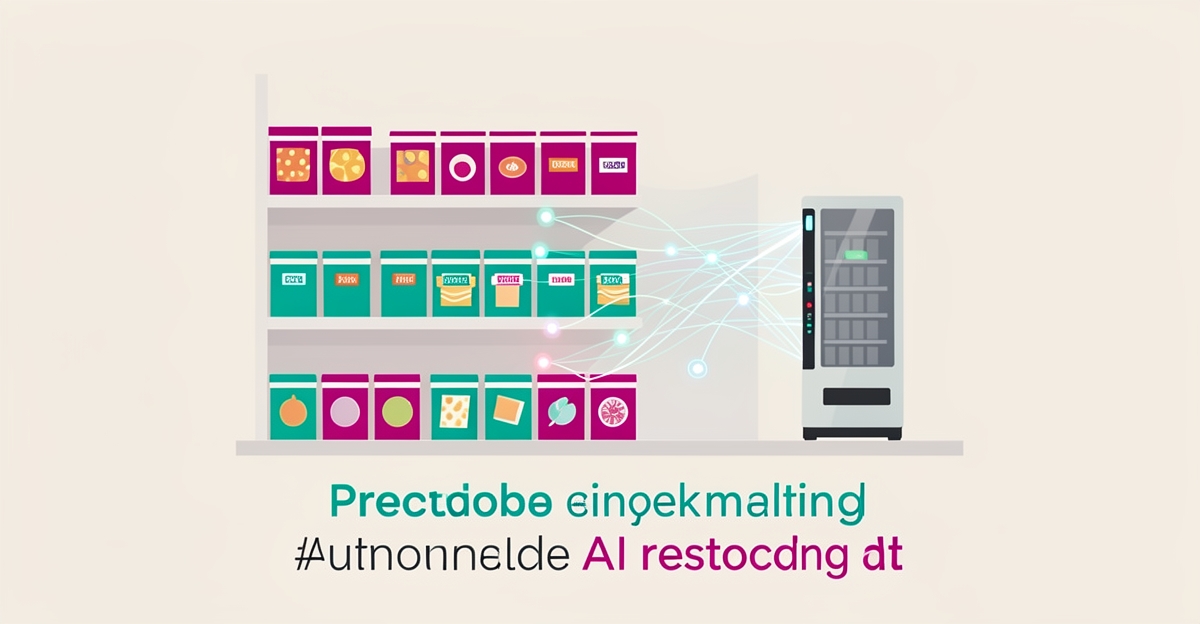
How AI Can Automate Daily Restocking in High-Demand Office Snack Locations
Key Facts
- AI-driven restocking typically reduces inventory costs substantially through better stock alignment with actual usage.
- Automated restocking tends to lift service levels by keeping shelves full during peak demand windows.
- Better product availability from AI inventory management commonly translates into a measurable sales increase.
- Automation delivers operational efficiency gains that manual teams struggle to match, especially across multiple locations.
- AI forecasting turns messy real-world signals, late trucks, returns, mis-scans, into reliable restocking decisions.
- Dynamic stock thresholds evolve daily as AI learns from sales spikes, staff absences, and seasonal shifts.
- Manual restocking triggers predictable stockouts after meetings and shift changes, eroding employee trust in the service.
Hire a team member that works 24/7 — for less than a part-time wage.
AI receptionists, SDRs, dispatchers and 99+ roles. Trained on your business, fully managed.
Not sure where to start? Ask our AI planner
The Hidden Cost of Manual Snack Restocking in High-Traffic Offices
High-traffic office snack locations move fast, and manual restocking rarely keeps pace. When shelves are checked on a fixed schedule, demand spikes from staff shifts and meetings create gaps that are costly to recover from.
Manual processes create predictable stockouts that frustrate employees and erode trust in the service. Overstocking follows as a defensive reaction, tying up cash in slow-moving items and increasing waste. Labor is pulled into repetitive checks instead of higher-value work, which drives inefficiency across the day.
Poor inventory control directly raises costs and lowers service. Industry research on automated replenishment consistently shows meaningful reductions in inventory costs through better stock management, alongside measurable gains in service levels and sales from improved product availability. The exact figures vary by operation, but the direction is clear: reactive restocking leaves money on the table every week.
The hidden cost shows up in operational drag. Automated replenishment studies report significant efficiency improvements through automation, gains manual teams struggle to match. Without real-time visibility, decisions rely on memory and last-minute counts rather than demand signals.
Stockouts and overstocking stem from the same root problem: decisions made without current data. Manual restocking typically produces:
- Stockouts during peak demand windows after meetings or shift changes
- Overstocking of low-velocity items that expire or go stale
- Inconsistent shelf presentation that reduces purchase intent
- Labor hours spent on physical counts instead of replenishment
These issues compound over time. Late trucks, returns, and mis-scans create messy real-world signals that manual systems cannot interpret quickly. AI-driven optimization is about turning those messy signals into reliable restocking decisions that protect cash and keep shelves full.
In high-demand office environments, service level is revenue. When a preferred snack is missing, employees buy elsewhere or skip the purchase entirely. That lost moment is hard to measure but easy to feel in declining participation and complaints.
This is where an AI Workflow Build changes the equation. AIQ Labs rebuilds the one workflow that costs you the most, restocking included, as custom AI agents that schedule and trigger replenishment based on real-time demand patterns, staff shifts, and historical sales, reducing labor costs and ensuring consistent product availability. The approach replaces reactive checks with predictive replenishment that aligns supply with actual usage.
Manual restocking also limits scalability. Adding locations multiplies checklists, routes, and exceptions. Without automation, growth increases error rates and labor demand in parallel.
Businesses that move from fixed schedules to data-driven replenishment see tighter inventory, fewer emergency orders, and more predictable spend. The cost of staying manual is not just labor; it is lost sales, wasted product, and diminished employee experience.
How AI Demand Forecasting Optimizes Restocking Decisions
AI-powered demand forecasting transforms how office snack locations manage inventory by turning historical sales, real-time usage, and staff shift patterns into accurate restocking predictions. Machine learning models analyze these data streams to identify consumption trends, anticipate peak demand periods, and adjust ordering schedules dynamically. This approach minimizes guesswork and ensures snacks are replenished precisely when needed, reducing both stockouts and excess inventory. Operations using AI-driven forecasting typically see meaningful reductions in inventory costs and consistent gains in service levels by maintaining product availability.
These forecasting systems continuously learn from new data, adapting to changes in employee behavior, seasonal variations, or unexpected usage spikes. By integrating staff shift schedules, AI can predict higher demand during overlapping breaks or project deadlines, triggering restocking alerts before shelves run empty. Real-time inventory sensors feed current stock levels into the model, enabling dynamic replenishment that responds to actual consumption rather than fixed schedules. Such systems improve forecasting accuracy, reduce stock issues, and optimize inventory levels through continuous adjustment based on live operational signals.
AIQ Labs builds custom AI agents that automate this entire forecasting and restocking workflow, eliminating manual monitoring and order placement. These agents process historical sales patterns, detect demand fluctuations, and generate optimized replenishment recommendations without human intervention. The result is a self-regulating system that maintains ideal stock levels while reducing labor costs associated with routine inventory checks. Businesses implementing this kind of automation commonly report a sales increase from improved product availability alongside significant operational efficiency gains. By aligning inventory with actual demand patterns, office snack locations can ensure consistent access to popular items while minimizing waste and overhead.
Implementing AI-Powered Restocking: From Data to Automated Action
Implementing AI-powered restocking begins with integrating real-time sales, inventory, and staffing data into a unified system that enables continuous visibility and decision-making. This foundation allows machine learning models to process historical patterns and identify demand fluctuations, forming the basis for accurate forecasting. AIQ Labs builds custom AI agents that ingest and synchronize this data from point-of-sale systems, shelf sensors, and workforce schedules, eliminating manual data consolidation and reducing operational delays.
Once data is unified, dynamic stock thresholds are set using AI-driven replenishment logic that adjusts minimum and maximum levels based on forecasted demand, lead times, and consumption trends. These thresholds are not static, they evolve daily as the system learns from sales spikes, staff absences, or seasonal shifts, ensuring optimal stock availability while minimizing waste. Operations running this kind of system typically report lower inventory costs and better operational efficiency through tighter stock alignment with actual usage patterns.
The final step connects AI agents directly to ordering workflows, triggering automated replenishment when stock falls below dynamic thresholds. These agents communicate with supplier APIs or internal procurement systems to generate and submit purchase orders without human intervention, creating a closed-loop system that maintains shelf availability. This automation typically raises service levels and drives a measurable sales uplift by preventing stockouts during peak demand periods. By removing manual bottlenecks, AI-powered restocking transforms a reactive chore into a proactive, self-optimizing process.
If restocking is not your only bottleneck, the same logic scales. AIQ Labs also deploys AI Employees, managed AI staff across 99+ roles at roughly 80% less cost than a human hire, and full AI Operating Systems that connect inventory, procurement, and reporting into one layer you own outright. Every engagement starts with a 2-minute Fit Check, followed by a free 30-minute strategy call.
Still paying for 10+ subscriptions that don’t talk to each other?
We build custom AI systems you own outright. No vendor lock-in. Full control.
Not sure where to start? Ask our AI planner
Frequently Asked Questions
How exactly does AI know when to restock snacks before they run out?
What kind of cost savings can we expect from switching to automated restocking?
How difficult is it to integrate AI restocking with our existing inventory and POS systems?
Can the system adapt if our office attendance patterns change suddenly?
What data do we need to start automating our snack inventory management?
Will AI restocking actually reduce the labor hours we spend on inventory checks?
Turning Snack Shelves Into Strategic Assets
Manual snack restocking in high-traffic offices creates avoidable costs, from stockouts that frustrate employees to overstocking that ties up cash and increases waste. AI-powered replenishment transforms this reactive chore into a proactive system by using real-time demand patterns, staff shifts, and historical sales to optimize inventory. Operations typically see lower inventory costs, higher service levels, and a sales increase from consistent product availability. Beyond the numbers, automation frees staff from repetitive counts to focus on higher-value work while ensuring shelves stay aligned with actual usage. For office snack locations ready to move beyond guesswork, the path forward starts with understanding where AI can deliver the fastest impact. Take the first step with a 2-minute Fit Check, then a free, no-obligation 30-minute strategy call to map your biggest bottleneck and explore how custom AI agents can automate restocking while reducing labor and waste. Data-driven replenishment doesn't just save money, it builds a more reliable, responsive service that employees trust and use.
Make AI your competitive advantage — not just another tool.
Strategy, implementation and ongoing optimization. One partner, end to end.
Not sure where to start? Ask our AI planner