How AI Can Automate Emergency Call Handling in Lawn Care Businesses
Key Facts
- A large share of annual revenue for storm-exposed lawn care businesses typically comes from a handful of storm events each year.
- Most urgent callers hang up without leaving a message when faced with voicemail, especially during high-stress weather events.
- Call volume can surge several times above normal for 48-72 hours after a major storm.
- AI triage is already used in public safety applications to prioritize urgent calls and improve response efficiency.
- AI-powered call answering can reduce staffing costs and improve customer satisfaction compared to voicemail or after-hours answering services.
- AIQ Labs has deployed 200+ multi-agent systems and runs 4 live SaaS products daily.
Hire a team member that works 24/7 — for less than a part-time wage.
AI receptionists, SDRs, dispatchers and 99+ roles. Trained on your business, fully managed.
Not sure where to start? Ask our AI planner
The Hidden Cost of Missed Emergency Calls in Lawn Care
Storm season transforms lawn care businesses from routine maintenance providers into emergency response units, with a single weather event capable of generating weeks of urgent work in just a few days. This surge isn't just busywork, it represents a critical revenue stream that can make or break annual profitability. For storm-exposed service businesses, a large share of annual revenue typically comes from a handful of storm events, yet the very systems meant to capture this opportunity often fail when it matters most.
When trees fall, drainage systems overflow, or property damage occurs during severe weather, customers don't call for quotes, they call for immediate help. But traditional voicemail systems create a critical bottleneck during these high-stress moments. Most urgent callers hang up without leaving a message when faced with voicemail, translating directly into lost revenue opportunities and frustrated customers who may never call back. This isn't merely an inconvenience, it's a systemic failure that compounds property damage while eroding trust in your business's reliability.
The financial impact extends beyond the immediate missed call. Each unanswered emergency represents potential revenue from services like debris removal, emergency tree work, drainage solutions, and follow-up lawn restoration, often the highest-margin jobs in a lawn care portfolio. When callers hang up due to ineffective call handling, businesses lose not just the emergency service fee but also the opportunity to secure ongoing maintenance contracts that frequently follow storm response work. The delay in response also allows secondary damage to occur, turning what might have been a simple tree removal into a complex property restoration project involving structural repairs, landscaping replacement, and insurance coordination.
- Lost emergency service revenue from hanging up callers
- Missed opportunities for follow-up maintenance contracts
- Increased property damage due to delayed response times
- Damaged reputation from perceived unresponsiveness during crises
- Operational inefficiency as staff scramble to reconstruct missed call information
For lawn care businesses operating in storm-prone regions, this creates a painful cycle: invest in marketing and equipment to capture emergency work, then lose the very leads you've worked to attract due to outdated communication systems. The solution isn't adding more staff to monitor phones during unpredictable weather events, it's implementing intelligent call handling that can distinguish between routine inquiries and true emergencies, then route them appropriately without human delay. Modern AI Employees can be trained to recognize urgency indicators in caller language, automatically prioritize storm-related calls, and initiate predefined response protocols while capturing every detail for crew dispatch, turning what was once a revenue leak into a reliable emergency response channel.
How AI Voice Agents Triage and Route Emergency Calls in Real Time
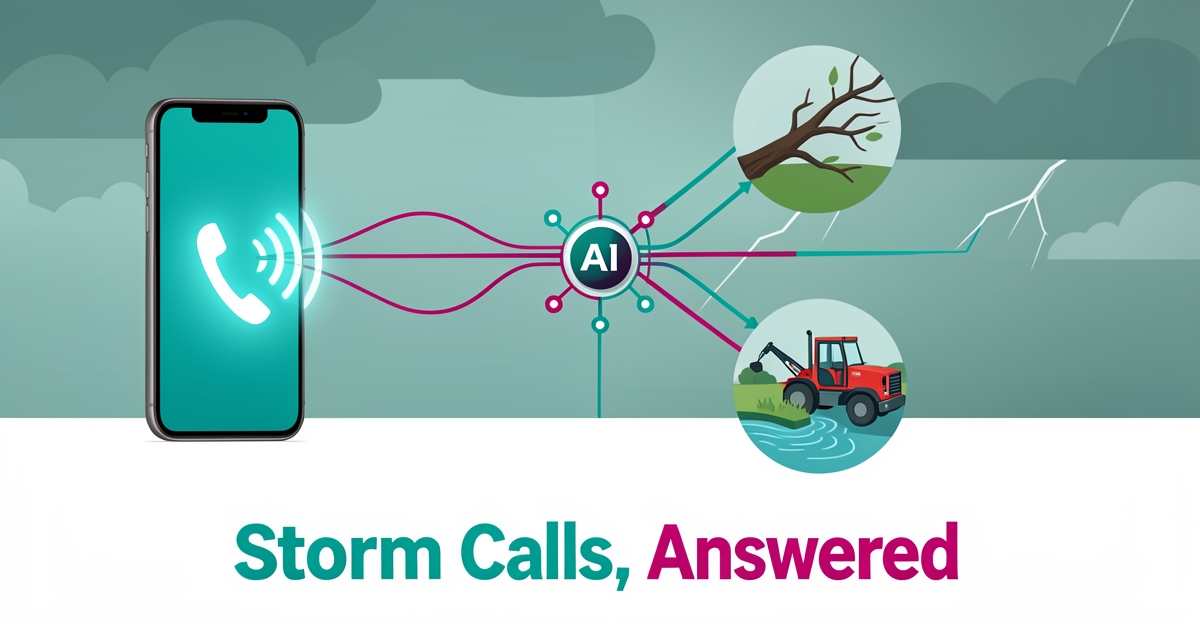
When storm damage strikes, lawn care businesses face a surge of urgent calls, downed trees, blocked driveways, hazardous debris, often overwhelming staff and risking delayed responses. AIQ Labs' AI voice agents eliminate this bottleneck by using natural language processing to detect urgency in real time, applying predefined triage rules, and instantly routing verified emergencies to available crews. This ensures 24/7 coverage without human delays or missed calls, directly addressing the operational chaos that follows severe weather events.
After a major storm, call volume can run several times above normal for 48-72 hours, making rapid triage essential. AI voice agents are trained to recognize critical phrases like "tree fallen on house" or "power lines down," triggering immediate escalation protocols. By filtering non-urgent inquiries and prioritizing true emergencies, these systems cut down the noise reaching your team, similar to how AI triage is used in public safety applications to prioritize urgent calls and improve response efficiency. This allows human teams to focus on fieldwork instead of call screening, improving both safety and service speed.
- Detects urgency using natural language understanding for phrases indicating immediate danger
- Applies custom triage rules based on business-defined emergency thresholds
- Routes verified emergencies to the nearest available crew via integrated scheduling tools
- Logs all interactions for audit trails and continuous improvement of response protocols
By handling the initial triage and routing autonomously, AIQ Labs' voice agents ensure no emergency call goes unanswered, even during peak storm volumes or after-hours events. This capability transforms reactive scrambling into a streamlined, reliable response system, directly supporting lawn care businesses in protecting both customer safety and operational continuity when it matters most. Businesses interested in implementing this level of emergency call automation can start with a free strategy call to assess their specific workflow needs and ROI potential.
Integrating AI Emergency Handling into Your Lawn Care Operations
When storm season hits, lawn care businesses face a surge in emergency calls, often several times normal volume for up to three days after severe weather, making rapid response critical to capturing revenue and preventing customer loss. For storm-exposed operators, a large share of annual revenue can come from just a few storm events, yet most callers won't leave a message if sent to voicemail during peak demand. AIQ Labs helps lawn care companies deploy an AI Employee that owns the entire emergency workflow, from initial call triage to crew dispatch, using flexible payment models like Start Monthly, Build in Milestones, or Own It Outright to ensure production readiness without operational disruption.
Implementation begins with defining distinct rules for storm season versus off-season operations, ensuring the AI adapts its urgency thresholds and response protocols based on real-time conditions. During high-risk periods, the system can be configured to prioritize calls involving downed trees, blocked driveways, or property damage, while off-season logic focuses on routine service inquiries. Next, urgency-based triage logic is built into the AI Employee, classifying callers by severity, such as immediate hazard, property risk, or non-urgent request, using customizable keywords and conversational cues. This enables the AI to walk callers through basic mitigation steps, like avoiding downed power lines or securing loose branches, while simultaneously alerting the nearest available crew.
Escalation protocols are then configured to route high-priority emergencies directly to on-call teams via SMS, voice call, or integrated dispatch tools, eliminating delays caused by manual call forwarding or voicemail checks. Finally, the AI Employee integrates with existing scheduling and CRM platforms, such as Google Calendar, Jobber, or ServiceM8, to automatically log emergency inspections, update job statuses, and trigger follow-up workflows. By connecting AI to these systems, businesses reduce manual data entry and ensure every emergency call is tracked from first contact to job completion. With continuous monitoring and optimization included in the deployment model, the AI Employee evolves with the business, improving accuracy and response speed over time. To explore how this workflow can be built and managed for your lawn care operation, start with a free strategy call at https://aiqlabs.ai/book.
Still paying for 10+ subscriptions that don’t talk to each other?
We build custom AI systems you own outright. No vendor lock-in. Full control.
Not sure where to start? Ask our AI planner
Frequently Asked Questions
How much revenue do lawn care businesses actually lose when emergency calls go to voicemail during storms?
Can an AI voice agent really tell the difference between a routine lawn question and a genuine emergency like a tree on a house?
What happens to call volume during a major storm, and can AI actually handle that spike?
Will I need to replace my current scheduling software or CRM to use AI emergency call handling?
Is this just a chatbot or voicemail replacement, or does it actually dispatch crews and manage the emergency workflow?
What's the realistic cost compared to hiring an after-hours dispatcher or answering service?
Turn Storm Chaos into Your Most Reliable Revenue Stream
When severe weather strikes, lawn care businesses face a critical choice: let emergency calls vanish into voicemail while competitors capture the work, or deploy intelligent systems that answer every call instantly. With a large share of annual revenue often concentrated in just a few storm events, the difference between a missed call and a dispatched crew can determine your entire year's profitability. AI voice agents eliminate the human bottleneck by triaging urgency in real-time, routing true emergencies to available teams, and integrating directly with your scheduling tools, ensuring you capture high-margin emergency work 24/7 without adding staff. If you're ready to stop losing storm revenue to busy signals, start with the two-minute Fit Check at https://aiqlabs.ai/apply, then book a free 30-minute strategy call at https://aiqlabs.ai/book to map your specific emergency workflow and ROI potential. No obligation, just a clear plan to transform your next weather event from operational chaos into your most reliable growth engine.
Make AI your competitive advantage — not just another tool.
Strategy, implementation and ongoing optimization. One partner, end to end.
Not sure where to start? Ask our AI planner