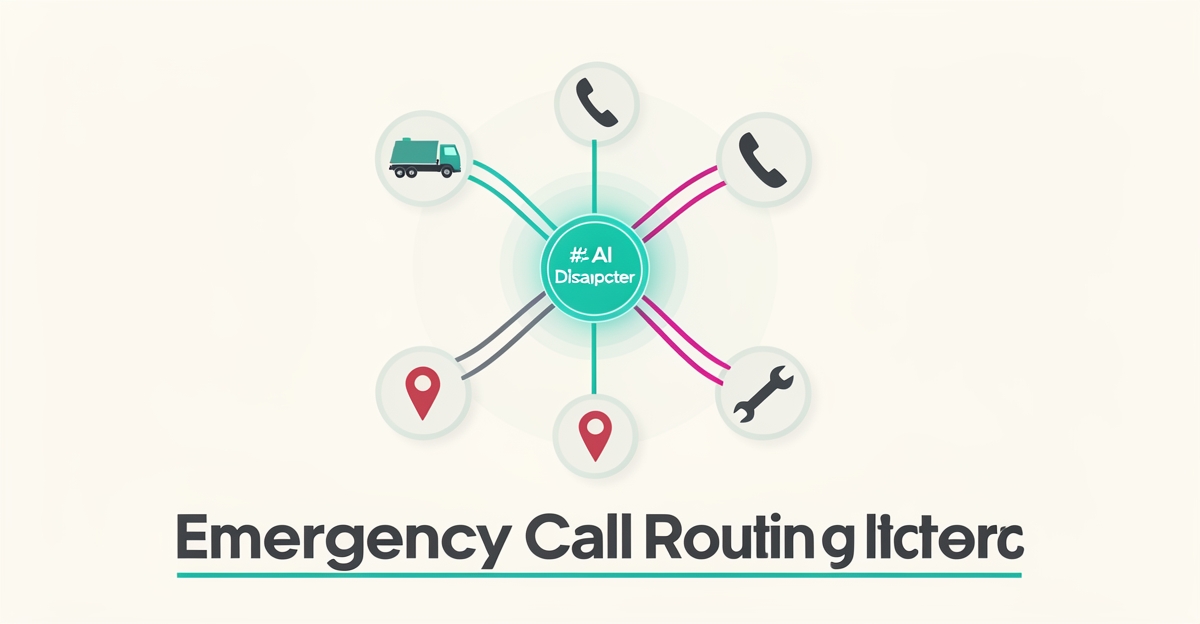
How AI Can Automate Emergency Call Routing for Garbage Disposal Services
Key Facts
- Staff shortages are a systemic problem across emergency response (industry data)
- Skill-based routing boosts first-call resolution by 20% (research)
- Skill-based routing cuts call abandonment rates by 40% (research)
- Agent utilization rises 30% with skill-based routing (research)
- Sinch Voice API offers 99.95% availability and numbers in over 70 countries (documentation)
- AI voice response agents understand context and act in real time (expertise)
- AI emergency call routing adoption is growing to improve response times (analysis)
Hire a team member that works 24/7 — for less than a part-time wage.
AI receptionists, SDRs, dispatchers and 99+ roles. Trained on your business, fully managed.
Not sure where to start? Ask our AI planner
The Hidden Cost of Manual Call Routing in Waste Management
A missed garbage pickup can quickly become a public health issue, and when residents call for help they expect an immediate, competent answer. Manual emergency call routing in waste management rarely delivers that, especially under pressure.
Staff shortages are a systemic problem across emergency response. Industry data shows 80% of US 911 systems lose staff within a year and are 30% understaffed. That churn leaves dispatch teams thin, overworked, and forced to triage with spreadsheets and phone trees.
The impact shows up in response times and reliability. Calls sit in queues while operators manually check technician locations, service zones, and truck availability. Without intelligent routing, urgent issues like overflowing bins, blocked access, or hazardous spills compete with routine inquiries for the same limited human attention.
Skill-based routing data illustrates what manual processes miss. Research shows a 20% increase in first-call resolution and a 40% reduction in call abandonment rates. A separate analysis also finds a 30% increase in agent utilization when calls are matched to the right resource.
Customer trust erodes when these delays repeat. Residents report missed pickups, unanswered calls, and conflicting information. For garbage disposal services, that translates into complaints, social media escalation, and regulatory scrutiny. The operational cost is real, but the reputational cost lasts longer.
Manual routing creates predictable bottlenecks:
- Delayed triage as operators manually verify location, urgency, and technician availability
- Staff burnout and turnover driven by high call volumes and after-hours coverage gaps
- Inconsistent information when callers reach different agents with no shared context
- Limited scalability during seasonal spikes, holidays, or weather events
AI-driven routing changes the equation by automating routine intake and prioritizing what matters. AIQ Labs offers AI-powered routing solutions through AI Operating Systems that integrate with existing dispatch systems to reduce delays and improve customer trust. Calls can be intelligently routed based on location, urgency, and technician availability, ensuring faster response times.
With natural language understanding and real-time context, AI can handle initial triage, confirm addresses, and book emergency pickups without waiting for a human. That frees dispatch staff for complex issues while maintaining consistent, 24/7 coverage. The result is fewer abandoned calls, quicker resolution, and a service reputation that holds up under pressure.
How AI-Powered Routing Engines Transform Emergency Dispatch
Emergency calls for garbage disposal rarely wait for business hours, and every second of delay erodes customer trust. AI-powered routing engines remove the manual triage bottleneck by matching callers to the right technician instantly based on real-time signals.
An AI dispatcher listens, understands intent, and routes without human intervention. Natural language understanding and conversational voice generation let the system extract location, urgency, and service type from the caller in real time. Task execution follows immediately, including booking appointments and sending confirmation texts, while intelligent escalation and sentiment analysis determine when to transfer to a human agent.
Skill-based routing creates measurable efficiency gains over traditional systems. According to research, organizations see a 20% increase in first-call resolution when calls are matched to the right capability. The same research shows a 40% reduction in call abandonment rates and a 30% increase in agent utilization.
That efficiency matters for emergency services. With 80% of US 911 systems losing staff within a year and operating 30% understaffed, automated triage frees human teams for complex issues that require judgment and empathy.
AIQ Labs offers AI-powered routing solutions through AI Operating Systems that integrate with existing dispatch systems to reduce delays and improve customer trust. The approach is designed for emergency contexts where location, urgency, and technician availability must align in seconds.
Intelligent routing works by continuously evaluating three inputs:
- Location data to identify the nearest available technician or service zone
- Urgency signals extracted from caller language and service type
- Technician availability and skill match to ensure first-call resolution
The result is faster response times and higher customer satisfaction without adding headcount. Routine calls are automated and personalized voice support handles intake, while the enterprise-grade network scales confidently with high availability and global coverage.
AI-powered voice response agents can understand context, resolve issues, and take actions in real time, making them ideal for emergency call routing. As voice AI capabilities mature, systems become more reliable at distinguishing a blocked disposal from a hazardous spill and routing accordingly.
The use of AI in emergency call routing is becoming increasingly popular, with many companies adopting AI-powered solutions to improve response times and customer satisfaction. Experts believe AI will continue to play a major role in the future of emergency call routing, with advancements in natural language processing and machine learning enabling more sophisticated and effective solutions.
Implementing AI Routing: From Integration to Ongoing Optimization
Emergency calls for garbage disposal can’t wait for a callback. An AI routing layer turns chaotic inbound spikes into immediate, location-aware dispatch decisions that protect public health and customer trust.
Implementation starts with clear requirements. Map the call types you must handle, the personalization level needed, and the data sources the router must access. Define urgency tiers, service zones, and the technician attributes that drive assignment. This scope sets the success criteria for automation and human handoff.
Engine selection determines integration speed and control. Choose a routing engine that connects with your existing dispatch system and supports natural language understanding and conversational voice generation. AIQ Labs offers AI-powered routing solutions through AI Operating Systems that integrate with existing dispatch systems to reduce delays and improve customer trust. Enterprise-grade voice infrastructure can deliver 99.95% availability and phone numbers in over 70 countries with Sinch's Voice API.
Configuration translates requirements into routing logic. Build rules that route by location, urgency, and technician availability. Add skill-based routing to match call complexity with agent capability. According to industry research, skill-based routing drives a 20% increase in first-call resolution, a 40% reduction in call abandonment rates, and a 30% increase in agent utilization.
Training makes the model useful on day one. Feed the AI historical call transcripts, dispatch notes, and technician schedules. Teach it to recognize spill types, blockage severity, and access constraints. Train escalation triggers and sentiment analysis to determine when to transfer calls to human agents. AI-powered voice response agents can understand context, resolve issues, and take actions in real time, making them ideal for emergency call routing.
A practical rollout follows this sequence:
- Define requirements for call types, personalization, and integration points with dispatch
- Select and connect an AI routing engine compatible with current CRM, scheduling, and field systems
- Configure routing rules for location, urgency, and live technician availability
- Train the model on real call data and validate escalation and sentiment thresholds
- Test live traffic, measure response times, and refine logic continuously
Ongoing optimization closes the loop. Monitor first-call resolution, abandonment, and average speed to answer. Refine intent models as new spill scenarios appear and technician coverage changes. With industry data showing 80% of US 911 systems lose staff within a year and are 30% understaffed, automation that frees up resources for more complex issues is not optional.
Performance improves with use. As the system learns local patterns and seasonal demand, routing becomes faster and more accurate. The use of AI in emergency call routing is becoming increasingly popular, with many companies adopting AI-powered solutions to improve response times and customer satisfaction.
Still paying for 10+ subscriptions that don’t talk to each other?
We build custom AI systems you own outright. No vendor lock-in. Full control.
Not sure where to start? Ask our AI planner
Frequently Asked Questions
How does AI routing actually reduce response times for emergency garbage pickup calls?
Will AI replace human dispatchers in emergency waste management systems?
Can AI routing systems work with our existing dispatch software and phone infrastructure?
How does the AI know when to escalate a call to a human agent instead of handling it automatically?
Is AI-powered routing reliable enough for emergency situations like spills or blocked access?
What kind of return on investment can we expect from implementing AI routing for our garbage disposal service?
Turning Emergency Calls into Reliable Service
AI-powered routing transforms how garbage disposal services handle emergency calls, automating intake, prioritizing urgent issues, and matching callers to the right technician in real time. By reducing delays, eliminating abandoned calls, and freeing staff for complex situations, this approach directly tackles the staffing challenges highlighted in industry data, where 80% of US 911 systems lose staff within a year and operate 30% understaffed. The result is faster response times, higher customer satisfaction, and a reputation for reliability when it matters most. For waste management teams ready to move beyond manual bottlenecks, the path forward starts with understanding where AI can deliver the biggest impact. Take the first step with a free 2-minute Fit Check to explore how AI-driven routing can strengthen your service operations and customer trust.
Make AI your competitive advantage — not just another tool.
Strategy, implementation and ongoing optimization. One partner, end to end.
Not sure where to start? Ask our AI planner