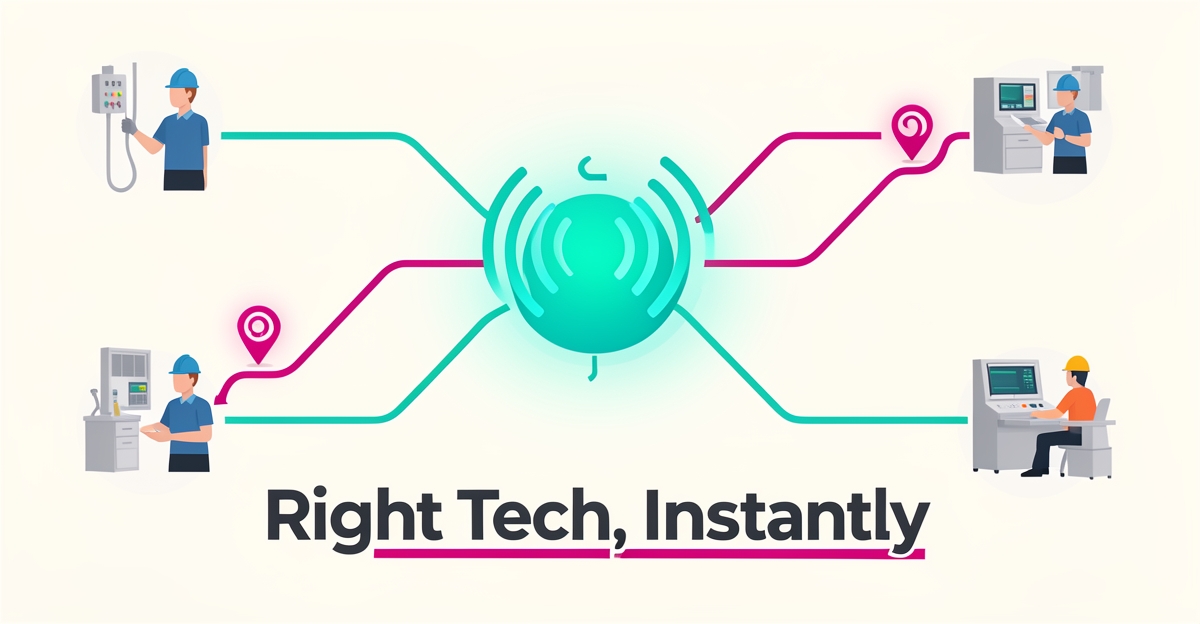
How AI Can Automate Emergency Call Routing to the Right Technician
Key Facts
- Misrouted calls are a persistent problem in traditional call centers, forcing customers to repeat their emergencies multiple times while minutes tick away.
- AI routing engines match technicians based on proximity, certifications, availability, and urgency signals from the caller's own words.
- Modern AI routing combines natural language triage with rules-based logic to deliver the right technician within minutes.
- AI-powered dispatch systems automatically schedule, route, and assign tasks in real time, solving complex logistics challenges for field service teams.
- AIQ Labs has deployed 200+ multi-agent systems and runs 4 live SaaS products daily, this is production technology, not a prototype.
Hire a team member that works 24/7 — for less than a part-time wage.
AI receptionists, SDRs, dispatchers and 99+ roles. Trained on your business, fully managed.
Not sure where to start? Ask our AI planner
The Cost of Misrouted Emergency Calls and Delayed Response
A single misrouted emergency call can mean the difference between a resolved crisis and a catastrophic delay. For service businesses handling urgent customer needs, the stakes of inefficient call routing extend far beyond customer satisfaction, they directly impact revenue, reputation, and operational survival.
When emergency calls bounce between departments or land with technicians who lack the right expertise, the costs compound rapidly. Customers are forced to repeat their emergencies multiple times while valuable minutes tick away. Each transfer adds friction to an already stressful situation and delays the dispatch of qualified help.
Delayed technician dispatch creates cascading operational failures. When a plumbing emergency sits in the wrong queue or an HVAC crisis reaches a generalist instead of a certified specialist, businesses face extended resolution times, increased labor costs, and heightened liability exposure. The longer a customer waits for the right technician, the more likely they are to abandon the call entirely, taking their emergency revenue to a competitor who can respond faster.
The financial impact extends beyond lost individual calls. Manual triage consumes dispatcher hours that AI can complete in seconds, while scheduling confusion and miscommunication burn billable time across the whole team. Every hour a dispatcher spends playing traffic cop is an hour not spent on customers who genuinely need a human.
AI-powered routing eliminates these bottlenecks by analyzing caller intent, location, and urgency instantly. Modern systems can assess whether a "no heat" call requires a gas-certified technician or an electrician, then route directly to the appropriate on-call specialist without human intervention. Emergency protocols trigger automatically based on the severity of the situation, not on whoever happens to answer the phone.
The operational costs of maintaining the status quo include:
- Increased labor expenses from extended call handling and manual transfers
- Lost revenue from abandoned emergency calls and delayed response times
- Higher customer acquisition costs to replace clients lost to poor emergency experiences
- Reduced technician utilization due to inefficient dispatch and travel routing
- Compliance and liability risks when emergencies aren't escalated properly
AIQ Labs builds AI employees like dispatchers and receptionists that understand your service protocols and integrate with existing workflows to eliminate these inefficiencies. By automating the triage and routing process, businesses ensure that every emergency reaches the right technician immediately, protecting both customer safety and operational margins.
How AI-Powered Call Routing Identifies Intent and Routes in Real Time
When a burst pipe floods a basement at 2 a.m., every second between the call and the dispatch matters. AI-powered call routing compresses that gap by listening, understanding, and acting on the caller's words in real time, no hold music, no human triage, no guesswork.
At the core of this capability is natural language processing. As the caller describes the problem, the AI analyzes their words for intent and context, instantly classifying the issue type, a gas leak, an electrical fault, a no-heat emergency, and distinguishing a true emergency from a routine request. The same rapid data processing and response-time improvements that have made AI valuable in emergency services dispatching apply directly to field service intake.
Once intent is established, the routing engine layers in operational rules. Modern systems combine AI-driven triage with rules-based routing logic to match the right technician to the right call within minutes, weighing:
- Geographic proximity to the caller's location
- Skill and certification requirements for the specific issue
- Current availability and on-call rotation
- Urgency signals detected from the caller's language and context
Speed matters, but so does accuracy. AI triage filters out routine requests, appointment changes, billing questions, status checks, so they never reach your on-call technician. For a service business, that filtering effect means fewer techs pulled off legitimate jobs for false alarms, and dispatchers freed to focus on the calls that genuinely need judgment.
What makes this practical for service businesses is that the AI doesn't operate in a vacuum. Systems built by teams like AIQ Labs are trained on a company's specific service protocols and dispatch rules, working within existing workflows, so when the AI identifies a burst water heater as a priority-two emergency, it routes to the technician your own escalation policy dictates, not a generic script.
Because these systems handle multiple calls simultaneously and operate around the clock, no emergency call waits in a queue at midnight or during a lunch rush. The caller reaches a system that understands the problem, knows who can fix it, and connects them, before a human dispatcher has even picked up a pen.
Implementing AI Call Routing Within Existing Field Service Workflows
Emergency calls can't wait for manual triage. When a service request comes in at night or during peak demand, seconds lost to transfers and guesswork directly impact safety, cost, and reputation.
Integrating AI-driven routing starts with mapping the existing emergency intake flow. Teams document how calls arrive, how urgency is assessed today, and where dispatch, CRM, and scheduling tools intersect. That map becomes the integration blueprint, ensuring the AI respects on-call rotation, geographic proximity, skill or certification requirements, and real-time availability.
AI call routing uses natural language processing to understand callers, handle multiple calls at once, and operate 24/7. The same capability lets emergency systems analyze caller data, intent, and context to connect each customer with the right technician quickly, without adding headcount.
Integration is practical and phased. A typical rollout for field service includes:
- Connect the AI triage layer to the existing phone system and dispatch software for real-time technician status
- Sync CRM records so the AI can access service history, prior issues, and customer preferences during the call
- Link scheduling tools to enforce on-call rules, travel time, and skill matching before an assignment is made
- Enable human-in-the-loop escalation for edge cases and compliance-sensitive decisions
AIQ Labs builds AI systems that understand your service protocols and work within your existing workflows. Depending on scope, that can mean a single workflow rebuild at a fixed price, the one intake-and-dispatch process that costs you the most, or a fully managed AI dispatcher trained on your internal escalation matrices that books, dispatches, and updates records end-to-end. For businesses ready to connect intake, dispatch, scheduling, and follow-up into one layer, an AI operating system ties it together in phases, owned outright.
The approach preserves operational continuity. Because the AI sits alongside current dispatch systems, CRM, and scheduling tools rather than replacing them, teams keep familiar interfaces while gaining automated triage and instant routing. Data flows both ways, so technician updates reflect immediately in the customer record and vice versa.
With careful planning, implementation, and ongoing evaluation, AI routing becomes a seamless extension of field service operations. Emergency calls are assessed instantly, routed to the best available technician, and documented without adding headcount or disrupting the protocols teams trust.
Still paying for 10+ subscriptions that don’t talk to each other?
We build custom AI systems you own outright. No vendor lock-in. Full control.
Not sure where to start? Ask our AI planner
Frequently Asked Questions
How much does misrouting emergency calls actually cost my service business?
Can AI really tell the difference between a real emergency and a routine request?
Will AI routing work with my existing dispatch, CRM, and scheduling tools?
How fast can AI route an emergency call compared to a human dispatcher?
What criteria does AI use to pick the right technician?
Is AI call routing only for 911, or can field service teams use it too?
Every Second Counts: Making Sure the Right Technician Answers
Misrouted emergency calls cost more than frustration, they drain revenue, strain technicians, and put your reputation on the line with every transfer. AI-powered routing closes that gap by understanding caller intent in real time, matching each emergency to the right technician based on skill, location, and availability, and doing it all within your existing dispatch, CRM, and scheduling workflows. The next step is simple: map your current emergency intake flow, identify where calls stall or get transferred, and imagine that triage happening instantly instead. If you want to see what that looks like for your business, start with AIQ Labs' two-minute Fit Check at /apply, then book a free 30-minute strategy call, a real working session with an AI engineer to map your biggest bottleneck. And if there's no clear win, we'll tell you that too.
Make AI your competitive advantage — not just another tool.
Strategy, implementation and ongoing optimization. One partner, end to end.
Not sure where to start? Ask our AI planner