How AI Can Automate Equipment Maintenance Scheduling for Tree Service Businesses
Key Facts
- Predictive maintenance typically reduces unplanned downtime compared with reactive or fixed-interval approaches, especially for high-use assets like chippers and bucket trucks.
- Emergency repairs generally cost significantly more than planned maintenance, premium labor, expedited parts, and idle crews all add up.
- Condition-based servicing, triggered by actual wear data rather than the calendar, eliminates unnecessary service intervals while catching real degradation early.
- AI models improve with every maintenance cycle, reducing false alarms and fine-tuning schedules over time.
- Retrofit sensors make predictive maintenance viable even for legacy equipment with no built-in telemetry.
Hire a team member that works 24/7 — for less than a part-time wage.
AI receptionists, SDRs, dispatchers and 99+ roles. Trained on your business, fully managed.
Not sure where to start? Ask our AI planner
The Hidden Cost of Reactive Maintenance in Tree Service
Tree service businesses operate in a high-stakes environment where equipment failure isn't just inconvenient, it's costly. When a chainsaw seizes mid-job or a chipper breaks down on site, the ripple effects hit revenue, safety, and customer trust hard. Reactive maintenance, fixing things only after they break, forces teams into emergency scrambles that drain budgets and erode productivity. Time-based schedules, while better than pure reactivity, often lead to unnecessary servicing or missed wear patterns, wasting both parts and labor.
The financial toll of this approach is substantial. Emergency repairs carry premium labor and parts costs, and for tree service operations, where downtime means idle crews and missed jobs, unplanned equipment failures translate directly into lost income. Predictive approaches exist precisely because anticipating failures before they happen keeps work flowing: instead of crisis-mode repairs, teams get advance warning and can schedule service during natural lulls rather than in the middle of a peak-season job.
- Emergency repairs typically cost substantially more than planned maintenance, once premium labor, expedited parts, and lost job time are counted.
- Repeated overheating or vibration from neglected maintenance accelerates wear, shortening the lifespan of expensive tools like bucket trucks and stump grinders.
- Technician overtime during breakdowns increases injury risk and contributes to burnout in an industry already facing labor shortages.
Beyond immediate repair bills, reactive strategies degrade equipment longevity. Running machinery beyond its optimal condition, whether due to delayed service or incorrect part replacement, creates cumulative damage that forces premature replacements. AI-driven monitoring changes this dynamic by analyzing real-time usage patterns, environmental stressors like dust and moisture, and operational hours to flag subtle degradation before it becomes catastrophic. This condition-based approach ensures service happens only when needed, eliminating wasteful intervals while preventing avoidable failures.
For tree service businesses looking to break this cycle, the path forward involves leveraging AI to transform maintenance from a cost center into a predictive advantage. By integrating sensor data from equipment logs with intelligent scheduling, companies can align service with actual wear, not calendars or guesswork. [AIQ Labs](/workflow-builds) builds systems that do exactly this: tracking usage, predicting optimal service windows, and generating proactive alerts that keep tools running longer and jobs on schedule. The result isn't just fewer breakdowns, it's a more resilient operation where maintenance supports growth instead of hindering it.
How AI Predictive Maintenance Works for Chainsaws, Chippers and Trucks
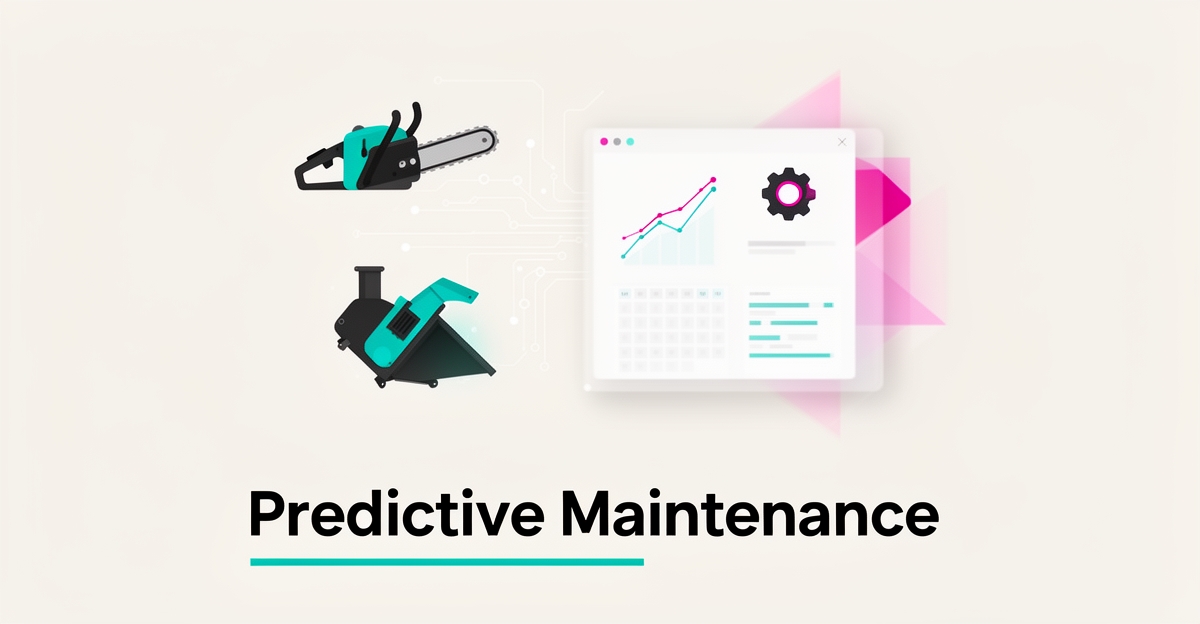
Tree service businesses rely on chainsaws, chippers, and trucks that face constant wear from demanding field conditions, making unexpected failures a major operational risk. AI-driven predictive maintenance transforms how these assets are monitored by shifting from fixed schedules or reactive repairs to condition-based interventions that anticipate issues before they cause downtime. This approach uses real-time data to optimize service timing, reduce emergency breakdowns, and extend the useful life of critical equipment.
The workflow begins with IoT sensors attached to machinery that continuously collect operational data such as vibration patterns, engine temperature, runtime hours, and hydraulic pressure. This data streams into a centralized system where it is cleaned, aggregated, and prepared for analysis, often integrated with existing field service or asset management platforms. AI models then process this information to detect subtle anomalies and degradation trends that precede mechanical failure, learning from historical patterns to improve accuracy over time. As the system evolves, it generates failure predictions and recommends optimal maintenance windows based on urgency, technician availability, and job schedules.
These capabilities translate directly to tree service operations, where anticipating a chipper blade failure or truck hydraulic issue can prevent costly delays during peak seasons. By servicing equipment only when data indicates genuine need, businesses avoid unnecessary part replacements and labor, cutting repair costs while improving asset longevity. AIQ Labs builds systems that automate this entire workflow, from sensor data ingestion to intelligent scheduling, enabling tree service companies to maintain peak equipment readiness with minimal manual oversight.
From Data to Dispatch: Building an AI Maintenance System That Fits Tree Operations
For tree service businesses, the path to AI-powered maintenance begins with a clear assessment of where equipment failures cause the most disruption. This readiness evaluation examines current maintenance logs, identifies high-failure assets like chippers or bucket trucks, and maps existing data streams to pinpoint gaps in sensor coverage or data quality. Without this foundation, even the most advanced AI model will struggle to deliver reliable predictions, as poor data integrity directly undermines the entire system. Predictive maintenance is an interdependent challenge requiring alignment of data, models, and human judgment, misalignment at any stage can compromise accuracy and lead to costly errors.
The next step involves deploying IoT sensors to capture real-time operational data such as vibration, temperature, and engine hours from equipment. For legacy machinery lacking built-in telemetry, retrofit sensors and middleware offer a practical solution, translating analog signals into digital inputs that feed into centralized data pipelines. These pipelines clean, aggregate, and normalize data from multiple sources, including equipment logs and repair histories, preparing it for AI analysis. Once data flows are stable, businesses can pilot the system on a small set of high-risk assets, allowing technicians to validate AI-generated maintenance suggestions against real-world outcomes. This iterative refinement builds trust and improves model accuracy, addressing workforce adoption concerns by demonstrating tangible value early in the process.
Scaling the system across the fleet requires ongoing attention to data quality, model generalization, and human-AI collaboration. AI models trained on limited or noisy data may fail to generalize to diverse equipment types or operating conditions, increasing the risk of false alarms or missed failures. To counter this, continuous learning cycles, where the AI updates its predictions based on actual maintenance outcomes, help refine accuracy over time. Crucially, the system should augment, not replace, technician expertise; human oversight ensures that AI recommendations are contextualized with on-the-ground experience. This kind of collaboration reduces repetitive work, increases accuracy, and frees skilled workers for higher-value tasks, directly benefiting tree service teams facing labor shortages and rising service expectations. AIQ Labs builds these systems in phases with [milestone-based delivery](/pricing), so you see working software at each step and own the final system outright, turning equipment data into dispatch confidence.
Why Custom AI Beats Off-the-Shelf for Field Service Teams
Off-the-shelf AI tools often fail field service teams because they can't adapt to the unique rhythms of tree service work, where equipment faces unpredictable terrain, weather, and usage patterns. Custom AI, however, is built around your specific workflows, learning from your actual chainsaw runtime, chipper vibration data, and bucket truck hours to predict maintenance needs with precision. This tailored approach eliminates guesswork, ensuring service happens only when truly needed, which directly cuts unnecessary labor and parts costs.
A key advantage of custom AI is true ownership, unlike subscription-based platforms that lock you into rigid features and ongoing fees, AIQ Labs builds systems you fully control, integrating seamlessly with your existing logs and dispatch tools without vendor dependency. This means your AI evolves with your business, not the other way around. For example, by analyzing real-time sensor data on engine temperature and usage, AI can extend tool life by preventing overuse, a critical benefit when replacement costs for specialized arborist equipment run high.
Custom AI keeps improving with your data. It continuously learns from your equipment's unique wear patterns, reducing false alarms and refining schedules over time. Unlike generic tools that require you to change your processes to fit the software, custom AI adapts to you, turning maintenance from a reactive scramble into a proactive, data-driven advantage that keeps crews working and equipment running longer.
To explore how a custom-built AI system can transform your equipment maintenance without lock-in or complexity, start with AIQ Labs' [2-minute Fit Check](/apply) and a free strategy call to map your specific opportunities.
Still paying for 10+ subscriptions that don’t talk to each other?
We build custom AI systems you own outright. No vendor lock-in. Full control.
Not sure where to start? Ask our AI planner
Frequently Asked Questions
Will AI predictive maintenance actually work for chainsaws, chippers and bucket trucks?
How much downtime can we realistically avoid with AI maintenance?
Isn't AI maintenance expensive compared to just fixing things when they break?
Do we need new equipment to get started with predictive maintenance?
What if our technicians don't trust AI recommendations?
Can a custom AI system integrate with the tools we already use?
Turn Equipment Uptime into Your Competitive Edge
AI-powered predictive maintenance shifts tree service operations from reactive scrambles to proactive readiness, using sensor data and intelligent scheduling to prevent breakdowns before they happen. By aligning service with actual equipment wear, not arbitrary timelines, businesses reduce emergency repairs, extend tool life, and keep crews productive during peak seasons. The result is lower costs, fewer disruptions, and a maintenance strategy that supports growth instead of hindering it. For tree service companies ready to move beyond guesswork, the first step is understanding where AI can deliver the biggest impact. Start with the [2-minute Fit Check](/apply), then a [free 30-minute strategy call](/book) to map your specific opportunities and see how a custom-built system can transform your equipment maintenance into a predictable advantage, no lock-in, no complexity, just clearer dispatch confidence and longer-lasting assets.
Make AI your competitive advantage — not just another tool.
Strategy, implementation and ongoing optimization. One partner, end to end.
Not sure where to start? Ask our AI planner