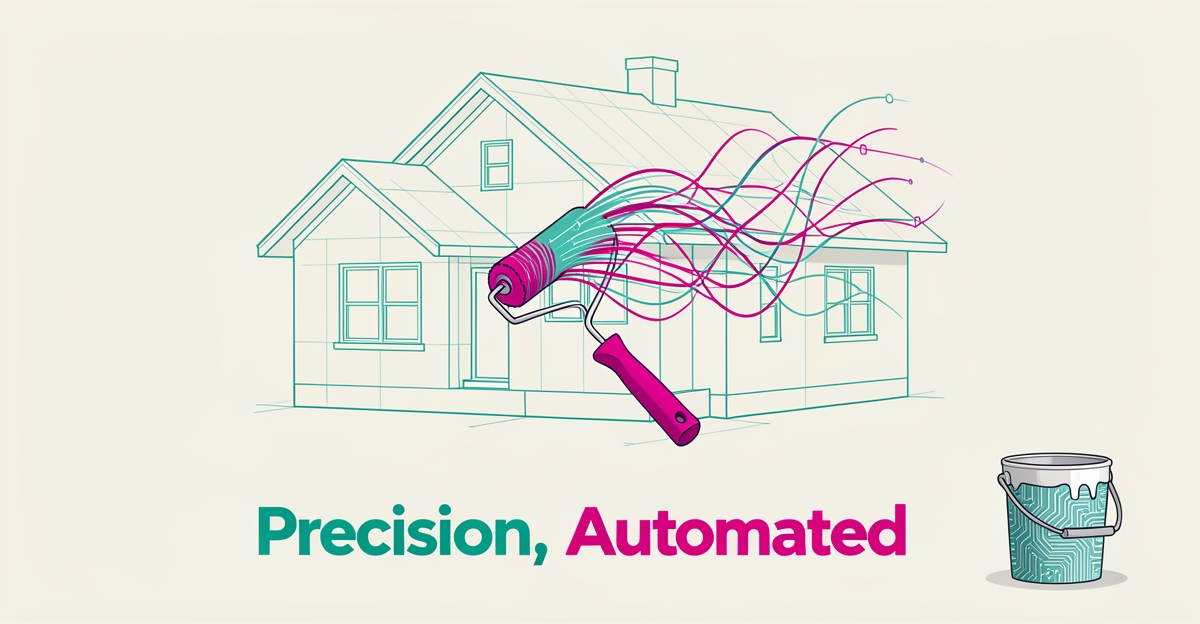
How AI Can Automate Estimate Generation for Painting Contractors, Without Losing Design Precision
Key Facts
- Generic AI often fails in professional services without domain-specific logic built in
- Task-specific models can be governed more tightly than general-purpose AI, with clear rules for what the model is allowed to do
- Human-in-the-loop validation keeps AI-generated estimates accurate and design-sensitive
- Most teams want tools that solve specific problems, not trillion-parameter models
- AI's practical value in estimating is better visibility, faster assessment and smarter prioritization, not replacing professional judgment
- Integration with existing CRM, project management and accounting systems beats rip-and-replace adoption
- Feedback loops from completed jobs turn contractor adjustments into a domain-specific training signal
Hire a team member that works 24/7 — for less than a part-time wage.
AI receptionists, SDRs, dispatchers and 99+ roles. Trained on your business, fully managed.
Not sure where to start? Ask our AI planner
Why AI Estimate Tools Fail Painting Contractors (And How to Fix It)
Many painting contractors hesitate to adopt AI for estimate generation, fearing it will oversimplify complex projects by ignoring design nuances and material interactions. This concern is valid, generic AI often fails in professional services without domain-specific logic. As of late 2026, many organizations are moving from AI experimentation into broader adoption, and the tools that struggle are the ones that lack context for complicated environments. When AI doesn't account for room-specific constraints like ceiling height, trim complexity, or surface preparation needs, estimates become inaccurate and erode trust.
The real issue isn't AI itself, but how it's implemented. Most teams aren't looking for trillion-parameter models, they want tools that solve specific problems in already complicated environments. For painting contractors, this means AI must be built with industry-specific logic, such as calculating paint absorption rates for different substrates, factoring in drying times between coats, or adjusting labor hours for intricate moldings. Without these constraints, AI treats every square foot the same, missing critical variables that affect both cost and timeline. Human oversight remains essential; AI should generate draft estimates for contractor review, not replace professional judgment.
To fix this, AI estimate tools need built-in validation protocols and feedback loops where contractors can refine outputs based on real-world results. AI's practical value lies in better visibility, faster assessment and smarter prioritization, not in eliminating human expertise. For example, AI can quickly process square footage, room type, and customer preferences to highlight potential challenges like moisture-prone walls or high-traffic areas needing durable finishes. Contractors then apply their knowledge to adjust for unseen conditions or client-specific design goals. This approach aligns with the shift away from broad "replace everything" strategies toward targeted automation that complements existing workflows. By focusing on task-specific models governed tightly, AI becomes a precision tool that enhances, rather than undermines, the contractor's role in delivering accurate, design-sensitive estimates. AIQ Labs rebuilds workflows like this with the domain expertise needed to avoid oversimplification while maintaining the efficiency gains contractors seek.
How Task-Specific AI Preserves Design Precision in Estimates
Many painting contractors worry that AI will oversimplify their craft, reducing detailed design work to generic calculations. In reality, task-specific AI systems built with industry-specific logic preserve the precision that defines quality painting estimates while automating repetitive tasks.
These systems process inputs like square footage, room type, surface conditions, and customer preferences through calibrated algorithms that mirror professional estimating practices. Rather than replacing human judgment, they handle the time-consuming math of material coverage, labor hours, and preparation work, allowing contractors to focus on design nuances and client consultations. AI's practical value lies in better visibility, faster assessment and smarter prioritization rather than attempting to fully automate complex decisions.
Task-specific models excel here because they operate within tightly defined parameters. For painting estimates, this means built-in constraints for factors like ceiling height, trim complexity, and surface preparation requirements that directly impact cost and timeline. Teams can define exactly what the model is allowed to do, where human approval is required and how changes move through existing controls. This controlled deployment prevents AI from making assumptions that could compromise design integrity.
AIQ Labs develops these systems using the same multi-agent frameworks behind its 200+ deployed systems and the four live SaaS products the company runs daily, ensuring estimates reflect real-world painting variables. The technology doesn't eliminate the contractor's expertise, it surfaces relevant data points faster, reduces calculation errors, and creates consistent baselines for discussion. When human oversight validates AI-generated outputs, the result is estimates that are both efficient and precise, maintaining the design integrity clients expect while freeing contractors to focus on what they do best: bringing vision to life through skilled application.
Implementing AI Estimate Generation with Human-in-the-Loop Validation
Adopting AI for estimates works best when contractors keep control of the final number. The technology handles repetitive calculations while humans validate design nuance and client-specific constraints.
Start by mapping the exact workflow you want AI to support. Define specific use cases for estimate generation focused on repetitive, time-consuming tasks rather than attempting full automation of complex decisions. This targeted approach mirrors how organizations are moving away from broad "replace everything" strategies and becoming more selective in what they automate.
Build industry-specific logic into the model from day one. Modern AI is strong at pattern recognition, reading layouts, extracting requirements and summarizing constraints quickly. For painting, that means embedding square footage calculations, room type multipliers, surface prep rules and customer preference parameters.
Integration beats replacement. Connect the estimate tool to existing CRM, project management and accounting systems so data flows without manual re-entry. AIQ Labs builds connected operating layers with industry-specific logic and design constraints, ensuring outputs respect practical realities of painting work rather than oversimplifying projects.
Human-in-the-loop validation protects precision and trust. AI-generated estimates require review before finalization, with clear escalation paths for edge cases.
A practical validation protocol includes:
- Automated first draft from project photos, measurements and preference forms
- Contractor review of material quantities, labor hours and design assumptions
- Client-facing summary with adjustable options for finishes and prep levels
- Feedback capture after job completion to refine future estimates
Governance keeps the system reliable. Teams can define exactly what the model is allowed to do, where human approval is required and how changes move through existing controls. This control is how you avoid turning a productivity tool into tomorrow morning's outage bridge.
Create feedback loops that improve accuracy over time. When contractors adjust an AI estimate, the system logs the change reason and outcome, building a domain-specific training signal. This continuous refinement delivers better visibility, faster assessment and smarter prioritization rather than magic automation.
Deploy task-specific models that can be controlled and governed more tightly than general-purpose AI. Most teams are not seeking trillion-parameter models but tools that help solve very specific problems in already complicated environments. If you'd rather have managed AI staff handle the intake, scheduling and follow-up around estimates, AIQ Labs' AI Employees cover 99+ roles at roughly 80% less cost than a human hire.
With validation protocols, workflow integration and ongoing feedback, contractors gain speed without losing design precision.
Still paying for 10+ subscriptions that don’t talk to each other?
We build custom AI systems you own outright. No vendor lock-in. Full control.
Not sure where to start? Ask our AI planner
Frequently Asked Questions
Will using AI for painting estimates make my estimates less accurate by ignoring design details?
How does AI actually help painting contractors save time on estimates without replacing their expertise?
What kind of human oversight is needed when using AI for painting estimates?
Can AI estimate tools integrate with the software I already use for my painting business?
Is AI for painting estimates just another generic tool that doesn't understand real-world painting challenges?
How do I know if an AI estimate tool is reliable and will improve over time?
Precision at Speed: Keep the Craft, Cut the Admin
AI doesn't have to flatten the craft of painting into a generic square-foot calculation. When estimate generation is built with task-specific logic, ceiling height, trim complexity, surface prep, drying times, and substrate absorption, AI handles the repetitive math while you keep control of design nuance and client judgment. The real win is better visibility, faster assessment and smarter prioritization, with human-in-the-loop validation protecting trust and accuracy. Start by mapping the exact repetitive steps you want automated, embed industry-specific rules from day one, and require contractor review before any estimate goes out. Pair that with feedback loops from completed jobs and integration into your existing CRM and accounting tools. If you're exploring how to automate estimates without losing precision, AIQ Labs can help map a practical path. Start the 2-minute Fit Check at https://aiqlabs.ai/apply for a free 30-minute strategy call to identify high-ROI automation opportunities for your business.
Make AI your competitive advantage — not just another tool.
Strategy, implementation and ongoing optimization. One partner, end to end.
Not sure where to start? Ask our AI planner