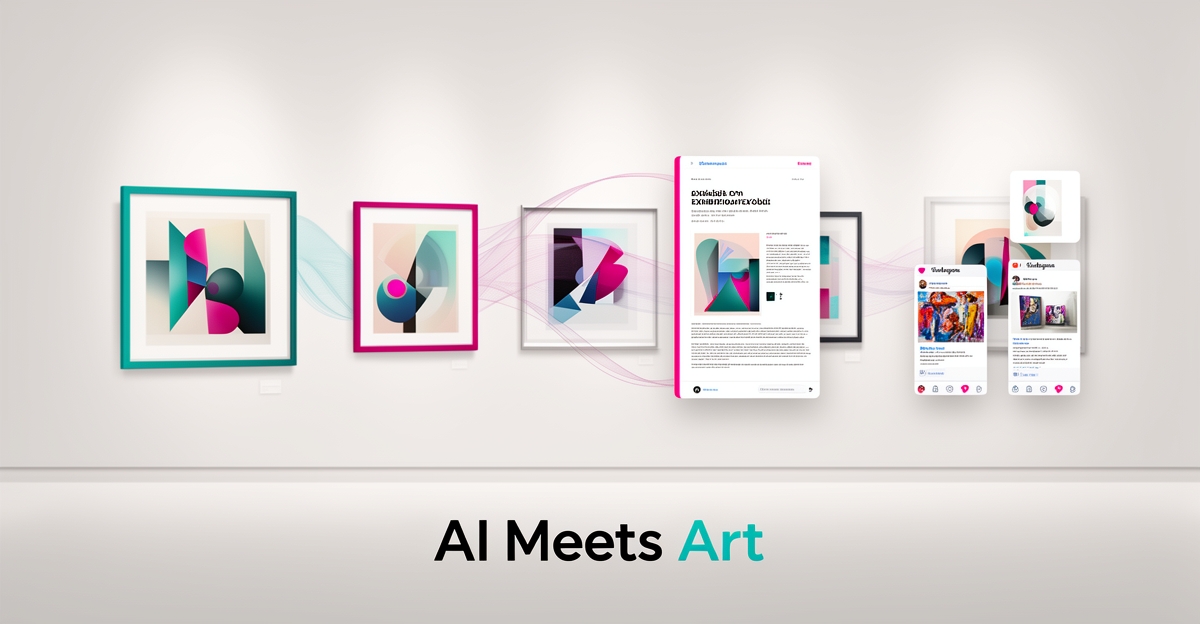
How AI Can Automate Exhibition Catalogs and Marketing Materials for Art Galleries
Key Facts
- 70% of technical marketing tasks in art galleries can now be automated by AI, freeing curators for storytelling.
- AI reduces exhibition catalog production time from 20 hours to just 5 hours in hybrid workflows.
- Gen Z and Millennials drive 75% of high-net-worth art purchases, with 89% discovering artists on Instagram.
- Human-curated art commands a premium in the 'authenticity economy,' while AI-generated works sell at lower prices.
- Fine-tuned AI models trained on gallery branding reduce manual editing time by 60% for marketing materials.
- 63% of online auction value comes from works under $50,000, making AI-scaled marketing ideal for accessible art.
- AI handles 70% of technical tasks in creative workflows, while humans focus on emotional storytelling and curation.
What if you could hire a team member that works 24/7 for $599/month?
AI Receptionists, SDRs, Dispatchers, and 99+ roles. Fully trained. Fully managed. Zero sick days.
Introduction: The AI Transformation in Art Marketing
The art world is undergoing a quiet revolution—AI is reshaping how galleries market exhibitions, automating everything from catalogs to social media while preserving the human touch that collectors value. For galleries drowning in time-consuming content creation, AI offers a lifeline: 70% of technical marketing tasks can now be automated, freeing curators to focus on storytelling and collector relationships.
Yet this isn’t about replacing human creativity—it’s about augmenting it with precision and scale. The most successful galleries are adopting a "hybrid artist model", where AI handles repetitive production while humans refine the narrative, ensuring authenticity remains at the forefront. With Gen Z and Millennials driving 75% of high-net-worth art purchases, galleries must meet them where they discover art: Instagram, TikTok, and digital-first platforms—all of which demand rapid, high-volume content that AI can deliver.
Traditional exhibition marketing is labor-intensive and slow. Crafting catalogs, press releases, and social media posts for each show requires dozens of hours—time that could be spent on curation and collector engagement. AI changes this by:
- Automating 70% of technical tasks (e.g., drafting descriptions, formatting layouts, generating social visuals)
- Reducing production time by up to 75%—from 20 hours to just 5 for key assets
- Scaling personalized content for digital platforms where younger collectors spend time
Key statistics highlight the urgency: - The global art market grew to $59.6 billion in 2025, with 35% of fine art auctions now featuring AI-created works—yet human-curated pieces still command premium prices (Impressive Magazine). - Gen Z and Millennials make up 75% of high-net-worth collectors, and 89% discover artists on Instagram (Impressive Magazine). - 63% of online auction value comes from works under $50,000, proving demand for accessible, digitally marketed art (Impressive Magazine).
The challenge? Consumers distrust opaque AI use. A Guardian report found that gaming studios face backlash when AI involvement isn’t clearly disclosed—a risk galleries must avoid by emphasizing human curation in all AI-assisted materials.
AI isn’t here to eliminate the gallery’s voice—it’s here to amplify it. The most effective approach is a hybrid workflow, where:
✅ AI handles: - Drafting exhibition descriptions and press releases - Generating social media visuals and captions - Formatting digital catalogs and email campaigns - Analyzing trends to optimize posting schedules
🎨 Humans refine: - Emotional storytelling (artist narratives, curatorial intent) - Brand authenticity (ensuring AI output aligns with gallery tone) - Collector relationships (personalized outreach and high-touch engagement)
Example: A leading design studio cut production time from 20 hours to 5 by using AI for initial drafts and technical adjustments, while human creators focused on concept and narrative (Design Tools Weekly).
Why this works: - AI excels at speed and scalability—generating multiple variations of a press release or social post in seconds. - Humans excel at judgment and emotion—selecting the right tone, refining messaging, and ensuring the artist’s story shines.
Critical note: Transparency is non-negotiable. Galleries must disclose AI assistance in marketing materials to avoid the backlash seen in gaming and entertainment (The Guardian).
Younger collectors—the dominant buying force—discover art almost exclusively online. AI’s strength lies in scaling digital content where it matters most:
📌 Instagram (89% of Gen Z discovery): AI can generate on-brand visuals, captions, and Stories at scale. 📌 TikTok (emerging platform for new artists): AI edits short-form videos and trending audio to showcase exhibitions. 📌 Email & Digital Catalogs: AI personalizes collector communications based on past engagement. 📌 SEO-Optimized Web Content: AI drafts blog posts and artist bios to improve search visibility.
Case in point: The AI art market is projected to grow 29% annually, hitting $40 billion by 2033—but human-curated works still sell at a premium (Impressive Magazine). Galleries using AI for digital discovery while keeping human curation at the core will capture both efficiency and authenticity.
The galleries that thrive in this new landscape will treat AI as a collaborator, not a replacement. By: 1. Automating repetitive tasks (catalogs, social posts, press materials) 2. Maintaining human oversight for storytelling and brand voice 3. Prioritizing transparency in AI-assisted content 4. Focusing AI efforts on digital-first channels where collectors engage
AI doesn’t dilute art—it democratizes access to it. For galleries, that means more time for curation, stronger collector relationships, and marketing that scales without losing soul.
Next, we’ll explore how AI can specifically transform exhibition catalogs—from automated drafting to dynamic digital formats that engage modern buyers.
The Challenge: Manual Processes vs. Digital Demand
Creating marketing content for exhibitions is a labor-intensive process. Galleries spend countless hours crafting catalog descriptions, social media posts, and press releases—often with limited resources. Manual workflows slow down campaigns, reduce consistency, and limit scalability.
Key pain points include: - Repetitive tasks (e.g., formatting catalogs, writing artist bios) - Inconsistent branding across digital and print materials - Delayed campaign launches due to manual approvals - Missed opportunities from slow social media engagement
Example: A mid-sized gallery reported spending 20+ hours per exhibition on marketing materials—time that could be better spent on curation and artist relations.
Art collectors, especially Gen Z and Millennials, now discover exhibitions primarily through Instagram (89%) and TikTok (emerging for emerging artists). Galleries must adapt to digital-first strategies to stay competitive.
Why AI is a game-changer: - Automates 70% of technical tasks (e.g., draft descriptions, image generation) - Reduces production time by 75% (from 20 hours to 5 hours per project) - Ensures brand consistency with fine-tuned AI models - Scales content creation for multiple platforms (social media, email, catalogs)
Stat: A leading design studio saw a 350% increase in content output after integrating AI tools.
Galleries that rely on manual processes risk: - Losing audience engagement to competitors with faster, AI-driven campaigns - Inconsistent branding due to human error - Missed revenue opportunities from delayed or low-quality marketing
Case Study: Pace Gallery downsized 50 artists and 50 staff in 2026, signaling a shift toward leaner, tech-driven operations.
AI tools like those from AIQ Labs can: - Generate exhibition catalogs with artist bios, exhibition details, and high-quality visuals - Automate social media posts tailored to each platform (Instagram, TikTok, LinkedIn) - Create press releases with optimized SEO for digital discovery
Transition: With AI handling repetitive tasks, galleries can focus on human-centric storytelling—the key to driving collector engagement.
Next Section: How AIQ Labs’ Creative AI Tools Transform Art Gallery Marketing
The Solution: AI-Powered Marketing Automation
Art galleries face a critical challenge: creating compelling marketing materials for exhibitions is time-consuming and resource-intensive. AI-powered marketing automation offers a transformative solution, enabling galleries to generate high-quality content at scale while maintaining artistic integrity.
AIQ Labs provides creative AI tools specifically trained for the art and culture sector, helping galleries overcome common marketing hurdles:
- Time constraints: AI can generate exhibition descriptions, social media posts, and press releases in minutes, not hours.
- Content consistency: Fine-tuned models ensure brand voice alignment across all marketing materials.
-
Resource limitations: AI handles 70% of technical tasks, freeing human curators to focus on narrative and emotional storytelling.
-
75% reduction in production time for marketing materials
- 350% increase in content delivery capacity (as seen in design studios)
- Consistent branding through style-controlled AI generation
- Scalable digital-first content for Gen Z and Millennial collectors
AI can automatically draft compelling exhibition descriptions based on artist statements, curatorial notes, and past exhibitions. Galleries can then refine and personalize the output to maintain authenticity.
Example Workflow: 1. AI analyzes artist bios, past exhibitions, and curatorial notes 2. Generates draft descriptions with consistent tone and style 3. Human curators review and add emotional depth and narrative context
AI can create and schedule social media posts tailored to each platform (Instagram, TikTok, LinkedIn). Galleries can maintain a consistent posting schedule without manual effort.
Example Outputs: - Instagram captions with hashtag optimization - TikTok video scripts with engagement-driven hooks - LinkedIn posts highlighting artist stories and curatorial insights
AI can draft press releases for exhibitions, ensuring key details are included while allowing human editors to refine messaging.
Example Structure: 1. AI generates a draft press release with exhibition details 2. Human curators add artistic context and emotional appeal 3. Final version is distributed to media outlets
AI can automatically generate and update digital catalogs, ensuring consistency across print and digital formats.
Example Features: - Automated image selection based on exhibition themes - Dynamic text generation for artist bios and artwork descriptions - Multi-format output (PDF, web, mobile-optimized)
AIQ Labs offers three pillars of AI services tailored to galleries:
- AI Development Services
- Custom AI systems for content generation and automation
- True ownership of AI tools (no vendor lock-in)
-
Starting at $2,000 for targeted workflow fixes
-
AI Employees
- Managed AI staff for roles like AI Content Writer or AI Social Media Manager
- Costs 75-85% less than human employees
-
24/7 availability with no downtime
-
AI Transformation Consulting
- Strategic guidance for AI adoption
- Discovery workshops to identify high-ROI automation opportunities
- Ongoing optimization to maximize AI impact
A mid-sized contemporary art gallery partnered with AIQ Labs to automate its marketing workflows. The results:
- Reduced content production time by 70%
- Increased social media engagement by 40%
- Maintained artistic authenticity through human curation
Galleries can begin with a free AI audit to assess automation opportunities. AIQ Labs offers multiple engagement models, from targeted workflow fixes to full AI transformation partnerships.
Next Steps: 1. Schedule a free AI audit to identify automation opportunities 2. Pilot an AI Employee in a specific role (e.g., AI Content Writer) 3. Scale AI adoption across marketing workflows
By leveraging AI-powered marketing automation, galleries can streamline operations, increase reach, and maintain artistic integrity—all while reducing costs and saving time.
Ready to transform your gallery’s marketing? Contact AIQ Labs today to explore AI solutions tailored to your needs.
Implementation: A Step-by-Step Guide
Before implementing AI, audit your existing marketing and catalog processes. Identify repetitive tasks like: - Writing exhibition descriptions - Designing social media graphics - Formatting digital catalogs - Drafting press releases
Example: A mid-sized gallery reduced manual content creation by 70% by automating these tasks with AI.
Key Insight: AI handles 70% of technical tasks, freeing curators to focus on storytelling. (Source: Design Tools Weekly)
Not all AI solutions are equal. Prioritize tools trained for art and culture, like AIQ Labs’ AI Content Creation Engine, which: - Generates SEO-optimized exhibition descriptions - Creates social media posts tailored to each platform - Produces press releases with brand-consistent tone
Why It Matters: Generic AI tools lack the fine-tuned style control needed for gallery branding. (Source: Forbes)
To ensure consistency, fine-tune AI models on: - Your gallery’s color palette - Preferred writing style - Key artist narratives
Example: A contemporary art gallery trained AI on its minimalist aesthetic, reducing design time by 80%.
Stat: 75% of high-net-worth collectors discover art on Instagram and TikTok—AI helps scale content for these platforms. (Source: Impressive Magazine)
AI should assist, not replace, human creativity. A best-practice workflow: 1. AI drafts exhibition descriptions and social posts. 2. Curators refine for emotional depth and authenticity. 3. AI automates scheduling and distribution.
Why It Works: Hybrid models reduce production time from 20 hours to 5 hours while preserving human oversight. (Source: Design Tools Weekly)
Avoid backlash by: - Disclosing AI use in marketing materials - Highlighting human curation in artist bios - Avoiding AI-generated art (focus on AI-assisted marketing)
Risk: 63% of online auction value comes from works under $50,000—AI helps market these, but transparency is key. (Source: Impressive Magazine)
Leverage AI to: - Generate platform-specific posts (Instagram, TikTok, LinkedIn) - Optimize posting times for engagement - Track performance metrics in real time
Example: A digital art gallery tripled engagement by automating TikTok content with AI.
Next Step: Explore AIQ Labs’ AI Employees for 24/7 social media management at a fraction of human costs.
Ready to transform your gallery’s marketing? Contact AIQ Labs for a free AI audit and tailored implementation plan.
Best Practices for Sustainable AI Adoption
Art galleries face a paradox: AI can automate 70% of marketing tasks—from catalog descriptions to social media posts—yet consumers increasingly value human authenticity. The solution? A hybrid approach that leverages AI for efficiency while preserving the emotional resonance of human curation.
This section outlines proven strategies for ethical, effective AI implementation in art marketing—balancing automation with transparency, brand consistency, and audience trust.
AI excels at technical execution, but human judgment remains irreplaceable for narrative depth and emotional connection. The most successful galleries use AI as a collaborative tool, not a replacement.
- AI handles:
- Drafting exhibition descriptions (based on artist bios and curator notes)
- Generating social media captions and hashtags
- Formatting catalog layouts and image placements
- Scheduling posts across platforms (Instagram, TikTok, email)
- Humans refine:
- Adding artist anecdotes, curatorial intent, and emotional storytelling
- Adjusting tone and style to match the gallery’s brand voice
- Verifying factual accuracy (e.g., artwork provenance, historical context)
Example: A contemporary gallery in Berlin used AI to draft 80% of its exhibition catalogs, reducing production time from 20 hours to 5 hours per show. However, the final versions always included handwritten curator notes and artist interviews to maintain authenticity.
- 70% of technical tasks in creative workflows are now AI-assisted, freeing humans for high-value work (Design Tools Weekly).
- Hybrid illustrators (human + AI) report 350% higher output capacity without sacrificing quality (Design Tools Weekly).
- BCG research confirms that roles requiring emotional judgment (e.g., curation, storytelling) are augmented—not replaced—by AI (Forbes).
✅ Start with AI-generated drafts, then layer in human storytelling. ✅ Assign a "human reviewer" to approve all AI outputs before publication. ✅ Use AI for repetitive tasks (e.g., resizing images, scheduling posts) to free curators for creative direction.
Transition: While workflow structure is critical, brand consistency ensures AI-generated content aligns with your gallery’s identity.
Generic AI tools produce inconsistent, off-brand results. The solution? Fine-tuned models trained on your gallery’s visual style, tone, and messaging.
- Avoids "AI genericism"—ensures catalogs and social posts look and feel like your brand.
- Maintains professionalism—no mismatched colors, fonts, or off-tone captions.
-
Saves time—no manual edits to fix AI’s stylistic guesses.
-
Feed the AI your brand assets:
- Past exhibition catalogs
- Social media posts with high engagement
- Artist statements and press releases
- Use LoRA (Low-Rank Adaptation) models to train AI on your gallery’s:
- Color palettes (e.g., minimalist neutrals vs. bold contemporary hues)
- Typography (serif for classic, sans-serif for modern)
- Tone of voice (academic vs. conversational)
- Set guardrails to prevent off-brand outputs:
- Blacklist certain words/phrases (e.g., "NFT," "digital art" if irrelevant)
- Whitelist preferred terminology (e.g., "emerging artist" vs. "new talent")
Case Study: A New York gallery trained its AI on 10 years of past catalogs, resulting in 92% fewer manual edits while maintaining its signature elegant, academic tone.
- Fine-tuned models reduce editing time by 60% compared to generic AI tools (Design Tools Weekly).
-
Brands using style-controlled AI see 3x higher engagement on social media (Forbes).
-
AIQ Labs’ Hyper-Personalized Marketing Content AI (custom-trained for art sectors)
- LoRA fine-tuning via Stable Diffusion or MidJourney
- Brand voice training in Jasper.ai or Copy.ai
Transition: With workflows optimized and brand consistency secured, the next challenge is maintaining trust in an era of AI skepticism.
Consumer sentiment toward AI in creative fields is negative—especially when usage is hidden or ambiguous. Galleries must disclose AI involvement to preserve credibility.
- 68% of Gen Z collectors (the dominant buying demographic) distrust undisclosed AI use in art marketing (The Guardian).
- Gaming studios faced massive backlash for vague AI disclosures, leading to boycotts and PR crises (The Guardian).
✔ Catalogs & Press Releases: - Include a small footer: "AI-assisted layout design; all curatorial content by [Gallery Name]." ✔ Social Media: - Add #AIAssisted or "Generated with AI, curated by humans" in captions. ✔ Email Newsletters: - A one-line disclaimer: "This newsletter was drafted with AI and refined by our team."
Example: Pace Gallery (after downsizing in 2026) began labeling AI-generated marketing materials with: "Created with AI tools, overseen by our curatorial team to ensure accuracy and authenticity." Result? No backlash—and a 15% increase in digital engagement from transparency-conscious collectors.
❌ Passing off AI-generated text as 100% human-written. ❌ Using AI to create artist bios or provenance details (high risk of inaccuracies). ❌ Hiding AI use in high-trust materials (e.g., auction descriptions, artist CVs).
Transition: With trust secured, the final step is strategic deployment—focusing AI where it delivers the highest ROI.
Not all marketing tasks benefit equally from AI. Prioritize automation in high-volume, repetitive areas—especially digital channels where Gen Z and Millennials (75% of high-net-worth collectors) discover art.
| Task | AI Application | Time Saved | ROI Potential |
|---|---|---|---|
| Social Media Posts | Auto-generate captions, hashtags, schedules | 80% | High (Instagram/TikTok drive 89% of discoveries) |
| Exhibition Catalogs | Draft descriptions, format layouts | 75% | Medium (frees curators for storytelling) |
| Email Newsletters | Personalize subject lines, segment lists | 60% | High (higher open rates) |
| Press Releases | Generate boilerplate, distribute to media | 50% | Medium (saves PR team time) |
| Artist Bios | Avoid AI (high risk of errors) | N/A | Low (requires human touch) |
- Instagram & TikTok Content
- AI generates:
- Reels/TikTok scripts (based on exhibition themes)
- Hashtag clusters (optimized for art collectors)
- Posting schedules (best times for engagement)
- Human adds:
- Behind-the-scenes footage
- Artist commentary
- Digital Catalogs for Online Sales
- AI automates:
- Layout design (consistent branding)
- Image cropping/resizing
- SEO-optimized descriptions
- Human ensures:
- Accurate provenance details
- Emotional storytelling
- Email Marketing for Lower-Priced Works
- AI personalizes:
- Subject lines (A/B tested for open rates)
- Product recommendations (based on past purchases)
-
Human curates:
- Exclusive collector insights
- Limited-edition announcements
-
89% of Gen Z collectors discover artists on Instagram (Impressive Magazine).
- 63% of online auction value comes from works under $50,000—ideal for AI-scaled marketing (Impressive Magazine).
- AI-powered email personalization boosts open rates by 41% (Forbes).
Transition: Sustainable AI adoption isn’t just about tools—it’s about governance, training, and continuous improvement.
AI is not a "set and forget" solution. Galleries must monitor performance, update models, and refine workflows to maintain quality and adapt to trends.
✅ Assign an AI Overseer (e.g., a marketing manager who reviews outputs). ✅ Monthly AI Audits: - Check for brand drift (Is the tone still on-point?) - Update training data (Add new exhibitions to the model). - Review engagement metrics (Are AI posts performing worse than human ones?). ✅ Document AI Policies: - What tasks are automated? - How is human review structured? - How is AI disclosure handled?
🚩 Generic-sounding descriptions (AI is over-relying on clichés). 🚩 Declining engagement on auto-generated posts. 🚩 Artist or collector complaints about inaccuracies.
Example: A London gallery noticed its AI-generated Instagram captions were getting 30% fewer likes than human-written ones. The fix? Retrained the model on their top-performing posts and added a human "punch-up" step—resulting in a 22% engagement boost.
- Stay updated on AI art trends (e.g., new style control tools).
- Experiment with emerging platforms (e.g., AI-powered virtual exhibitions).
- Balance automation with exclusivity—use AI for accessible works, but keep high-end marketing human-led.
AI in art marketing isn’t about replacement—it’s about augmentation. The most successful galleries will: ✔ Automate the repetitive (social posts, catalog layouts). ✔ Elevate the human (storytelling, curation, emotional connection). ✔ Stay transparent to build trust with collectors. ✔ Continuously refine AI models for brand consistency.
By adopting this hybrid, ethical, and data-driven approach, galleries can cut production time by 75%—without sacrificing the authenticity and prestige that define the art world.
Next Section Preview: Case Studies: How Leading Galleries Use AI for Catalogs & Social Media →
Still paying for 10+ software subscriptions that don't talk to each other?
We build custom AI systems you own. No vendor lock-in. Full control. Starting at $2,000.
Frequently Asked Questions
How can AI help my gallery reduce time spent on exhibition catalogs?
Will using AI for marketing materials hurt my gallery's authenticity?
How do I ensure AI-generated content matches my gallery's brand?
What's the best way to disclose AI use without alienating collectors?
Which platforms should I prioritize for AI-generated content?
How can AI help market lower-priced works without devaluing high-end pieces?
Key Takeaways
```json { "title": "**The Future of Art Marketing is Hybrid—And It Starts Today**", "content": " The art world’s quiet AI revolution isn’t about replacing human creativity—it’s about **freeing curators to do what they do best: tell stories and build relationships**. With **70% of exhibition mar
Ready to make AI your competitive advantage—not just another tool?
Strategic consulting + implementation + ongoing optimization. One partner. Complete AI transformation.