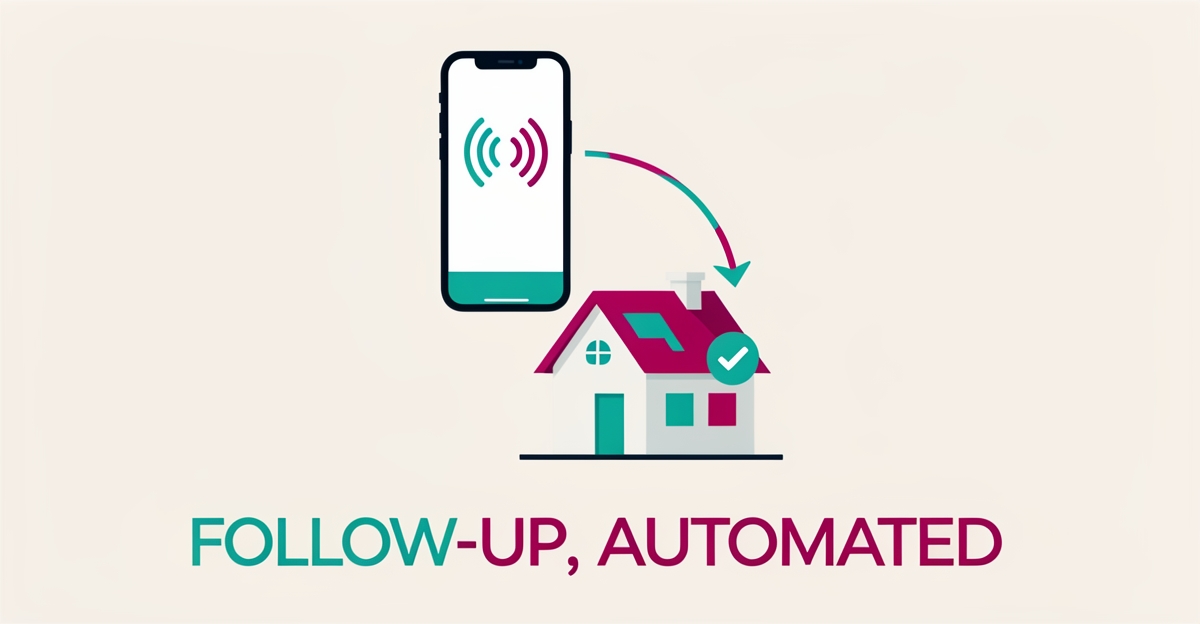
How AI Can Automate Follow-Up Calls After Home Repair Jobs Are Completed
Key Facts
- AI is expected to handle 95% of customer interactions in the future according to industry research
- 78% of businesses already use AI in at least one business function
- 70% of AI use cases can be solved with simple workflow patterns like Prompt Chaining or Routing
- Most clients for an AI analytics platform are implemented in around 2 weeks and start seeing actionable insights within the first few weeks
- One client (Dyno-Rod) doubled their online revenue within three months by optimizing spend based on AI-driven insights
Hire a team member that works 24/7 — for less than a part-time wage.
AI receptionists, SDRs, dispatchers and 99+ roles. Trained on your business, fully managed.
Not sure where to start? Ask our AI planner
Introduction
Picture this: a plumbing crew finishes a water heater replacement at 4 p.m., and by the next morning, every single customer from that day has received a friendly call asking how everything went. No staff member dialed a single number. This is what AI-powered follow-up automation makes possible for home repair businesses, and it's rapidly becoming the standard rather than the exception.
The timing matters. According to research on AI in customer service, 78% of businesses already use AI in at least one business function, and AI is expected to handle 95% of customer interactions in the future. For trades businesses that live on repeat work and referrals, the follow-up call after a completed job is one of the highest-leverage touchpoints, and historically one of the most neglected.
The reason it gets neglected is simple: manual follow-up doesn't scale. A technician or office manager can only make so many courtesy calls between dispatching jobs and processing invoices. An AI agent changes that equation entirely. As one guide to AI agent workflows explains, an AI agent is "autonomous software that understands your goal, plans the steps, uses tools/APIs, and learns from feedback to finish the job with minimal supervision." In practical terms, that means an agent can detect when a job is marked complete in your scheduling system, place a natural-sounding call, ask about service quality, offer a maintenance tip, and even book the next appointment, all without adding staff.
What a well-built follow-up system can do:
- Call every customer automatically within hours of job completion, not days or weeks
- Personalize each conversation using job details from your CRM, so the call never feels generic
- Route problems immediately, a customer reporting an unresolved issue gets escalated to a human, not a survey
- Offer relevant maintenance tips and suggest future services based on job history
- Capture call transcripts and sentiment data automatically, building a record no manual note-taker could match
The shift here is from reactive to proactive customer engagement. Instead of waiting for a customer to call with a complaint, or worse, silently leaving a bad review, the business reaches out first. That proactive posture is what turns one-time repair jobs into long-term service relationships.
This is exactly the problem space where companies like AIQ Labs operate, deploying outbound AI agents that handle timely, personalized follow-up without requiring any staff time. The playbook, as practitioners put it, isn't "AI everything", it's "automate what matters." For a home repair business, few things matter more than the moment right after the job is done.
In the sections that follow, we'll break down how these systems actually work, what the technology looks like under the hood, and how to implement one without over-engineering it.
Key Concepts
Automated follow-up calls turn a manual, often skipped step into a scalable loyalty engine for home repair businesses. Instead of waiting for complaints, AI initiates contact right after job completion to check quality, capture feedback, and create the next opportunity.
The shift is from reactive to proactive service. Nextiva research shows that when companies integrate AI into customer service, they move from reactive problem-solving to a proactive service model where each interaction aims for the fastest possible resolution. For trades, that means calling within 24 hours of a completed job while the experience is fresh.
An AI agent is the engine behind this automation. Unlike a simple chatbot, an AI agent is autonomous software that understands your goal, plans the steps, uses tools/APIs, and learns from feedback to finish the job with minimal supervision. It can trigger on a "job complete" status in a CRM, personalize the conversation with job details, and route issues to humans when needed.
Workflow patterns keep the system reliable and simple. LinkedIn’s guide to autonomous AI agents notes that 70% of AI use cases can be solved with simple workflow patterns like Prompt Chaining or Routing. For follow-ups, chaining handles the sequential steps, greet, check quality, offer tip, while routing classifies intent and sends problems to a technician or manager.
Data integration is non-negotiable. The agent must connect to CRM, scheduling, and phone systems to access customer name, job history, and completion time. The autoMate project demonstrates this principle by integrating with 31 SaaS platforms including HubSpot and providing tools for notes, files, and reminders behind the chat.
Personalization drives acceptance and revenue. AI customer service analysis finds that AI tools analyze extensive customer data like past interactions, purchase history, and preferences, enabling hyper-personalized experiences. A home repair agent can reference the specific service performed and suggest relevant maintenance.
Key capabilities that make follow-up calls work:
- Trigger-based calling tied to job completion status in the scheduling system
- Personalized dialogue using job details, technician name, and service date
- Intent routing to positive feedback, maintenance offer, or service issue workflows
- Automatic CRM logging of sentiment, outcomes, and next steps
Business adoption is already mainstream. Industry data shows 78% of businesses already use AI in at least one business function, and AI is expected to handle 95% of customer interactions in the future. AIQ Labs deploys outbound AI agents for home services that build customer loyalty through timely, personalized engagement without requiring staff, aligning with [AI Employees](/ai-employees) for service quality checks and future job scheduling.
Guardrails keep the human touch intact. The system should identify as AI, escalate major problems immediately, and log every interaction for weekly review to tighten prompts and policies. Start simple and add complexity only when the problem demands it is the core practice for sustainable automation.
Best Practices
Automated follow-ups only work when the call feels timely, relevant, and safe to escalate. Home repair teams that treat the post-job call as a proactive loyalty moment, not a checkbox, see higher retention and more repeat bookings.
Start with a simple trigger and a clear success criteria. Pick one repeatable workflow such as calling every customer 24 hours after a job is marked complete to check service quality. Map the process into sequential steps that depend on the previous answer, which is where prompt chaining and routing patterns deliver the most value. 70% of AI use cases can be solved with simple workflow patterns like Prompt Chaining or Routing, so start simple and add complexity only when the problem demands it.
Design the agent to personalize with real job data and act, not just talk. An AI agent is autonomous software that understands your goal, plans the steps, uses tools/APIs, and learns from feedback to finish the job with minimal supervision. The agent should access CRM and scheduling data to reference the specific repair, offer a relevant maintenance tip, and suggest a future service. This moves service from reactive problem-solving to a proactive service model where each interaction aims for the fastest possible resolution.
Keep humans in the loop for trust and compliance. Set guardrails for autonomy versus human approval, for example immediately transfer the call to a human manager if a major problem is reported. Log every interaction and review weekly to tighten prompts, memory, and policies. This approach mirrors how AIQ Labs deploys outbound AI agents that build customer loyalty through timely, personalized engagement without requiring staff.
Build integration before scale. The agent needs connections to CRM, phone system, calendar, and knowledge base so it can update records and schedule jobs mid-call. 78% of businesses already use AI in at least one business function, and AI is expected to handle 95% of customer interactions in the future, making seamless tool integration essential for adoption.
Best practices to implement now:
- Trigger calls from job completion status in your scheduling or CRM to ensure timing is relevant.
- Personalize the opening with job details, technician name, and service performed for instant recognition.
- Use routing to classify intent and chain steps for quality check, tip delivery, and future booking.
- Define escalation rules for complaints, safety issues, or requests beyond the agent’s authority.
- Capture transcripts, sentiment, and outcomes automatically for continuous improvement.
Maintain a consistent brand voice and clear AI identification. Customers accept automation when it delivers value and offers a clear path to a human. With proper guardrails, the follow-up becomes a revenue driver rather than a cost center.
Implementation
Automating post-job follow-ups starts with treating the call as a repeatable workflow, not an ad-hoc courtesy. Home repair teams can trigger outreach the moment a job closes and let an AI agent handle the conversation end-to-end while capturing data for the business.
Map the job-complete signal to an outbound call within 24 hours. The agent pulls CRM and scheduling data so the greeting references the actual work, e.g., “We replaced your water heater on Tuesday.” That personalization is the foundation of proactive service, moving from reactive problem-solving to a proactive service model where each interaction aims for the fastest possible resolution. AI customer service guidance notes this shift is central to loyalty.
Design the call as a simple, chained workflow first. Start simple and add complexity only when the problem demands it, because 70% of AI use cases can be solved with simple workflow patterns like Prompt Chaining or Routing. Autonomous AI agent workflows research shows routing classifies intent and chaining sequences steps such as greet, check quality, offer a tip, and propose next service.
Integration determines reliability. The agent needs read access to CRM, job history, and calendar, plus write access to log outcomes and book appointments. Practical systems connect behind the chat to SaaS platforms and provide tools for notes, files, and reminders. Open source automation examples demonstrate connecting AI to business tools for end-to-end actions.
Set guardrails for autonomy. Define when the agent transfers to a human, such as major problems or explicit requests. Log every interaction and review weekly to tighten prompts, memory, and policies. This logging creates the data loop that lets the system learn from feedback and improve conversion.
Implementation for home repair typically follows these steps:
- Identify the workflow: call every customer 24 hours after job marked complete to check service quality and satisfaction.
- Map the process: greet with job details, ask about quality, offer maintenance tip, suggest future service, end with optional booking.
- List required tools/APIs: CRM, phone system, calendar, knowledge base for maintenance tips.
- Set guardrails: auto-escalate red-flag language to a human manager and allow customer opt-out to a person.
Businesses already move fast with these patterns. Most clients for an AI analytics platform are implemented in around 2 weeks and start seeing actionable insights within the first few weeks. Automated analytics case data shows speed is achievable when the workflow is scoped tightly.
Adoption is rising quickly. 78% of businesses already use AI in at least one business function, and AI is expected to handle 95% of customer interactions in the future. Industry AI adoption data underscores why outbound follow-up automation is becoming standard.
AIQ Labs applies this approach in the Outbound Campaign Automation space, deploying [AI Employees](/ai-employees) that build customer loyalty through timely, personalized engagement without requiring staff. The result is consistent coverage, real-time sentiment capture, and proactive scheduling that turns completed jobs into repeat revenue.
Conclusion
Automating follow-up calls turns a manual, often missed step into a scalable driver of loyalty and repeat revenue for home repair businesses. When the job is marked complete, an AI agent can trigger a personalized call, check service quality, offer maintenance tips, and schedule future work without adding staff.
AI is already reshaping customer service. Industry research shows AI is expected to handle 95% of customer interactions in the future, and 78% of businesses already use AI in at least one business function. That shift moves teams from reactive problem-solving to proactive engagement where each touch aims for the fastest resolution.
For home repair, proactive follow-up means catching issues before reviews form and creating natural upsell moments. An autonomous agent understands the goal, plans steps, uses tools and APIs, and learns from feedback to finish the job with minimal supervision. It can access job details, personalize the conversation, and route concerns to a human when needed.
Workflow simplicity matters. Autonomous agent guidance notes 70% of AI use cases can be solved with simple patterns like Prompt Chaining or Routing. Starting simple and adding complexity only when demanded keeps implementation fast and reliable.
Data integration is the foundation. The agent needs CRM, scheduling, and job history connected so conversations feel relevant and actions are accurate. When tools work together, the team avoids manual re-entry and the customer experiences continuity.
Next steps for home repair teams considering outbound follow-up automation:
- Map the follow-up workflow from job complete trigger to call, sentiment check, tip offer, and scheduling.
- Identify required tools and APIs for phone, CRM, calendar, and knowledge base.
- Define guardrails for escalation to human staff on major problems or red-flag language.
- Pilot with a simple chaining or routing pattern and log every interaction for weekly refinement.
AIQ Labs deploys outbound AI agents that build customer loyalty through timely, personalized engagement without requiring staff. The approach aligns with [AI Workflow Builds](/workflow-builds) that prioritize experience over cost savings alone.
Building the system as a managed AI Employee means the follow-up process runs 24/7, captures transcripts and sentiment in real time, and scales to 100% of completed jobs. Teams can start with a single workflow, prove value, then expand across service lines.
The playbook is not AI everything. It is automate what matters, measure outcomes, and iterate.
Still paying for 10+ subscriptions that don’t talk to each other?
We build custom AI systems you own outright. No vendor lock-in. Full control.
Not sure where to start? Ask our AI planner
Frequently Asked Questions
How soon after a home repair job is completed can an AI agent make a follow-up call?
What percentage of customer interactions is AI expected to handle in the future according to industry research?
Can an AI follow-up agent personalize the conversation using details from the completed job?
What happens if a customer reports a problem during an AI follow-up call?
Is it necessary to integrate the AI agent with existing business systems like CRM or phone systems for it to work effectively?
What workflow patterns are recommended for building a simple and effective AI follow-up system?
Key Takeaways
{ "title": "Turn Every Job Done Is a Loyalty Moment Waiting to Happen", "content": "Automating follow-up calls transforms a missed opportunity into a consistent engine for customer loyalty and repeat revenue in home repair businesses. By triggering personalized calls the moment a job is complete, "
Make AI your competitive advantage — not just another tool.
Strategy, implementation and ongoing optimization. One partner, end to end.
Not sure where to start? Ask our AI planner