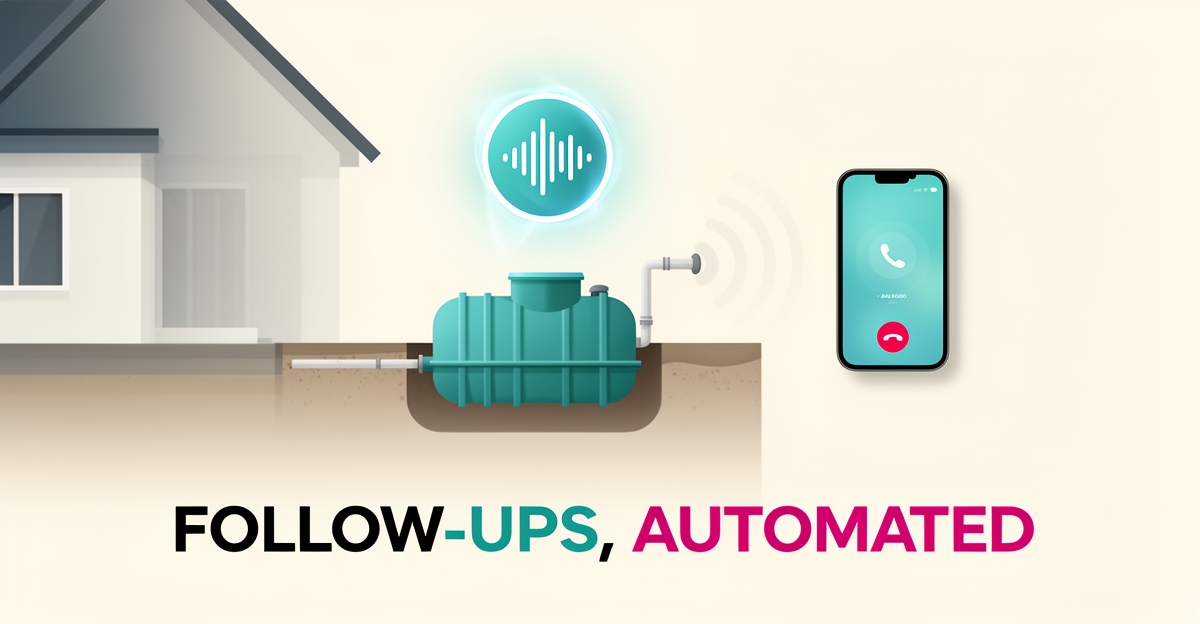
How AI Can Automate Follow-Up Calls After Septic Installation
Key Facts
- AI voice assistants have been shown in large-scale deployment studies to increase issues resolved per hour in customer support workflows, typically by double-digit percentages
- Industry analysis consistently finds that companies responding to leads within an hour are far more likely to qualify the lead than those who wait longer
- AI Voice employees operate 24/7 to check for leaks, ask about usage patterns, and schedule maintenance after septic installation
- AI follow-up systems improve customer retention by ensuring consistent communication and timely issue detection
- AI Voice employees use natural language understanding to engage customers in empathetic conversations about septic system performance
- AI follow-up automation frees human staff to focus on complex diagnostics requiring expertise
- AI Voice employees log interaction data for continuous improvement and seamless human agent handoff when needed
Hire a team member that works 24/7 — for less than a part-time wage.
AI receptionists, SDRs, dispatchers and 99+ roles. Trained on your business, fully managed.
Not sure where to start? Ask our AI planner
The Post-Installation Follow-Up Gap
After septic system installation, consistent post-installation follow-ups are critical to catch leaks, confirm proper usage, and schedule preventive maintenance, yet many installers struggle to maintain this cadence. Manual follow-up processes often fall through the cracks due to staffing limitations, scheduling conflicts, or competing priorities, leading to missed service opportunities and diminished customer trust. When check-ins are delayed or skipped entirely, small issues like minor leaks or improper usage can escalate into costly repairs or system failures, directly impacting both customer satisfaction and long-term retention.
Timing matters in customer engagement: industry analysis consistently finds that companies responding to leads within an hour are far more likely to qualify the lead than those who delay. This principle applies directly to post-installation follow-ups, where timely check-ins signal reliability and proactive care. Without automation, septic installers lack the bandwidth to ensure every new customer receives a prompt, personalized call within that critical window, increasing the risk of undetected problems and avoidable service calls down the line.
The cost of inconsistent follow-up extends beyond immediate service gaps, it erodes retention and increases long-term operational burden. AI Voice employees, as deployed by AIQ Labs through its AI Employees service, address this gap by automating post-installation check-ins to verify system performance, inquire about usage patterns, and schedule maintenance, all without requiring human agent time. By leveraging AI to handle these routine but essential touchpoints, septic service providers can maintain consistent communication, reduce missed leaks, and improve customer retention through reliable, 24/7 follow-up that scales with their business.
How AI Voice Employees Automate Septic Follow-Ups
After septic installation, timely follow-up is essential to ensure system performance and customer satisfaction, yet manual outreach often falls short due to resource constraints. AI Voice employees solve this by operating 24/7 to check for leaks, ask about usage patterns, and schedule maintenance, all without human intervention. These agents use natural language understanding to engage customers in empathetic conversations, adapting questions based on installation details and customer profiles gathered from integrated systems. By automating routine check-ins, septic service providers can maintain consistent touchpoints while freeing human staff for complex issues requiring expertise.
Large-scale deployments of generative AI assistants in customer support have shown meaningful gains in issues resolved per hour, demonstrating how AI boosts efficiency in service workflows. AIQ Labs' AI Employees apply this same principle to septic follow-ups, using multi-agent frameworks to coordinate tasks such as diagnosing potential problems, logging service history, and triggering maintenance scheduling in connected CRM platforms. This structured approach ensures agents operate within defined guardrails while handling variations in customer responses, such as clarifying questions about system behavior or expressing concerns about performance.
- Conduct performance check-ins by asking targeted questions about water usage, odors, or drainage issues
- Identify early warning signs of leaks or blockages through conversational analysis
- Schedule maintenance appointments directly into service calendars based on customer availability
- Log interaction data for continuous improvement and human agent handoff when needed
- Escalate urgent issues to human technicians using predefined protocols
Industry analysis consistently finds that companies responding to leads within an hour are far more likely to qualify the lead than those who wait longer, a principle that applies equally to post-installation follow-ups where timely engagement prevents small issues from becoming costly repairs. AI Voice employees leverage this insight by initiating calls at optimal times based on customer engagement history, ensuring higher response rates and more accurate feedback. Unlike generic automation, these agents personalize interactions using data from installation records and past service history, making each conversation feel relevant and attentive rather than robotic.
By combining 24/7 availability with contextual intelligence, AI Voice employees transform septic follow-ups from a sporadic manual task into a proactive service advantage. They maintain the consistency and scalability needed for growing businesses while preserving the human touch through intelligent escalation paths. For septic installers seeking to improve retention and reduce emergency calls, this approach delivers measurable service quality gains without expanding headcount, turning routine check-ins into a strategic opportunity to build trust and long-term customer relationships.
Building a Safe and Effective AI Follow-Up System
Building a safe and effective AI follow-up system for septic installations requires careful structuring around role clarity, knowledge depth, and operational safeguards. The process begins with defining a precise role for the AI voice employee, such as conducting post-installation check-ins to verify system performance, inquire about usage patterns, and schedule preventive maintenance. This role definition ensures the AI operates within clear boundaries, focusing on routine follow-ups while avoiding scope creep into complex diagnostics or emergency response. Timely, consistent engagement is where AI delivers clear value: it can run 24/7 without fatigue, ensuring every new customer hears from you within the window that matters most.
A robust knowledge base is essential for accurate and context-aware interactions. This includes septic system specifications, installation details from CRM records, common failure points like drain field saturation or tank leaks, and regional maintenance guidelines. The AI must be grounded in this structured data to recognize normal operation versus warning signs, such as unusual odors or slow drainage reported by customers. Integration with existing systems, particularly CRM platforms, ensures the AI accesses real-time installation dates, service history, and customer preferences, enabling personalized follow-ups that reference specific system models or past issues. Poor data quality undermines AI reliability, so implementing validation controls for customer and installation records is critical to prevent incorrect assessments or inappropriate recommendations.
Operational guardrails and human oversight complete the safety framework. The AI should be programmed to escalate immediately to a human agent if it detects keywords indicating emergencies, such as sewage backup, strong odors inside the home, or visible pooling, or if a customer expresses distress or confusion. For non-urgent issues like minor usage questions or maintenance scheduling, the AI can resolve the interaction autonomously, logging outcomes and scheduling future check-ins. Maintaining human-in-the-loop review for a sample of calls allows continuous refinement of the AI's judgment, ensuring alignment with company standards and customer expectations. This balanced approach leverages AI's consistency and scalability while preserving the empathy and expertise needed for sensitive post-service interactions.
From Pilot to Production with AIQ Labs
Moving a septic follow-up program from pilot to production means turning a good idea into a reliable, always-on service process. For septic installers, that shift is about consistent post-installation contact that checks system performance, surfaces usage questions, and books maintenance before small issues become costly.
AIQ Labs approaches this with a managed AI Employee model rather than a software license. The Start Monthly payment model covers build, training on your business, tool integrations, monitoring and improvements in a flat monthly plan. That structure lets a pilot start with one defined role and expand without renegotiating contracts or rebuilding integrations. If follow-ups are part of a bigger scheduling-and-service workflow that needs rebuilding, AIQ Labs also offers Workflow Builds at a fixed price, and a full AI Operating System for companies ready to connect everything.
Production readiness starts with data. The AI Voice employee is trained on installation records, service histories and customer profiles so calls are contextual, not generic. Integration with existing CRM and scheduling systems ensures the agent can reference the specific system installed, date of service and prior notes during a live conversation. This mirrors the broader reality that AI effectiveness relies on accurate information to deliver reliable results.
A pilot is designed around clear agent principles: role definition, knowledge base, action capabilities, guardrails and channel selection. For septic follow-ups the role is clear: check for leaks, ask about usage patterns, and schedule maintenance. Operational guardrails define when to escalate to a human, how to handle sensitive information, and what constitutes an emergency.
Continuous optimization is built into the managed service. Performance data is reviewed to refine scripts, timing and escalation rules.
- Role definition and knowledge base built from installation records and service history
- Start Monthly deployment with 24/7 availability and built-in monitoring
- Integration with CRM, scheduling and phone systems for end-to-end action
- Ongoing retraining and guardrail tuning based on call outcomes
The business case aligns with documented AI impacts in customer service. Large-scale deployments of generative AI conversational assistants across thousands of customer support agents have shown an average 15 per cent increase in issues resolved per hour. Speed matters for follow-up effectiveness, and industry analysis consistently shows companies responding to leads within an hour are far more likely to qualify the lead compared to those who waited longer.
AI can analyze engagement patterns to time calls when customers are most likely to answer, and tailor questions to installation specifics. That personalization supports retention and service quality without adding headcount. With 24/7 AI Voice employees handling routine check-ins, human teams focus on complex diagnostics and high-value service.
Start the 2-minute Fit Check at https://aiqlabs.ai/apply to map your current follow-up bottleneck and see if a managed AI Employee is a clear fit.
Still paying for 10+ subscriptions that don’t talk to each other?
We build custom AI systems you own outright. No vendor lock-in. Full control.
Not sure where to start? Ask our AI planner
Frequently Asked Questions
Will AI follow-up calls actually get customers to answer after a septic installation?
What can an AI voice agent check for during a post-installation follow-up?
Is it safe to let AI handle septic follow-ups instead of a human?
How much more efficient is AI for follow-up calls compared to manual outreach?
Do I need perfect data to start AI follow-up calls for septic customers?
Can AI follow-ups really help retention after septic installation?
Turn Post-Installation Check-Ins Into a Retention Engine
Consistent post-installation follow-up is what separates reliable septic installers from those chasing costly failures. Manual check-ins slip through the cracks, while AI Voice employees deliver 24/7 performance check-ins, early warning detection, and maintenance scheduling without adding headcount. By combining contextual knowledge from installation records with intelligent timing and clear escalation guardrails, automated follow-ups protect system health, signal proactive care, and create the timely engagement that builds trust and retention. Moving from pilot to production is straightforward when the role is defined, data is clean, and integration with CRM and scheduling is in place. Start by mapping your current follow-up bottleneck, defining the specific check-in questions and escalation rules for your systems, and testing timing based on customer engagement patterns. If you want a no-obligation working session to map the bottleneck and see if a managed AI Employee is a clear fit, start the 2-minute Fit Check at https://aiqlabs.ai/apply for a free 30-minute strategy call. Fast, consistent engagement is one of the strongest retention levers a service business can pull, and that principle applies directly to post-installation care.
Make AI your competitive advantage — not just another tool.
Strategy, implementation and ongoing optimization. One partner, end to end.
Not sure where to start? Ask our AI planner