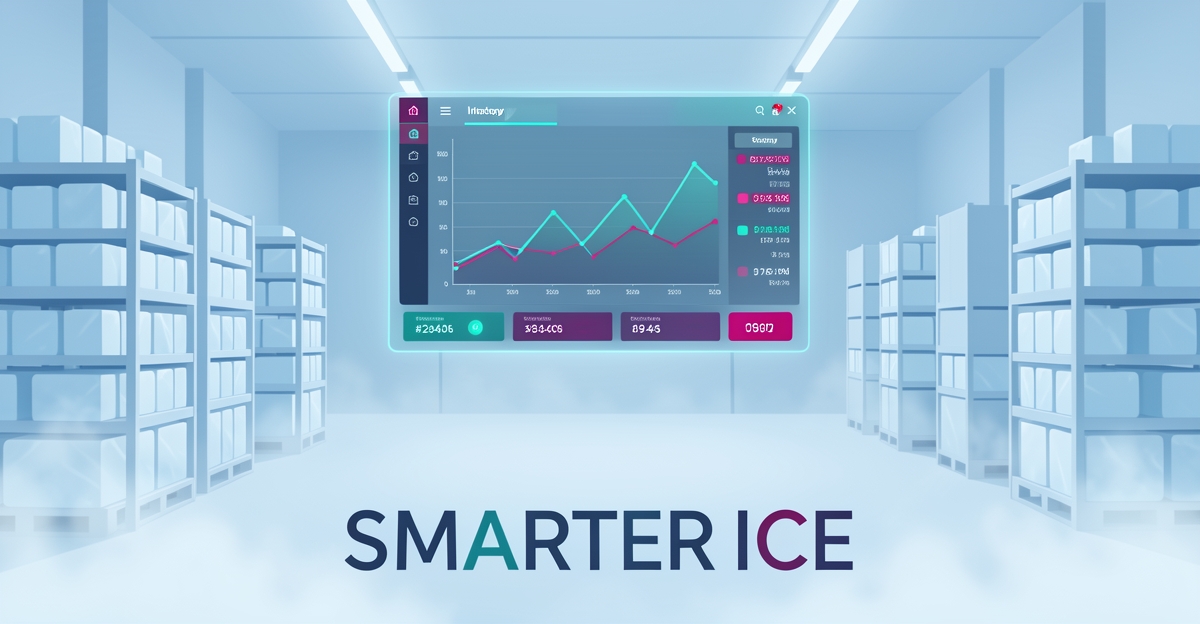
How AI Can Automate Ice Inventory Tracking and Replenishment for Cold Storage Facilities
Key Facts
- AI inventory systems typically reduce both stockouts and excess inventory costs by improving forecast accuracy and automating reorder triggers
- Manual inventory management can consume 20+ hours weekly in mid-sized cold storage facilities, time that automation can largely eliminate
- AI systems track ice inventory across multiple locations in real time using sensors, IoT devices, and machine learning algorithms
- The AI inventory management market has grown rapidly since 2024, with continued strong expansion projected through 2030 as warehousing adoption accelerates
- A 3-6 month pilot program is a common recommendation for testing AI integration before full-scale deployment
- AIQ Labs has deployed 200+ multi-agent systems and runs 4 live SaaS products daily, proof the approach works in production, not just in theory
Hire a team member that works 24/7 — for less than a part-time wage.
AI receptionists, SDRs, dispatchers and 99+ roles. Trained on your business, fully managed.
Not sure where to start? Ask our AI planner
The Hidden Cost of Manual Ice Inventory Management in Cold Storage
Manual ice inventory tracking in cold storage facilities creates significant operational blind spots that directly impact profitability. Staff relying on spreadsheets or clipboard logs often miss real-time fluctuations in demand, leading to preventable stockouts during peak periods. Businesses using traditional inventory methods routinely experience stockouts that disrupt operations and frustrate customers, while overstocking ties up capital and increases the risk of product spoilage in temperature-sensitive environments. These inefficiencies compound when manual counts are delayed or inaccurate, forcing facilities into reactive rather than proactive management.
The financial toll of these manual processes is substantial and measurable. AI-driven inventory systems typically reduce both stockout frequency and excess inventory costs by improving forecast accuracy and automating reorder decisions, directly addressing two of the most costly pain points in cold storage operations. For ice inventory specifically, where product integrity depends on consistent temperature control and timely turnover, these improvements translate to reduced waste and better cash flow. Facilities still using manual tracking often carry meaningfully more inventory than necessary to buffer against uncertainty, a costly hedge that AI-driven forecasting can largely eliminate through precise demand prediction.
Labor inefficiency further amplifies these costs, as skilled staff spend hours each week on repetitive counting, data entry, and reconciliation instead of value-added tasks. Manual inventory management can consume 20+ hours weekly in mid-sized facilities, time that could be redirected toward process improvement or customer service when automated systems handle routine tracking. This misallocation of human resources not only increases payroll expenses but also contributes to burnout and higher turnover in roles already strained by the physical demands of cold storage work. The cumulative effect is a system where operational friction erodes margins while creating avoidable risks to supply chain reliability. Facilities ready to move beyond guesswork can take the 2-minute Fit Check to map their specific ice inventory challenges and see where AI automation fits.
How AI-Powered Systems Transform Ice Inventory from Reactive to Proactive
Cold storage operators have long accepted stockouts and excess ice as unavoidable costs of doing business. AI-powered systems change that equation by turning inventory from a reactive chore into a proactive advantage.
AI inventory management represents a fundamental shift from traditional manual processes to automated, data-driven systems. Unlike conventional methods that rely on historical data and manual analysis, AI-powered systems use machine learning algorithms and real-time data to proactively predict demand, automate replenishment, and optimize stock levels.
Real-time visibility forms the foundation. AI systems track and control inventory across multiple locations in real time by using sensors, IoT devices, algorithms, and data analysis. This continuous monitoring ensures accurate stock levels at all times without manual counts.
Predictive analytics replaces guesswork. AI analyzes historical usage data, customer behavior, market trends, and external factors to predict future demand patterns. Facilities can anticipate ice usage spikes from heat waves, events, or seasonal shifts and plan accordingly.
Automated replenishment eliminates delays. AI can automatically trigger restocks when inventory levels reach predetermined thresholds, preventing stockouts without requiring manual intervention. This is where the biggest gains show up: fewer emergency orders, less rushed logistics, and no more discovering an empty bin at the worst possible moment.
The financial impact is measurable. By optimizing inventory levels and reducing both overstocks and stockouts, AI helps minimize holding costs and maximize profitability. Well-implemented AI inventory initiatives commonly pay for themselves within the first year or two, depending on facility size and starting conditions.
Market momentum confirms the shift. The AI inventory management market has grown rapidly since 2024, with continued strong expansion projected through 2030 as warehousing and cold chain operators accelerate adoption.
AI transforms ice inventory management through:
- Real-time sensor data integration for continuous stock visibility
- Predictive demand forecasting that accounts for weather, events, and usage trends
- Automated reorder triggers that prevent stockouts and excess waste
- Multi-location coordination for balanced distribution across cold storage sites
This proactive approach turns inventory management into a strategic advantage. Instead of reacting to empty bins, teams focus on growth while the system maintains optimal levels.
AIQ Labs builds these systems through its AI Workflow Builds, rebuilding the one workflow that costs you the most, at a fixed price and in phases. The resulting system monitors ice inventory levels, predicts usage patterns, and automatically triggers restocks, and you own the solution outright.
Implementation Roadmap: From Pilot to Full-Scale AI Inventory Automation
Implementing AI for ice inventory tracking requires a structured, risk-mitigated approach. AIQ Labs recommends beginning with a thorough audit of current manual or legacy systems to identify gaps in data flow, tracking accuracy, and replenishment triggers, especially critical in cold storage where temperature-sensitive inventory demands precision. This assessment establishes a baseline for measuring improvement and ensures the AI solution addresses real operational pain points rather than layering technology onto inefficient processes.
Next, data preparation is essential: standardizing product codes, correcting naming inconsistencies, and cleaning historical usage and supplier lead-time data ensures the AI model receives reliable inputs. AI thrives on accurate, consistent data, messy inputs lead to poor predictions and flawed automation. Once data is ready, facilities should set measurable goals such as reducing stockout frequency, cutting excess inventory carrying costs, or freeing up staff hours currently spent on manual counts. These targets provide clear success criteria for evaluating pilot performance and justifying broader investment.
A phased rollout starting with a 3-6 month pilot allows teams to validate the system on a limited scope, such as tracking ice inventory across one storage zone or for a specific product line, before scaling. During this phase, AIQ Labs supports clients through its Build in Milestones payment model: you pay per completed phase, with the flexibility to pause or keep all work completed to date. This approach minimizes upfront risk while ensuring ownership of developed assets. Parallel running of AI recommendations alongside manual processes builds trust and reveals tuning needs. After refining the model based on real-world performance, facilities can expand to full-scale deployment, integrating real-time sensor data, establishing automated reorder workflows, and training staff to act on AI-driven alerts, turning inventory management from a reactive chore into a proactive, optimized operation. For larger operations, AIQ Labs' AI Operating Systems connect inventory management with the rest of the business in one operating layer, built in phases and owned outright.
Turning Ice Inventory into Your Competitive Edge
Manual ice tracking creates costly blind spots, stockouts, excess waste, and drained labor hours, that erode profitability in cold storage. AI transforms this reactive cycle into a proactive advantage by delivering real-time visibility, predictive demand forecasting, and automated replenishment. These aren't just operational tweaks; they directly improve cash flow, reduce spoilage risk, and free skilled staff for higher-value work. Facilities ready to move beyond guesswork can start with a 2-minute Fit Check and a free 30-minute strategy call to map their specific challenges and explore how AIQ Labs builds custom, owned solutions that integrate with existing tools, no vendor lock-in, just systems that pay for themselves. Take the first step today.
Make AI your competitive advantage — not just another tool.
Strategy, implementation and ongoing optimization. One partner, end to end.
Not sure where to start? Ask our AI planner