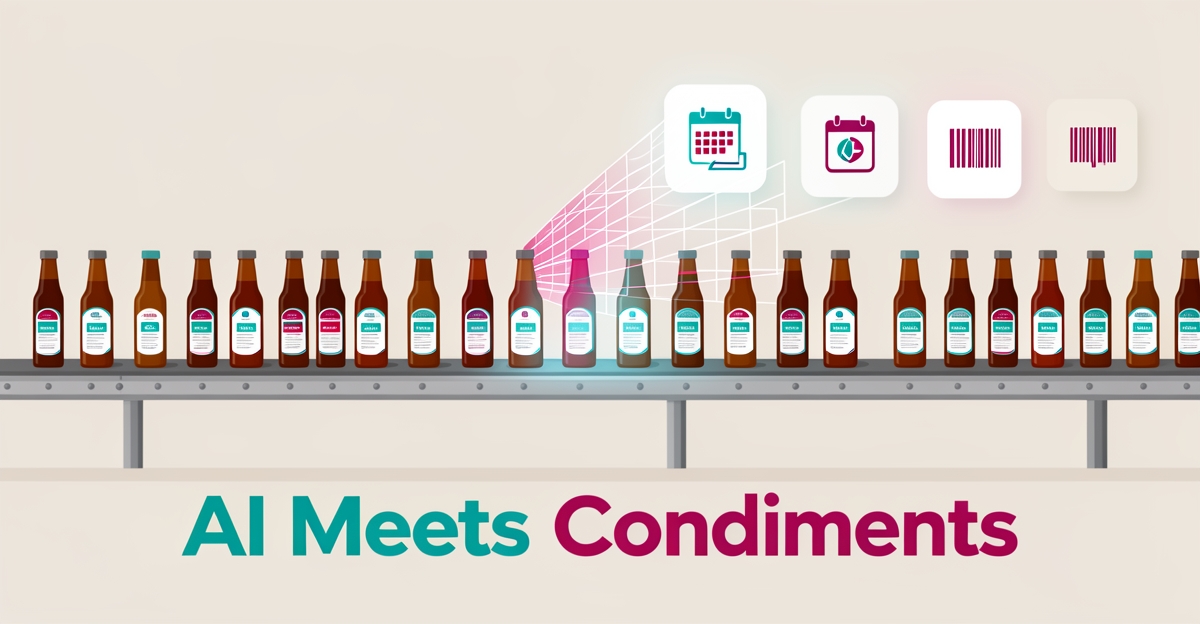
How AI Can Automate Labeling, Batch Tracking, and Expiry Management in Condiment Production
Key Facts
- A single misprinted date or mismatched batch code can turn a routine condiment run into a recall, a fine, or lost shelf space
- Regulators expect precise lot-level traceability from raw material intake to finished goods, gaps make audits and recalls slow and expensive
- Hybrid labeling approaches combining human and machine labeling typically deliver the best balance of accuracy, speed, and cost
- Automated label inspection catches misprints, missing allergens, and barcode defects at line speed
- Predictive shelf-life models trained on pH, water-activity, and temperature data help planners rotate stock proactively and cut write-offs
- AIQ Labs has deployed 200+ multi-agent systems and runs 4 live SaaS products daily
Hire a team member that works 24/7 — for less than a part-time wage.
AI receptionists, SDRs, dispatchers and 99+ roles. Trained on your business, fully managed.
Not sure where to start? Ask our AI planner
The Hidden Costs of Manual Labeling and Compliance Errors in Condiment Production
A single misprinted date or mismatched batch code can turn a routine condiment run into a recall, a fine, or lost shelf space. Manual labeling, batch tracking, and expiry management create friction at every step, and the costs compound quietly until compliance is breached.
Human handling of labels and records remains error-prone under production pressure. Manual transcription and data entry are slow and costly, with a hard throughput ceiling. In condiment lines with multiple SKUs, flavor variants, and co-packs, that effort multiplies across shifts.
Compliance risk rises when batch traceability depends on handwritten logs or spreadsheet updates. Regulators expect precise lot-level traceability from raw material intake to finished goods. Gaps in batch tracking make root-cause analysis slow during audits or consumer complaints, and expiry management errors lead to overstock, markdowns, and waste.
The hidden costs show up in four recurring ways:
- Labeling errors and rework from manual application and transcription
- Batch traceability gaps that delay recalls and increase audit exposure
- Expiry mis-management that drives waste and lost margin
- Labor hours tied to repetitive checks instead of value-added production
Manual processes also create data quality issues that undermine any future automation. Automated data labeling can speed things up, but may propagate errors and amplify bias, which is why hybrid labeling approaches, combining human and machine labeling, typically deliver the best balance of accuracy, speed, and cost. Without clean, consistent batch and expiry data, AI systems for forecasting and compliance cannot be trusted.
Market momentum reflects the pain: producers are steadily adopting fully automatic labeling equipment to reduce variability. Yet machines alone do not solve data capture, integration, or decisioning across production, warehouse, and distribution.
This is where a focused [AI Workflow Build](/workflow-builds) becomes essential. AIQ Labs rebuilds the one workflow that costs you the most, labeling, batch tracking, or expiry management, into one auditable, connected process, reducing human error and improving compliance without replacing the line operators who know the product best.
How AI Transforms Labeling, Batch Tracking, and Expiry Management
Condiment manufacturers face a daily balancing act between regulatory precision and production speed, where a single mislabeled batch can trigger costly recalls. AI-powered systems turn that tension into a controlled, repeatable process by automating label verification, tracking every lot in real time, and predicting shelf life with far greater accuracy than manual methods.
AI-driven batch tracking extends that visibility beyond the labeler. Computer-vision scanners and edge sensors capture lot codes, timestamps, and environmental conditions at every handoff, mixing, filling, capping, palletizing, feeding a unified ledger that quality teams can query instantly. When a deviation appears, the system isolates the affected lots in seconds rather than hours, protecting both consumers and brand reputation.
Expiry management shifts from static date stamping to dynamic prediction. Machine-learning models trained on historical pH, water-activity, and temperature data forecast remaining shelf life for each SKU under real-world storage profiles. This lets planners rotate stock proactively, reduce write-offs, and meet retailer freshness guarantees without overproducing.
- Automated label inspection catches misprints, missing allergens, and barcode defects at line speed
- Real-time lot genealogy links raw-material certificates to finished-goods pallets
- Predictive shelf-life engines adjust best-by dates based on actual storage history
- Hybrid human-in-the-loop workflows validate edge cases before they scale
Hybrid approaches that combine human oversight with machine speed typically deliver the best balance of accuracy, throughput, and cost, critical when a single labeling error can cascade across thousands of units. AIQ Labs applies this same principle, building custom AI document-processing workflows that keep condiment producers compliant while their teams focus on formulation and growth.
Choosing the Right AI Approach: Automation vs. Human Oversight
Choosing the right AI approach for labeling, batch tracking, and expiry management in condiment production requires balancing speed, accuracy, and regulatory compliance. While fully automated systems promise efficiency, they risk amplifying silent errors and bias without human oversight. Automated data labeling can accelerate workflows but may propagate inaccuracies that compromise product safety and traceability, critical concerns in food production governed by strict labeling and expiry regulations.
Hybrid labeling approaches, which combine AI-driven automation with human-in-the-loop validation, consistently deliver strong outcomes by leveraging machine speed for repetitive tasks while reserving human judgment for edge cases and quality assurance. This balance reduces the throughput and cost ceiling of manual labeling while mitigating the error amplification risks of full automation, making hybrid models well suited to regulated environments where compliance cannot be sacrificed for efficiency.
Implementing a hybrid strategy allows condiment manufacturers to automate high-volume labeling and batch tracking processes while maintaining human oversight for expiry prediction validation, label verification, and audit trail integrity. This approach supports scalable AI integration without introducing uncontrolled variability into critical production workflows. For businesses seeking to deploy such systems with confidence in regulated food settings, partnering with an experienced AI provider ensures alignment with industry standards, seamless integration with existing ERP and MES platforms, and ongoing optimization as production demands evolve. AIQ Labs builds custom AI solutions that embed human-in-the-loop controls where needed, enabling manufacturers to harness automation's benefits without compromising on safety, accuracy, or regulatory adherence.
Practical Steps to Implement AI in Your Condiment Production Line
Condiment production lines face mounting pressure to maintain accuracy and compliance across labeling, batch tracking, and expiry management. AI integration offers a structured path to automate these critical functions while reducing manual intervention and error rates. Starting with a clear assessment of current workflows helps identify where AI can deliver the most immediate impact, particularly in high-volume labeling tasks that consume significant labor hours.
Selecting the right AI tools requires evaluating interoperability with existing manufacturing execution systems (MES) and enterprise resource planning (ERP) platforms. Solutions must support seamless data exchange to avoid siloed information that undermines batch traceability. AI-powered labeling systems, for instance, can use computer vision to verify label placement and content in real time, reducing mislabeling risks that lead to recalls or regulatory penalties. For batch tracking, AI models analyze production timestamps, ingredient lot numbers, and environmental conditions to create dynamic, auditable records that support rapid recalls if needed.
Implementation should prioritize scalable, modular systems that allow phased rollout across product lines. Begin with a single high-risk condiment variant, such as a refrigerated sauce with strict expiry controls, to validate the AI system's performance before expanding. Integrate AI with quality control checkpoints where automated alerts flag deviations in label alignment, batch code readability, or expiry date calculations. These checks serve as human-in-the-loop validations, preventing silent error amplification, a known risk in fully automated data labeling. Combining AI forecasting with real-time sensor data typically improves expiry prediction accuracy, enabling better inventory rotation and waste reduction.
AIQ Labs supports condiment manufacturers through [AI Workflow Builds](/workflow-builds) that deliver production-ready systems tailored to regulated food environments. Rather than offering generic tools, we architect solutions that integrate with your existing MES, ERP, and quality management systems, ensuring full ownership and long-term adaptability. Our approach includes configuring AI agents for label verification, batch genealogy tracking, and predictive shelf-life modeling, all designed to meet FDA and CFIA compliance standards. By embedding AI directly into operational workflows, manufacturers gain a unified system that reduces manual data entry, catches labeling errors before they ship, and provides real-time visibility into product lifecycle data.
Ongoing success depends on establishing clear governance protocols for AI oversight, including regular model retraining with new product variants and continuous monitoring of false positive/negative rates in label verification. Training production staff to interpret AI-generated alerts and intervene when necessary ensures the system augments rather than replaces human expertise. As your condiment line scales, the AI system can expand to incorporate additional data points, such as humidity exposure during storage or transit time, to refine expiry predictions further. This adaptive capability transforms labeling, batch tracking, and expiry management from cost centers into strategic assets that enhance product safety, reduce waste, and strengthen consumer trust. For producers ready to connect these functions into one owned operating layer, [AI Operating Systems](/ai-operating-systems) offer a phased path to a fully integrated production backbone.
Still paying for 10+ subscriptions that don’t talk to each other?
We build custom AI systems you own outright. No vendor lock-in. Full control.
Not sure where to start? Ask our AI planner
Frequently Asked Questions
How much does AI-powered labeling actually reduce errors compared to manual processes in condiment production?
What's the real cost difference between fully automated labeling and a hybrid AI-human approach?
Can AI really predict expiry dates better than our current static date-stamping method?
We have multiple SKUs and co-pack arrangements, will AI batch tracking handle that complexity without creating data silos?
How much of our team's time goes into data prep if we build this in-house versus using a managed solution?
What happens when the AI flags a labeling edge case during a production run, does the line stop?
Turning Condiment Compliance Into Competitive Advantage
From misprinted labels to expiry-driven waste, the hidden costs of manual processes in condiment production add up fast, eroding margins, triggering recalls, and straining compliance. AI-powered automation, especially when guided by human oversight, transforms labeling, batch tracking, and expiry management into a unified, auditable workflow that reduces errors, cuts rework, and frees teams to focus on innovation. With hybrid approaches delivering the best balance of speed and accuracy, manufacturers can scale confidently without sacrificing safety or traceability. The path forward starts with assessing your current bottlenecks and exploring how custom AI solutions can integrate seamlessly with your existing systems. To see where AI can make the biggest impact in your operation, start with the free two-minute [Fit Check](/apply) and follow it with a no-obligation 30-minute strategy call to map your highest-ROI opportunities. Questions first? Reach us at [email protected].
Make AI your competitive advantage — not just another tool.
Strategy, implementation and ongoing optimization. One partner, end to end.
Not sure where to start? Ask our AI planner