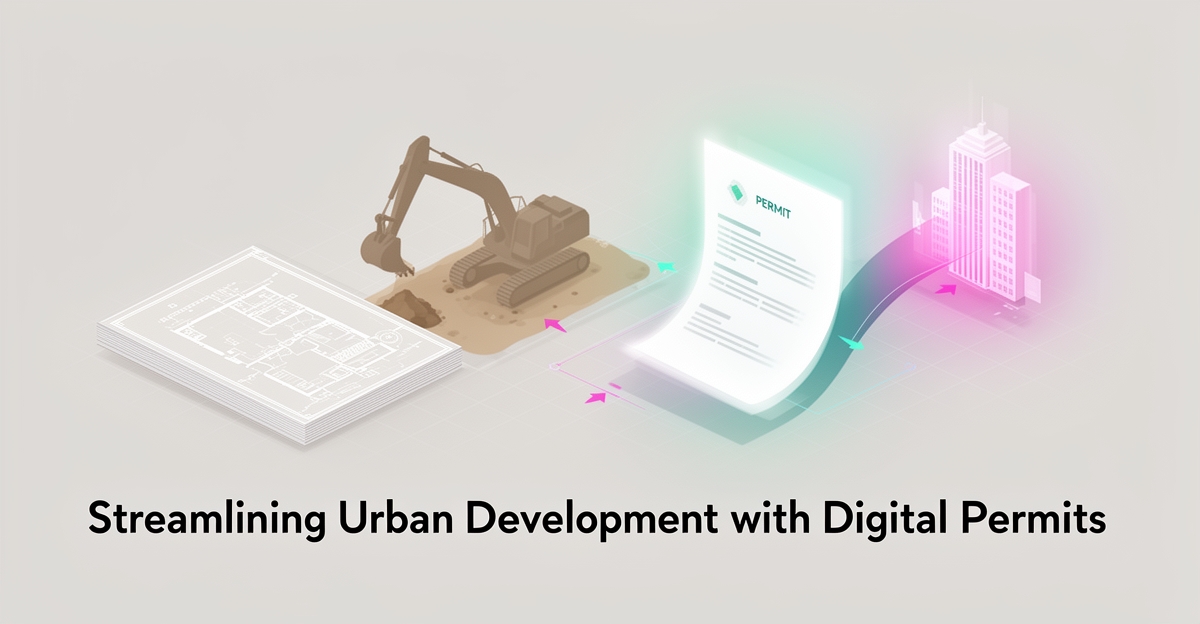
How AI Can Automate Permit Applications for Excavation Contractors
Key Facts
- AI systems extract site details from project documents and auto-populate permit applications for direct submission to government portals
- Custom AI workflows typically eliminate manual data entry while improving first-pass approval rates through accuracy and completeness
- Permit delays ripple across scheduling, labor allocation, and equipment utilization, so faster submissions mean faster job starts
- Well-designed permit automation includes validation checks, audit trails, and human-in-the-loop review for regulated submissions
- AIQ Labs has deployed 200+ multi-agent systems and runs 4 live SaaS products daily, building workflows contractors own outright
Hire a team member that works 24/7 — for less than a part-time wage.
AI receptionists, SDRs, dispatchers and 99+ roles. Trained on your business, fully managed.
Not sure where to start? Ask our AI planner
The Permit Bottleneck Costing Excavation Contractors Time and Revenue
Manual permit applications are a persistent bottleneck for excavation contractors, consuming valuable time and delaying project starts. The process often involves gathering site details, completing complex forms, and navigating municipal portals, tasks that are slow, error-prone, and costly when done manually. These inefficiencies directly impact revenue by extending timelines and increasing administrative overhead.
For excavation contractors specifically, manual permit handling contributes to delays that ripple across scheduling, labor allocation, and equipment utilization. Errors in applications, such as missing information or incorrect formatting, frequently trigger rejections, requiring resubmission and further delaying approvals. Every day a permit sits in a queue is a day your crew and equipment aren't earning.
Automation offers a clear path to relief. By replacing manual data entry and form completion with intelligent systems, contractors can minimize human error, accelerate submission cycles, and free up staff for higher-value field work.
- Eliminates repetitive data gathering across multiple sources
- Ensures consistent, accurate formatting to municipal standards
- Enables direct submission to city portals without manual intervention
- Cuts processing time dramatically by orchestrating the full workflow
- Provides real-time tracking and status updates for all applications
AIQ Labs builds custom AI workflows that extract site details from project documents, auto-populate permit applications, and submit them directly to government portals, turning a days-long chore into a near-instantaneous process. This approach not only cuts administrative burden but also improves first-pass approval rates by ensuring completeness and accuracy. For excavation firms operating on tight margins, reducing permit-related delays means faster job starts, better resource planning, and improved cash flow, all critical advantages in a competitive market where time is literally money. By addressing this specific bottleneck with a targeted AI Workflow Build, contractors reclaim control over their schedules and unlock capacity to take on more work without expanding their teams.
How AI Extracts, Formats and Submits Permits Directly to City Portals
For excavation contractors, a permit application can stall a project for days before a shovel ever hits the ground. The bottleneck isn't a lack of information, it's that the information lives in site plans, survey documents, and municipal forms that someone has to manually read, re-key, and reformat for each city's requirements.
AI-powered document processing changes that equation by handling the entire workflow in three stages. First, the system extracts site details directly from project plans and supporting forms, lot dimensions, excavation depth, utility locations, contractor credentials, and property identifiers. Modern document AI reads both structured forms and unmarked plan drawings, pulling the exact data points each jurisdiction asks for. Accuracy at this stage determines everything downstream, so extraction is validated against your own records before anything moves forward.
Second, the AI formats the extracted data into the specific structure each municipality demands. Every city portal has its own field conventions, attachment requirements, and validation rules. Rather than an office manager rebuilding the same application from scratch for the fifth jurisdiction this month, the system maps site data into each template automatically, flags missing or inconsistent information before submission, and generates a complete, review-ready package.
Third, the system submits the application directly to the municipal portal. Using secure integrations, the AI completes web forms, uploads formatted documents, tracks confirmation numbers, and monitors application status, escalating to a human reviewer only when a jurisdiction rejects something or requires additional documentation. The result is a permit pipeline that runs continuously instead of only when someone has a free afternoon.
The payoff compounds across every project. Contractors working with purpose-built systems typically see permit processing time cut from days to hours, with manual data entry eliminated entirely. For a small excavation operation, permit automation is one of the most immediately reachable wins in construction automation.
A well-designed workflow includes a few core safeguards:
- Validation checks that catch missing site details before submission, not after rejection
- Human-in-the-loop review for unusual sites, variances, or first-time jurisdiction formats
- Complete audit trails logging every submission, confirmation, and status change
- Configurable escalation rules so nothing is filed without contractor sign-off where required
The technology is proven; the constraint for most contractors is simply that no one has connected the pieces into a single system they own.
From Paperwork to Production: Implementation Roadmap for Contractors
Knowing where to start matters more than the technology itself. Contractors who succeed with AI permit automation follow a deliberate sequence: target the highest-friction workflows first, prepare their data, then integrate with the systems they already use.
Start by mapping your permit landscape. Identify which application types consume the most administrative hours, excavation permits, right-of-way approvals, utility notifications, and rank them by volume and error rate. Automation delivers the biggest return on repetitive, document-heavy workflows.
Next, assess data readiness. AI systems extract site details, parcel information, and project specifications from your existing documents, but they need consistent inputs. Audit your job files, drawings, and past permit applications. Clean, organized records become the foundation for accurate document extraction and formatting.
Then plan the integration. The goal is not another disconnected tool, it's a system that connects your project management software, document storage, and municipal submission portals into one flow. For permit work, that means the AI pulls site data, formats the application, and submits it directly to the city portal without manual re-entry. That's the model behind an AI Workflow Build: rebuild the one workflow that costs you the most, at a fixed price, in phases.
A practical rollout looks like this:
- Document your current permit process end-to-end, including every handoff and delay point
- Prioritize one high-volume permit type as your pilot workflow
- Standardize and organize the source data the AI will draw from
- Integrate the system with your existing project and document tools
- Measure processing time and error rates before and after go-live
Finally, monitor and refine. Track how long applications take from initiation to submission, and review rejected or returned permits to identify gaps. This is the same disciplined, phased approach AIQ Labs applies when building custom permit automation, systems that eliminate manual data entry and stay under your control as requirements change.
The payoff compounds. Contractors who move from paperwork to production now position themselves ahead of competitors still filing by hand.
Why Custom AI Beats Generic Tools for Regulated Permit Work
Permit applications stall excavation jobs because generic form fillers can't handle regulated, city-specific compliance. Excavation contractors need systems that understand local codes, site constraints, and portal workflows, not just text extraction.
Generic tools promise speed but create risk. They fill fields from templates without validation against municipal requirements, and they operate in isolation from dispatch and CRM. That disconnect forces manual rework, delays approvals, and exposes the business to rejections for incomplete submissions.
Custom AI built for excavation compliance changes the ownership model. With AIQ Labs' build-own-operate approach, the system is architected around your processes and data, integrates two-way with CRM and dispatch, and remains yours to control and evolve. This is true ownership instead of subscription lock-in. For contractors who want permitting connected to scheduling, dispatch, and billing rather than bolted on, an AI Operating System provides one connected layer built in phases and owned outright.
In regulated permitting, accuracy matters more than raw speed. A custom system delivers governance and integration that generic fillers cannot:
- Ownership and control of code, agents, and data with no vendor lock-in
- Deep two-way API integration with CRM, dispatch, and accounting for a single source of truth
- City-specific validation, audit trails, and human-in-the-loop controls for regulated submissions
- Continuous refinement on your sites, forms, and approval history to improve accuracy over time
Generic form fillers treat every city the same. Custom AI learns your jurisdictions, your crews, and your compliance history, then executes end-to-end with guardrails. The result is fewer rejections, faster starts, and a system that scales with your business rather than constraining it.
Still paying for 10+ subscriptions that don’t talk to each other?
We build custom AI systems you own outright. No vendor lock-in. Full control.
Not sure where to start? Ask our AI planner
Frequently Asked Questions
How much time can AI actually save on excavation permit applications?
Is AI permit automation just generic form filling, or does it handle city-specific rules?
Will automating permits mean we lose control or create compliance risk?
What's the business case for digitizing permits beyond saving admin hours?
Can AI really read unmarked site plans accurately enough for permits?
How do we start without overhauling everything at once?
Turn Permit Delays Into Project Momentum
Manual permit handling is costing excavation contractors time, approvals, and cash flow. The bottleneck isn't a lack of information but the re-keying and reformatting of site details for each city portal, and AI changes that by extracting data from plans, formatting it to municipal standards, and submitting directly with validation and tracking. That shift replaces repetitive data gathering and error-prone submissions with a continuous pipeline that improves first-pass approval rates and frees staff for field work. If you're ready to test the impact on your own workflows, map your highest-volume permit type, audit the source documents the AI would draw from, and define the integration points with your project management and document tools. AIQ Labs builds custom AI workflows that eliminate manual entry, with ownership and no vendor lock-in. Start the 2-minute Fit Check at https://aiqlabs.ai/apply and book a free 30-minute strategy call to map your biggest bottleneck and see if there's a clear win, or reach us directly at [email protected]. Permit automation is one of the most immediately reachable wins in construction, and the contractors who move first keep the schedule advantage.
Make AI your competitive advantage — not just another tool.
Strategy, implementation and ongoing optimization. One partner, end to end.
Not sure where to start? Ask our AI planner