How AI Can Automate Preventive Maintenance Scheduling for AC Units
Key Facts
- Many maintenance teams lack a centralized view of when equipment is due for service, which pushes them into reactive, emergency-driven work.
- Automated preventive maintenance scheduling is widely associated with significantly fewer emergency breakdowns compared with calendar-based or reactive approaches.
- Unplanned equipment failures impose substantial costs on industrial operations each year, with commonly cited estimates running into the trillions globally.
- AI-assisted dispatch and scheduling typically let teams capture more service calls without adding headcount.
- Dispatchers using AI scheduling automation commonly report saving multiple hours per week on manual coordination.
- Well-implemented AI maintenance scheduling often delivers a strong return on investment through fewer breakdowns and better asset utilization.
Hire a team member that works 24/7 — for less than a part-time wage.
AI receptionists, SDRs, dispatchers and 99+ roles. Trained on your business, fully managed.
Not sure where to start? Ask our AI planner
The Preventive Maintenance Gap HVAC Teams Face Today
HVAC teams today often operate in a reactive mode, scrambling to fix breakdowns instead of preventing them. Without centralized visibility into equipment age, usage patterns, and service history, dispatchers lack the data needed to schedule maintenance proactively. This leads to missed service windows, inefficient routing, and frustrated customers who experience unexpected AC failures during peak seasons. The operational pain is compounded by dispatcher overload, where manual scheduling consumes hours each week that could be spent on higher-value tasks.
Industry surveys consistently suggest that a large share of maintenance teams don't know when their equipment is due for service without a centralized system, forcing them into a cycle of emergency responses. This lack of foresight directly contributes to costly downtime, unplanned equipment failures impose a major annual burden on industrial operations worldwide, with commonly cited estimates running into the trillions of dollars. For SMB HVAC businesses, these unexpected breakdowns erode profit margins and damage customer trust, especially when service delays occur during extreme weather events.
The consequences extend beyond immediate repair costs. Teams relying on reactive scheduling typically face significantly more emergency breakdowns than those using automated preventive maintenance systems. Dispatchers spend excessive time coordinating last-minute service calls, often duplicating efforts or overlooking critical maintenance windows. This inefficiency not only increases labor costs but also reduces the number of preventive service calls teams can complete, missing opportunities to build long-term customer relationships through consistent, reliable care.
- Inability to track service history across multiple units and locations
- Manual scheduling errors leading to overlapping or missed appointments
- Dispatcher burnout from constant reactive firefighting
- Lost revenue from preventable emergency service gaps
- Decreased customer satisfaction due to unpredictable system failures
AIQ Labs addresses this gap through AI Workflow Builds, rebuilding the one workflow that costs you the most, in phases, at a fixed price, so preventive maintenance scheduling runs on unit age, usage, and weather data instead of guesswork, turning a reactive cost center into a proactive service advantage.
How AI Predicts, Monitors, and Smart Schedules AC Maintenance
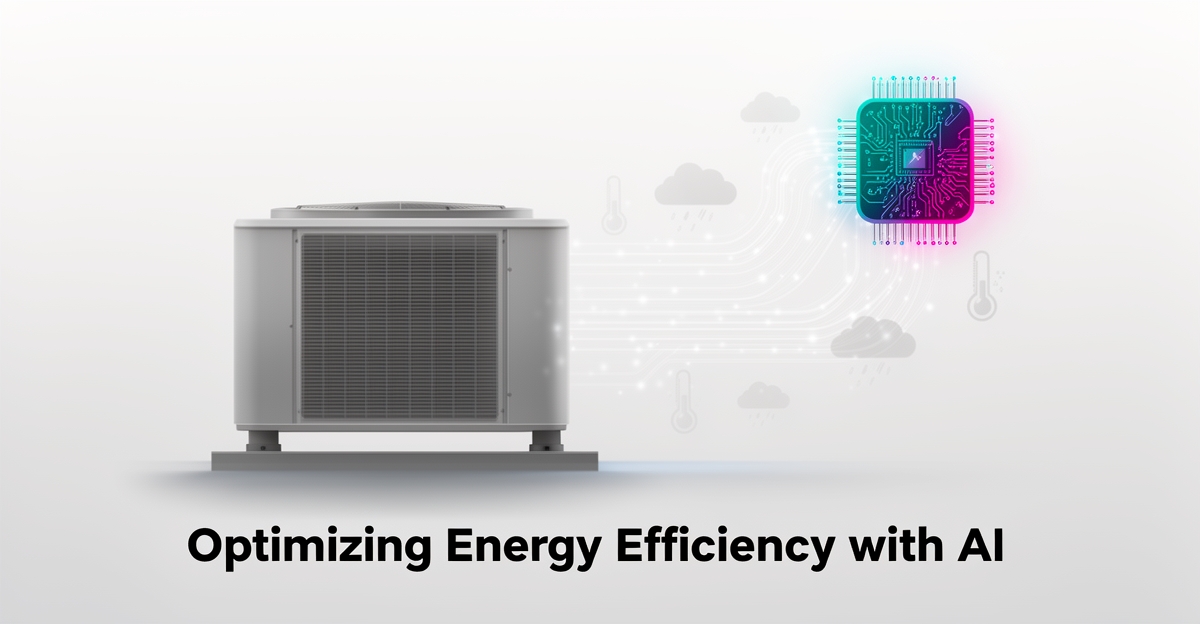
AI is turning reactive AC service into a scheduled, predictable operation. By reading unit age, usage patterns and weather data together, systems can anticipate need before a failure occurs and align crews with the right windows.
Predictive maintenance forms the first core application. AI analyzes historical run hours, seasonal load and environmental conditions to forecast when a unit will require service. This data-driven timing reduces surprise failures and supports longer equipment life. Organizations using automated PM scheduling typically report substantially fewer emergency breakdowns than those relying on reactive scheduling. The approach also builds customer trust by replacing last-minute calls with planned visits.
Condition monitoring provides continuous visibility. Sensors and connected controls feed real-time performance signals into models that flag anomalies such as rising amp draw, short cycling or pressure drift. Early detection prevents small issues from escalating into costly downtime. This is exactly the gap continuous monitoring closes: without a centralized system, most maintenance teams simply don't know when equipment is due for service.
Smart scheduling completes the loop by turning predictions into executable work. AI balances technician capacity, travel distance, parts availability and customer access windows to optimize routes and service density. Dispatchers commonly reclaim multiple hours per week once AI handles routine coordination. The result is more service calls captured without adding headcount, as smarter routing and fewer missed windows raise service density.
The three capabilities work together as an integrated workflow:
- Predictive maintenance using unit age, usage and weather data to forecast service need
- Continuous condition monitoring to catch degradation early and trigger alerts
- Smart scheduling that optimizes routes and technician capacity for on-time execution
For HVAC firms, this means fewer callbacks, better asset utilization and a more reliable customer experience. AIQ Labs builds these systems to integrate with your existing CRM and field operations tools, and the systems learn from each service event and refine predictions over time.
When maintenance is scheduled by data rather than calendar, teams spend less time firefighting and more time delivering planned value.
From Data to Dispatch: Building an AI Maintenance System That Integrates With Your Operations
Moving from manual calendars to intelligent dispatch starts with the data you already have and the systems you already use. A practical AI maintenance system for AC units is built in layers, not as a rip-and-replace.
The foundation is visibility. Without a centralized system, most maintenance teams don't know when their equipment is due for service. Implementing a computerized maintenance management system creates a single source of truth for work orders, unit age, service history, and technician capacity. That CMMS becomes the data spine for everything that follows.
Data collection then expands beyond the CMMS. AI models ingest unit age, runtime hours, usage patterns, and weather data to find failure signals early. With continuous condition monitoring, the system detects anomalies before they become major problems and supports predictive maintenance that reduces breakdowns and improves customer trust.
Once data flows, AI analysis replaces static intervals with dynamic risk scoring. The model predicts when maintenance is required for each unit and optimizes the schedule against technician availability, route density, and weather forecasts. Teams using automated PM scheduling typically see fewer emergency breakdowns and capture more service calls without adding technicians.
Integration is what makes the system operational. AIQ Labs builds custom AI systems that connect to your existing CRM, scheduling, and dispatch software so predictions turn into dispatched work without manual re-entry. True ownership means the system is built for you and owned outright, you're not renting it forever.
A typical implementation path looks like this:
- CMMS adoption and historical data consolidation for unit age, usage, and service records
- AI model training on usage and weather data to predict failure risk and optimal service windows
- Automated scheduling and dispatch integration with CRM and field tools for real-time assignment
- Closed-loop monitoring with condition updates feeding back into the model
Managed AI staff can then handle the human-facing workflow. An AI dispatcher can qualify incoming requests, prioritize based on AI risk scores, and book technicians automatically, typically at a fraction of the cost of a human hire. With the Start Monthly payment model, the build, training, integrations, monitoring, and improvements are included in a flat monthly plan, with the ability to pause or adjust anytime. Larger builds can be phased in milestones, or owned outright.
The result is smart scheduling that reduces downtime, extends unit lifespan, and builds customer trust through proactive service.
Results, Risks, and What to Watch For
AI-powered maintenance scheduling delivers measurable results while requiring thoughtful implementation to maximize value. Teams using automated preventive maintenance scheduling typically report significantly fewer emergency breakdowns, reducing operational disruptions and service costs. Dispatchers commonly reclaim several hours each week through AI-driven scheduling automation, allowing them to focus on higher-value customer interactions and complex troubleshooting rather than manual coordination. Together, these efficiency gains often produce a strong return on investment, transforming maintenance from a reactive cost center into a proactive value driver.
However, successful implementation depends on addressing several critical factors that influence system reliability and performance. Data quality remains foundational, AI predictions are only as accurate as the information feeding them, requiring consistent, clean data from unit sensors, usage logs, and weather sources. System integration presents another challenge, as connecting AI scheduling tools with existing CRM, field service platforms, and accounting software demands careful API mapping and workflow alignment to avoid data silos. Cybersecurity considerations are equally important, given that maintenance systems often handle sensitive equipment data and customer information requiring robust protection against unauthorized access.
AIQ Labs approaches these challenges by building custom AI systems that augment rather than replace human expertise, ensuring dispatchers retain oversight while benefiting from intelligent scheduling recommendations. The technology excels at processing complex variables like unit age, seasonal usage patterns, and forecasted weather conditions to optimize maintenance timing, capabilities that would be impractical to manage manually at scale. By positioning AI as a decision-support tool, organizations maintain accountability for customer outcomes while gaining the efficiency advantages of automation. This balanced approach enables HVAC businesses to reduce breakdowns, improve service responsiveness, and build stronger customer trust through reliable, well-maintained AC units.
Still paying for 10+ subscriptions that don’t talk to each other?
We build custom AI systems you own outright. No vendor lock-in. Full control.
Not sure where to start? Ask our AI planner
Frequently Asked Questions
How does AI actually predict when an AC unit needs maintenance?
Will implementing AI maintenance scheduling require replacing our existing CRM or field service tools?
How much time can dispatchers really save with AI-powered maintenance scheduling?
What kind of return on investment can HVAC businesses expect from AI maintenance scheduling?
Is my data good enough for AI to make accurate maintenance predictions?
Can AI really help us capture more service calls without hiring more technicians?
Turning AC Maintenance from Guesswork to Growth
AI-powered preventive maintenance scheduling transforms how HVAC teams operate, replacing reactive firefighting with data-driven foresight. By analyzing unit age, usage patterns, and weather data, AI predicts service needs, cuts emergency breakdowns, and raises service density through smart scheduling. Dispatchers gain back hours each week, shifting focus from manual coordination to higher-value customer interactions. The result is fewer callbacks, longer equipment life, and stronger customer trust, all while extending the lifespan of critical AC assets. For businesses ready to move beyond guesswork, the path forward starts with understanding where AI can unlock the most value in your specific workflow. Take the 2-minute Fit Check, then book a free, no-pressure 30-minute strategy call to map your biggest maintenance bottleneck and see how intelligent scheduling can become your proactive service advantage.
Make AI your competitive advantage — not just another tool.
Strategy, implementation and ongoing optimization. One partner, end to end.
Not sure where to start? Ask our AI planner