How AI Can Automate Property Inspections and Site Assessments in Landscaping
Key Facts
- Manual site inspections can take roughly 20+ minutes per issue to compile notices, while hybrid AI-human workflows can reduce this to a couple of minutes, according to one comparative analysis
- The hybrid human-in-the-loop model has been reported to cut average violation resolution from about three weeks to under a week and meaningfully improve follow-through on fines per property inspection research
- Embedding human verification in AI inspection workflows is widely credited with reducing liability exposure compared to manual or fully automated methods according to comparative analysis
- Reliable AI inspections typically demand very low false negative and false positive rates, benchmarks that are difficult to hit without human feedback loops per technical targets for defensible inspections
- Most organizations report increased AI ambition, yet many CIOs admit they cannot scale beyond pilot phases due to governance and readiness gaps according to AI scaling research
- Courts generally do not recognize algorithmic assertions as expert testimony, making fully automated enforcement legally questionable and potentially a breach of fiduciary duty per property inspection research
- AI innovation is outpacing regulation, creating a self-sustaining acceleration loop where governance and security are treated as obstacles rather than necessities according to TechRadar analysis
Hire a team member that works 24/7 — for less than a part-time wage.
AI receptionists, SDRs, dispatchers and 99+ roles. Trained on your business, fully managed.
Not sure where to start? Ask our AI planner
Why Manual Site Inspections Are Failing Landscaping Teams
Manual site inspections in landscaping are increasingly failing to meet operational demands, creating bottlenecks that ripple through planning and client satisfaction. Teams relying on drive-by or walk-through assessments face inherent limitations that compromise both efficiency and accuracy, especially when scaling across large properties or dense urban environments. These manual methods are not just slow, they introduce systemic risks that automated systems can help mitigate.
Inspection fatigue significantly reduces the reliability of human assessments over time. As noted in industry research, visual focus degrades during extended patrols, particularly in adverse weather, leading to missed issues and false negatives. Cognitive bias further undermines consistency, where personal interactions or implicit preferences can result in selective enforcement, exposing organizations to legal challenges. Physical access barriers also limit what ground-level inspectors can evaluate, roofs, gutters, and obstructed zones behind fences or vegetation often go unassessed, creating blind spots in site evaluations.
These shortcomings show up in measurable inefficiencies. One comparative analysis puts manual notice compilation at roughly 20+ minutes per issue, contributing to delayed responses and backlog accumulation, with resolution cycles stretching to around three weeks and weak follow-through on violation tracking. Together, these patterns reveal how manual processes create planning delays and heighten legal exposure for landscaping and property management teams.
AIQ Labs supports the shift toward smarter site assessments through AI Workflow Builds that integrate AI-driven data analysis into field operations, enabling faster terrain evaluation and preliminary reporting without replacing human judgment. This approach reduces time spent on routine inspections while improving the consistency and defensibility of assessment outcomes, addressing the core weaknesses of manual workflows at their source.
The Human-in-the-Loop Model That Balances Speed With Legal Defensibility
Here's a sobering reality: an AI system can flag a violation in under a second, yet that same speed can render the entire notice legally worthless. Pure standalone automation fails not because the technology is weak, but because it lacks judgment, and courts notice.
The core problem is algorithmic context blindness. Computer vision can misclassify a tree shadow as mold or seasonal grass discoloration as poor lawn maintenance, generating false positives that erode homeowner trust. Worse, AI lacks the discretion to recognize that a vehicle parked on a lawn might be there for a medical emergency, not neglect. The result is tone-deaf violation notices that spark disputes rather than compliance.
There's also a fiduciary dimension. Courts generally do not recognize algorithmic assertions as expert testimony, which means automated penalties issued without human validation are legally questionable, and delegating enforcement entirely to software can constitute a breach of a board member's fiduciary duty, according to property inspection research.
The answer is a hybrid human-in-the-loop (HITL) workflow that pairs AI speed with human authority:
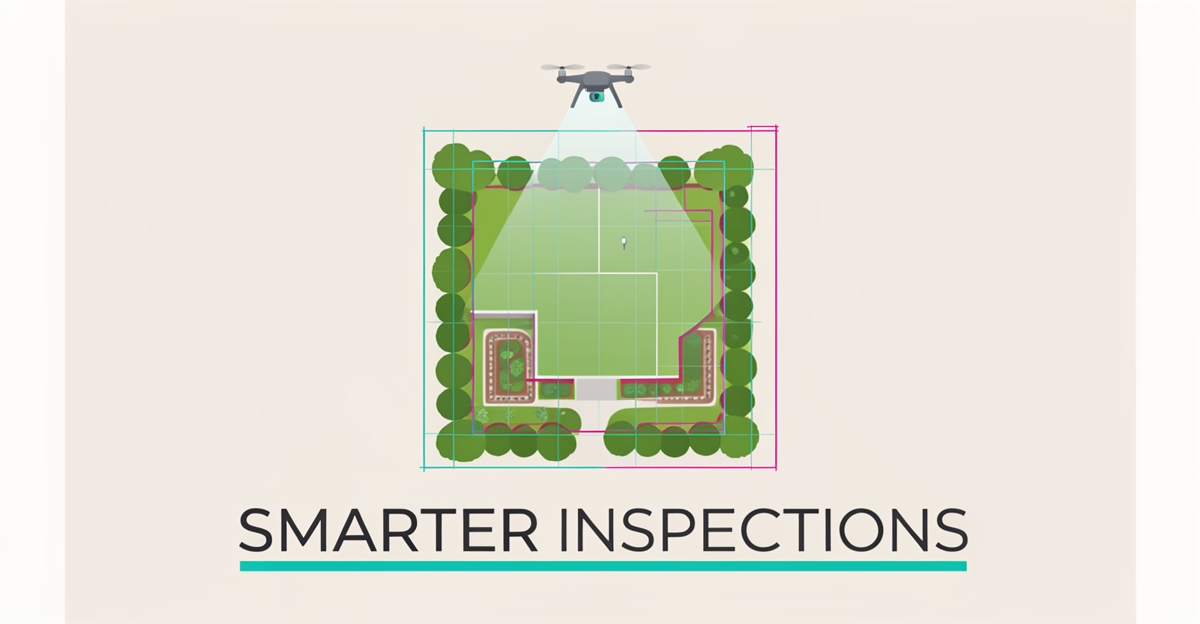
- Automated field data capture: Drones or vehicle-mounted cameras collect geo-referenced imagery across the property.
- Computer vision sifting: The AI engine flags potential exceptions against governing rules or site conditions.
- Human verification dashboard: A manager reviews flagged anomalies, filters false alerts, and approves valid findings.
- Algorithmic refinement: Every manual correction feeds back into the model, steadily reducing false positives.
The performance gap between this model and the alternatives is measurable. Where a manual inspection workflow takes roughly 20+ minutes to compile each notice and resolves issues over multi-week cycles, the hybrid HITL workflow has been reported to compile notices in a couple of minutes, cut resolution cycles to under a week, and meaningfully improve fine collection, while reducing total liability exposure, per the same comparative analysis.
That liability reduction matters because it reflects defensibility, not just efficiency. Human verification helps evidence remain admissible, full compliance with FAA Part 107 and local privacy laws is the technical target, and ensures contextual judgment survives in the record.
For landscaping firms adopting these capabilities, the lesson generalizes: AI should analyze property data, identify terrain issues, and generate preliminary site assessments, while a human professional retains final sign-off. This is the architecture we build at AIQ Labs, custom systems with configurable human-in-the-loop controls, audit trails, and validation layers, so field teams gain speed without surrendering legal standing. In a market where AI innovation is outpacing regulation, that friction isn't a bottleneck, it's what makes the output defensible.
Technical Targets and Compliance Guardrails for Reliable Inspections
The operational foundation for defensible AI inspections begins with establishing rigorous technical targets that ensure reliability at scale. A hybrid Human-in-the-Loop (HITL) architecture is essential to achieve the precision required for legal admissibility and community trust, where AI handles initial data processing while human professionals retain final verification authority. This approach directly addresses the core limitations of standalone automation, such as context blindness and fiduciary risk, by embedding human judgment into critical decision points. Industry guidance suggests reliable inspections demand very low false negative and false positive rates, benchmarks that are difficult to attain without structured oversight and continuous model refinement through human feedback loops.
Compliance guardrails must be engineered into the system from inception, not added as afterthoughts, to mitigate escalating regulatory and security risks. Every data collection phase, whether via drone or ground-based sensors, must adhere strictly to FAA Part 107 regulations for airspace use and align with local privacy statutes to help evidence remain admissible in legal proceedings. TechRadar analysis warns that the culture of speed in AI deployment often treats governance as an obstacle, creating self-sustaining vulnerabilities where unchecked innovation outpaces regulatory frameworks. Meanwhile, AI scaling research finds that most organizations report increased AI ambition, yet a significant proportion of CIOs admit they cannot scale projects beyond pilot phases due to gaps in technical readiness, governance, and execution roadmaps, highlighting the critical scaling gap that stalls widespread adoption.
To bridge this gap, organizations must implement layered safeguards that extend beyond basic compliance to encompass holistic data governance and operational resilience. This includes establishing clear audit trails for all AI-generated findings, enforcing role-based access controls for sensitive property data, and embedding validation layers that prevent autonomous action on high-risk assessments without human confirmation. Evidence admissibility generally requires full compliance with both FAA Part 107 and privacy laws, a non-negotiable threshold for any inspection system seeking legal defensibility. By anchoring AI workflows in these operational standards, prioritizing accuracy targets, regulatory alignment, and human oversight, property management and landscaping firms can transition from fragile pilots to scalable, trustworthy inspection systems that deliver consistent results without compromising accountability or community relations. AIQ Labs supports this transition through AI Operating Systems built in phases and owned outright, helping organizations build the governance and technical foundations needed to move beyond ambition into reliable, compliant execution at scale.
Implementing an AI Site Assessment System for Landscaping Operations
Landscaping operations face mounting pressure to deliver accurate site assessments quickly while managing compliance risks and field team workloads. AIQ Labs helps bridge this gap by designing custom AI systems that support field teams with automated data capture and preliminary analysis, all while keeping human expertise in the loop for final decisions. This approach ensures assessments are both efficient and legally defensible.
A practical rollout begins with auditing violation records from the past 12 months to establish baseline dispute rates and pinpoint inefficiencies in current workflows. This step reveals where manual processes fall short, typically the time spent compiling notices per issue and weak follow-through on violations under manual systems. Understanding these metrics sets the stage for measurable improvement.
Next, draft a clear drone policy that addresses FAA Part 107 licensing, approved flight paths, and privacy safeguards before any aerial data collection begins. Without this foundation, even the most advanced AI system risks producing inadmissible evidence or triggering privacy complaints. Building security and governance in from the start prevents costly rework and ensures compliance with evolving regulations.
Launch a hybrid pilot on a single site to test the end-to-end workflow: AI processes drone imagery to flag potential issues like overgrown vegetation or drainage problems, then sends findings to a manager's dashboard for contextual review. Organizations using this HITL model report notice compilation times dropping to a couple of minutes and resolution cycles shrinking from weeks to days. Every human correction refines the AI, reducing false positives over time.
Finally, integrate the system with field operations tools and client planning platforms so assessment data flows seamlessly into work orders, scheduling software, and client reports. This turns AI from a standalone tool into a production-ready asset owned by the landscaping business, delivering faster site assessments, fewer disputes, and stronger client trust without replacing the expert judgment that drives quality outcomes.
Still paying for 10+ subscriptions that don’t talk to each other?
We build custom AI systems you own outright. No vendor lock-in. Full control.
Not sure where to start? Ask our AI planner
Frequently Asked Questions
Why are manual site inspections becoming ineffective for landscaping teams?
Can AI fully replace human inspectors in property assessments?
What is a Human-in-the-Loop (HITL) workflow in AI property inspections?
How much faster is a hybrid HITL system compared to manual inspections?
What technical standards must an AI inspection system meet to be legally defensible?
What is the first step in implementing an AI site assessment system for landscaping operations?
The Fastest Route to Defensible Site Assessments Starts With One Site
The pattern is consistent across comparative property inspection research: manual inspections are slow and inconsistent, while a hybrid human-in-the-loop workflow compiles notices in minutes, shrinks resolution cycles, and improves follow-through, all while reducing liability exposure. But the real lesson here isn't speed, it's defensibility. AI that flags issues without human verification produces legally questionable output; humans without AI support drown in backlogs and bias. The winning architecture pairs drone-based data capture and computer vision with a manager's final sign-off, wrapped in FAA Part 107 compliance, audit trails, and privacy safeguards built in from day one. Your next step is practical: audit your last 12 months of inspection records, draft a drone policy, and run a single-site hybrid pilot before scaling. If you want help mapping that rollout, or determining whether there's a clear win for your operation at all, AIQ Labs builds these systems through fixed-price, phased Workflow Builds with configurable human oversight baked in. Start the two-minute Fit Check at https://aiqlabs.ai/apply, then book your free 30-minute strategy call at https://aiqlabs.ai/book, a real working session with an AI engineer, not a sales pitch.
Make AI your competitive advantage — not just another tool.
Strategy, implementation and ongoing optimization. One partner, end to end.
Not sure where to start? Ask our AI planner