How AI Can Automate Quality Inspection in Meat Processing Lines
Key Facts
- Market analysis projects the meat processing inspection AI market to grow substantially through 2033 according to market analysis
- Human fatigue can significantly reduce detection accuracy after hours of continuous inspection according to food safety research
- Inspector-to-inspector variation in defect identification rates is a documented challenge in manual inspection per industry research
- Subtle defects like hair, plastic fragments, or early-stage spoilage are commonly missed at standard line speeds per food safety research
- Unsafe food causes an estimated 600 million illnesses and 420,000 deaths annually worldwide per international health statistics
- An estimated 48 million people in the United States suffer from foodborne illnesses each year, resulting in roughly 128,000 hospitalizations and 3,000 deaths according to food safety data
- Contaminant detection tends to drop as line speeds increase beyond what human inspectors can reliably monitor per processing line analysis
Hire a team member that works 24/7 — for less than a part-time wage.
AI receptionists, SDRs, dispatchers and 99+ roles. Trained on your business, fully managed.
Not sure where to start? Ask our AI planner
Why Manual Inspection Fails in Modern Meat Processing
Manual quality inspection in meat processing is increasingly inadequate for today's high-speed production environments. Human inspectors face inherent limitations in fatigue, consistency, and detecting microscopic contaminants at line speeds, creating significant safety gaps. These shortcomings directly contribute to preventable foodborne illnesses that affect millions annually.
An estimated 48 million people in the United States suffer from foodborne illnesses each year, resulting in roughly 128,000 hospitalizations and 3,000 deathsaccording to food safety data. Globally, unsafe food causes an estimated 600 million illnesses and 420,000 deaths annuallyper international health statistics. Many of these incidents stem from defects or contaminants that manual inspection simply cannot reliably catch during continuous production.
- Human fatigue measurably reduces detection accuracy after hours of continuous inspection
- Inspector-to-inspector variation produces inconsistent defect identification rates across shifts
- Subtle defects like hair, plastic fragments, or early-stage spoilage are frequently missed at standard line speeds
- Manual inspection cannot assess internal fat distribution or marbling without destructive testing
- Contaminant detection tends to drop as line speeds exceed what human eyes can reliably track
These limitations create unacceptable business risk in an industry where a single contamination event can trigger massive recalls, regulatory penalties, and irreversible brand damage. The inability to detect foreign materials or pathological changes in real time means contaminated products can reach consumers before issues are identified, a reactive approach that fails modern food safety standards.
AIQ Labs addresses this critical gap by building production-ready computer vision systems that monitor meat cuts for defects, fat content, and contamination in real time. These solutions integrate with existing line sensors to provide consistent, fatigue-free inspection capable of identifying subtle anomalies that human eyes miss, transforming quality control from a reactive checkpoint into a proactive safety control point embedded directly in the production flow. For processors who want to start with a single high-cost workflow, an AI Workflow Build targets exactly that one bottleneck at a fixed price.
How AI-Powered Computer Vision Solves Real-Time Quality Inspection
Real-time inspection is no longer a manual bottleneck on meat lines. AI-powered computer vision turns every camera into a consistent inspector that never tires, never misses a shift, and documents every decision.
Market momentum reflects the shift. Market analysis projects the meat processing inspection AI market to grow substantially through 2033 according to market analysis. That growth is driven by pressure to prevent unsafe food, with an estimated 600 million global illnesses from unsafe food annually as reported by food safety research.
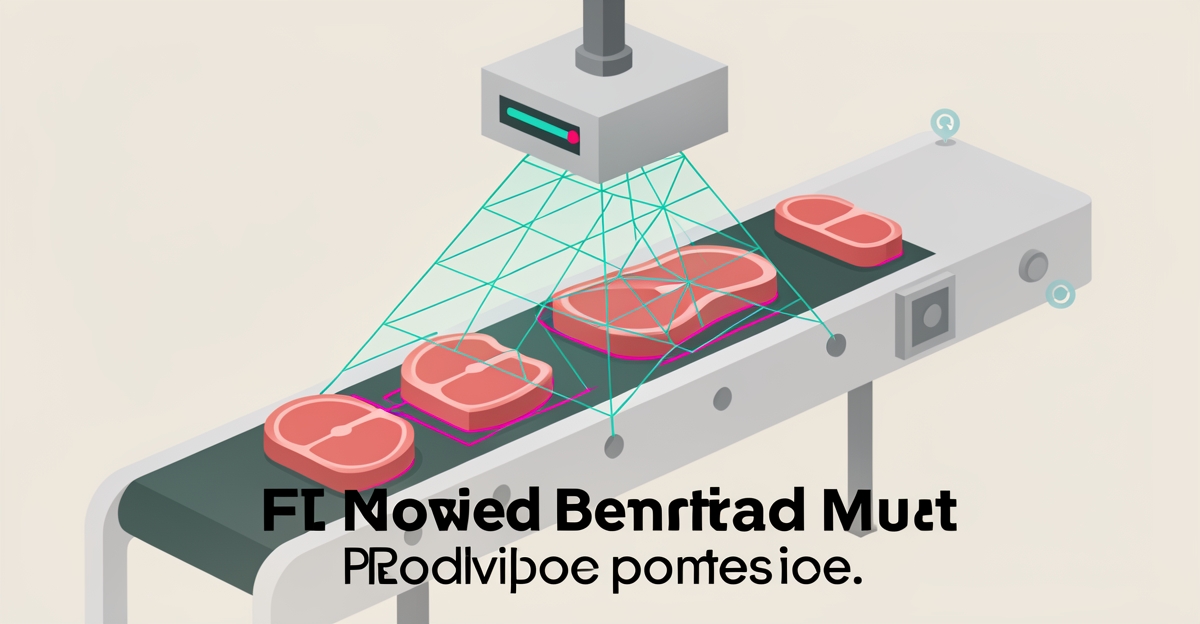
Computer vision is becoming a cornerstone of automated inspection, moving beyond simple defect detection to encompass the identification of foreign materials according to industry coverage. On a production line, cameras capture each cut in high resolution as it moves under existing line sensors. Machine learning models trained on large datasets recognize subtle anomalies in color, texture, marbling, and shape.
The system delivers real-time control, not just post-line reporting. Detection triggers immediate segregation and disposition of affected items, turning inspection into a documented control step that helps prevent adulterated product from entering commerce as described in food safety regulation analysis. This consistent approach reduces reliance on human variability and supports compliance with tightening safety expectations.
AIQ Labs builds production-ready vision and monitoring systems that integrate with existing line sensors. Monitoring meat cuts for defects, fat content variation, or contamination in real time improves safety and consistency across shifts, and when inspection needs to connect into scheduling, dispatch, or reporting, an AI Operating System ties those pieces into one connected layer the business owns outright.
Capabilities deployed on modern lines include:
- Defect and anomaly detection for bruising, discoloration, and trim inconsistency
- Fat content and marbling variation analysis for grade accuracy
- Foreign material identification including plastic, metal fragments, and non-meat objects
- Traceable logging of each inspection event for recall readiness and audit trails
Integration is designed for minimal disruption. Vision models run alongside conveyors, feeding metrics into dashboards that operations teams can monitor live. Alerts are prioritized, and data feeds back into model retraining to improve accuracy over time.
The result is faster decisions, fewer manual checks, and verifiable quality. Predictive inspection replaces reactive sorting, giving processors confidence that issues are caught at the source rather than downstream.
Implementing AI Inspection Systems with Existing Production Lines
Implementing AI inspection systems into existing meat processing lines requires a structured approach that aligns with current operations while unlocking real-time quality control. The process begins with a thorough assessment of the production line to identify critical inspection points where defects, fat content inconsistencies, or contamination risks are most likely to occur. This ensures the AI system targets high-impact areas without disrupting workflow.
Data collection forms the foundation of effective AI implementation. Historical inspection data, sensor outputs from existing line equipment, and visual datasets of both acceptable and defective products must be gathered to train accurate models. As noted in industry research, AI-powered computer vision systems depend on high-quality, labeled data to reliably detect subtle anomalies such as foreign material or fat marbling variations. Once data is prepared, AI models are trained and validated using this information to ensure they meet required precision and recall thresholds before deployment.
Integration with existing line sensors and control systems is achieved through API connections and middleware that allow the AI system to receive real-time image streams and trigger appropriate responses, such as diverting defective products or adjusting line speed. This integration enables the AI to function as a documented control step, turning detection into preventive action rather than mere observation. Throughout implementation, continuous monitoring and model retraining maintain performance as product variations or environmental conditions change.
- Assess production line for optimal AI inspection placement
- Collect and label historical and real-time visual and sensor data
- Train and validate AI models using line-specific datasets
- Integrate AI vision system with existing sensors and PLCs via API
- Deploy, monitor, and continuously optimize model performance
AIQ Labs supports this implementation through AI Workflow Builds, delivering production-ready computer vision systems that businesses own outright, eliminating vendor lock-in while ensuring long-term scalability. Work can start monthly or build in milestones, depending on what fits your budget and risk tolerance. By embedding AI inspection directly into the workflow, meat processors gain real-time oversight that enhances safety, reduces waste, and aligns with evolving regulatory expectations for tech-enabled food safety. This approach transforms quality control from a periodic checkpoint into a continuous, intelligent safeguard embedded in the line.
Still paying for 10+ subscriptions that don’t talk to each other?
We build custom AI systems you own outright. No vendor lock-in. Full control.
Not sure where to start? Ask our AI planner
Frequently Asked Questions
How much does manual inspection actually miss on a high-speed meat processing line?
What kinds of defects can AI vision catch that human inspectors typically miss?
Does implementing AI inspection require replacing our existing production line equipment?
How does AI inspection help with recalls and audit compliance?
Is the AI inspection market actually growing, or is this just hype?
What happens when the AI model encounters a new product variation or seasonal change?
From Reactive Checks to Real-Time Control
Manual inspection can't keep pace with modern meat lines, fatigue, inconsistency and missed contaminants create safety gaps that cost lives and brands. AI-powered computer vision changes the equation by turning every camera into a consistent, fatigue-free inspector that monitors cuts for defects, fat and marbling variation, and foreign material in real time, with traceable logs for recall readiness. The shift is already underway, with market analysis projecting strong growth for inspection AI through 2033 according to market analysis. For processors, implementation means assessing critical inspection points, collecting line-specific visual and sensor data, and integrating vision models with existing sensors and PLCs for immediate segregation. AIQ Labs builds production-ready computer vision systems that integrate with existing line sensors and are owned outright by the business. Start the Fit Check at https://aiqlabs.ai/apply for a free 30-minute strategy call to map your biggest bottleneck and identify high-ROI automation opportunities, or reach the team directly at [email protected].
Make AI your competitive advantage — not just another tool.
Strategy, implementation and ongoing optimization. One partner, end to end.
Not sure where to start? Ask our AI planner