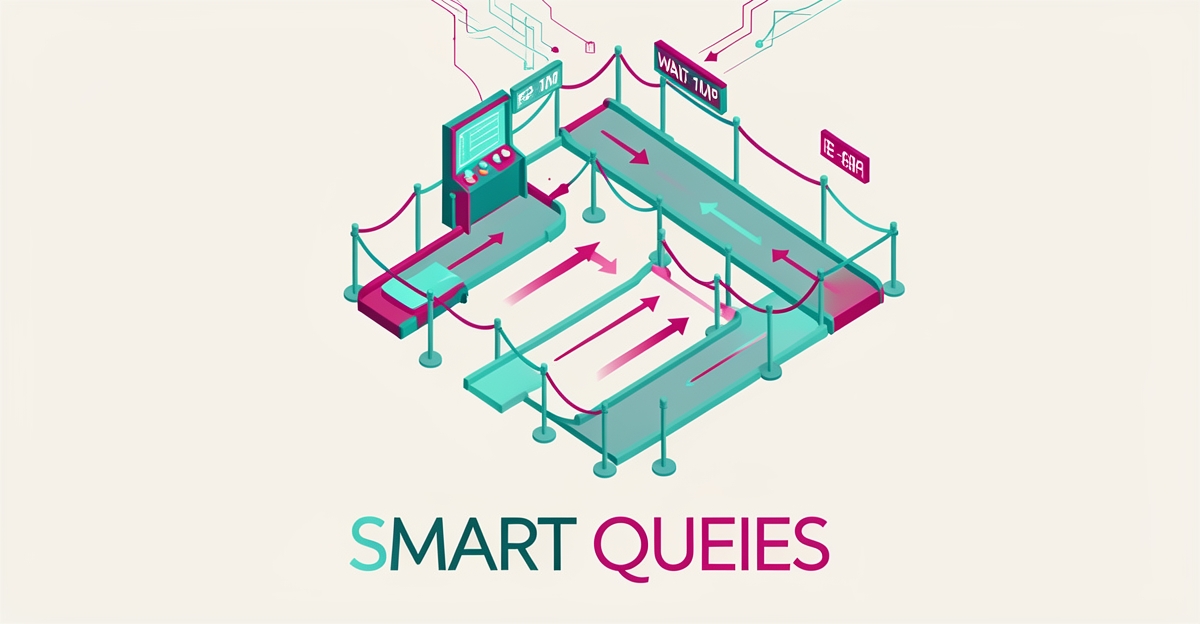
How AI Can Automate Real-Time Queue Management in High-Traffic Family Entertainment Centers
Key Facts
- Industry projections put the global Queue Management AI market on a growth path of roughly 22% CAGR from 2025 through 2033, reflecting strong demand for automated guest-flow systems.
- Industry surveys suggest companies adopting workflow automation typically save around 10-15 hours per employee per week on repetitive tasks.
- As of late 2026, a growing share of small and mid-sized businesses use AI in at least one function, and adoption continues to climb year over year.
- Most organizations that implement AI automation report seeing positive returns within roughly 12 months, according to industry research.
- AIQ Labs has deployed 200+ multi-agent systems and runs 4 live SaaS products daily, real operational experience, not theory.
Hire a team member that works 24/7 — for less than a part-time wage.
AI receptionists, SDRs, dispatchers and 99+ roles. Trained on your business, fully managed.
Not sure where to start? Ask our AI planner
The Hidden Cost of Manual Queue Management in Family Entertainment
Families don’t remember how long the line was. They remember how long it felt.
In high-traffic family entertainment centers, manual queue management turns fun into friction. Staff juggle paper tickets, shout names across noisy floors, and re-route guests when a ride goes down. The result is visible bottlenecks, uneven staffing, and a guest experience that erodes with every extra minute.
Manual processes create hidden labor drag across the operation. Industry surveys suggest companies adopting workflow automation typically save around 10-15 hours per employee per week. In a busy venue, that time is currently spent checking queues, updating boards, and apologizing for delays instead of engaging guests.
Perceived wait time compounds the problem. When guests see a static line with no updates, uncertainty grows faster than the clock. In arcades and play zones, that uncertainty pushes families toward exit doors rather than the next attraction, directly cutting repeat visits and ancillary spend.
Traditional systems also limit operational agility. Staff cannot reallocate resources in real time, predict surge periods, or personalize flow for different guest groups. The operation runs on reaction, not anticipation, and errors climb with fatigue.
The broader shift is well underway. As of late 2026, a growing share of small and mid-sized businesses use AI in at least one business function, and adoption keeps climbing. The queue management segment is accelerating with it, industry projections put the global Queue Management AI market on a growth path of roughly 22% CAGR from 2025 through 2033.
AI-powered queue management changes the dynamic by making flow visible and adjustable. Systems analyze real-time data, predict peak periods, and dynamically allocate resources, thereby reducing wait times and improving service efficiency. Features such as predictive analytics and personalized notifications allow venues to offer a smoother, more engaging guest journey.
The cost of staying manual shows up in three places:
- Staff hours lost to repetitive check-ins and manual re-routing
- Guest dissatisfaction from long, unpredictable waits
- Lost revenue from families leaving early or skipping paid attractions
AIQ Labs approaches this as an AI Workflow Builds challenge: rebuild the one workflow that costs you the most, guest flow, at a fixed price, in phases. The focus is on queue management that adapts without adding headcount.
When queues are managed by data instead of guesswork, teams spend less time firefighting and more time creating moments that bring families back.
How AI Transforms Queue Flow with Real-Time Adaptation
Imagine a family entertainment center where a sudden rainstorm drives hundreds of guests indoors at once, and the queue system instantly rebalances staffing, ride availability, and guest notifications without a single manager lifting a finger. This is the operational reality that AI-powered queue management delivers, and it's why industry projections put the global Queue Management AI market on a growth path of roughly 22% CAGR from 2025 through 2033.
At the core of this transformation lies predictive analytics, which enables the system to forecast demand surges before they materialize. By analyzing historical attendance patterns, real-time foot traffic, weather conditions, and even local event calendars, AI agents can anticipate peak periods and pre-emptively adjust staffing levels, open additional attractions, or modify ride capacity to maintain optimal flow.
These systems rely on multi-agent architectures where specialized AI agents work in concert to manage different aspects of the guest experience. One agent monitors equipment status and ride availability, another tracks queue lengths and wait time predictions, while a third handles guest communications through personalized notifications. This orchestrated approach allows for real-time adaptation that static scheduling simply cannot match. It's the same pattern AIQ Labs has deployed across 200+ multi-agent systems in production.
The operational impact extends beyond guest satisfaction to tangible efficiency gains. Industry surveys suggest companies adopting workflow automation typically save around 10-15 hours per employee per week. In high-traffic venues, this translates to:
- Dynamic staff allocation based on real-time demand rather than fixed schedules
- Automated ride availability adjustments that maximize throughput during peak hours
- Personalized guest notifications that suggest optimal visit times for specific attractions
- Predictive maintenance alerts that prevent downtime before it affects queue flow
AIQ Labs builds custom AI workflows specifically engineered for these high-stakes environments, multi-agent systems that integrate with your existing ticketing infrastructure, IoT sensors, and point-of-sale systems. Rather than offering a one-size-fits-all software package, these tailored solutions learn the unique rhythm of each venue, whether an indoor play zone, arcade, or theme area, and adapt their decision-making accordingly. For venues that want front-of-house coverage too, AI Employees can handle guest check-ins, booking calls, and dispatch at a fraction of the cost of an additional human hire.
The result is a self-optimizing ecosystem where wait times decrease not through guesswork, but through continuous data analysis and automated response. As guest expectations for seamless experiences continue to rise, real-time adaptation becomes the defining competitive advantage for family entertainment centers looking to maximize both capacity and customer satisfaction.
Implementation Roadmap: From Assessment to AI-Owned Queue Automation
For family entertainment centers facing peak-hour congestion, implementing AI-powered queue automation begins with a structured assessment of current guest flow patterns and operational pain points. AIQ Labs starts this process with a free 30-minute strategy call, analyzing foot traffic data, ride or attraction utilization rates, and existing queue bottlenecks to identify the one workflow that costs the venue the most. This discovery phase reflects a broader reality: as of late 2026, a growing share of small and mid-sized businesses use AI in at least one business function, and venues that automate typically free up roughly 10-15 hours per employee per week, a critical advantage for centers managing limited staff during busy periods.
The implementation then progresses through AIQ Labs’ Build in Milestones model, where custom workflows are developed in phased increments at a fixed price. Each milestone focuses on a specific component: first integrating access control turnstiles and POS systems to capture real-time entry and purchase data, then deploying predictive analytics to forecast demand spikes based on historical trends and live foot traffic. Subsequent phases add dynamic queue routing logic that adjusts virtual line assignments according to ride availability, staffing levels, and guest preferences. This phased approach allows centers to validate each integration step, such as synchronizing ticket sales with virtual queue updates, before advancing, reducing risk while maintaining operational continuity. Market analysis confirms that AI-powered queue management systems leveraging predictive analytics and real-time data allocation significantly improve service efficiency, directly supporting the goal of minimizing wait times in high-traffic environments.
Once core integrations are live, the system enters ongoing optimization, where AI continuously refines queue logic based on performance feedback. Key metrics like average wait time, abandonment rates, and guest satisfaction scores drive adjustments to the algorithms, and automation can expand to secondary attractions or food service lines. This iterative improvement cycle ensures the system adapts to seasonal variations, special events, or evolving guest behaviors. Because centers own the custom-built workflow outright, they retain full control to scale or modify the system as needed, without vendor lock-in or surprise fees. For venues that eventually want queue management connected to booking, staffing, and marketing in one layer, an AI Operating System built in phases is the natural next step. The result is a self-optimizing queue management engine that not only reduces congestion but also enhances the overall guest experience, turning operational challenges into opportunities for increased dwell time and repeat visits.
Still paying for 10+ subscriptions that don’t talk to each other?
We build custom AI systems you own outright. No vendor lock-in. Full control.
Not sure where to start? Ask our AI planner
Frequently Asked Questions
How does AI-powered queue management actually reduce wait times in busy family entertainment centers?
What kind of time savings can staff expect from implementing AI workflow automation in queue management?
Is AI queue management only for large theme parks, or can smaller family entertainment centers benefit too?
What are the main risks or downsides of implementing AI in queue management that I should be aware of?
How quickly can a family entertainment center see a return on investment after implementing AI queue management?
Do I need to replace my current ticketing or access control systems to use AI queue management?
Turning Queue Chaos into Competitive Advantage
AI-powered queue management transforms the guest experience in family entertainment centers by replacing guesswork with real-time data, predictive analytics, and dynamic resource allocation. This approach tackles the hidden costs of manual processes, staff hours wasted on repetitive tasks, guest frustration from unpredictable waits, and lost revenue from early exits, while delivering measurable efficiency gains. Facilities adopting these intelligent workflows typically free up 10-15 hours per employee per week, directly boosting engagement and dwell time. For centers ready to move beyond reactive operations and build a self-optimizing system they own outright, the next step is a focused assessment. Start with the 2-minute Fit Check or book a free 30-minute strategy call to map your biggest bottlenecks and explore how a custom AI workflow can turn queue challenges into opportunities for repeat visits and increased spend, without adding headcount or vendor lock-in.
Make AI your competitive advantage — not just another tool.
Strategy, implementation and ongoing optimization. One partner, end to end.
Not sure where to start? Ask our AI planner