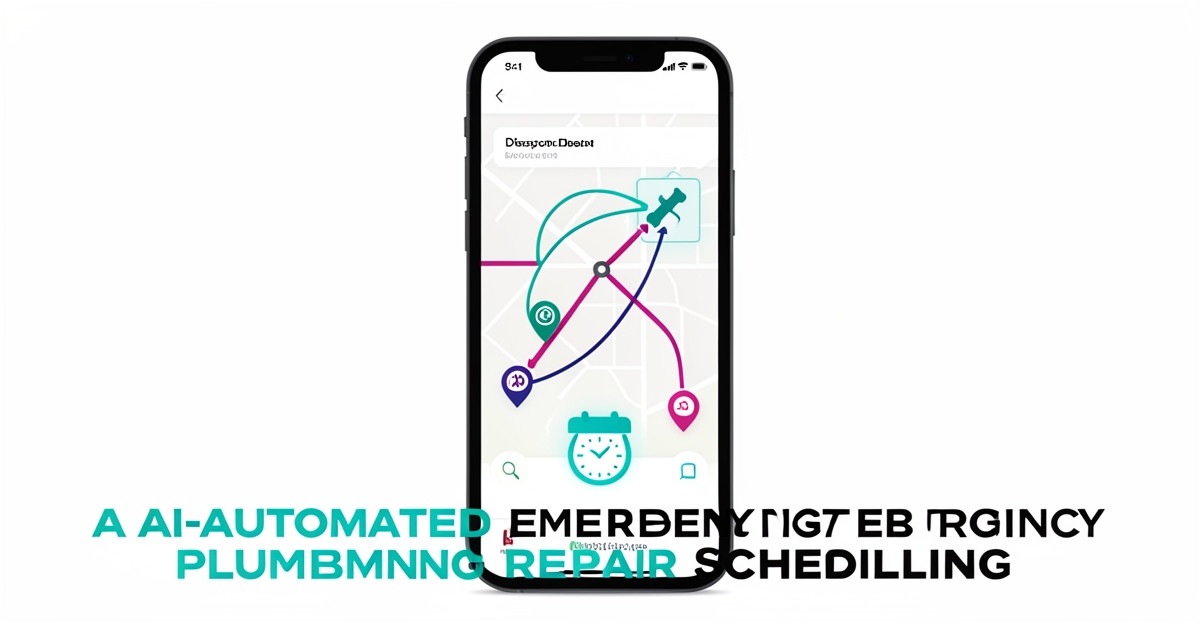
How AI Can Automate Repair Scheduling for Emergency Plumber Workflows
Key Facts
- Manual emergency scheduling creates delays through phone tag, repeated availability checks, and incomplete information handoffs between dispatchers and field crews.
- AI scheduling systems process incoming calls instantly, assess technician availability in real time, and generate optimized dispatches without human intervention.
- AI systems typically integrate with existing CRM, calendar, and GPS tools to evaluate technician location, skills, and parts inventory before dispatching.
- Automated dispatch scales during peak demand periods, winter freezes, heavy rain events, when manual systems and dispatcher capacity break down.
- Human-in-the-loop oversight keeps dispatchers in control of exceptions like high-value commercial jobs and parts shortages while AI handles routine scheduling.
Hire a team member that works 24/7 — for less than a part-time wage.
AI receptionists, SDRs, dispatchers and 99+ roles. Trained on your business, fully managed.
Not sure where to start? Ask our AI planner
The Hidden Cost of Manual Emergency Scheduling
The emergency plumbing call comes in at 2 a.m., a burst pipe flooding a basement. What follows is often a frantic game of phone tag as dispatchers scramble to locate an available technician, check schedules, and call back the distressed homeowner with updates. This manual dance creates critical delays when every minute counts, turning a stressful emergency into a prolonged ordeal for both customer and crew.
Manual scheduling bottlenecks directly impact response quality during high-pressure scenarios. Every availability check, callback, and schedule lookup adds lag between the emergency call and technician dispatch, lag that compounds while water damage spreads. When AI optimizes technician allocation based on real-time availability and proximity instead, that lag largely disappears.
The friction extends beyond delayed response. Technicians frequently arrive unprepared due to incomplete information transfer during the chaotic handoff from dispatcher to field staff. Meanwhile, customers endure repeated calls for updates, increasing frustration and eroding trust in the service provider. Automated systems can instantly confirm appointments and push status updates without human intervention, eliminating the back-and-forth that slows everything down.
These inefficiencies compound during peak demand periods, like winter freezes or heavy rain events, when emergency call volumes surge. Manual systems simply cannot scale, leading to technician misallocation, overlapping appointments, and service gaps that leave customers waiting. Every one of those gaps is revenue walking out the door, often to a competitor who answered first.
- Delayed technician dispatch due to manual schedule checking
- Incomplete job information transfer increasing first-visit inefficiency
- Customer frustration from repeated status update requests
- Technician misallocation during high-volume emergency periods
- Scaling limitations when call volume exceeds dispatcher capacity
For plumbing businesses relying on legacy scheduling methods, these hidden costs manifest as damaged customer relationships, wasted technician hours, and missed revenue opportunities, all preventable with AI-driven automation that handles the complexity of emergency coordination in real time. AIQ Labs builds these systems as managed AI Employees or as a focused Workflow Build targeting the single costliest bottleneck in your operation, integrating directly with the calendar and service tools you already run.
How AI Eliminates Scheduling Friction in Real Time
When an emergency strikes, every minute counts, yet traditional scheduling wastes precious time on phone tag and manual availability checks. AI eliminates this friction by processing calls instantly, assessing technician availability in real time, and generating optimized dispatches without human intervention. The dispatcher stops being a bottleneck and becomes a supervisor of exceptions.
The system begins by analyzing incoming emergency calls through natural language processing to determine urgency, location, and required expertise. Simultaneously, it evaluates real-time technician data, including current job status, GPS location, skill certifications, and parts inventory, against calendar integrations to identify the nearest qualified professional. This coordination across CRM, scheduling tools, and dispatch systems ensures decisions reflect live operational conditions rather than static schedules.
Once availability is confirmed, AI-driven dispatch logic calculates optimal routing by factoring in traffic patterns, service urgency, and equipment needs, then automatically books the appointment and sends customer confirmations. This end-to-end automation reduces administrative overhead while improving response consistency, critical for plumbing emergencies where delays can exacerbate property damage. By handling routine scheduling decisions autonomously, the system allows human dispatchers to focus on complex escalations and strategic planning, creating a balanced human-AI collaboration that enhances both efficiency and service quality.
Implementation: Integrating AI with Your Existing Plumbing Workflow
Deploying AI scheduling for emergency plumbing workflows begins with a clear assessment of current processes. Map out how emergency calls are received, how technicians are currently dispatched, and where manual back-and-forth creates delays. This foundational step identifies specific pain points that AI can resolve, such as scheduling conflicts or missed follow-ups. It's the same discovery-first approach AIQ Labs uses before any build begins.
Next, integrate the AI system with your existing calendar and CRM tools to enable real-time data flow. Connect scheduling platforms like Google Calendar or Calendly, CRM systems such as HubSpot or Salesforce, and GPS tracking tools so the AI can instantly assess technician location, availability, and skill sets. This integration creates a centralized automation pipeline where AI agents process emergency calls, evaluate real-time technician data, and generate optimized schedules that account for travel time and parts inventory.
Establish clear human oversight protocols to ensure AI handles routine scheduling while escalating complex cases. Define thresholds for when human intervention is required, such as high-value commercial jobs, parts shortages requiring special ordering, or customer escalations, so dispatchers retain control over exceptions. Train staff on how to monitor AI-generated schedules, override decisions when necessary, and provide feedback for continuous improvement. This human-in-the-loop model maintains service quality while leveraging automation.
- Assess current workflow bottlenecks
- Integrate AI with calendar, CRM, and GPS tools
- Set up human oversight for complex cases
- Train staff on AI collaboration and feedback
- Monitor performance and iterate monthly
By following these steps, plumbing companies can transform emergency scheduling from a manual bottleneck into a streamlined, AI-augmented process that improves response times and customer satisfaction. And because the system is built in phases and owned outright, you're never locked into a black box you can't control.
Still paying for 10+ subscriptions that don’t talk to each other?
We build custom AI systems you own outright. No vendor lock-in. Full control.
Not sure where to start? Ask our AI planner
Frequently Asked Questions
How does AI actually speed up emergency plumbing dispatch?
Will AI replace my dispatchers?
Can AI work with the calendar and CRM tools we already use?
What kind of response time improvement can we realistically expect?
Will AI scheduling hold up during peak demand like winter freezes?
How do we start AI scheduling without overhauling our whole workflow?
Turning Emergency Response into a Competitive Advantage
Emergency plumbing workflows don't have to be defined by frantic phone tag and delayed dispatches. As this article outlined, AI-driven scheduling eliminates manual bottlenecks by processing calls instantly, matching technicians based on real-time availability and proximity, and automating customer confirmations, all while integrating with existing calendar and CRM tools. The result is faster response times, reduced technician idle time, and fewer missed service opportunities, directly translating to stronger customer trust and more efficient operations during peak demand. For plumbing businesses ready to move beyond reactive scheduling, the next step is a focused assessment of where AI can resolve specific friction points. AIQ Labs helps SMBs identify these high-impact opportunities through a free strategy call, offering a clear path to automation that aligns with real operational goals. To explore how AI can transform your emergency workflow without overhaul or risk, start with the Fit Check to see where the wins are waiting.
Start the Fit Check to begin your no-obligation assessment, or email [email protected] with questions.
Make AI your competitive advantage — not just another tool.
Strategy, implementation and ongoing optimization. One partner, end to end.
Not sure where to start? Ask our AI planner