How AI Can Automate Site Inspections and Safety Compliance for Road Construction Companies
Key Facts
- Automated inspection systems typically pair ruggedized cameras, drones, and IoT sensors with computer vision models, hardware remains the largest cost component in most deployments
- Continuous monitoring closes the gap between periodic walkthroughs, where hazards can develop unnoticed between inspections
- Automated systems generate timestamped, geotagged audit trails that support OSHA and DOT compliance reviews
- AI inspection programs succeed or fail on data quality and integration, not on the choice of model
- AIQ Labs has deployed 200+ multi-agent systems and runs 4 live SaaS products daily
Hire a team member that works 24/7 — for less than a part-time wage.
AI receptionists, SDRs, dispatchers and 99+ roles. Trained on your business, fully managed.
Not sure where to start? Ask our AI planner
The Hidden Cost of Manual Site Inspections in Road Construction
Manual site inspections in road construction carry hidden costs that extend far beyond labor hours. Traditional methods rely on periodic human checks, which are inherently limited by fatigue, inconsistent training, and the inability to monitor vast work zones continuously. This creates significant blind spots where hazards can develop unnoticed between inspections, increasing the risk of accidents and near-misses. The reactive nature of manual oversight means safety issues are often only identified after an incident occurs, undermining proactive risk management.
Human error remains a leading factor in construction site incidents, with delayed hazard detection directly contributing to preventable injuries and project delays. Without real-time monitoring, subtle but critical risks, such as uneven pavement settlement, inadequate signage, or equipment malfunctions, can persist undetected until they escalate. These gaps not only endanger workers and the public but also expose companies to regulatory scrutiny and costly work stoppages during safety audits. Inconsistent documentation further complicates compliance efforts, as paper-based or sporadic digital records lack the traceability and consistency required for rigorous inspections.
The operational inefficiencies of manual processes extend to audit vulnerabilities, where inspectors may miss recurring patterns of non-compliance due to fragmented data collection. Unlike automated systems that generate continuous, auditable logs, manual inspections depend on subjective recollections and incomplete checklists, making it difficult to demonstrate due diligence during regulatory reviews. This lack of verifiable evidence increases liability and can result in fines, project delays, or reputational damage when safety standards are questioned. For road construction firms striving to maintain both safety and schedule adherence, these limitations highlight a pressing need for more reliable, consistent inspection methods.
This is the shift AIQ Labs helps companies make: replacing error-prone manual checks with intelligent systems that provide continuous, objective monitoring, turning safety compliance from a periodic burden into a real-time operational advantage. By integrating computer vision, sensor data, and predictive analytics, these tools can identify anomalies the moment they emerge, enabling immediate corrective action before risks materialize. This approach not only reduces reliance on fallible human judgment but also builds a defensible, data-driven safety record that strengthens audit readiness and regulatory confidence. Ultimately, automating site inspections transforms safety from a cost center into a measurable contributor to project efficiency and workforce protection.
How AI-Powered Inspection Systems Detect Hazards in Real Time
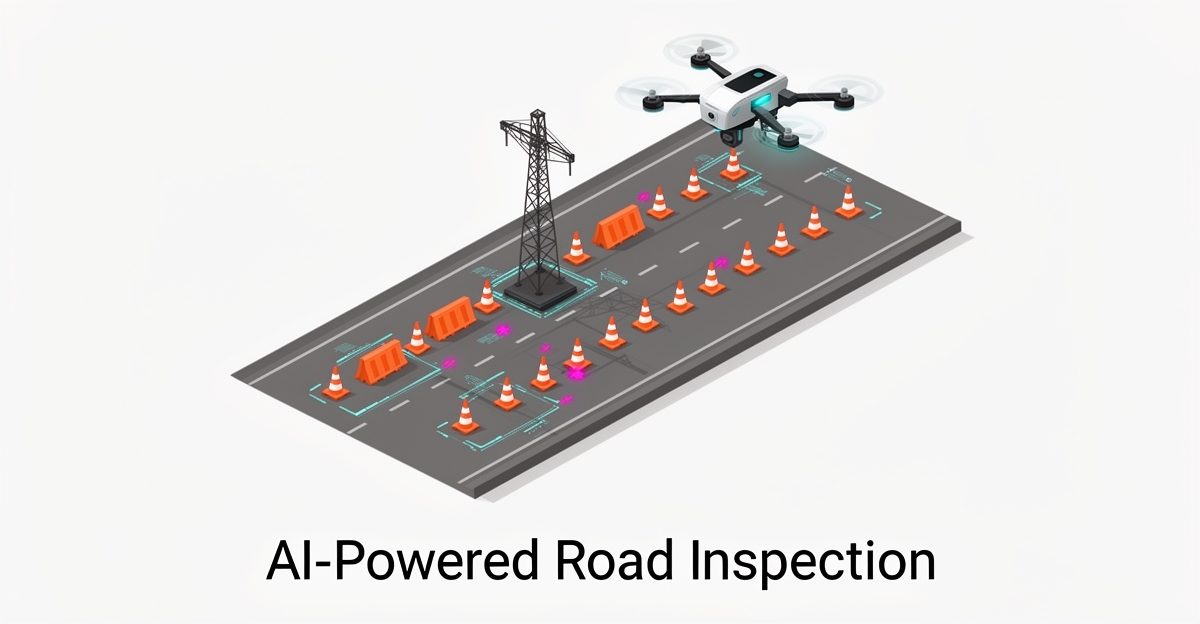
Road construction sites generate massive streams of visual and sensor data every shift, yet most firms still rely on periodic walkthroughs that miss hazards between inspections. AI-powered inspection systems close that gap by continuously analyzing feeds from drones, fixed cameras, and IoT sensors to flag structural defects, equipment malfunctions, and worker violations the moment they appear. The technology applies computer vision models trained on site-specific conditions to detect cracks in pavement, improper shoring, missing guardrails, and PPE non-compliance with a consistency human inspectors cannot match across thousands of linear feet.
Adoption has accelerated as the hardware has matured. Ruggedized cameras and edge compute units, built to survive dust, vibration, and weather, now anchor most deployments, reflecting the need for reliable data capture in harsh environments. As of late 2026, industry analysts consistently point to automated inspection as one of the fastest-growing applications of computer vision in heavy construction, though exact market projections vary widely by scope and source.
- Drones equipped with thermal and RGB sensors map subsurface voids and pavement delamination before they become visible
- Fixed cameras on pavers and rollers monitor compaction uniformity and material temperature in real time
- Wearable IoT devices track worker proximity to moving equipment and trigger instant alerts
- Automated defect classification routes findings to the right crew with geotagged evidence for immediate remediation
The shift from reactive to continuous monitoring changes the safety economics of a project. Instead of discovering a failed slope or damaged barrier during a weekly audit, supervisors receive prioritized alerts with annotated imagery, enabling same-shift correction. This reduces the inspection-to-action cycle from days to minutes and creates an auditable digital trail for OSHA and DOT compliance. AIQ Labs builds custom multi-agent systems that fuse these data streams, apply site-specific risk models, and integrate with existing project management and ERP platforms so safety intelligence flows directly into daily operations. For contractors who want to start smaller, a single workflow rebuild, automating the one inspection or reporting process that costs the most, is often the fastest way to prove value.
Building a Governed AI Foundation: Why ERP Integration Is Non-Negotiable
The most advanced AI models will fail if they are built on a foundation of fragmented data and unclear processes. For road construction companies, the leap from manual safety checks to automated intelligence hinges not on the algorithm itself, but on the governed environment in which it operates. Without clean data and clear controls, AI becomes a liability rather than an asset, generating unreliable insights that increase audit risk instead of reducing it.
AI systems are only as reliable as the data they consume. Poor data quality leads directly to inaccurate hazard detection and compliance reporting, undermining the entire safety program. This is why a robust data management system is the prerequisite for any successful deployment. Industry analysis has repeatedly found that the real constraint on AI success is not the technology itself, but the lack of a strong operational foundation underneath it.
Enterprise Resource Planning (ERP) systems provide the governed backbone that AI requires to function effectively in high-stakes environments like road construction. By establishing a single source of truth, ERP platforms enforce data controls and create auditable outcomes across every project site. When AI is embedded within this governed environment, it transforms raw inspection data into compliant, actionable intelligence while maintaining the strict documentation standards required for regulatory audits.
The broader move toward automated inspection reflects a simple calculation: the cost of sensors and compute keeps falling while the cost of incidents, fines, and delays keeps rising. However, capturing this value requires more than purchasing software. It demands an execution framework where AI and ERP work in concert, combining the adaptability of machine learning with the operational discipline of enterprise platforms.
Building this foundation requires deliberate architectural choices:
- Establishing data governance protocols before model training begins
- Integrating inspection AI directly with ERP workflows for real-time compliance tracking
- Implementing human-in-the-loop controls for critical safety decisions
- Creating immutable audit trails that satisfy regulatory scrutiny
AIQ Labs approaches safety automation by first architecting this governed foundation, ensuring that custom AI systems integrate seamlessly with existing enterprise platforms rather than operating as isolated tools. For companies that want one connected layer across inspections, scheduling, compliance, and reporting, an AI operating system built in phases, and owned outright, avoids the trap of disconnected pilots. This methodology aligns with research on inspection methodologies, which emphasizes that automated systems deliver repeatable value only when supported by structured data collection and clear operational protocols.
The result is an AI capability that scales across multiple sites while maintaining consistent safety standards. With governed data flowing through integrated systems, road construction firms can automate hazard detection with confidence, knowing every AI-generated alert is traceable, auditable, and grounded in reliable information. This operational maturity transforms AI from an experimental pilot into a core component of enterprise risk management.
From Pilot to Production: How AIQ Labs Deploys Custom Safety AI for Road Contractors
The journey from AI pilot to production-ready safety system begins with a clear assessment of existing workflows and data quality. Many road construction firms struggle with fragmented inspection records and inconsistent reporting, which undermines the effectiveness of any AI solution. AIQ Labs starts by evaluating current site monitoring practices, identifying gaps in data collection, and determining what structured inputs are needed to train reliable safety models. This foundational step ensures the AI system is built on accurate, auditable information rather than assumptions.
Once data readiness is established, AIQ Labs develops custom AI agents tailored to the contractor's specific safety protocols and regulatory requirements. These agents are engineered using modern multi-agent frameworks, enabling them to analyze video feeds, sensor data, and site logs in real time to detect hazards such as missing PPE, equipment proximity risks, or traffic control violations. The system is designed to integrate seamlessly with tools already in use, like Procore for project management or Primavera for scheduling, through deep two-way API connections that allow the AI to both pull context and push alerts or compliance updates directly into existing workflows.
Deployment can follow a managed AI employee model, where the safety monitoring system operates continuously as a virtual team member, working 24/7 without fatigue or oversight gaps, typically at a fraction of the cost of an equivalent human hire. Unlike point solutions that require constant vendor coordination, AIQ Labs builds systems the contractor owns outright, retaining full control over customization, data, and future enhancements. This approach addresses the operational-foundation problem directly by combining custom development with governance, integration, and ongoing optimization under a single partnership. The greatest value emerges when AI's adaptability is paired with the discipline of enterprise platforms, creating a scalable, compliant safety monitoring system that reduces accident risks and audit exposure.
Still paying for 10+ subscriptions that don’t talk to each other?
We build custom AI systems you own outright. No vendor lock-in. Full control.
Not sure where to start? Ask our AI planner
Frequently Asked Questions
How does AI actually catch hazards on a road construction site that manual inspections miss?
Is AI for site inspections just hype, or is adoption really growing?
What's the biggest risk if we try AI without fixing our data first?
Do we need ERP integration for AI safety compliance to work?
How fast can AI turn an inspection finding into action?
Can AI inspections be customized to our specific safety protocols?
Turning Safety into a Strategic Advantage
Automating site inspections with AI transforms safety from a reactive, error-prone process into a proactive, data-driven advantage for road construction companies. By continuously monitoring hazards, integrating with ERP systems for governed compliance, and deploying custom AI systems that work as virtual team members, firms can reduce accidents, avoid costly delays, and build auditable safety records that stand up to regulatory scrutiny. The shift isn't just about technology, it's about building operational resilience where safety intelligence flows directly into daily decisions. For contractors ready to move beyond manual checks and pilot projects, the next step is a clear assessment of where AI can deliver the highest impact. Start the 2-minute Fit Check, then book a free 30-minute strategy call to map your biggest bottlenecks and identify high-ROI automation opportunities tailored to your site operations.
Make AI your competitive advantage — not just another tool.
Strategy, implementation and ongoing optimization. One partner, end to end.
Not sure where to start? Ask our AI planner