How AI Can Automate the Trailer Inspection & Pre-Purchase Process
Key Facts
- AI-powered visual inspection can significantly reduce trailer inspection time compared to manual review, as demonstrated in industrial quality-control applications
- Quality control automation is widely reported to deliver strong ROI within 18 months, driven by reduced labor costs, fewer errors, and faster decision cycles
- Predictive maintenance powered by AI is commonly credited with reducing unplanned downtime by 30-40% in industry analyses
- The digital pre-trip inspection automation market has been projected to grow from roughly $1.42 billion in 2024 toward $4.13 billion by 2033, at a reported 13.6% CAGR per market research
- AI agents can automate checklist reviews, flag maintenance issues, and generate standardized pre-purchase reports with minimal human input as built by AIQ Labs
- AI performs an exhaustive first pass scanning for anomalies while human inspectors review flagged items and apply judgment (per implementation guidance)
- AI-driven defect detection can minimize overkill rates while accurately identifying challenging defects, per quality control research
Hire a team member that works 24/7 — for less than a part-time wage.
AI receptionists, SDRs, dispatchers and 99+ roles. Trained on your business, fully managed.
Not sure where to start? Ask our AI planner
The Hidden Cost of Manual Trailer Inspections
Manual trailer inspections often break down under the weight of human limitations. Inspector fatigue sets in during long shifts, leading to missed defects and inconsistent evaluations. Checklists vary between inspectors, and subjective judgments erode buyer confidence in the pre-purchase process. These inefficiencies slow turnaround times and increase the risk of costly oversights. As the digital inspection automation market grows toward a projected $4.13 billion by 2033 at a reported 13.6% CAGR according to market research, the industry is clearly moving beyond clipboards and disconnected cameras.
Manual processes struggle to keep pace with the demands of modern fleet operations. Without standardized logic, inspections become reactive rather than preventive, increasing the likelihood of unsafe trailers on the road. Variability in reporting makes it difficult for buyers to compare assets objectively, and delays in inspection results stall purchasing decisions. These pain points create a clear business case for automation—one that addresses not just speed, but consistency, accuracy, and trust.
AI-powered systems overcome these challenges by applying consistent logic to every inspection. Computer vision algorithms can detect subtle defects like frame cracks or worn suspension components that might be overlooked by fatigued human inspectors. By integrating with existing tools such as digital cameras and IoT sensors, AI agents automate checklist reviews, flag maintenance issues in real time, and generate standardized pre-purchase reports with minimal human input. Industrial applications of vision AI have shown significant reductions in inspection time alongside improved defect detection accuracy.
The result is a more reliable, transparent process that builds confidence for both buyers and sellers. Buyers receive objective, data-driven reports they can trust, while sellers benefit from faster turnarounds and fewer disputes over condition assessments. AIQ Labs builds AI systems that integrate into inspection workflows—whether as a single AI Workflow Build targeting your inspection bottleneck or as part of a broader AI Operating System—transforming a traditionally manual, error-prone task into a streamlined, auditable process. These systems don't replace human expertise—they augment it, allowing inspectors to focus on complex judgments while AI handles repetitive, data-intensive tasks.
For businesses still relying on manual methods, the hidden costs are significant: increased liability, slower sales cycles, and eroded trust in the inspection process. By adopting AI-driven automation, companies can reduce operational friction, improve safety compliance, and position themselves at the forefront of an industry shift toward intelligent, data-backed evaluations. The market is already moving in this direction—those who act now gain an edge in accuracy, efficiency, and buyer confidence.
How AI-Powered Visual Inspection Actually Works
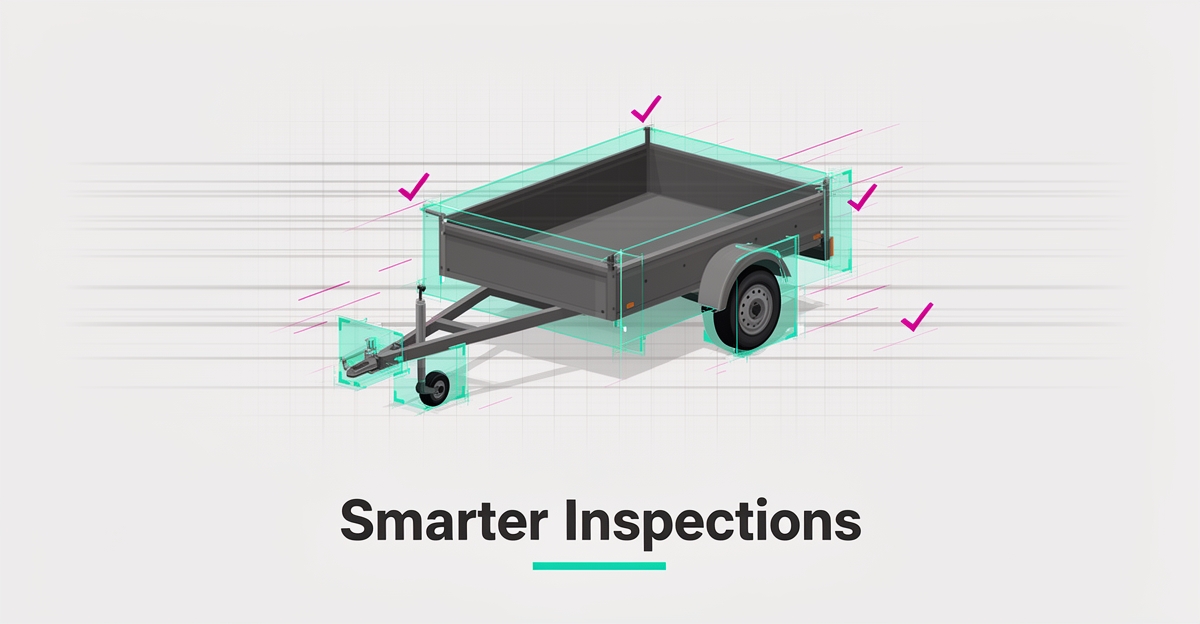
Behind every AI-powered trailer inspection is a pair of technologies working in tandem: computer vision, which captures and interprets images and video of the trailer, and machine learning models trained to recognize what damage actually looks like. Feed these systems high-resolution photos of a trailer's frame, walls, roof, and undercarriage, and they can flag surface scratches, structural issues, and wear patterns that signal deeper problems.
The speed advantage is substantial. Industrial analyses of vision AI, including Advantech's machine vision research, report inspection time reductions on the order of 60-70% compared to manual review. For a pre-purchase evaluation, that means a buyer can move from photo capture to a structured defect report in a fraction of the time a walk-around inspection would take.
Consistency matters just as much as speed. Human inspectors are prone to fatigue and subjectivity—two identical trailers can receive different verdicts depending on who looks at them and when. AI systems evaluate every image against the same trained criteria, delivering uniform results across hundreds of inspections. This is why quality control research shows AI-driven defect detection can minimize overkill rates while accurately identifying even challenging defects.
What does that look like in practice? A well-trained visual inspection system can catch:
- Surface damage such as scratches, dents, and corrosion on trailer panels
- Dimensional deviations and assembly errors that indicate structural issues
- Wear patterns that suggest developing mechanical or maintenance problems
- Subtle defects easy to miss during a rushed or fatigued manual review
Critically, AI works best as an augmentation layer rather than a replacement for human expertise. As implementation guidance on AI visual inspection notes, AI is not meant to replace human inspectors entirely, but to augment their capabilities and improve overall quality control. The AI performs the exhaustive first pass—scanning every frame for anomalies—while the human inspector reviews flagged items, applies judgment to ambiguous cases, and makes the final call. This division of labor catches subtle defects humans miss while keeping false positives in check.
The workflow extends beyond detection, too. Modern systems can automate checklist reviews, log identified maintenance issues, and generate standardized pre-purchase reports with minimal manual input. AIQ Labs builds AI systems that integrate directly with inspection tools to produce these standardized reports automatically, so the output a buyer receives is consistent, documented, and ready for decision-making.
The underlying implementation follows a proven pattern: define the defects to detect, gather a dataset of good and defective examples, train the model, integrate it with existing tools, then monitor and retrain over time. As the digital pre-trip inspection automation market grows toward a projected $4.13 billion by 2033, the technology stack behind it is becoming increasingly accessible to businesses of every size.
From Checklist to Report: Automating the Pre-Purchase Workflow
The pre-purchase workflow for trailers has long relied on manual checklists and time-consuming report generation, creating bottlenecks in transactions and leaving buyers vulnerable to overlooked issues. Today, AI agents are transforming this process by automatically reviewing digital inspection data, cross-referencing findings with maintenance histories, and flagging predictive maintenance concerns. Industry research commonly credits AI-powered predictive maintenance with reducing unplanned downtime by 30-40%, which directly translates to lower operational risk and increased confidence in purchase decisions.
These intelligent systems integrate with existing inspection tools—such as digital checklist apps, IoT sensors, and maintenance logs—to create a unified workflow where data flows automatically from collection to analysis. AIQ Labs builds AI agents that operate within this ecosystem, interpreting visual and sensor data against historical performance patterns to identify subtle wear, impending component failures, or recurring issues that human inspectors might miss under time pressure. By anchoring assessments in both real-time findings and long-term trends, the technology shifts inspections from reactive spot-checks to proactive risk evaluations.
Once analysis is complete, the AI agent generates a standardized, audit-ready pre-purchase report that summarizes key findings, highlights predictive risks, and provides actionable insights—all with minimal human input. This automation can cut inspection time significantly, as noted in Advantech's findings on vision AI efficiency, while ensuring consistency and completeness across every transaction. The result is a faster, more transparent process that accelerates negotiations, reduces back-and-forth, and gives buyers the assurance they need to move forward with confidence.
- Automated review of digital checklists against maintenance history
- Predictive maintenance flagging with meaningful downtime reduction potential
- Standardized report generation with minimal human intervention
- Integration with existing inspection tools and IoT data sources
- Audit-ready documentation that increases buyer confidence
Implementing AI Inspection: A Practical Roadmap
Starting the journey to automate trailer inspections begins with clearly defining what defects matter most—whether structural damage, wear patterns, or safety compliance issues. This focused problem definition ensures the AI system targets high-impact areas, directly supporting faster pre-purchase evaluations. Industry research confirms that AI-driven visual inspection delivers consistent, high-speed defect detection critical for logistics and manufacturing operations.
Next, gather a diverse dataset of high-resolution images and videos showing both compliant trailers and various defect types—such as frame cracks, tire wear, or lighting failures—under real-world conditions. Effective AI training depends on data quality and volume; models trained on comprehensive, labeled datasets achieve higher accuracy in identifying subtle defects that manual inspectors might miss. Best practices in AI visual inspection emphasize that robust data collection is foundational to minimizing false positives and ensuring reliable performance across varying lighting and angles.
Selecting the right AI technology follows, typically involving computer vision models like CNNs or transformer-based architectures paired with edge computing for real-time processing on-site. Training the model requires iterative refinement using the collected dataset, validating precision and recall metrics before deployment. Integration with existing workflows—such as maintenance logs, procurement systems, or mobile inspection apps—ensures adoption without disrupting current operations. Finally, deploy the system with continuous monitoring, retraining as new defect patterns emerge, and establish feedback loops to maintain accuracy over time. Industry analyses, including Advantech's research, report that quality control automation can deliver strong ROI within 18 months by reducing labor costs, minimizing errors, and accelerating decision-making.
Real-world implementation faces hurdles including substantial data collection efforts, integration complexity with legacy systems, and the need for specialized AI expertise—challenges that internal teams often struggle to overcome alone. Owning the built system, rather than relying on subscription tools, provides long-term control, eliminates recurring vendor fees, and enables customization as inspection standards evolve. This is exactly the model behind AIQ Labs' AI Workflow Builds: we rebuild the one workflow that costs you the most—at a fixed price, in phases—and you own the result outright. It turns inspection into a scalable, insight-driven advantage rather than another line item on a subscription bill.
The ROI Case: What Automation Returns to Your Business
Automation transforms the trailer inspection and pre-purchase process from a bottleneck into a strategic advantage. By integrating AI-powered visual inspection and intelligent report generation, businesses achieve measurable returns that directly impact the bottom line. Industry research reports that quality control automation can deliver 200-300% ROI within 18 months, driven by reduced labor costs, fewer errors, and faster decision cycles. Inspection time can drop by 60-70% with vision AI, enabling teams to evaluate more units per day without sacrificing accuracy. This efficiency gain is critical in competitive markets where speed and trust influence purchasing outcomes.
AIQ Labs builds inspection AI that integrates with existing tools to automate checklist reviews, flag maintenance issues, and generate standardized pre-purchase reports with minimal human input. These systems are engineered for production use, built on multi-agent architectures proven across 200+ deployed systems and the 4 live SaaS products AIQ Labs runs daily. The result is not just faster inspections, but more consistent, auditable evaluations that increase buyer confidence and reduce post-purchase disputes. Faster turnaround means quicker inventory turnover, while higher report accuracy strengthens your reputation as a trustworthy supplier.
- Reduce inspection labor substantially through automated defect detection and reporting
- Cut pre-purchase evaluation time from hours to minutes per unit
- Increase inspection throughput without adding headcount
- Improve report consistency and audit readiness
- Enable data-driven pricing and negotiation based on objective condition scores
The competitive edge comes from combining speed with reliability—delivering inspections that are both fast and defensible. When buyers receive detailed, AI-validated reports quickly, trust accelerates the sales cycle. This isn't theoretical; it's the same engineering AIQ Labs applies daily in its own revenue-generating platforms. To uncover your highest-ROI automation opportunity, start with the 2-minute Fit Check at https://aiqlabs.ai/apply, then book your free 30-minute strategy call at https://aiqlabs.ai/book. No obligation, just clarity on your path to measurable impact.
Still paying for 10+ subscriptions that don’t talk to each other?
We build custom AI systems you own outright. No vendor lock-in. Full control.
Not sure where to start? Ask our AI planner
Frequently Asked Questions
How much time can AI actually save in trailer inspections compared to manual methods?
Advantech's industry analysis documents this efficiency gain for pre-purchase evaluations.
Will AI replace human inspectors in the trailer inspection process?
As implementation guidance notes, AI performs the exhaustive first pass, flagging anomalies for human review to improve overall quality control and minimize false positives.
What kind of defects can AI detect that humans might miss during trailer inspections?
These capabilities reflect what well-trained visual inspection systems can catch in practice across industrial quality-control deployments.
What ROI can businesses expect from implementing AI-powered trailer inspection automation?
Advantech's findings attribute this return to faster inspections, higher throughput, and improved report consistency that builds buyer confidence.
How does AI improve the reliability and trustworthiness of pre-purchase trailer reports?
This consistency increases buyer confidence and reduces post-purchase disputes—a core outcome of the workflow automation approach AIQ Labs applies when integrating visual and sensor data against historical performance patterns.
Can AI inspection systems work with our existing tools like digital cameras and maintenance logs?
AIQ Labs builds AI systems that operate within this ecosystem, interpreting visual and sensor data to generate standardized pre-purchase reports with minimal human input.
From Manual Checks to Intelligent Assurance
AI-powered trailer inspection transforms a traditionally slow and inconsistent process into a streamlined, data-driven workflow that builds buyer trust and accelerates sales cycles. By cutting inspection time and improving defect detection accuracy, businesses gain operational efficiency while minimizing costly oversights. The integration of computer vision and machine learning ensures every trailer is evaluated against the same objective standard, turning subjective judgments into auditable, standardized reports. For companies ready to move beyond manual checklists and fragmented tools, the path forward begins with understanding where AI delivers the highest impact. Take the first step with the 2-minute Fit Check at aiqlabs.ai/apply, then book a free 30-minute strategy call at aiqlabs.ai/book—no obligation, just clarity on how AI can strengthen your pre-purchase evaluations in a market projected to reach $4.13 billion by 2033 according to industry forecasts.
Make AI your competitive advantage — not just another tool.
Strategy, implementation and ongoing optimization. One partner, end to end.
Not sure where to start? Ask our AI planner