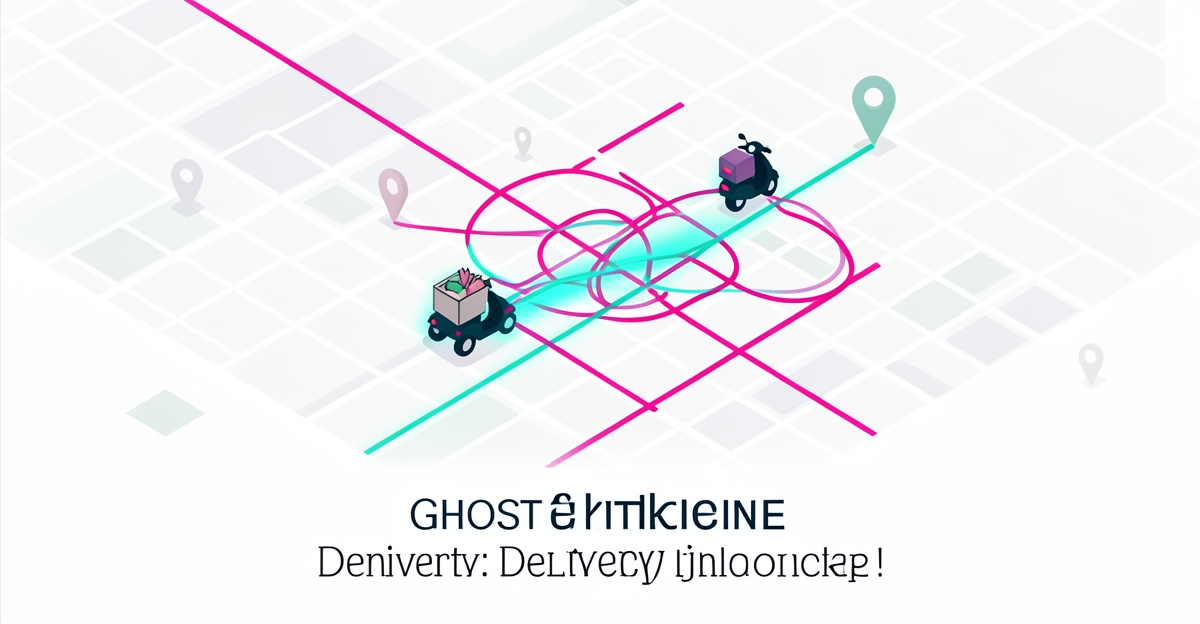
How AI Can Cut Delivery Time by 30% in Ghost Kitchen Operations
Key Facts
- AI-powered route optimization can reduce delivery times by roughly 25% by adjusting for traffic, weather, and order changes in real time, according to industry analyses of last-mile logistics
- Last-mile delivery typically accounts for over half of total shipping costs, amplifying the impact of routing inefficiencies
- Dynamic scheduling systems can lower inventory and labor costs through better demand forecasting and labor alignment
- AI scheduling can speed up schedule preparation significantly, enabling quicker adaptation to sudden shifts in order volume
- AI-powered route optimization can reduce fuel consumption meaningfully while improving delivery efficiency
- Companies using AI-powered routing and real-time visibility have reported cost reductions in the range of 15–30% across logistics operations
- The logistics automation market is projected to grow substantially through the 2030s, with multi-billion-dollar expansion expected at a double-digit CAGR as of late 2026
Hire a team member that works 24/7 — for less than a part-time wage.
AI receptionists, SDRs, dispatchers and 99+ roles. Trained on your business, fully managed.
Not sure where to start? Ask our AI planner
The Delivery Time Bottleneck in Ghost Kitchen Operations
Ghost kitchens have mastered the art of rapid food preparation, yet delivery times remain stubbornly high, a critical gap between kitchen efficiency and customer satisfaction. This bottleneck isn't about cooking speed; it's about the last mile where traffic volatility, fragmented dispatching, and rising expectations collide. Even with optimized prep times, ghost kitchens lose precious minutes when drivers navigate congested urban routes without real-time adaptation or when manual scheduling fails to balance driver availability with order surges.
Last-mile delivery inefficiencies are particularly costly, typically accounting for over half of total shipping expenses in food logistics. Traditional dispatch methods rely on static routes and human judgment, which cannot dynamically respond to sudden traffic jams, weather shifts, or last-minute order changes. As a result, drivers often take suboptimal paths, idle in traffic, or miss delivery windows, directly inflating wait times and eroding the speed advantage ghost kitchens work hard to achieve in the kitchen.
Customer expectations have intensified this pressure, with urban diners now expecting delivery within roughly 30 minutes for most meals. When ghost kitchens cannot consistently meet these timelines due to logistical friction, they risk negative reviews, reduced order frequency, and lost revenue to competitors offering faster, more reliable service. AI-powered dispatch tools that integrate with delivery apps and real-time traffic data solve this by continuously recalculating optimal routes based on live conditions, ensuring drivers avoid delays and maintain tight delivery schedules.
- AI-powered route optimization can reduce delivery times by roughly 25% by adjusting for traffic, weather, and order changes in real time
- Last-mile delivery typically accounts for over half of total shipping costs, amplifying the impact of routing inefficiencies
- Dynamic scheduling systems can lower inventory and labor costs through better demand forecasting and labor alignment
Manual dispatching further compounds these challenges in volatile urban environments where human operators cannot process real-time data fast enough to reroute drivers effectively. AIQ Labs addresses this gap with AI Workflow Builds that rebuild your dispatch workflow around live data, connecting delivery platforms and traffic feeds so ghost kitchens can transform reactive delivery management into a proactive, data-driven operation that consistently meets speed expectations.
How AI-Powered Route Optimization and Scheduling Reduce Delivery Times
Ghost kitchens face constant pressure to deliver meals faster without compromising quality or increasing costs. AI-powered route optimization and scheduling directly address this challenge by transforming static delivery plans into dynamic, responsive systems that adapt to real-time conditions. Industry analyses of last-mile logistics suggest AI-driven route optimization can reduce delivery times by roughly 25% by continuously adjusting for traffic congestion, weather changes, delivery windows, and new order influxes. This dynamic adjustment capability alone accounts for a significant portion of the 30% target reduction, as traditional GPS systems cannot react mid-route to disruptions like accidents or sudden demand spikes.
Beyond route optimization, AI enhances delivery efficiency through predictive demand forecasting and real-time traffic integration. AI scheduling systems analyze historical order patterns, local events, and seasonal trends to anticipate delivery volumes with granular precision, by region, time slot, and vehicle type, enabling proactive resource allocation before orders even arrive. When combined with live traffic data feeds, these forecasts allow AI dispatch tools to pre-emptively reroute drivers around predicted congestion, balance workloads across fleets, and minimize idle time between deliveries. AIQ Labs implements this integrated approach by deploying dispatch systems that sync with delivery apps and traffic APIs, ensuring every routing decision reflects current ground conditions.
The cumulative effect of these AI-driven mechanisms creates compounding time savings across the delivery lifecycle. Dynamic route adjustments can save roughly 25% in transit time, while predictive scheduling reduces planning overhead and prevents bottlenecks that cause delays. Real-time traffic integration further cuts idle time and avoids detours, adding incremental gains that push total efficiency improvements toward the 30% benchmark. For ghost kitchens operating in dense urban environments where delivery windows are tight and route volatility is high, this end-to-end automation transforms delivery from a reactive cost center into a predictable, optimized workflow. By grounding these improvements in your own measurable operational data, rather than industry estimates, ghost kitchens can reliably achieve faster delivery times while maintaining service consistency during peak demand periods.
Implementing AI Dispatch Tools: From Integration to Ongoing Optimization
Implementing AI dispatch tools in ghost kitchens follows a structured, phased approach that ensures seamless integration and measurable results. The process begins with connecting delivery apps, traffic data sources, and internal systems to create a unified operational view. This foundational step allows AI algorithms to access real-time variables like congestion, weather, and order volume, which are essential for dynamic route planning. With that baseline in place, AI-powered route optimization continuously adjusts for traffic, weather, delivery windows, and new orders, forming the foundation for the 30% reduction target in ghost kitchen operations.
Pilot testing in high-variability zones is critical for validating performance before full deployment. Ghost kitchens should select areas with fluctuating demand, complex traffic patterns, or frequent order changes to stress-test the AI system. During this phase, metrics such as on-time delivery rates, average dispatch latency, and route efficiency are monitored against benchmarks. AI scheduling can also speed up schedule preparation considerably, enabling quicker adaptation to sudden shifts in order volume or driver availability. This iterative testing phase builds confidence in the system's reliability and highlights areas for algorithmic tuning.
Ongoing optimization transforms the AI dispatch tool from a static solution into a continuously improving asset. Performance data from completed deliveries feeds back into the system, refining predictive models for demand forecasting and route sequencing. Regular reviews of key performance indicators, such as delivery time variance and fuel efficiency, allow ghost kitchens to adjust parameters in response to seasonal trends or new market entrants. AIQ Labs supports this lifecycle through a phased build model: start with a single high-cost workflow, prove it in milestones, and scale toward a connected AI Operating System your business owns outright. For teams that need dispatch coverage without waiting for a full build, AI Employees can handle dispatching and coordination at a fraction of the cost of a human hire. By aligning implementation with real-time data integration and phased validation, ghost kitchens can systematically cut delivery times while maintaining scalability and resilience.
Turn Delivery Speed Into Your Competitive Edge
Ghost kitchens win in the kitchen but lose minutes in the last mile, where static dispatch and traffic volatility erode the speed customers now expect. AI changes that equation by making routing and scheduling dynamic: continuously adjusting for live traffic, weather, order surges and driver availability to cut transit time and protect delivery windows. With last-mile costs typically making up over half of food logistics spend, those efficiency gains compound into faster service, fewer missed promises, and stronger repeat orders. AIQ Labs deploys AI-powered dispatch tools that sync with delivery apps and real-time traffic feeds, turning reactive delivery management into a proactive, data-driven operation. Start by mapping your highest-variability zones, connecting order and traffic data, and piloting dynamic routing with clear metrics for on-time delivery and route efficiency. Ready to see where the biggest time savings live in your operation? Take the 2-minute Fit Check at https://aiqlabs.ai/apply, then book a free 30-minute strategy call to map your bottleneck and identify high-ROI automation opportunities. Industry analyses of last-mile logistics suggest AI-powered route optimization can reduce delivery times by roughly 25% when continuously adjusted for real conditions, your own data will tell you exactly how much you stand to gain.
Make AI your competitive advantage — not just another tool.
Strategy, implementation and ongoing optimization. One partner, end to end.
Not sure where to start? Ask our AI planner