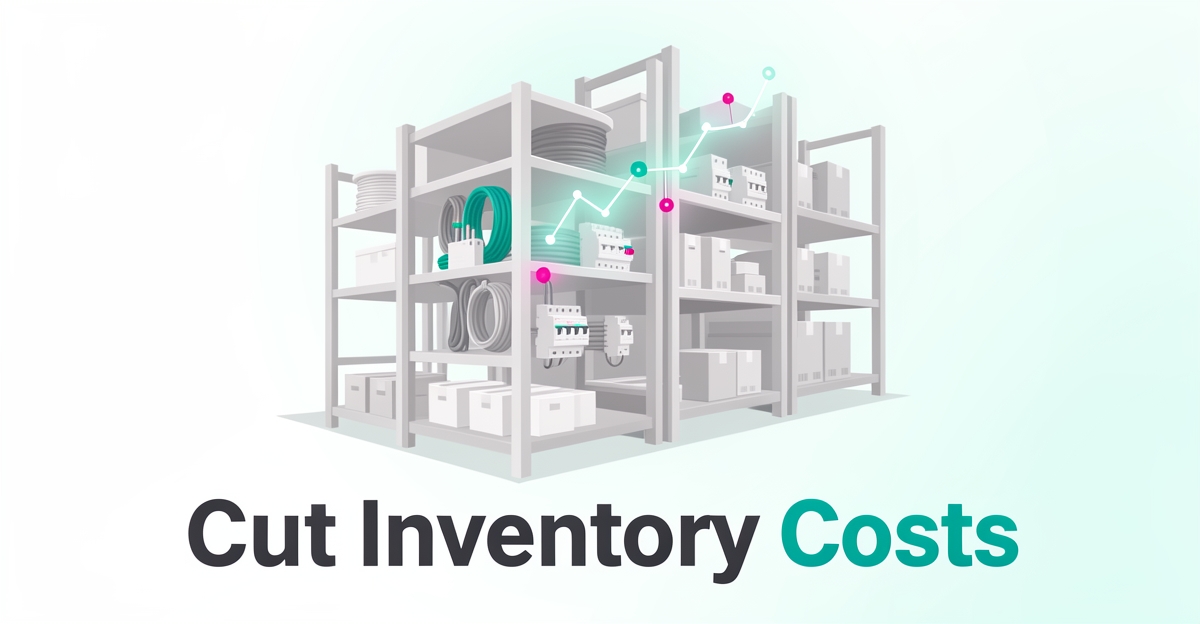
How AI Can Cut Your Inventory Management Costs in Electrical Distribution
Key Facts
- Inventory inefficiencies cost businesses enormous sums each year, according to industry research
- AI-powered demand forecasting can reduce stockouts substantially, according to recent analysis
- AI can meaningfully cut excess inventory and free up working capital, industry data suggests
- The average business keeps significantly more inventory than needed, research suggests
- AI can cut inventory forecasting errors meaningfully across businesses of all sizes, according to Reachify
- Holding excess inventory typically costs a significant share of its total value each year, analysis shows
- Out-of-stocks cost retailers hundreds of billions of dollars annually, according to retail data
Hire a team member that works 24/7 — for less than a part-time wage.
AI receptionists, SDRs, dispatchers and 99+ roles. Trained on your business, fully managed.
Not sure where to start? Ask our AI planner
The Hidden Cost of Guesswork: Why Electrical Distributors Overstock and Understock
The true cost of inventory mismanagement in electrical distribution goes far beyond empty shelves or crowded warehouses—it bleeds directly into working capital and operational agility. When distributors rely on static forecasting methods, they consistently misjudge demand, leading to costly imbalances that erode profitability. Industry research suggests the average business keeps significantly more inventory than it needs, tying up cash that could be invested in growth or used to weather market shifts. This excess stock isn't just sitting idle—it's actively draining resources, with holding costs typically consuming a meaningful share of its total value each year.
At the same time, stockouts create ripple effects that extend well beyond lost sales. Out-of-stocks cost retailers hundreds of billions of dollars annually, and for advertised items, stockout rates can climb sharply, amplifying revenue loss during critical promotional periods. These gaps don't just disappoint customers—they damage long-term trust and push buyers toward competitors who can deliver reliably. In volatile markets where electrical demand fluctuates with construction cycles, seasonal projects, and regulatory shifts, guesswork-based forecasting becomes a liability rather than a planning tool.
The financial toll is real: companies lose enormous sums every year due to inventory inefficiencies, driven by preventable stockouts, overstocks, and returns. These figures aren't abstract—they represent dollars trapped in inefficient cycles of overordering and panic replenishment. For electrical distributors managing thousands of SKUs across diverse product lines, even small forecasting errors compound into significant waste. AI-powered demand forecasting offers a path forward, capable of meaningfully reducing stockouts and cutting excess inventory, freeing up working capital and restoring balance to the supply chain. By replacing intuition with data-driven precision, distributors can finally break the cycle of guesswork and build inventory strategies that protect both service levels and profitability. Schedule a free 30-minute strategy call to explore how AI-powered inventory forecasting can transform your stock management.
How AI Forecasting Transforms Inventory Accuracy: From Reactive to Predictive
AI-powered demand forecasting is shifting inventory management from reactive guesswork to predictive precision. By analyzing historical sales patterns, seasonal cycles, and external signals like weather or market trends, AI systems generate forecasts that significantly reduce error rates. According to Reachify research, AI can meaningfully cut inventory forecasting errors across businesses of all sizes, directly improving planning reliability.
This leap in accuracy translates to tangible operational gains for electrical distributors facing volatile demand for components and supplies. AI-driven forecasting enables businesses to reduce excess inventory, freeing up working capital otherwise tied in overstock, as noted by Gartner. Simultaneously, stockouts can be substantially lowered, preventing lost sales and customer dissatisfaction, per findings from Articsledge. Together, these improvements strengthen cash flow and service levels without increasing carrying costs.
- Analyzes historical sales, seasonality, and external demand signals
- Reduces forecast errors meaningfully (Reachify)
- Cuts excess inventory and stockouts (Gartner, Articsledge)
- Improves working capital and service reliability
For distributors seeking to move beyond spreadsheets and manual adjustments, AI forecasting delivers a foundation for smarter inventory decisions. AIQ Labs builds custom demand prediction systems that learn from your sales data and regional patterns, turning inventory from a cost center into a strategic advantage. To explore how this applies to your operations, start the 2-minute Fit Check for a free strategy call.
From Insight to Action: Implementing AI Inventory Optimization with AIQ Labs
Electrical distributors bleed cash on both sides of the stock equation. Overstock ties up working capital while stockouts erode customer trust, and manual forecasting rarely keeps pace with regional demand swings.
A practical adoption path starts with data integration before any model is trained. Sales history, purchase orders, supplier lead times, and regional seasonality are consolidated into a single source of truth. Clean, connected data lets the system learn real patterns instead of noise, which is essential for reliable reorder triggers.
Model training focuses on demand prediction and optimal stock levels. Industry research suggests AI adoption in inventory management can lead to meaningful reductions in inventory costs and improvements in forecast accuracy. For electrical distributors, that means fewer slow-moving SKUs and better coverage for high-velocity items.
Automated reorder triggers close the loop from insight to action. Once thresholds are learned, the system generates replenishment recommendations or orders directly, balancing service level targets with carrying cost constraints. Recent analysis finds AI-powered demand forecasting can substantially reduce stockouts. Real-time visibility prevents the costly double penalty of emergency buys and lost sales.
AIQ Labs maps this implementation to its current service lineup so SMBs can own the outcome without vendor lock-in:
- AI Workflow Builds: rebuild the inventory forecasting workflow that costs you the most, at a fixed price and in phases
- AI Employees: managed AI staff that monitor stock, flag exceptions, and execute reorder workflows around the clock—at a fraction of the cost of a human hire
- AI Operating Systems: one connected operating layer across forecasting, procurement, and branch operations, built in phases and owned outright
Ownership is central. Instead of subscribing to a point solution, businesses receive a production-ready system they control, with APIs to ERP, accounting, and procurement tools. That architecture supports owning it outright and continuous improvement as new products and regions are added.
The business impact compounds quickly. Analysis of inventory operations notes the average business keeps significantly more inventory than needed, and holding extra inventory typically costs a meaningful share of its total value yearly. Reducing excess frees cash for growth while improving availability.
Implementation is staged to limit risk. Start with a single warehouse or product family, validate forecast accuracy and reorder logic, then expand. With the right data foundation and managed AI support, distributors move from reactive firefighting to predictable, data-driven stocking that protects margin and customer satisfaction.
Ready to map your highest-ROI workflow? Start the 2-minute Fit Check at aiqlabs.ai/apply, then book a free 30-minute strategy call with an AI engineer.
Still paying for 10+ subscriptions that don’t talk to each other?
We build custom AI systems you own outright. No vendor lock-in. Full control.
Not sure where to start? Ask our AI planner
Frequently Asked Questions
How much can AI-powered forecasting actually reduce excess inventory for electrical distributors?
Can AI really help prevent stockouts?
What percentage of inventory do most businesses keep unnecessarily, and what does it cost them?
Is AI inventory management only for large companies, or can small electrical distributors benefit too?
How does AIQ Labs ensure I own the AI system they build for my inventory needs?
What's the first step to implementing AI inventory forecasting with AIQ Labs?
From Guesswork to Growth: How AI Turns Inventory Into Advantage
Electrical distributors lose real money to overstocking and stockouts—cash trapped in excess inventory, working capital drained, and customer trust eroded by missed deliveries. AI-powered demand forecasting changes that by cutting forecast errors, reducing excess inventory, and lowering stockouts, directly improving cash flow and service reliability. The result isn't just better stock levels—it's a strategic shift where inventory stops being a cost center and starts supporting growth. For distributors ready to move beyond spreadsheets and guesswork, the next step is clear: see where AI can make the biggest impact in your operations. Start the 2-minute Fit Check at aiqlabs.ai/apply for a free 30-minute strategy call with an AI engineer to map your highest-ROI opportunities—no obligation, just clarity on what's possible.
Make AI your competitive advantage — not just another tool.
Strategy, implementation and ongoing optimization. One partner, end to end.
Not sure where to start? Ask our AI planner