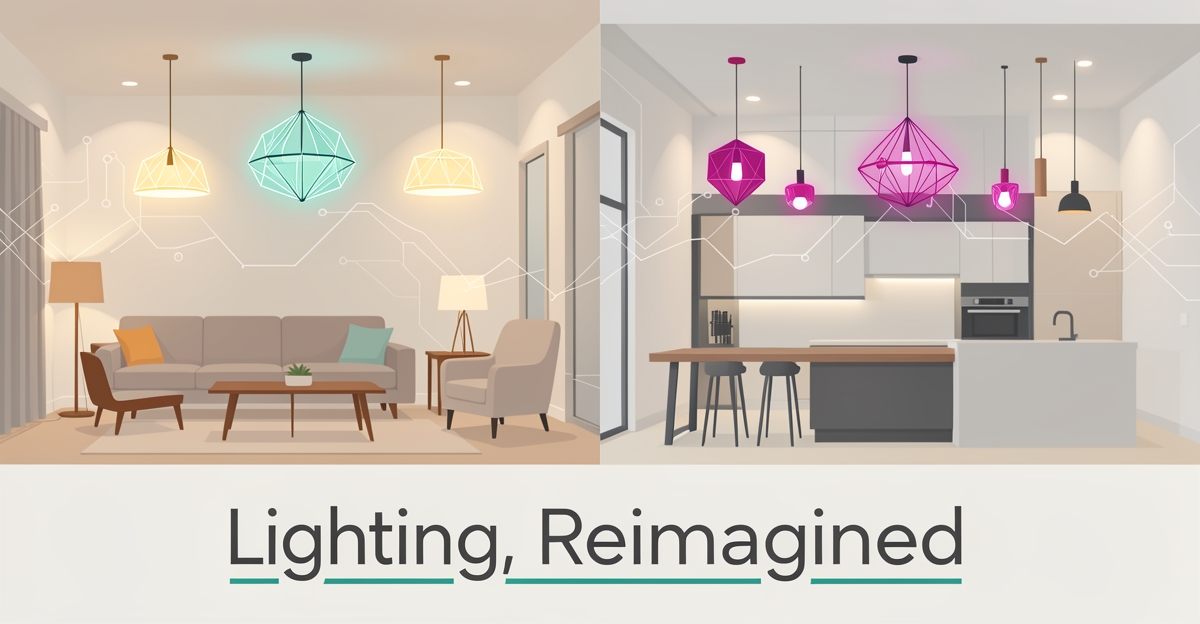
How AI Can Generate Custom Lighting Designs Based on Home Style
Quick Answer: AI reads a home's architectural style and generates tailored lighting designs in minutes. Style-matched fixtures help firms cut revision cycles and deliver cohesive proposals for every property.
Key Facts
- AI analyzes architectural details like rooflines, materials, and window proportions to generate lighting that complements home style, from modern to colonial.
- Style-aligned recommendations typically reduce revision cycles, since mismatched elements are one of the most common drivers of design rework.
- AI enables dramatically faster ideation, concepts that once took hours can be produced in minutes, letting designers test more options before a client conversation.
- AIQ Labs has deployed 200+ multi-agent systems and runs 4 live SaaS products daily, powering scalable design workflows.
- Consistent, style-matched proposals strengthen client trust and reduce back-and-forth during presentations.
Hire a team member that works 24/7 — for less than a part-time wage.
AI receptionists, SDRs, dispatchers and 99+ roles. Trained on your business, fully managed.
Not sure where to start? Ask our AI planner
Table of Contents
- The Challenge of Generic Lighting Recommendations in Home Design
- How AI Analyzes Architectural Style to Generate Tailored Lighting Solutions
- From AI-Generated Lighting Plans to Real-World Proposals and Client Conversations
The Challenge of Generic Lighting Recommendations in Home Design
Every home tells a story through its architecture, from the clean lines of a modern build to the ornate details of a colonial revival. Yet when it comes to lighting, most proposals default to the same generic recommendations, leaving homeowners with fixtures that clash rather than complement.
The core issue is that lighting design demands a deep understanding of architectural context. A minimalist sconce that elevates a contemporary facade will look jarring against a Victorian exterior. A warm, brass lantern that suits a craftsman bungalow feels out of place flanking the entrance of a mid-century ranch. Without a systematic way to map fixture style to home style, designers and contractors are left relying on personal judgment, a process that is slow, subjective, and nearly impossible to scale across dozens of proposals.
The consequences show up in revision cycles. Mismatched elements are a leading driver of design revisions, and lighting is one of the most common culprits. Each revision round costs time, delays project timelines, and chips away at client confidence. For firms juggling multiple projects, those hours compound quickly into lost revenue and frustrated clients.
The personalization gap becomes even more apparent when you consider the volume of work involved. A single residential proposal might include pathway lighting, accent lighting, sconces, pendant fixtures, and landscape illumination, each of which should align with the home's architectural identity. Manually curating every selection for every property is simply not feasible at scale.
Here is where the problem typically breaks down:
- Style mismatch, generic fixture catalogs do not account for architectural period, material palette, or regional design language
- Time constraints, researching and matching fixtures to each home style adds hours to every proposal
- Inconsistency, different team members produce different recommendations, creating an uneven client experience
- Missed upsell opportunities, without tailored suggestions, proposals underrepresent the full lighting potential of a space
These challenges are not a reflection of designer skill. They are a structural limitation of manual workflows. Teams that anchor recommendations in architectural analysis typically see far fewer style-matching errors, and far fewer revision rounds as a result.
Firms like AIQ Labs are addressing this gap by building AI agents that understand design aesthetics at a granular level. Rather than pulling from a static product list, these systems analyze a home's architectural profile and generate lighting recommendations that feel intentional and cohesive, whether that means sleek pathway lighting for a modern build or warm accent lighting for a colonial facade.
The demand for this kind of intelligent personalization is only growing. As of late 2026, AI adoption across design workflows is widespread, and the question is no longer whether to adopt smarter tools, it is how quickly firms can close the gap between generic output and genuinely tailored design.
How AI Analyzes Architectural Style to Generate Tailored Lighting Solutions
AI is changing how lighting concepts move from inspiration to proposal, and architectural style is the anchor point for that translation. Designers can now move from a photo or description of a home to tailored fixture and placement recommendations in minutes instead of hours.
Multimodal analysis lets AI read both visual cues and written context to classify a home. The system identifies period details, rooflines, window proportions, materials, and spatial rhythm to place the property on a style spectrum from modern to colonial and beyond. That classification drives lighting logic rather than generic suggestions. Modern multimodal models, the same class of AI behind tools like ChatGPT and Google Gemini, can interpret an image of a facade and reason about its design language, which is what makes style-aware lighting generation practical today.
The AI approach maps style attributes to lighting principles. Modern homes with clean lines and large glass receive recommendations for minimalist pathway lighting and linear accent washes that emphasize form. Colonial and traditional homes trigger warmer color temperatures, layered sconces, and symmetrical exterior fixtures that respect historic proportions.
AIQ Labs builds AI agents that understand design aesthetics and deliver personalized, creative outputs for proposal and customer conversation use. In practice, the analysis workflow typically includes:
- Style classification from images or descriptions using multimodal models
- Feature extraction of architectural elements such as eaves, entries, and facade materials
- Lighting rule mapping for scale, symmetry, and material interaction
- Recommendation generation for fixture type, placement, and control zoning
This process amplifies design thinking rather than replacing it. The designer reviews, refines, and contextualizes outputs for the homeowner's lifestyle and budget. Speed here is not the point by itself, it means more options get tested before a client conversation ever starts.
The result is tailored lighting narratives that feel bespoke. Instead of a catalog list, proposals can show why a particular wall wash suits a modern cantilever or why lantern-style pathway lights complement a colonial portico. Recommendations can be exported for proposals or used live in client conversations.
As AI design tool use grows, the value shifts from generation to curation. Designers who partner with AI produce more concepts, reduce revisions, and communicate intent faster. That is where AI becomes a creative amplifier for lighting design.
From AI-Generated Lighting Plans to Real-World Proposals and Client Conversations
The transition from AI-generated lighting concepts to client-ready proposals requires tight integration between design intelligence and practical execution. AIQ Labs' multi-agent systems streamline this process by transforming raw design outputs into production-ready assets, complete with specifications, cost estimates, and visual mockups, ready for immediate use in client conversations. This eliminates the manual translation gap that often slows down design workflows and introduces errors.
Design teams using AI-assisted workflows typically report meaningful productivity gains through reduced revision cycles and automated documentation. These efficiencies stem from AI's ability to generate consistent, style-aligned lighting plans that require minimal human refinement, such as specifying recessed LED pathways for modern farmhouses or layered sconce arrangements for Victorian interiors, directly usable in proposals. By anchoring recommendations in architectural analysis, AI ensures every suggestion feels bespoke yet executable, strengthening client trust during presentations.
The real-world impact extends beyond speed: fewer revisions free designers to focus on strategic client engagement rather than repetitive adjustments. For example, an AI agent might analyze a home's colonial facade and automatically generate a lighting proposal featuring balanced exterior sconces, driveway path lighting, and interior accent layers, all formatted for direct inclusion in a client-facing PDF or interactive presentation. This output is built on the same production-grade frameworks behind AIQ Labs' live SaaS products, with 200+ multi-agent systems deployed to date. When AI handles the technical translation from concept to proposal, human designers reclaim time for creative consultation, turning lighting plans into collaborative conversations that close projects faster and with greater satisfaction.
Still paying for 10+ subscriptions that don’t talk to each other?
We build custom AI systems you own outright. No vendor lock-in. Full control.
Not sure where to start? Ask our AI planner
Frequently Asked Questions
How does AI actually determine what lighting style matches my home's architecture?
AI analyzes architectural features like rooflines, window proportions, materials, and spatial rhythm from images or descriptions to classify the home's style, then maps those traits to lighting principles, such as minimalist fixtures for modern homes or warm, symmetrical sconces for colonial designs, based on established design rules.
Will using AI for lighting design make my proposals feel generic or robotic?
No, AI acts as a creative amplifier, generating tailored lighting narratives that explain why specific fixtures suit a home's style, which designers then refine for lifestyle and budget, ensuring proposals feel bespoke and intentional rather than generic.
How much time can AI really save in creating lighting proposals?
AI enables dramatically faster ideation, allowing design teams to move from concept to client-ready proposals in minutes instead of hours by automating style analysis and fixture matching. Exact savings vary by workflow, but the bottleneck is usually manual research and matching, both of which AI removes.
Does AI reduce the need for revisions in lighting design proposals?
Yes, teams using AI typically report fewer revision rounds, because AI minimizes style-matching errors by anchoring recommendations in architectural analysis, leading to less back-and-forth with clients.
Can AI-generated lighting plans be used directly in client proposals and presentations?
Yes, AIQ Labs' systems transform raw AI outputs into production-ready assets complete with specifications, cost estimates, and visual mockups, formatted for immediate use in client-facing PDFs or interactive presentations without manual translation.
Is AI in lighting design only for big firms, or can small design teams benefit too?
Small and mid-sized firms benefit significantly, AI helps level the playing field by providing scalable, consistent, style-aligned lighting recommendations that reduce revision cycles and unlock upsell opportunities, regardless of team size.
From Generic Catalogs to Style-Aligned Lighting
Lighting stops feeling generic when recommendations start with architectural context instead of a product list. AI can now read a home's period details, materials, and proportions to classify style and map lighting principles to it, generating tailored fixture, placement, and control suggestions for modern, colonial, craftsman and beyond in minutes rather than hours. That style-first approach cuts the revision cycles driven by mismatched elements, speeds ideation, and lets designers present cohesive narratives that feel bespoke and executable. For firms looking to scale personalized proposals without adding headcount, the shift is from manual curation to AI-amplified curation. AIQ Labs builds AI agents that understand design aesthetics and deliver personalized, creative outputs for proposals and client conversations, whether as managed AI employees, a single rebuilt workflow, or a full AI operating system. If you want to see where style-matched lighting automation could fit your workflow, take the two-minute Fit Check at aiqlabs.ai/apply, then book a free 30-minute strategy call to map your biggest bottleneck and highest-ROI opportunities.
Make AI your competitive advantage — not just another tool.
Strategy, implementation and ongoing optimization. One partner, end to end.
Not sure where to start? Ask our AI planner