How AI Can Handle Customer Complaints in Repair Services Without Human Stress
Key Facts
- Industry reports consistently suggest AI customer service tools can handle a large share of routine tickets without human intervention, with some vendors claiming figures as high as 80%.
- Most consumers still expect a human option for complex or emotionally charged issues, AI works best as a first line, not a replacement.
- AI Employees from AIQ Labs typically cost roughly 80% less than an equivalent human hire while working around the clock.
- AIQ Labs has deployed 200+ multi-agent systems and runs 4 live SaaS products daily, the patterns behind complaint handling are proven, not theoretical.
- Automated intake and documentation can eliminate many hours of manual data entry each week and sharply reduce operational errors.
Hire a team member that works 24/7 — for less than a part-time wage.
AI receptionists, SDRs, dispatchers and 99+ roles. Trained on your business, fully managed.
Not sure where to start? Ask our AI planner
The Repair Complaint Bottleneck and Staff Burnout
Repair services often drown in complaints, follow-ups, and scheduling chaos, creating a bottleneck that overwhelms technicians and support staff. Manual triage of incoming issues consumes valuable time that could be spent on actual repairs, leading to delays and frustration for both employees and customers. This constant pressure contributes to staff burnout, especially when response times lag and ticket volumes surge without adequate support systems.
Industry research consistently points in the same direction: AI-powered tools can absorb a large share of routine tickets, some vendors report figures as high as 80%, taking follow-ups and status updates off human agents' plates. The practical effect for a repair business is fewer missed calls, faster issue documentation, and smoother coordination between customers and field technicians. When the routine layer is automated, teams can focus on the complex, high-value work that actually requires human expertise.
Without automation, staff frequently juggle multiple systems, logging complaints, rescheduling appointments, and chasing updates, while trying to maintain service quality. This fragmented workflow increases cognitive load and error rates, particularly during peak seasons. AI employees can step in to manage routine interactions, such as confirming service windows, collecting issue details, and sending status updates, all while integrating with existing scheduling and CRM tools. By offloading these tasks, repair shops can alleviate burnout, improve response consistency, and create a more sustainable workflow that supports both team well-being and customer satisfaction.
How AI Triage Reduces Routine Workload and Response Time
Repair services face constant pressure to respond quickly to customer complaints while managing limited staff resources. AI triage systems change this dynamic by automatically handling the majority of routine inquiries, allowing human technicians to focus on complex repairs and on-site work. Because most complaints follow predictable patterns, scheduling follow-ups, status requests, documentation of service issues, they're exactly the kind of work AI handles well. This shift lightens the workload and enables faster resolutions for common issues.
The impact on response times is significant. When AI answers instantly instead of a call going to voicemail, customers stop waiting hours for a callback. These gains come from core capabilities like natural language understanding, which allows AI to interpret customer intent accurately across text, chat, and voice channels. Omnichannel support ensures consistent service whether a customer reaches out via website, SMS, or social media, while knowledge base integration enables the AI to pull relevant repair guides, warranty details, or service histories instantly. For complex issues requiring expert judgment, seamless AI-to-human handoff ensures context is preserved, so technicians pick up exactly where the AI left off without forcing customers to repeat themselves.
By automating routine tasks such as appointment confirmations, status updates, and basic troubleshooting, AI triage frees up skilled staff to focus on higher-value activities. This reduces burnout and tends to improve first-time fix rates and customer satisfaction. As repair businesses scale, this hybrid model maintains service quality without proportional increases in headcount. AIQ Labs implements these capabilities through managed AI Employees, receptionists, dispatchers, and 99+ other roles, trained on specific repair workflows and integrated directly with scheduling tools, CRM systems, and parts inventory platforms.
From Complaint to Resolution: AI Workflows for Repair Services
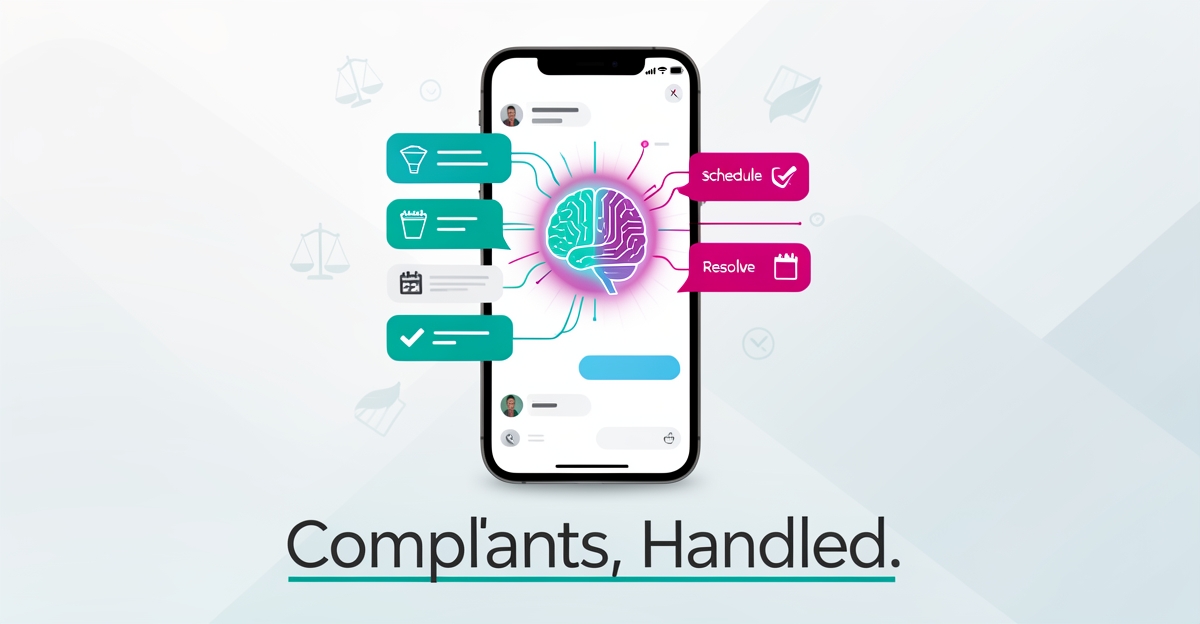
Repair businesses face constant pressure to resolve customer complaints quickly while managing technician workloads. AI-powered workflows transform this challenge by creating seamless processes from initial complaint to final resolution. These systems begin with intelligent intake that captures complaint details and detects customer sentiment in real time, so nothing falls through the cracks before a human ever gets involved.
The workflow starts when a customer reports an issue via phone, email, or chat. AI systems immediately analyze the language for frustration indicators and urgency levels, prioritizing cases that need human attention. Automated scheduling then proposes available time slots based on technician locations and parts availability, sending confirmation requests to customers without manual intervention. Throughout the process, AI continuously documents issue details, parts used, and labor hours in a centralized system accessible to all team members.
For complex complaints requiring technician expertise, AI handles seamless escalation with complete context transfer. The system provides technicians with pre-visit summaries including complaint history, customer sentiment trends, and recommended diagnostic approaches. Post-service, AI manages follow-up communications to confirm satisfaction and schedule preventive maintenance. This end-to-end automation lets skilled staff focus on hands-on repairs rather than administrative tasks. If complaint handling is the single workflow costing your shop the most, AIQ Labs' AI Workflow Builds rebuild exactly that one process at a fixed price, in phases, or, for shops ready to connect everything, an AI Operating System links intake, dispatch, and follow-up into one owned operating layer.
Implementing AI Support Without Losing the Human Touch
Implementing AI support in repair services requires a thoughtful approach that balances efficiency with the human element customers still value. Start by assessing your current support workflow to pinpoint repetitive tasks like scheduling follow-ups or documenting common issues that AI can handle without compromising service quality. This evaluation helps identify where automation will reduce technician workload while preserving opportunities for human expertise in complex diagnostics or customer consultations.
Select AI tools specifically designed for repair operations, ensuring they integrate smoothly with your existing scheduling, CRM, and parts inventory systems. Look for platforms offering natural language understanding and omnichannel support so customers can reach you via phone, chat, or email seamlessly. Train your team to act as AI supervisors, monitoring interactions, stepping in for nuanced complaints, and refining the system based on real-world feedback. Most consumers still expect a human option for sensitive conversations, so position AI as a tool that enhances rather than replaces your team's ability to build trust.
Address implementation challenges proactively: clean and organize historical ticket data to improve AI accuracy, prioritize platforms with strong security certifications for customer information protection, and design clear escalation paths for issues requiring human judgment. Monitor key metrics like first-response time, resolution rate, and customer satisfaction scores to continuously optimize the balance between automation and personal touch.
- Audit current support processes for AI integration points
- Choose tools with repair-industry specific workflows
- Train staff as AI supervisors and escalation handlers
- Track productivity and satisfaction metrics weekly
By framing AI as a support system that handles routine tasks while empowering technicians to focus on skilled repairs, businesses can scale support without sacrificing the empathy and expertise that define quality service. This approach aligns with AIQ Labs' methodology of building owned, integrated systems that evolve with your operational needs rather than imposing rigid, one-size-fits-all solutions.
Still paying for 10+ subscriptions that don’t talk to each other?
We build custom AI systems you own outright. No vendor lock-in. Full control.
Not sure where to start? Ask our AI planner
Frequently Asked Questions
How much can AI reduce response times in repair service complaints?
Will AI replace human technicians in repair shops?
What percentage of routine repair tickets can AI handle without human intervention?
How does AI improve agent productivity in repair service teams?
Can AI work with our existing repair shop software like scheduling and CRM systems?
How much do AI Employees cost compared to hiring?
Less Stress, Faster Fixes, Happier Teams
Repair businesses don't need to choose between fast customer responses and a sustainable workload for staff. By automating routine complaint intake, scheduling, status updates and documentation, AI triage cuts response lag and frees technicians to do the work only they can do. The result is fewer missed calls, more consistent service, and a team that isn't burned out by repetitive follow-ups. When AI handles the routine tickets that don't require human judgment, your people can focus on complex diagnostics, empathetic escalations, and the high-value interactions customers remember. AIQ Labs helps repair shops implement this hybrid model with managed AI Employees trained on specific repair workflows and integrated with scheduling, CRM and parts systems, 200+ multi-agent systems deployed, and payment models that fit your stage: start monthly, build in milestones, or own it outright. Audit your current complaint workflow for repetitive touchpoints, map where an AI employee can take over, and start with one workflow to prove value. Take the 2-minute Fit Check at https://aiqlabs.ai/apply, then book a free 30-minute strategy call at https://aiqlabs.ai/book to map your biggest bottleneck.
Make AI your competitive advantage — not just another tool.
Strategy, implementation and ongoing optimization. One partner, end to end.
Not sure where to start? Ask our AI planner