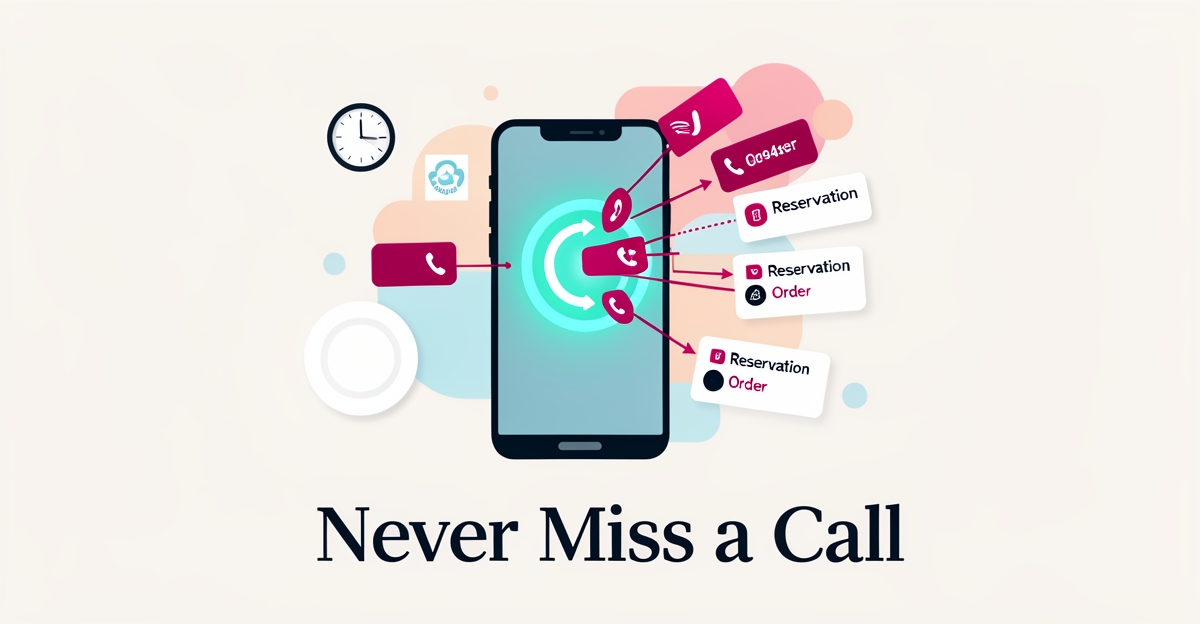
How AI Can Help Diners Handle High Volume During Lunch and Weekend Hours
Key Facts
- Most diners still call a restaurant before visiting or ordering, according to industry research.
- Industry reports suggest restaurants can miss a large share of inbound calls, often cited in the 30-60% range, during peak hours per industry data.
- Each missed call typically represents tens of dollars in lost revenue, commonly cited at $35-$50 per call per industry estimates.
- AI-powered answering services can reduce missed calls by 90% or more per Bite Buddy guidance.
- AI answering responds in under one second with unlimited simultaneous calls per restaurant answering service guidance.
- AI order-taking accuracy is typically reported above 95% when menu data is clean, versus lower accuracy for humans under high volume per comparison data.
- Consistent AI upselling on every call can lift average order value, with industry analyses citing gains in the 15-25% range per industry analysis.
Hire a team member that works 24/7 — for less than a part-time wage.
AI receptionists, SDRs, dispatchers and 99+ roles. Trained on your business, fully managed.
Not sure where to start? Ask our AI planner
The Peak-Hour Revenue Leak Diners Don't See
The lunch rush and weekend surge turn diners into high-pressure environments where every missed call chips away at revenue. Industry research indicates that the large majority of diners call a restaurant before visiting or ordering, making the phone a critical lifeline for capturing business. Yet during peak hours, restaurants can miss 30-60% of inbound calls, and each one typically represents $35-$50 in lost revenue.
This leak isn't just about unanswered phones, it's about staff overwhelmed trying to juggle orders, reservations, and walk-ins while the line keeps ringing. Hosts and servers stretched thin can't consistently answer calls, take accurate details, or upsell specials, leading to dropped orders and frustrated customers who simply call the next spot. The result is a silent drain: potential revenue vanishing before it even reaches the kitchen.
- Missed calls during peak mean lost reservations, takeout orders, and catering inquiries
- Staff overload increases errors in order-taking and reservation details
- Upselling opportunities disappear when calls go unanswered or rushed
- Customer frustration builds when they can't get through, driving them to competitors
- Revenue loss accumulates fast, just 10 missed calls at $40 each is $400 gone
AI-powered call handling transforms this dynamic by managing inbound volume so human staff can focus on delivering great experiences. AIQ Labs deploys AI employees that answer calls instantly, confirm orders, promote daily specials, and integrate with POS systems to capture every opportunity, turning a peak-hour liability into a streamlined revenue protector.
Outbound AI Employees That Promote, Confirm and Follow Up
During peak lunch and weekend rushes, restaurants face a critical challenge: managing high call volumes while maintaining service quality. AI-powered outbound calling systems solve this by handling specials promotion, order confirmations, and follow-ups with speed and consistency that human teams cannot match during busy periods.
AI answering services respond to calls in under one second, eliminating hold times that frustrate diners and lead to abandoned orders. Unlike human call centers limited by staffing levels, AI systems can manage unlimited simultaneous calls, ensuring every inquiry is addressed instantly even during the busiest service windows. This capability directly combats the industry reality where restaurants can miss 30-60% of inbound calls during peak hours, each typically representing $35-$50 in lost revenue.
These AI employees maintain high order accuracy through natural language understanding and seamless POS integration, typically outperforming human agents who are stretched thin across high-volume calls. By automating routine outbound tasks like confirming daily specials or following up on large orders, AI allows restaurant staff to focus entirely on in-person customer engagement during service peaks. The system operates around the clock, capturing opportunities that would otherwise be lost outside regular business hours or during staff breaks.
AIQ Labs deploys managed AI employees specifically designed for restaurant outbound campaigns, integrating with existing reservation and ordering systems to ensure data consistency. These AI agents maintain consistent upselling performance, promoting specials on every call and lifting average order value through personalized recommendations based on customer history. With support for dozens of languages, they serve diverse customer bases without the language limitations of human staff who typically handle only one to three languages effectively.
The contrast with traditional call centers is stark: while human teams incur variable monthly costs and struggle with inconsistent performance during peak demand, AI answering services offer predictable pricing. AIQ Labs' Start Monthly model keeps costs far below a human hire, typically around 80% less, while scaling instantly with demand. This approach transforms an operational liability, missed calls during rush periods, into a reliable revenue channel, all while maintaining the human touch where it matters most: at the table.
From Calls to Full AI Restaurant Operations
The real power of AI in restaurants goes far beyond handling peak-hour calls, it's about building intelligent systems that run core operations seamlessly. Forward-thinking establishments are moving past isolated AI tools to deploy full AI operating systems that integrate inventory ordering, staff scheduling, and order management directly with POS and vendor platforms. These unified systems don't just automate tasks, they create a responsive, data-driven backbone that scales with demand.
By automating routine workflows, restaurants can achieve measurable efficiency gains within months, industry analyses commonly cite labor savings in the 10-20% range and food cost reductions of 5-15% through smarter forecasting and reduced waste. AIQ Labs supports this transformation through AI Workflow Builds that rebuild the one workflow costing you the most, fixed price, delivered in phases, and full operating systems built in phases and owned outright. The result is a leaner, more agile operation where human staff focus on hospitality while AI manages the operational complexity behind the scenes.
However, scaling agentic AI successfully requires more than just technology, it demands a fundamental redesign of decision architecture. Restaurants must map how decisions flow across teams, clarify ownership, establish trusted data sources, and define clear escalation paths for human intervention. Without this foundation, even the most advanced AI systems risk creating bottlenecks or errors. When decision architecture is aligned with AI capabilities, the entire operation becomes more resilient, adaptive, and ready for sustainable growth. To explore how AI operating systems can transform your restaurant's efficiency, start the two-minute Fit Check, then book a free 30-minute strategy call to identify your highest-impact automation opportunities.
Implementing AI Call Coverage Without Disrupting Service
Peak lunch rush and Saturday dinner can turn a busy phone line into lost revenue. Restaurants can miss 30-60% of inbound calls during peak hours, and each missed call typically represents $35-$50 in lost revenue. A structured rollout keeps service intact while capturing that demand.
Start with an honest baseline. Audit your current call volume to understand your baseline before any change. Track when calls spike, how long wait times run, and how many go to voicemail. According to restaurant answering service guidance, this data defines whether you need full coverage or overflow support.
Data quality determines performance. Prepare your menu and information by compiling a current menu with all items, prices, modifications, and descriptions. Clean POS names, allergens, and hours so the AI can answer accurately. Poor input data produces poor recommendations, and AI models improve over a learning period, early recommendations may be less accurate than mature ones.
Choose the answering model that fits your team. Decide between full replacement where AI answers every call or overflow handling where AI answers calls during peak hours. Overflow protects the in-house experience while still cutting abandonment. Integration is what makes it reliable.
Set up your AI-powered answering service by integrating it with your POS and reservation systems. Real-time menu access, table availability, and order status prevent errors and transfers. AI-powered answering services can provide instant pickup, zero hold time, and handle unlimited simultaneous calls.
Plan for people, not just technology. Train your staff on the new system and ensure they understand how to use it effectively. Change management matters because teams accustomed to manual ordering need training and time to trust system recommendations. Define escalation rules, who owns a decision, and what data is trusted for that decision.
A practical rollout sequence helps:
- Audit two weeks of call logs to map volume, peak windows, and lost-call cost
- Compile and validate menu, pricing, modifiers, hours, and reservation rules for AI training
- Select full replacement vs overflow handling based on baseline and staffing
- Integrate AI coverage with POS and reservations for live order capture and booking
- Run a supervised pilot, review transcripts, and train staff on handoffs and overrides
With the right preparation, AI call coverage becomes an extension of the front-of-house. AIQ Labs deploys AI employees to handle repetitive tasks efficiently, allowing staff to focus on customer engagement during the moments that matter most. Consistent pickup and accurate capture protect revenue without disrupting service flow.
Most diners call a restaurant before visiting or ordering, so answering reliably is table stakes. AI-powered answering services can reduce missed calls by 90% or more while keeping the human team focused on in-person hospitality.
Still paying for 10+ subscriptions that don’t talk to each other?
We build custom AI systems you own outright. No vendor lock-in. Full control.
Not sure where to start? Ask our AI planner
Frequently Asked Questions
How many calls do restaurants actually miss during lunch and weekend rushes?
Can an AI answering service really handle a full lunch rush without putting callers on hold?
Will AI take orders as accurately as my staff does?
What's the difference between full replacement and overflow call handling?
How do I roll out AI call coverage without disrupting service?
Is an AI answering service more expensive than hiring a call center or extra staff?
Every Ringing Phone Is Revenue, Start Capturing Yours
The math is hard to ignore: most diners still call before they visit or order, and peak-hour missed calls can run as high as 30-60%, an unanswered phone is one of the most expensive liabilities in your dining room. As we've covered, AI call handling answers in under a second, captures orders with high accuracy, promotes specials on every call, and integrates with your POS, while your team stays focused on the guests at the table. The path forward doesn't require a leap of faith: audit two weeks of call logs, clean up your menu data, choose overflow or full coverage, and run a supervised pilot before scaling. If you want help mapping where that revenue is leaking and which fix delivers the fastest return, start with the two-minute Fit Check, then book a free 30-minute strategy call, a real working session with an AI engineer, and if there isn't a clear win, we'll tell you that too.
Make AI your competitive advantage — not just another tool.
Strategy, implementation and ongoing optimization. One partner, end to end.
Not sure where to start? Ask our AI planner