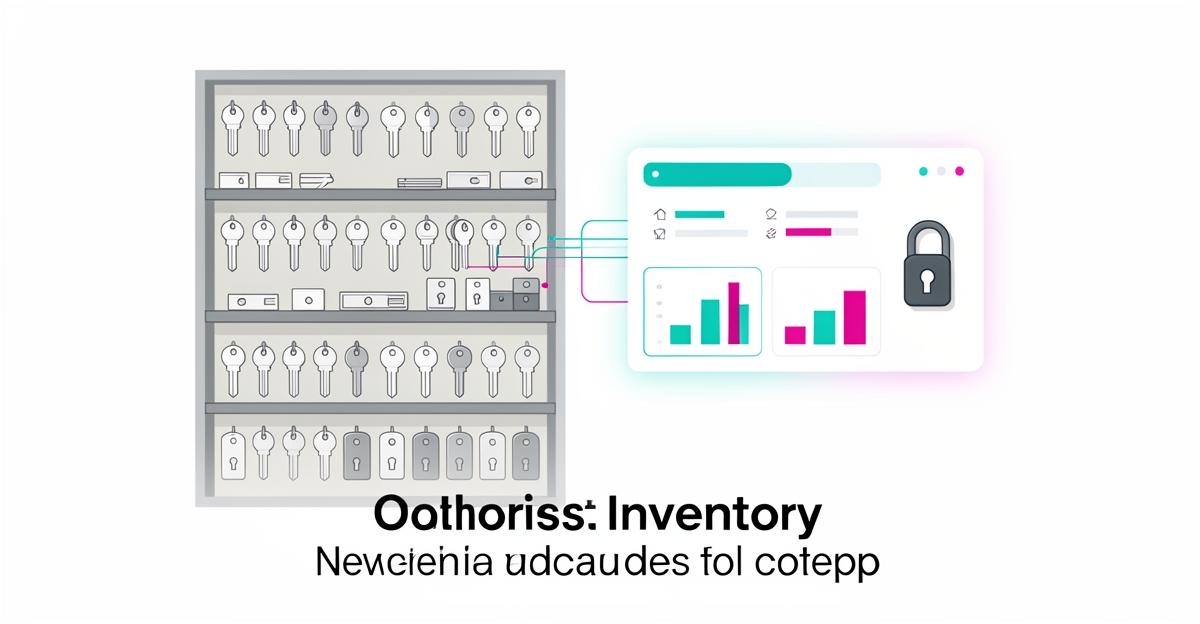
How AI Can Improve Accuracy in Key Replacement and Part Inventory Management
Key Facts
- Industry analyses of AI-powered inventory systems typically report major reductions in stockouts and excess inventory when forecasting replaces manual reordering
- Smart lock adoption continues to expand the parts catalog locksmiths must manage in both variety and technical complexity
- As of late 2026, most organizations report using AI in some form, and inference costs have fallen enough to make continuous forecasting practical for small shops
- AI systems enable dynamic reorder triggers based on lead time variability and demand spikes
- AIQ Labs builds custom AI inventory systems locksmiths own outright, code, agents, and data
Hire a team member that works 24/7 — for less than a part-time wage.
AI receptionists, SDRs, dispatchers and 99+ roles. Trained on your business, fully managed.
Not sure where to start? Ask our AI planner
The Cost of Inaccurate Inventory in Locksmith Services
A locksmith van rolls out to a job site, and the technician discovers the required key blank or transponder chip isn't in stock. The appointment fails, the customer loses an hour, and the business eats the cost of a wasted trip. Multiply that scenario across dozens of calls per week, and manual inventory tracking quietly becomes one of the most expensive blind spots in a locksmith operation.
Manual tracking, spreadsheets, clipboard counts, memory-based reordering, creates two failure modes that feed each other. The first is the stockout: a fast-moving part runs dry because nobody noticed demand accelerating. The second is overstocking: capital gets tied up in slow-moving blanks and hardware that sit on shelves for months. Both drain cash flow, and both stem from the same root problem, reordering decisions based on intuition rather than data.
The downstream effects compound quickly:
- Failed service calls that require repeat visits, doubling labor cost per job
- Emergency parts runs at premium prices to cover gaps
- Longer customer wait times that push reviews, and referrals, downward
- Tied-up working capital in excess inventory that never turns over
These inefficiencies matter more as the industry shifts underfoot. Smart lock adoption keeps accelerating, which means the parts catalog locksmiths must manage is expanding in both variety and technical complexity. Keeping pace with that catalog using manual methods becomes harder every year.
The broader market has already moved. As of late 2026, the majority of organizations report using AI in some form, and modern inventory platforms use AI to predict future demand more accurately than traditional forecasting by analyzing historical data, market trends, and real-time signals. Agentic AI systems can now handle much of the cycle from procurement to fulfillment, identifying cost-effective suppliers and triggering reorders before stockouts occur.
For locksmiths, the barrier to adopting these capabilities is lower than it once was. Falling inference costs have put sophisticated forecasting within reach of small and mid-sized shops. This is where AI-driven inventory systems, tracking key types, stock levels, and demand patterns to keep the right parts on hand, become practical rather than aspirational. AIQ Labs builds these systems to integrate directly with a locksmith's existing operations, replacing guesswork with demand-driven reordering and reducing the downtime and service delays that manual tracking makes inevitable.
AI-Driven Demand Forecasting and Real-Time Tracking
AI-driven forecasting turns key and parts inventory from guesswork into a measurable operation. Locksmiths track thousands of SKUs across brands, models, and service calls, and AI learns the patterns that humans miss.
AI analyzes historical sales, seasonality, and real-time usage patterns to predict demand with high accuracy. Models ingest point-of-sale data, service tickets, and external signals to spot trends before they impact stock. This shift from intuition to data analysis is central to how AI-powered inventory optimization works.
Real-time tracking closes the loop between forecast and fulfillment. As keys are issued, returned, or consumed on jobs, stock levels update instantly and reorder triggers fire automatically. The system prevents overstocking or stockouts by aligning supply with actual demand, not static safety-stock rules.
The market pressure is clear. Smart lock adoption continues to expand the variety of key types locksmiths must hold, and AI adoption across industries keeps climbing, meaning competitors who adopt predictive inventory first gain a durable edge.
For locksmith operations, AI forecasting delivers:
- Demand prediction from historical sales and seasonality
- Real-time stock visibility by key type and location
- Automated reorder optimization to reduce excess inventory
- Usage pattern alerts for emerging part needs
Falling compute costs make these models practical at SMB scale. Cheaper inference means continuous forecasting without prohibitive overhead, something that would have required an enterprise budget only a few years ago.
AIQ Labs integrates AI into inventory systems to ensure locksmiths always have the right parts available, reducing downtime and service delays. For shops that want to start smaller, AI Workflow Builds rebuild the single workflow that costs the most, often key blank replenishment, at a fixed price, in phases.
The result is fewer stockouts and less excess inventory while cash flow improves through optimized ordering. As AI adoption grows in locksmith services, predictive inventory becomes a competitive advantage rather than an operational burden.
Automated Procurement and Dynamic Reorder Optimization
AI-powered automation is transforming how locksmiths manage procurement and inventory replenishment, shifting from reactive ordering to intelligent, real-time decision-making. By continuously analyzing live inventory levels, lead times, and demand patterns, AI systems can trigger purchase orders exactly when and where they're needed, eliminating guesswork and manual intervention. This dynamic approach ensures critical key blanks and hardware remain in stock without overburdening cash flow through excessive safety stock.
Industry analyses consistently show that AI-driven procurement dramatically reduces processing time while improving supplier selection through real-time price, availability, and performance scoring. For locksmith businesses, this means faster response to emergency service calls and fewer delays caused by missing parts. AIQ Labs integrates these capabilities into custom inventory systems that learn from historical usage and seasonal trends, such as increased demand for high-security keys during holiday periods, to optimize reorder points automatically.
The system operates through a closed-loop workflow: inventory sensors or POS data feed real-time stock levels into the AI engine, which calculates optimal order quantities based on forecasted demand, current lead times, and supplier reliability. When stock dips below the dynamically adjusted threshold, the system generates a purchase order, routes it for approval (if required), and sends it to the preferred supplier, minimizing human touchpoints. This reduces administrative overhead and the risk of human error in reorder calculations.
- Continuous monitoring of inventory levels across multiple locations
- Dynamic reorder triggers based on lead time variability and demand spikes
- Automated supplier ranking using cost, delivery performance, and quality metrics
- Self-learning algorithms that improve forecast accuracy over time
- Exception handling for stockouts or delayed shipments with automated alerts
By replacing static safety stock models with adaptive, data-driven replenishment, locksmiths can meaningfully reduce excess inventory and stockouts, directly improving service readiness and customer satisfaction. AIQ Labs builds these intelligent procurement workflows as part of comprehensive AI inventory systems, and for routine back-office work like order confirmation and supplier follow-up, managed AI Employees can handle the day-to-day coordination at a fraction of a hire's cost. The result is a leaner, more responsive supply chain that keeps technicians equipped and jobs moving forward, without the manual burden.
Implementation Path: From Assessment to Owned AI Inventory System
Moving from manual counts to an owned AI inventory system requires a clear path, not a big bang rollout. Locksmiths who map the journey in stages reduce risk and see service improvements early.
Assessment starts with workflow reality. Document how key types, blanks, and hardware move from intake to job completion, where stockouts or overstocking happen, and which tools currently hold inventory data. This baseline reveals the data quality and integration points that will feed the AI. Industry outlooks show AI adoption extending beyond smart locks into service operations and predictive tool maintenance.
Design follows assessment. With clean process maps, a custom AI model can be built to track key types, stock levels, and demand patterns and prevent overstocking or stockouts. AIQ Labs aligns this work to a phased model: targeted workflow fixes, managed AI staff for daily operations, or a full AI Operating System that connects inventory, scheduling, and customer service in one layer you own outright.
Implementation is phased and practical:
- Discovery and architecture to evaluate readiness, data infrastructure, and ROI
- Custom AI agent development for forecasting, automated reorder, and tool integration
- Pilot deployment on one workflow, such as key blank replenishment, with monitoring
- Full ownership transfer and ongoing optimization across inventory and supply chain
This staged approach mirrors how AI is changing inventory management broadly. Agentic AI for inventory is now used to deliver from procurement to fulfillment by analyzing historical data, market trends, and real-time demand.
Context matters for timing. Smart lock adoption keeps rising, signaling growing demand for key services and parts, while AI adoption across industries continues to climb as inference costs fall.
Ownership is the differentiator. Instead of renting subscription tools, businesses can own the code, agents, and data they build, enabling long-term control and customization. AIQ Labs offers flexible payment models, start monthly, build in milestones, or own it outright, so the structure matches your cash flow and risk tolerance. With owned systems, locksmiths reduce downtime and service delays by ensuring the right parts are available when needed.
Start with a focused 2-minute Fit Check to map your biggest bottleneck and identify high-ROI automation opportunities. From there, a free 30-minute strategy call with AIQ Labs can clarify whether a workflow fix, department automation, or a complete AI operating system fits your current maturity. Questions first? Reach the team at [email protected].
Still paying for 10+ subscriptions that don’t talk to each other?
We build custom AI systems you own outright. No vendor lock-in. Full control.
Not sure where to start? Ask our AI planner
Frequently Asked Questions
How does AI actually prevent stockouts of key blanks and parts?
Is AI inventory management affordable for small locksmith shops?
What's the difference between traditional inventory tracking and AI-powered forecasting?
How long does it take to implement an AI inventory system?
Can AI handle the growing complexity of smart lock inventory?
Do I need to replace my existing systems to use AI inventory management?
Turn Guesswork into Reliable Availability
The cost of inaccurate inventory in locksmith services isn't just about missed appointments, it's about eroded trust, wasted labor, and capital locked in unused stock. As smart lock adoption accelerates and parts complexity grows, relying on spreadsheets and intuition becomes a liability. AI-driven inventory systems change that by turning historical data, real-time usage, and demand patterns into precise forecasting and automated replenishment. The result? Fewer stockouts, less excess inventory, and technicians who have the right part on hand. AIQ Labs helps locksmiths build owned, custom AI inventory systems that integrate with existing operations, no vendor lock-in, just measurable improvements in service readiness and cash flow. To see where your operation stands and what a practical first step looks like, start with the 2-minute Fit Check and a free 30-minute strategy call to map your biggest bottleneck and identify high-ROI automation opportunities.
Make AI your competitive advantage — not just another tool.
Strategy, implementation and ongoing optimization. One partner, end to end.
Not sure where to start? Ask our AI planner