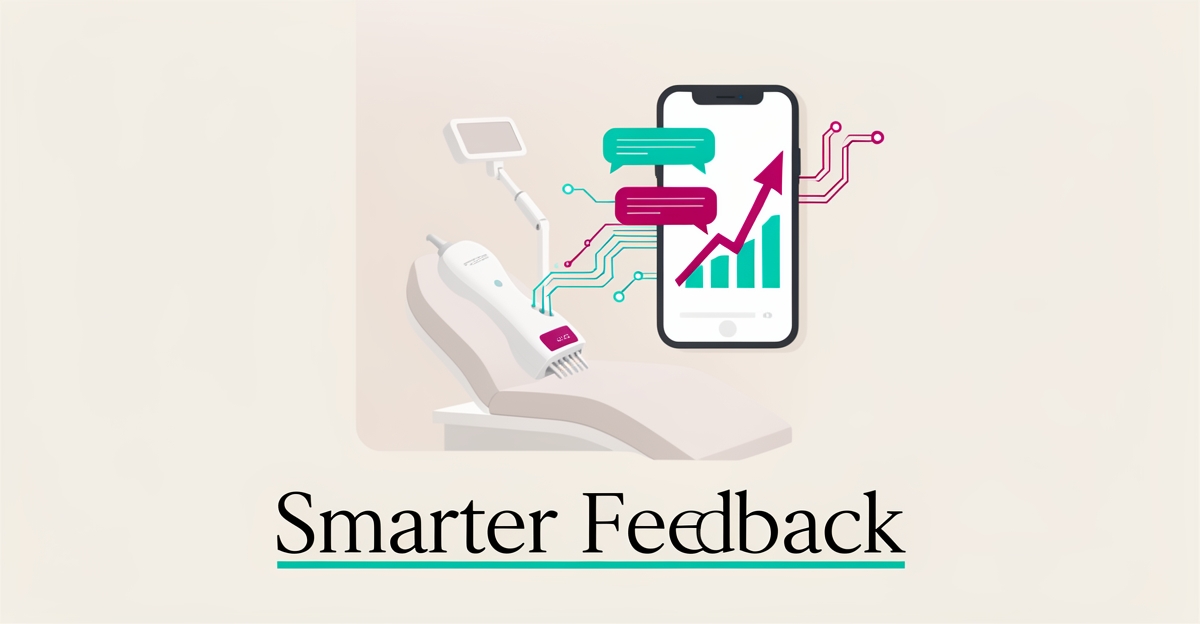
How AI Can Improve Client Feedback Collection in Microneedling Studios Without Adding Staff
Key Facts
- Poor customer service costs organizations trillions of dollars annually across industries, according to widely cited industry research.
- Modern AI sentiment classification typically performs on par with human analysts, who themselves agree on sentiment ratings only around 80-85% of the time.
- As of late 2026, most service businesses are using or actively planning AI-powered customer communication, automated feedback is becoming the baseline, not the edge.
- Well-configured AI systems can typically handle the large majority of routine customer tasks, including feedback solicitation and triage.
- Companies that systematically listen to client feedback consistently report meaningful gains in retention and loyalty.
- Data quality determines output quality: bad input data reliably produces bad insights, no matter how sophisticated the AI.
- "AI isn't yet capable of context and nuance. Our human reps are still vital for understanding the 'why' behind the sentiment," says Kenko Tea founder Sam Speller in HubSpot's analysis.
Hire a team member that works 24/7 — for less than a part-time wage.
AI receptionists, SDRs, dispatchers and 99+ roles. Trained on your business, fully managed.
Not sure where to start? Ask our AI planner
The Hidden Cost of Missed Client Signals in Microneedling Studios
A client leaves your studio with glowing skin and a subtle concern about redness that they don't mention to your front desk. Three days later, they're posting in a skincare forum asking if the reaction is normal, while your team remains completely unaware of the brewing dissatisfaction.
This scenario plays out daily in microneedling studios, creating invisible risks that erode client trust before you ever have a chance to intervene. Industry research consistently estimates that poor customer service costs organizations trillions of dollars annually, and for aesthetic practices operating on thin margins and high client expectations, even a handful of missed signals can trigger significant revenue loss.
The stakes are particularly high in microneedling, where post-treatment experiences vary widely and clients often hesitate to voice concerns directly. Manual feedback collection, whether through sporadic follow-up calls or paper surveys, simply cannot keep pace with the volume of client interactions. Studio owners find themselves trapped between providing attentive care and managing operational demands, leaving gaps where critical feedback slips through unnoticed.
When feedback collection fails, studios face several compounding risks:
- Undetected adverse reactions that escalate into negative reviews or lost clients
- Missed opportunities to address technique inconsistencies across practitioners
- Invisible patterns of dissatisfaction that only surface in churned clients
- Wasted marketing spend acquiring new clients while existing ones quietly depart
The financial impact extends beyond immediate revenue loss. Research indicates that companies listening to user feedback see meaningful increases in customer loyalty, yet most microneedling studios lack the bandwidth to systematically capture and analyze client sentiment. Without automated systems, feedback remains anecdotal and unstructured, making it impossible to identify trends like recurring discomfort during specific treatment phases or confusion about aftercare protocols.
AI-powered sentiment analysis offers a solution by automatically processing client communications and flagging urgent concerns in real time. Modern AI systems typically classify sentiment at accuracy levels comparable to human analysts, who themselves agree on sentiment only around 80-85% of the time. This technology enables studios to monitor client emotions at scale without hiring additional administrative staff.
AIQ Labs specializes in deploying these intelligent feedback systems specifically for service-based businesses like microneedling studios. By integrating AI sentiment analysis with your existing post-treatment communication workflows, we help you capture the nuanced client signals that manual methods miss, transforming reactive damage control into proactive relationship management. Our systems analyze tone and context across surveys, emails, and review platforms, alerting your team only when human intervention truly matters.
The hidden cost of missed feedback isn't just measured in lost clients, it's the gradual erosion of your studio's reputation and the missed opportunities to refine your craft. In an industry built on trust and visible results, understanding what clients truly feel after they leave your chair isn't optional; it's essential for survival.
How AI Automates Post-Treatment Feedback Collection and Sentiment Analysis
A microneedling client walks out the door, and within hours an AI system has already checked in, collected their feedback, and analyzed how they feel, all without anyone on your team lifting a finger. This is what automated post-treatment feedback looks like in practice, and as of late 2026 it's rapidly becoming the norm rather than the exception.
The shift is happening fast. Industry research indicates that the overwhelming majority of companies are either using or actively planning AI-powered solutions for customer communication. For microneedling studios, that means the window to gain a competitive edge through automated feedback is still open, but closing.
Here's how the mechanics work. When an appointment ends, an AI system triggers a personalized outreach via text or email, asking about the client's experience. Once the response arrives, natural language processing goes to work analyzing not just what the client said, but how they said it. These systems typically classify sentiment at accuracy levels that match human analysts, who themselves agree on sentiment only around 80-85% of the time.
The real value goes beyond simple positive-or-negative scoring. AI can detect the emotional context and level of urgency behind each response, which means a client mentioning unusual redness two days post-treatment gets flagged for immediate attention, while a routine "loved my session" note simply feeds into your satisfaction metrics. No staff member has to triage an inbox.
A well-configured system typically handles:
- Automatic post-treatment outreach timed to each client's appointment
- Sentiment and tone analysis of every response, matched against human-level accuracy
- Escalation flags for urgent concerns that need a human touch same-day
- Aggregated trend reporting that reveals recurring issues or standout praise
That last point matters more than it might seem. Well-configured AI tools can typically handle the large majority of routine customer tasks and questions, freeing your estheticians to focus on the treatments themselves, and on the clients whose feedback genuinely requires their judgment. As Kenko Tea founder Sam Speller puts it, "AI isn't yet capable of context and nuance. Our human reps are still vital for understanding the 'why' behind the sentiment."
Success does depend on implementation. AI solves the scale problem in feedback analysis, but only when built with clear objectives, consolidated data sources, and validated results. Poor data quality produces poor insights, and asking the wrong questions yields impressive dashboards that change nothing.
This is where thoughtful setup makes the difference. At AIQ Labs, we deploy AI tools that integrate directly with post-treatment surveys and deliver real-time insights to management teams, configured to understand aesthetic-treatment terminology and the specific concerns microneedling clients raise. The goal isn't replacing human care; it's ensuring nothing important slips through while your team stays focused on clients in the treatment room.
From Raw Feedback to Actionable Insights: Identifying Patterns Before They Become Problems
Microneedling studios face a constant challenge: turning scattered client feedback into clear, actionable improvements without overburdening staff. AI-powered feedback analysis solves this by automatically consolidating input from post-treatment surveys, text messages, and online reviews into a unified view. This consolidation is critical, without it, valuable insights remain siloed and patterns go unnoticed until they escalate into recurring complaints.
Implementation best practices consistently point to the same requirement: identify and consolidate feedback sources from multiple systems, booking platforms, survey tools, review sites, and community forums. AI systems excel at this task, processing thousands of data points daily to surface trends that human teams might miss amid daily operations. For microneedling studios, this could mean detecting early signs of aftercare confusion or scheduling friction before they impact client retention.
Data quality is equally vital, poor input guarantees poor output, no matter how sophisticated the AI. Studios must organize and prepare feedback by removing noise, ensuring sufficient context, and considering volume before analysis. Bad data reliably produces bad insights, and companies across industries lose significant revenue to poor data quality. AIQ Labs helps studios implement proper data hygiene practices as part of their feedback system setup, ensuring the AI analyzes clean, relevant information.
Finally, validating AI-identified themes prevents the common pitfall of impressive dashboards that don't change decisions. Studios should review a sample of feedback within each AI-flagged issue, like recurring mentions of "needling depth concerns" or "post-treatment redness duration", to confirm the AI accurately captured the problem. This human-in-the-loop step ensures insights drive real operational adjustments, not just visual reports. By following these steps, microneedling studios transform raw feedback into a proactive improvement engine.
Why Human Judgment Still Matters: Balancing AI Efficiency with the Personal Touch
AI can process thousands of survey responses in seconds, but it cannot hear the hesitation in a client's voice when they describe unexpected redness after a session. That gap between what AI measures and what clients actually experience is exactly where the best microneedling studios draw the line between automation and human judgment.
The technology's limitations are real and worth naming directly. AI sentiment classification typically performs at accuracy levels comparable to the 80-85% agreement rate among human analysts themselves. That sounds impressive until you consider what falls into the remaining gap: the nuanced, context-heavy feedback that often matters most in a skincare setting.
A client who writes "the treatment was fine, I guess" after experiencing prolonged sensitivity is not expressing satisfaction. AI may log that as neutral or even positive, while a trained esthetician reading the same words would immediately recognize a follow-up conversation waiting to happen. As Sam Speller, Founder and CEO of Kenko Tea, puts it in HubSpot's analysis of AI feedback tools: "AI isn't yet capable of context and nuance. Our human reps are still vital for understanding the 'why' behind the sentiment and for adding the personal touch."
The other blind spot is what clients never say at all. AI can only analyze feedback that exists, it cannot know about the concern a client chose not to raise, the question they felt awkward asking, or the hesitation they masked with politeness. In a microneedling context, where clients may feel embarrassed admitting they skipped aftercare or confused about normal versus abnormal skin reactions, those silences carry significant clinical and relational weight.
Successful studios solve this by assigning AI and humans distinct, complementary roles:
- AI handles volume and pattern detection, flagging recurring complaints about post-treatment dryness or consistently positive sentiment around a specific technician across hundreds of responses
- Humans handle escalation and interpretation, personally reaching out when sentiment turns negative, ambiguous, or emotionally charged
- AI drafts the summary; a team member decides what it means and what happens next
- Staff validate AI-flagged themes against real client conversations before acting on them
That last point matters more than most studios realize. Poor data quality produces poor insights, and AI without validated results creates dashboards that look impressive but change nothing. Reviewing a sample of flagged feedback before acting is not optional, it is the quality control layer that keeps automation honest.
This is precisely the balance AIQ Labs builds into its feedback systems: AI collects, categorizes, and surfaces insights in real time, while configurable human-in-the-loop controls ensure relationship-critical responses always route to a person. The goal is not to remove your team from client relationships, it is to make sure they spend their limited time on the conversations that actually require them.
Deploying AI Feedback Systems in Your Studio Without Hiring or Technical Expertise
Getting started doesn't require a data science team or a six-figure budget. The most successful implementations begin with a single, well-defined question: what specific insight would change how you operate tomorrow?
AI-powered feedback analysis solves the scale problem, but only when studios define clear objectives before selecting tools. Microneedling studios should map their feedback goals, whether tracking post-treatment comfort, pigment retention, or technician communication, before evaluating any platform. This clarity prevents the common trap of building impressive dashboards that don't actually change decisions.
- Audit existing touchpoints: booking confirmations, post-care emails, follow-up texts
- Identify one high-impact workflow to automate first, typically the 24-hour post-treatment check-in
- Choose a solution that integrates with your current booking software via API or webhook
- Set a 30-day validation period to review AI-categorized feedback against manual review
Well-configured AI systems can typically handle the large majority of routine customer tasks, including the initial feedback solicitation and triage that consumes front-desk hours. Studios using managed AI employees, like the AI Employees deployed by AIQ Labs, skip the technical build entirely. These systems arrive pre-trained on aesthetics industry terminology, connect to calendars and CRMs through standard integrations, and improve continuously without requiring in-house engineering time. And because managed AI staff typically cost a fraction of a human hire, you get coverage around the clock without expanding payroll.
AI sentiment classification typically performs on par with human analysts, who themselves agree on sentiment around 80-85% of the time. That parity means studio owners can trust automated flagging for urgent issues, allergic reactions, dissatisfaction with results, scheduling complaints, while focusing their personal attention on the conversations that genuinely require a human touch.
Still paying for 10+ subscriptions that don’t talk to each other?
We build custom AI systems you own outright. No vendor lock-in. Full control.
Not sure where to start? Ask our AI planner
Frequently Asked Questions
How accurate is AI at understanding client sentiment compared to human analysts?
Will AI miss the nuanced concerns clients don't explicitly state in surveys?
What percentage of routine feedback tasks can AI actually handle without staff involvement?
Do I need technical expertise or a data science team to deploy AI feedback collection in my studio?
How do I know the AI isn't just creating impressive dashboards that don't change anything?
What's the financial impact of missing client feedback signals in a microneedling studio?
The Feedback Loop You Build Today Protects Every Client Tomorrow
The gap between a satisfied client and a silently departed one often comes down to whether their feedback reached you in time. Throughout this article, we've seen how AI closes that gap: automated post-treatment outreach captures every client's experience, sentiment analysis matches human-level accuracy, and pattern detection surfaces recurring issues before they become churned clients and negative reviews. Just as importantly, the human-in-the-loop approach ensures your estheticians still handle the nuanced conversations that require real judgment, AI simply makes sure nothing important slips through while your team stays focused on the treatment room. And with most service businesses adopting AI-powered customer communication as of late 2026, the competitive window for standing out through attentive, responsive care is narrowing. Getting started doesn't require technical expertise or new hires, it starts with one automated workflow, like a 24-hour post-treatment check-in. If you're ready to see what that would look like in your studio, take the two-minute Fit Check at aiqlabs.ai/apply and book a free 30-minute strategy call with AIQ Labs. It's a working session, not a sales pitch, and if there isn't a clear win, we'll tell you that too.
Make AI your competitive advantage — not just another tool.
Strategy, implementation and ongoing optimization. One partner, end to end.
Not sure where to start? Ask our AI planner