How AI Can Improve Crane Rental Safety Through Real-Time Job Monitoring
Key Facts
- Industry research suggests AI integration can meaningfully reduce workplace accidents when paired with existing safety frameworks.
- Real-time monitoring typically combines voice logs, GPS coordinates, and job-site sensor data into a single safety envelope.
- ROI for AI safety systems typically lands on a multi-year horizon, driven by reduced downtime, insurance savings, and fewer regulatory issues.
- Human-in-the-loop guardrails remain essential: AI detects and recommends, people decide.
Hire a team member that works 24/7 — for less than a part-time wage.
AI receptionists, SDRs, dispatchers and 99+ roles. Trained on your business, fully managed.
Not sure where to start? Ask our AI planner
Why Human-Only Crane Monitoring Is Reaching Its Limits
The hum of a crane cab is a familiar sound on any job site, but behind that routine lies a constant, high-stakes mental marathon. Traditional crane safety has always leaned heavily on the skill and vigilance of human operators, a reliance that, while admirable, is increasingly showing its limits in today's complex environments.
Operators are tasked with processing vast amounts of real-time data—wind speed, load weight, boom angle, ground conditions, and the movements of ground personnel—all while maintaining unwavering focus. This constant cognitive load, combined with long shifts, can lead to fatigue and a diminished capacity for split-second, critical decisions. Human-only monitoring is inherently susceptible to error, fatigue, and the sheer inability to process every data point simultaneously.
The consequences of these human limitations are significant. Even the most experienced operator can miss a subtle deviation or a rapidly developing hazard. Industry research on AI safety implementation suggests that properly integrated AI systems can meaningfully reduce workplace accidents, underscoring the potential for technology to augment human capabilities where they fall short. This isn't about replacing human expertise, but rather providing a crucial layer of support that can identify risks before they escalate.
The challenge lies in the sheer volume and velocity of information. A crane operator's attention is a finite resource, and expecting them to be omniscient across an entire job site, every minute of every day, is simply unrealistic. This is where the concept of proactive safety layers becomes critical, moving beyond reactive responses to preventative interventions.
Consider the multifaceted demands that push human monitoring to its breaking point:
- Maintaining constant vigilance over dynamic load parameters and environmental factors.
- Reacting instantaneously to unexpected obstacles or personnel movements.
- Diagnosing subtle equipment anomalies that could precede a failure.
- Combating the cumulative effects of fatigue over extended operational periods.
These pressures create safety gaps that traditional protocols, reliant solely on human observation and judgment, struggle to fill. The need for real-time monitoring, predictive analysis, and automated intervention is no longer a luxury but a necessity. Companies like AIQ Labs recognize this evolving landscape, understanding that integrating advanced systems can provide the continuous, data-driven oversight needed to enhance safety compliance and reduce risk in crane operations. This shift represents a fundamental rethinking of how we approach safety, moving towards a collaborative model where technology augments human strengths and mitigates inherent weaknesses.
AI-Powered Real-Time Job Monitoring for Cranes
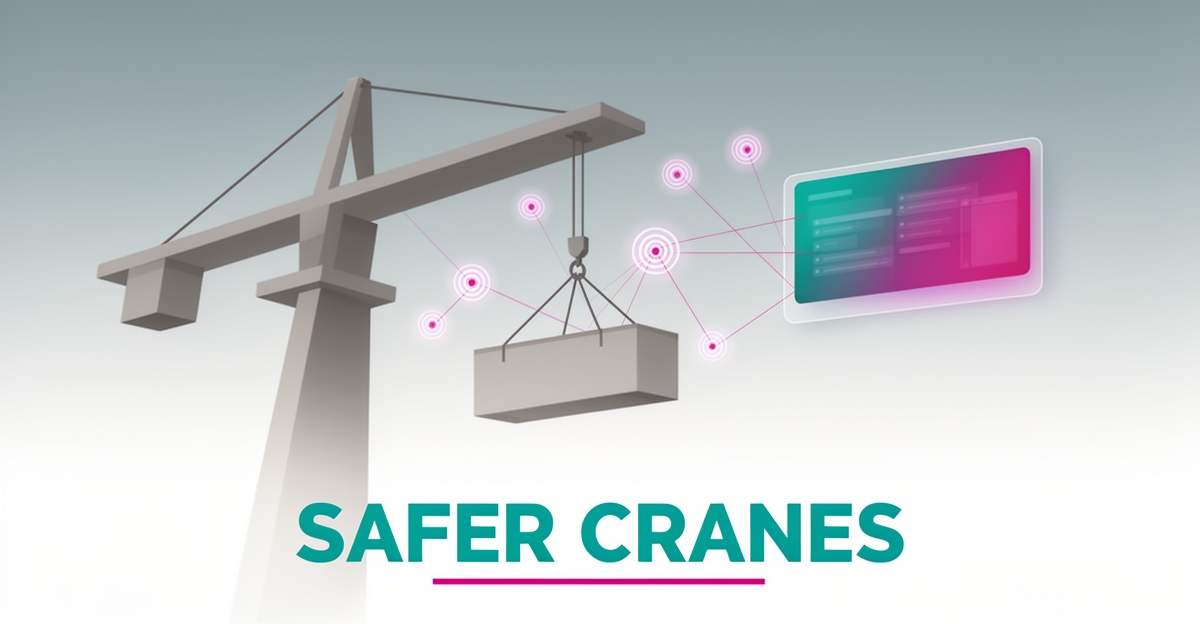
Traditional crane safety depends on operator vigilance, but fatigue and limited real-time data processing create blind spots that AI can eliminate. AI-powered monitoring systems combine voice logs, GPS coordinates, and job-site data to create a continuous safety envelope around every lift. This multi-layered approach detects deviations from planned operations and triggers immediate voice or text alerts to field supervisors before incidents escalate.
- Automated control assistance that executes precise, repeatable movements reducing human error during critical lifts
- Real-time monitoring with computer vision sensors that detect obstacles, monitor load stability, and initiate collision avoidance
- Enhanced operator assistance delivering contextual alerts and decision support directly in the cab
- Integrated voice communication analysis that correlates operator commands with actual crane movements
These systems don't replace operator expertise — they augment it with computational precision that human attention alone cannot sustain. And as AI adoption spreads across heavy equipment operations, fleets that build monitoring capability early gain a compounding advantage in both safety records and the operational data those records generate.
AIQ Labs builds AI voice and communication systems that unify field data streams into actionable safety intelligence. Our work deploying AI Employees—voice agents that handle calls, dispatch, and follow-up reliably in high-stakes environments—demonstrates the same architectural principles that apply when monitoring crane operations where split-second decisions prevent catastrophic outcomes. The key is treating safety as a data integration challenge: every sensor reading, voice command, and GPS coordinate becomes a verification point in a system designed to catch deviations before they become incidents.
From Alerts to Action: Implementation Guardrails for Crane AI
An alert that nobody acts on is just noise. For crane rental fleets, the difference between a monitoring system that improves safety and one that becomes background chatter comes down to disciplined implementation—rolling out AI with clear guardrails rather than bolting on dashboards and hoping for the best.
The first guardrail is defining critical capability levels before deployment. This means identifying and prioritizing the most serious safety risks in your operations—load instability, collision zones, unauthorized lift conditions—and deciding exactly what the AI is authorized to detect, flag, and escalate. Without these boundaries, even a well-built system produces inconsistent responses that operators learn to ignore.
Second, effective deployments apply two layers of safety: preventative measures such as data validation that stop bad inputs from corrupting decisions, and reactive measures such as automated responses when a deviation is detected. This layered approach matters because AI's safety benefits only materialize when preventative and reactive safeguards work together, not in isolation.
Third, robust monitoring and logging are non-negotiable. Every AI decision, alert, and safety event should be tracked and reviewable, so supervisors can audit why a system flagged a lift or triggered an intervention. This is where communication infrastructure earns its keep: AIQ Labs builds voice and communication systems that combine voice logs with GPS and job data, delivering alerts to field supervisors via voice or text while preserving a complete record for compliance review.
Finally, keep a human in the loop for high-risk actions. Any critical or irreversible operation—halting a lift, dispatching an inspector, grounding a crane—should require human approval before execution. The AI detects and recommends; people decide. This structure also addresses explainability and trust, since operators can see exactly how the system arrived at each recommendation.
A practical rollout sequence for rental fleets looks like this:
- Define which safety risks the AI monitors and what capability level triggers each response.
- Layer preventative validation with reactive automated alerts to supervisors.
- Pilot in controlled environments before wider deployment, treating early misalignment as expected—not a failure.
- Log every decision and alert for audit and continuous tuning.
- Route high-risk actions through human approval, every time.
Data curation underpins all of it—AI safety systems are only as reliable as the quality and integrity of the data feeding them. And because implementation typically delivers ROI over a multi-year horizon, fleets should structure investment accordingly—phased builds with clear milestones tend to work better than all-at-once overhauls. Ownership matters here too: with AIQ Labs' model, clients own the code, agents, and data outright, so the monitoring system evolves with the fleet rather than locking into a vendor's roadmap. Safety is a user problem before it is a technology problem, and guardrails are what turn alerts into action.
Business Impact and Risk Reduction with Real-Time AI Safety
AI-powered real-time monitoring transforms crane safety from reactive compliance to proactive risk prevention. By continuously analyzing sensor data, GPS positioning, and voice logs from field operations, AI systems detect deviations from safe operating procedures before they escalate into incidents. This capability directly addresses the leading causes of crane-related accidents—human error, fatigue, and delayed hazard recognition—by providing instant alerts to supervisors via voice or text when unsafe conditions arise. Industry research on AI safety implementation suggests such monitoring can meaningfully reduce workplace accidents, lowering injury rates, equipment damage, and project delays for crane rental businesses.
The financial upside extends beyond accident prevention. While AI implementation requires upfront investment in sensors, integration, and analytics platforms, the long-term savings compound over a typical multi-year ROI horizon, driven by reduced downtime, lower insurance premiums, fewer regulatory fines, and extended equipment lifespans through predictive maintenance. Companies adopting AI monitoring now position themselves to capture share in a growing market while building operational resilience.
Compared to manual control—where safety depends entirely on operator vigilance and periodic inspections—AI-powered systems deliver consistent, data-driven oversight. Manual methods are prone to lapses in attention, inconsistent reporting, and delayed responses to emerging risks. AI monitoring, by contrast, enables:
- Continuous 24/7 site surveillance without fatigue
- Instant alerts for overload, sway, or proximity hazards
- Automated logging of all operational events for audit readiness
- Voice-triggered check-ins that confirm supervisor awareness
- Integration with AI voice agents to deliver alerts via natural language calls
This shift not only strengthens compliance with OSHA and ANSI standards but also creates a competitive differentiator. Crane rental firms using AI monitoring can demonstrate verifiable safety performance to clients, win higher-value contracts, and reduce liability exposure—turning safety investment into a measurable business advantage. AIQ Labs supports this transformation by integrating voice-enabled AI agents with crane telemetry to deliver real-time, actionable insights directly to field teams.
Still paying for 10+ subscriptions that don’t talk to each other?
We build custom AI systems you own outright. No vendor lock-in. Full control.
Not sure where to start? Ask our AI planner
Frequently Asked Questions
Can AI really reduce crane accidents, or is it just hype?
What does AI-powered real-time monitoring actually do on a crane job site?
Will AI replace crane operators?
How long does it take to see ROI from AI safety systems for crane rentals?
What guardrails should we put in place before deploying crane AI?
Do we have to hand our data over to a vendor?
Turning Safety Alerts into Business Advantage
AI-powered real-time monitoring transforms crane safety from a reactive cost center into a proactive business driver. By continuously analyzing sensor data, voice logs, and GPS positioning, these systems detect hazards before they escalate—delivering ROI over a typical multi-year horizon through lower downtime, insurance savings, and extended equipment life. For crane rental fleets, this means stronger compliance, fewer liabilities, and the ability to win higher-value contracts by demonstrating verifiable safety performance. The technology doesn't replace operator expertise; it augments it with tireless, data-driven oversight that fills the gaps human vigilance alone cannot sustain. To explore how AI voice and communication systems can deliver actionable safety intelligence directly to your field teams, start with a 2-minute Fit Check and a free 30-minute strategy call to map your biggest bottlenecks and identify high-ROI automation opportunities.
Make AI your competitive advantage — not just another tool.
Strategy, implementation and ongoing optimization. One partner, end to end.
Not sure where to start? Ask our AI planner