How AI Can Improve Customer Experience in Post-Construction Cleaning
Key Facts
- Most consumers now expect personalized, consistent interactions across every channel they use to reach a service business
- Only a small fraction of service issues are fully resolved through self-service, most still require a human or AI-assisted conversation
- As of late 2026, generative AI is widely used in customer service for sentiment analysis, routing, and response drafting
- AIQ Labs has deployed 200+ multi-agent systems and runs 4 live SaaS products daily
- Managed AI Employees typically cost around 80% less than an equivalent human hire
Hire a team member that works 24/7 — for less than a part-time wage.
AI receptionists, SDRs, dispatchers and 99+ roles. Trained on your business, fully managed.
Not sure where to start? Ask our AI planner
The Communication Gap That Costs Post-Construction Cleaning Contracts
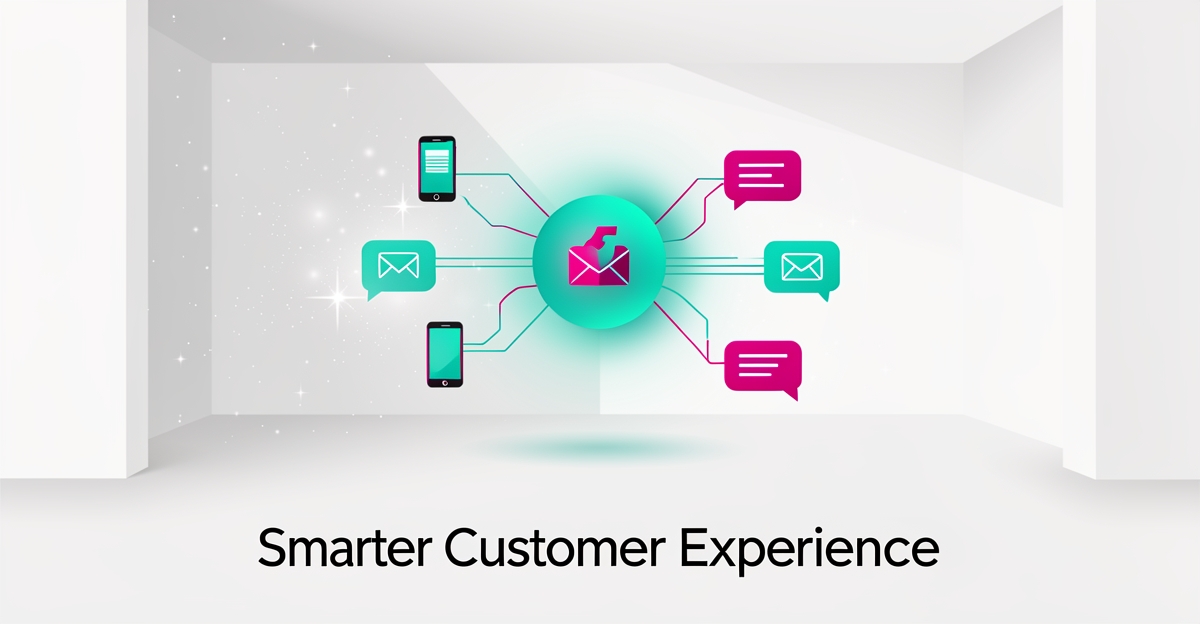
Fragmented communication across phone, email, and SMS creates friction during final walkthroughs, leading to missed punch-list items and scheduling delays that erode trust. General contractors and property managers often juggle multiple channels to coordinate post-construction cleaning, resulting in inconsistent updates and overlooked details. Just as friction drives cart abandonment in e-commerce, communication friction here translates to lost repeat business in service industries. As of late 2026, most customer service teams use generative AI in some form, often to analyze sentiment and prioritize outreach, highlighting a growing need for unified, intelligent communication. Without a centralized system, critical feedback slips through cracks, delaying project closeouts and damaging contractor relationships. AIQ Labs addresses this by deploying AI-powered touchpoints that unify phone, email, and SMS into a seamless omnichannel experience, ensuring instant, accurate responses that keep projects on schedule and clients satisfied.
- Real-time synchronization of punch-list updates across all communication channels
- Automated routing of complex issues to human supervisors when needed
- Consistent, branded messaging that reduces confusion during walkthroughs
Why Generic AI Chatbots Fail in Specialized Trade Services
A property manager calls at 7 p.m. because the final clean left adhesive residue on $40,000 worth of custom millwork, and your chatbot cheerfully asks if she'd like to reschedule. This is where generic automation collapses in post-construction cleaning.
Standard chatbots work well for simple, repetitive queries. But customer experience research consistently shows that only a small share of service issues are fully resolved through self-service. In specialized trades, that share shrinks further because inquiries rarely fit neat categories.
Post-construction cleaning sits at the intersection of technical knowledge, liability, and multi-party coordination. Consider what a typical customer interaction actually involves:
- Material-specific protocols: HEPA filtration requirements for silica dust, pH-neutral cleaners for natural stone, or warranty-voiding chemicals to avoid on specialty surfaces
- Safety compliance: OSHA documentation, site-specific hazard assessments, and proof of insurance that varies by project type
- Stakeholder complexity: The general contractor needs punch-list verification, the subcontractor needs access scheduling, and the building owner needs warranty documentation, often in the same thread
- Context-dependent pricing: Square footage means nothing without knowing ceiling height, fixture density, and post-construction debris levels
When a GC texts a photo of concrete dust infiltrating a server room, they don't need a scripted response about business hours. They need a system that understands the urgency, recognizes the equipment sensitivity, checks crew availability against the project timeline, and coordinates with the mechanical contractor who caused the dust migration.
The problem deepens with warranty and compliance documentation. AI can absolutely speed up customer service, but speed without accuracy creates liability. If your AI quotes the wrong dwell time for a disinfectant or misstates whether a cleaning method voids a flooring warranty, you've created legal exposure, not efficiency.
Generic chatbots also fracture across communication channels. The property manager emails photos, the site supervisor texts updates, and the owner's rep calls for clarification. Without unified context, each interaction starts from zero. Consumers overwhelmingly expect personalized interactions, and they report frustration when they don't get them, frustration that compounds when they're repeating project details across three platforms.
This is where context-aware AI systems diverge from scripted bots. AIQ Labs builds AI employees trained on your specific service protocols, material compatibility charts, and compliance requirements. These systems don't just answer questions, they access project management tools, pull up site-specific notes, and coordinate across phone, email, and SMS while maintaining full conversation history.
The difference shows up in resolution quality. A generic bot might confirm an appointment. A properly trained AI employee recognizes that a request to "clean the data hall" requires different protocols than standard office space, checks whether the HVAC commissioning is complete, and flags the need for anti-static cleaning agents, all before dispatching a crew.
With generative AI now standard across customer service organizations as of late 2026, the competitive advantage doesn't come from having AI. It comes from having AI that understands the difference between post-construction cleanup and janitorial services, and can act on that knowledge across every customer touchpoint.
Omnichannel AI Employees: Unifying Voice, SMS, and Email for Seamless Handoffs
Post-construction cleaning projects often suffer from fragmented communication across voice, SMS, and email channels, leading to delayed responses and inconsistent updates. AIQ Labs' AI Employees unify these touchpoints as Dispatchers, Service Coordinators, and QA Agents to create a seamless, omnichannel experience. This integration ensures customers receive consistent information regardless of how they reach out, reducing frustration and improving satisfaction. With most consumers expecting personalized interactions across every channel, unified communication is now critical for trust and retention.
These AI Employees automatically log punch-list updates to CRM systems, trigger crew dispatch via SMS, and email compliance reports upon job completion. By centralizing communication and automating routine updates, they eliminate manual handoffs that slow down operations. The result is a coordinated workflow where clients, crews, and managers stay aligned without repetitive follow-ups. Sentiment analysis, now a mainstream AI use case in customer service, lets these agents detect dissatisfaction early and route concerns before they escalate, exactly what post-construction environments demand.
The impact is measurable: teams typically see coordination overhead per job drop sharply, freeing them to focus on quality and timeliness rather than administrative work. AI Employees handle initial inquiries, status requests, and documentation routing 24/7, ensuring no message goes unanswered. And because managed AI staff typically cost around 80% less than an equivalent human hire, the economics work for small and mid-sized cleaning operations, not just enterprise fleets. For post-construction cleaning businesses, this means faster resolution, fewer errors, and a consistently professional experience that builds client confidence and encourages repeat business.
From Reactive to Predictive: Using Sentiment Analysis and Job Data to Prevent Callbacks
The post-construction clean is complete, but the real test begins when the client walks through the space. Traditional quality checks rely on spot inspections and delayed feedback, often missing subtle issues that only surface later as callbacks. This reactive approach erodes margins and damages reputation, especially when sentiment analysis, already widely adopted in customer service as of late 2026, can catch dissatisfaction early.
AI transforms this workflow by unifying post-job data streams, inspection photos, crew notes, and real-time feedback from phone, email, and SMS, into a single predictive signal. By analyzing historical callback patterns alongside current job details, AI flags high-risk cleans before crews leave site, turning low self-service resolution rates into a proactive quality assurance lever. This shift prevents avoidable rework, protects crew utilization, and ensures the first impression aligns with the promised standard.
The system works by detecting early warning signs invisible to manual review: inconsistent photo lighting suggesting missed areas, sentiment shifts in client messages indicating unmet expectations, or recurring defect types tied to specific crews or surfaces. When risk thresholds are crossed, AI triggers immediate interventions, detailed re-inspection checklists, supervisor alerts, or personalized client outreach via preferred channels, all while maintaining seamless omnichannel continuity. For post-construction cleaning businesses, this isn't just about fixing mistakes; it's about embedding quality into the delivery process, where every resolved issue before departure strengthens trust and preserves hard-won margins. AIQ Labs helps companies deploy these intelligent touchpoints to deliver consistent, omnichannel experiences that turn service recovery into service excellence.
Implementation Roadmap: Deploying an AI Workforce Without Disrupting Active Job Sites
Most post-construction cleaning companies hesitate to adopt AI because they picture a rip-and-replace overhaul that stalls active job sites. The reality is far less disruptive when you start with a single, high-impact role and expand only after each phase proves itself.
AIQ Labs deploys AI workforces in three deliberate phases. Phase one places an AI Receptionist on after-hours emergency lines so no urgent call goes to voicemail. Phase two promotes that same agent into a full Dispatcher that books crews, confirms supply drops, and updates the CRM in real time. Phase three layers in a QA workflow that scores every interaction, flags compliance gaps, and feeds insights back to operations leadership. Each phase ships in two-to-four-week sprints, with a named owner on both sides and a go/no-go milestone before the next dollar is spent.
- Week 1–2: Discovery, call-flow mapping, and CRM integration
- Week 3–4: AI Receptionist live on after-hours line; human team shadows
- Week 5–8: Dispatcher workflow activated; crew schedules auto-synced
- Week 9–12: QA scorecards, sentiment tagging, and weekly insight reports
The entire ramp runs on the Start Monthly model, a flat fee that typically costs less than a part-time hire and includes build, training, integrations, monitoring, and continuous improvement. You can pause or adjust anytime, and you own every workflow we build together. Prefer a fixed-scope project or full ownership from day one? AIQ Labs also offers Workflow Builds to rebuild the one workflow that costs you the most, and AI Operating Systems that connect your entire operation in phases you own outright. An AI workforce that spans phone, email, and SMS closes the personalization gap without pulling supervisors off job sites.
Ready to see the first phase scoped for your operation? Start the two-minute Fit Check at aiqlabs.ai/apply and book a free 30-minute strategy call at aiqlabs.ai/book. If there isn't a clear win, we'll tell you, no pitch, just clarity.
Still paying for 10+ subscriptions that don’t talk to each other?
We build custom AI systems you own outright. No vendor lock-in. Full control.
Not sure where to start? Ask our AI planner
Frequently Asked Questions
How can AI actually help with post-construction cleaning communication when we already use phone, email, and SMS?
Won't a generic AI chatbot just give robotic answers and miss important details about our specialized cleaning work?
Is implementing AI going to disrupt our active job sites or require a big overhaul we can't afford right now?
How do we know the AI won't make mistakes on compliance or warranty issues that could create liability for us?
Can AI really reduce callbacks and rework after a post-construction clean is done?
What kind of ROI or efficiency gains should we expect from using AI Employees in our cleaning business?
Turning Communication Friction Into Competitive Advantage
Post-construction cleaning success hinges on clear, timely communication, yet fragmented channels create costly delays, missed punch-list items, and frustrated clients. AIQ Labs bridges this gap with AI Employees that unify phone, email, and SMS into a seamless omnichannel experience, ensuring consistent updates, proactive issue resolution, and context-aware responses tailored to your specific protocols. By eliminating silos and embedding quality into every touchpoint, teams shift from reactive firefighting to predictive coordination, accelerating approvals and building trust that drives repeat business. The path forward starts with clarity: take the two-minute Fit Check at aiqlabs.ai/apply to map your biggest bottleneck and explore how an AI workforce can strengthen your customer experience, no pitch, just insight.
Make AI your competitive advantage — not just another tool.
Strategy, implementation and ongoing optimization. One partner, end to end.
Not sure where to start? Ask our AI planner