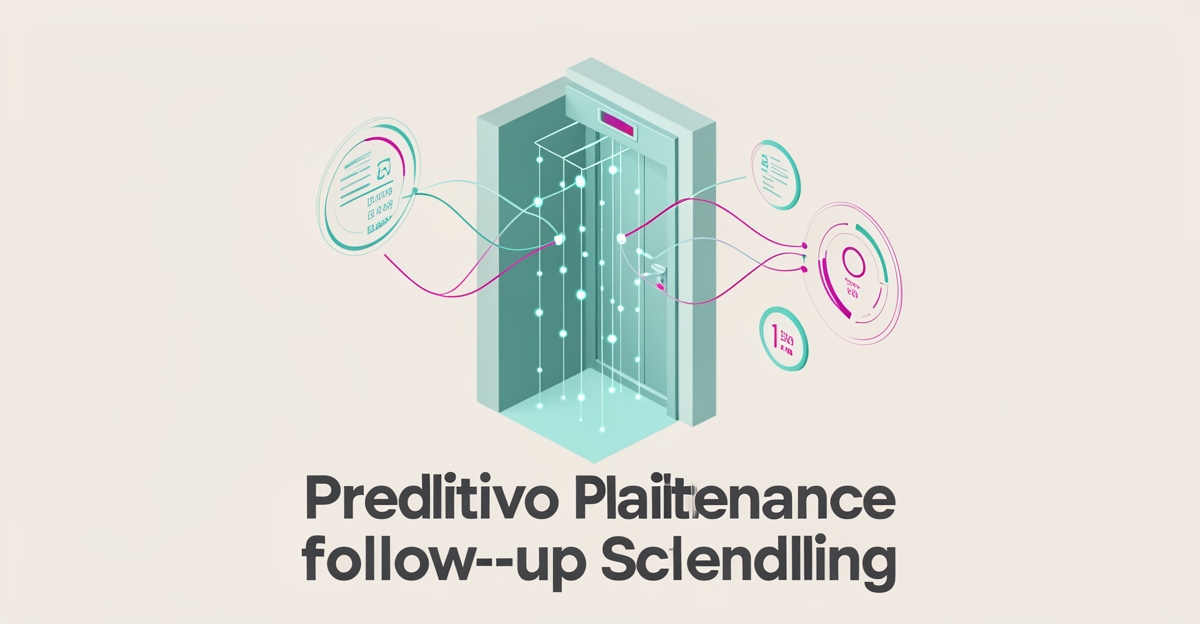
How AI Can Improve Customer Retention in Elevator Installation Services
Key Facts
- Industry surveys consistently find a majority of customers say their last AI interaction didn't solve their problem, poorly deployed automation actively damages retention
- AI can typically reclaim a meaningful share of a rep's time, often cited at around 29%, by automating admin tasks and data collection
- A majority of sales teams report being overwhelmed by administrative work, which translates directly into missed follow-ups
- Roughly half of executives are already deploying AI agents for customer service as of late 2026, widening the gap for firms still on spreadsheets
- Sales leaders widely report higher conversion rates when using behavioral and intent data to time outreach
Hire a team member that works 24/7 — for less than a part-time wage.
AI receptionists, SDRs, dispatchers and 99+ roles. Trained on your business, fully managed.
Not sure where to start? Ask our AI planner
The Hidden Cost of Reactive Service in Elevator Maintenance
Elevator installation companies lose clients not from poor installation, but from what happens after the handoff. Inconsistent follow-up, missed maintenance signals, and generic communication erode trust over time.
Reactive service creates a churn cycle that is expensive to reverse. When maintenance requests sit unanswered or follow-up is delayed, customers perceive neglect. That perception hardens into lost renewals and negative referrals, even when the original install was flawless.
The risk is amplified with poorly implemented AI. Industry research has repeatedly found that a majority of customers, one widely cited figure is 63%, say their last AI interaction didn't solve their problem. Generic, context-free messages feel automated and impersonal, which damages retention in a service business that depends on reliability.
The operational drag behind reactive service is measurable. Sales transformation analyses consistently find that a majority of sales teams, one common figure is 60%, report being overwhelmed by the sheer volume of administrative work. That overload translates directly into missed check-ins, delayed service tickets, and lost opportunities to upsell maintenance contracts.
By automating admin tasks, data collection, and customer insights, AI can typically reclaim a significant share of a rep's time, estimates around 29% are common. Reclaimed time allows teams to focus on proactive engagement instead of chasing records.
Elevator service history is inherently data-rich, but rarely used proactively. Service calls, part replacements, inspection dates, and building usage patterns contain early warning signals. Without systems that track and interpret that history, companies remain reactive.
AI Customer Relationship Management shifts the model from reactive to anticipatory. Systems can track customer service history, predict maintenance needs, and send personalized follow-up messages to retain clients. This is the core of AI Customer Retention & Loyalty.
The hidden costs of reactive service show up as:
- Missed maintenance windows that turn into emergency calls and dissatisfaction
- Inconsistent follow-up after installation that leaves customers feeling unsupported
- Generic communication that fails to reference service history or building specifics
- Manual tracking that overwhelms reps and delays response times
As of late 2026, roughly half of executives, one commonly cited figure is 49%, are already deploying AI agents for customer service. The competitive gap widens for companies still relying on spreadsheets and memory.
AIQ Labs builds AI systems that understand client behavior and proactively manage post-service engagement to reduce churn, whether that's an AI dispatcher handling inbound service requests or a full workflow rebuild around your maintenance pipeline. By connecting service history to predictive maintenance and personalized messaging, elevator installation firms can replace reactive firefighting with trust-building retention.
When follow-up is timely, contextual, and consistent, customers stay.
AI-Powered Retention: Tracking, Predicting, and Personalizing at Scale
AI systems are transforming how elevator installation services maintain long-term client relationships by tracking service history, predicting maintenance needs, and triggering personalized follow-ups at scale. By analyzing usage patterns, environmental data, and past service records, AI can anticipate when a client's equipment will require attention before issues arise. This proactive approach not only reduces unexpected downtime but also strengthens trust by demonstrating foresight and reliability. AIQ Labs builds custom systems that integrate these capabilities directly into post-service workflows, enabling teams to shift from reactive fixes to strategic retention.
AI can typically reclaim a substantial share of a rep's time, estimates around 29% are common, by automating admin tasks, data collection, and customer insights, allowing staff to focus on high-value interactions rather than routine follow-ups. Research on sales automation consistently shows this time savings directly supports more consistent client engagement without increasing headcount. When combined with intent data, these insights become even more powerful, a majority of sales leaders report higher conversion rates when using behavioral signals to time outreach. Personalized, timely follow-ups based on predicted needs measurably improve response and retention rates.
- Track service history across installations to identify patterns in wear, usage, and failure points
- Predict maintenance needs using real-time sensor data and environmental factors like humidity or usage frequency
- Trigger personalized messages, such as service reminders or upgrade suggestions, based on individual client behavior
- Reduce manual follow-up effort by automating outreach triggers while preserving human oversight for complex cases
These capabilities allow elevator service providers to move beyond generic check-ins and deliver communications that feel relevant and timely. When clients receive a message that anticipates their needs, like a notice about lubrication due after a harsh winter or a safety check after high-traffic periods, they perceive the provider as attentive and competent. This level of personalization, powered by AI-driven tracking and prediction, turns routine service into a retention advantage. By embedding these functions into owned systems, the approach behind AIQ Labs' AI Operating Systems, businesses ensure that insights remain internal, actionable, and continuously refined, without relying on third-party platforms that limit control or transparency.
Building Trust Through Transparent AI: The Human-in-the-Loop Approach
Here's an uncomfortable truth: industry research has repeatedly found that a majority of customers, one widely cited figure is 63%, say their last AI interaction didn't solve their problem. For elevator installation and service companies, where a single unhappy property manager can take years of contract value elsewhere, that finding should stop any AI rollout in its tracks. The solution isn't abandoning AI; it's deploying it transparently, with humans firmly in the loop.
The elevator industry runs on trust. Building owners and facility managers sign maintenance agreements because they believe your technicians will keep their elevators safe and running. That trust took years to earn and can be destroyed by one frustrating chatbot loop. As AI strategy advisors commonly put it: efficiency wins the quarter, but trust wins the decade, the best AI strategies deliver both.
So what does transparent AI look like in practice for an elevator service provider? It starts with honesty about what the system is. When AI sends a personalized maintenance reminder or follows up after an installation, the customer should never wonder whether they're talking to a person. AIQ Labs builds AI systems with configurable escalation, so when a situation exceeds the AI's authority, a safety concern, a contract dispute, an emergency entrapment, the conversation routes immediately to a human technician or dispatcher.
The second pillar is guardrails. AI practitioners widely emphasize that the difference between helpful and risky AI is knowing when to stop: agents need clear boundaries defining exactly what actions they can take and when to hand off to humans. For elevator companies, that means defining boundaries before deployment:
- AI can schedule routine maintenance visits and send predictive service reminders, but never diagnose safety-critical issues
- AI can surface maintenance history and flag equipment at risk, but a licensed technician makes the final call
- AI can draft follow-up messages after installations, but account managers approve anything touching contract terms
- AI can log every interaction in an audit trail, so nothing happens in a black box
That last point matters more than most providers realize. AI isn't magic, it's a strategy. It has to be planned, adapted, and rolled out based on your goals, current challenges, and team's capacity. Rushing an AI system live without planning, especially on poor-quality service data, produces inaccurate predictions that erode exactly the customer confidence you're trying to build.
The payoff for getting this right is real. The goal is augmentation, not replacement: AI handles the administrative weight, tracking service history, monitoring maintenance schedules, drafting follow-ups, while your team focuses on the relationships and technical judgment that keep clients loyal. Done well, this human-in-the-loop model delivers both halves of the equation: the efficiency that protects margins and the transparency that protects trust.
For elevator service providers weighing their first AI investment, the test is simple: would your best customer know exactly when they're talking to AI, and would they be comfortable with the answer? If not, redesign before you deploy.
Still paying for 10+ subscriptions that don’t talk to each other?
We build custom AI systems you own outright. No vendor lock-in. Full control.
Not sure where to start? Ask our AI planner
Frequently Asked Questions
How can AI help elevator installation companies improve customer retention after the initial install?
Why do so many AI interactions fail to solve customer problems, and why does this matter for elevator service providers?
How much time can AI reclaim for sales or service reps in elevator companies, and what should they do with that time?
What are the risks of using AI in elevator customer service without proper safeguards, and how can companies avoid them?
Why is transparency important when using AI in elevator service, and what does 'human-in-the-loop' look like in practice?
How many executives are already using AI agents for customer service, and how does this create a competitive gap?
From Reactive Repairs to Retention You Can Count On
Elevator installation firms don't lose clients at handoff because of the install itself, but because of what happens after: missed follow-ups, generic messages, and service history that stays unused. AI shifts that pattern by tracking service records, predicting maintenance needs, and triggering personalized, timely outreach that feels attentive rather than automated. When teams reclaim time from admin work and focus on high-value engagement, retention stops being reactive and starts being built into every interaction. Trust remains the deciding factor, which is why transparent, human-in-the-loop systems with clear guardrails matter more than speed alone. For providers ready to move from firefighting to foresight, the next step is mapping where service data already exists and where proactive touchpoints can prevent churn. AIQ Labs builds owned AI systems that connect history to predictive maintenance and personalized messaging for post-service engagement, with 200+ multi-agent systems deployed and four live SaaS products we run daily. Start with the two-minute Fit Check at https://aiqlabs.ai/apply, then book a free 30-minute strategy call at https://aiqlabs.ai/book to map your biggest retention bottleneck. Efficiency wins the quarter, trust wins the decade, and transparency is what closes the gap.
Make AI your competitive advantage — not just another tool.
Strategy, implementation and ongoing optimization. One partner, end to end.
Not sure where to start? Ask our AI planner