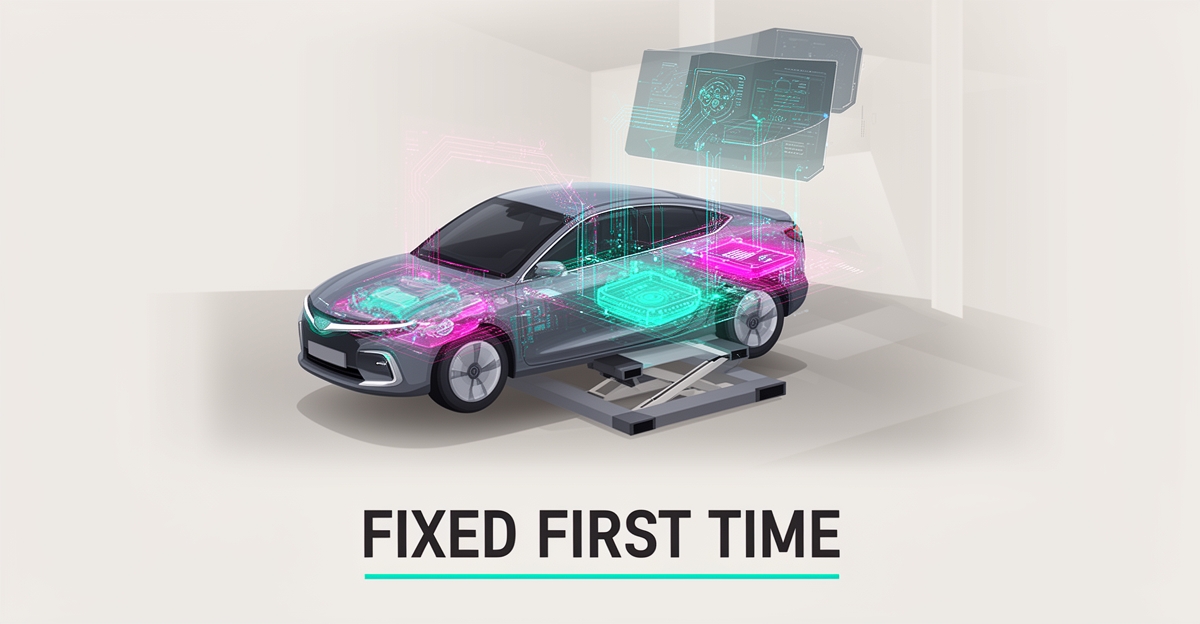
How AI Can Improve First-Time Repair Success Rates in Hybrid Car Repairs
Key Facts
- Industry reporting as of late 2026 suggests AI-assisted diagnostics can help shops push first-time fix rates above 88% in complex vehicle repairs
- AI-powered guidance tools have been credited with reducing repair times by roughly 39% in some maintenance operations
- Shops implementing AI report meaningful maintenance cost savings—often cited around 30%—primarily by cutting rework
- AI-driven scheduling and predictive insights can reduce equipment and bay downtime by up to 40% in automotive service operations
- AI-guided onboarding can compress new technician training from months to weeks in some shops
- A large majority of service-industry decision-makers report investing in AI for operations as of 2026
- High-performing service companies adopt AI at noticeably higher rates than underperformers, per widely cited industry analyses
Hire a team member that works 24/7 — for less than a part-time wage.
AI receptionists, SDRs, dispatchers and 99+ roles. Trained on your business, fully managed.
Not sure where to start? Ask our AI planner
Why Hybrid Car Repairs Struggle with First-Time Fix Rates
Hybrid vehicles present unique challenges that undermine first-time repair success. Their complex electrical systems, combining internal combustion engines with high-voltage batteries and regenerative braking, create diagnostic uncertainty that even experienced technicians struggle to resolve. This complexity is compounded by a widespread skill gap, as many repair shops lack personnel specifically trained in hybrid-specific diagnostics and repair procedures. As a result, technicians often rely on trial-and-error approaches, leading to misdiagnosis, unnecessary part replacements, and repeat customer visits.
These challenges directly impact operational efficiency and customer trust. Industry reporting as of late 2026 suggests AI-assisted tools can help shops achieve first-time fix rates exceeding 88%, highlighting the significant gap between typical hybrid repair performance and what's possible with advanced support. Without accurate diagnostics, shops face increased labor costs from repeated disassembly and reassembly, extended vehicle downtime, and frustrated customers who lose confidence in the service provider. The financial toll is substantial—rework, wasted parts, and comeback visits quietly eat margins on every hybrid job that isn't fixed right the first time.
The root causes of poor first-time fix rates in hybrid repairs stem from three interconnected issues: intricate electrical architectures that obscure fault origins, insufficient technician expertise in emerging hybrid technologies, and the lack of real-time, data-driven guidance during repairs. These factors create a cycle where initial repairs fail to address the true problem, necessitating return visits that erode both profitability and customer loyalty. Addressing this requires solutions that go beyond traditional training, leveraging technology to bridge knowledge gaps and provide contextual repair intelligence at the point of service. AI-powered tools are well positioned to change this picture by analyzing historical repair data, predicting failure points, and guiding technicians through precise, verified procedures—turning uncertainty into actionable insight. AIQ Labs helps shops build these capabilities through AI Workflow Builds that target the specific repair workflow costing you the most—whether that's intake and diagnostics, parts verification, or post-repair quality checks—delivered at a fixed price in clear phases.
- Complex electrical systems increase diagnostic difficulty
- Technician skill gaps in hybrid-specific repairs
- Lack of real-time, data-driven repair guidance
How AI Diagnostics and Guidance Improve Repair Accuracy
AI-powered diagnostics are transforming how hybrid vehicle repairs are approached by combining machine learning, natural language processing, and visual recognition to analyze service history and real-time sensor data. This enables predictive failure detection and precision-guided repairs that significantly improve accuracy. Industry reporting as of late 2026 suggests AI-assisted tools can help shops achieve first-time fix rates exceeding 88% while meaningfully reducing repair times—directly addressing the complexity of hybrid systems that often leads to misdiagnosis and rework.
These technologies work together to interpret diagnostic trouble codes, cross-reference past service records, and identify subtle patterns indicative of emerging issues in battery management, regenerative braking, or electric drive systems. By surfacing likely failure points before disassembly begins, AI reduces guesswork and ensures technicians focus on the root cause rather than symptoms. Natural language interfaces allow mechanics to query repair histories or technical bulletins conversationally, while visual recognition tools can verify part compatibility through image analysis—minimizing errors in component selection.
AIQ Labs supports shops in implementing these capabilities through AI Workflow Builds that embed predictive insights directly into your existing process, and, for shops ready to go further, an AI Operating System that connects intake, diagnostics, parts, and follow-up into one layer your shop owns outright. Key benefits include faster fault isolation, consistent application of OEM procedures, and real-time guidance that adapts to vehicle-specific data—creating a more reliable repair process from initial diagnosis to final verification. This approach turns variability into consistency, helping hybrid repair operations deliver dependable results even as vehicle technology evolves.
Implementing AI in Your Shop: From Data to Technician Adoption
Implementing AI in your shop starts with data readiness—ensuring service records, diagnostic logs, and parts histories are accurate and accessible. AI systems rely on high-quality data to identify patterns and predict failure points, especially in complex hybrid systems. Without clean, structured inputs, even the most advanced tools will underperform. Begin by auditing your current data sources and resolving inconsistencies before moving forward.
Next, choose an implementation approach that aligns with your shop's workflow and integrates with existing systems like your DMS or scheduling software. Look for capabilities such as voice-activated guidance, visual part recognition, or predictive maintenance features—technologies widely credited with reducing repair times and improving first-time fix rates. Prioritize phased adoption, so technicians build confidence without disruption. AIQ Labs builds in milestones for exactly this reason: you see working software at each phase before committing to the next, and there's no pressure to buy more than you need. If you'd rather start small, an AI Employee—a managed AI receptionist or service advisor working at roughly 80% less cost than a human hire—can handle booking, customer updates, and follow-up while your team focuses on wrenching.
Training is critical for adoption. Provide hands-on sessions focused on real repair scenarios, emphasizing how AI reduces cognitive load and prevents rework. Shops that invest in structured onboarding often see new hire ramp-up compress from months to weeks. Pair this with clear KPIs—track first-time fix rate, average repair time, and customer satisfaction weekly to measure impact and refine your approach. Continuous feedback loops ensure the system evolves with your team's needs. Shops using AI-driven guidance consistently report fewer errors and stronger customer trust, which directly supports retention and referral growth. AIQ Labs supports this journey with tailored implementation planning, helping shops move from data preparation to sustained performance gains without overhauling their core operations.
Still paying for 10+ subscriptions that don’t talk to each other?
We build custom AI systems you own outright. No vendor lock-in. Full control.
Not sure where to start? Ask our AI planner
Frequently Asked Questions
Why are first-time fix rates so low for hybrid car repairs?
Can AI actually improve first-time fix rates for hybrid repairs?
How much time and money does AI save in hybrid repair shops?
What specific AI technologies help technicians with hybrids?
Is AI hard to adopt if my shop is small and data is messy?
Will AI replace my technicians?
Turn Hybrid Repair Uncertainty into Predictable Profit
Hybrid vehicles demand more than traditional diagnostic approaches—their intricate electrical systems, high-voltage batteries, and regenerative braking create complexity that even seasoned technicians struggle to navigate. As outlined above, AI-powered tools bridge this gap by analyzing historical service data, predicting failure points, and guiding repairs with precision. The result? Shops leveraging these solutions report first-time fix rates exceeding 88%, meaningful repair time reductions, and lower maintenance costs, according to industry reporting as of late 2026. For repair shops ready to move beyond trial-and-error diagnostics, the path forward starts with clean data, strategic AI integration, and technician training that turns uncertainty into confidence. AIQ Labs helps shops implement these capabilities through AI Workflow Builds that target your costliest repair workflow at a fixed price, delivered in phases you control. Ready to transform your hybrid repair outcomes? Take the 2-minute Fit Check, then book a free 30-minute strategy call to map your biggest opportunities—no sales pitch, just clarity on your next steps.
Make AI your competitive advantage — not just another tool.
Strategy, implementation and ongoing optimization. One partner, end to end.
Not sure where to start? Ask our AI planner