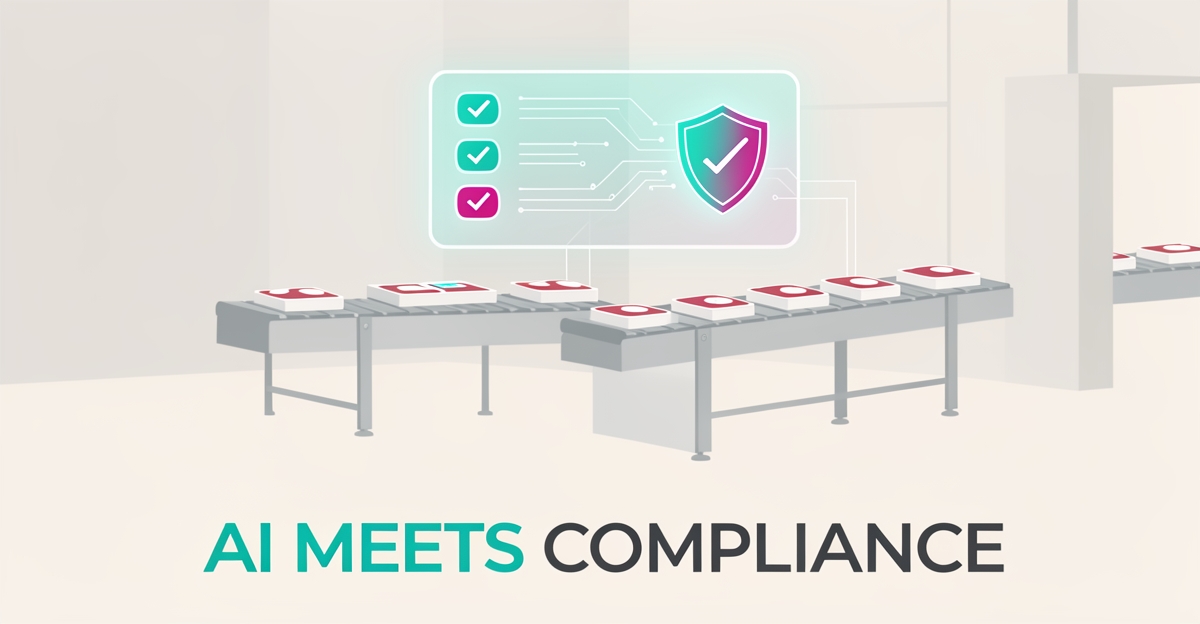
How AI Can Improve Food Safety Compliance in Meat Processing Plants
Key Facts
- Industry analyses project strong growth for AI in food safety and quality control through 2030, driven largely by the inefficiencies of manual compliance according to market analysis
- A majority of food businesses have implemented or are actively planning AI technologies to enhance safety standards and operational efficiency per industry research
- AI-driven automation can substantially reduce manual compliance workload, freeing teams to focus on oversight rather than paperwork studies suggest
- AI systems enable real-time meat traceability across every production stage and can initiate targeted recalls with precise lot identification according to meat industry solutions research
- AI-powered cameras can track staff activity on production lines, measuring task times and identifying delays to support operational visibility as described in industry research
- AI can manage USDA and FSIS compliance covering HACCP plans, export certifications, and daily plant checks as a continuous process per meat processing solutions research
- AI innovation is outpacing regulatory frameworks, creating a governance gap that requires proactive oversight built into systems from day one technology analysts report
Hire a team member that works 24/7 — for less than a part-time wage.
AI receptionists, SDRs, dispatchers and 99+ roles. Trained on your business, fully managed.
Not sure where to start? Ask our AI planner
The Compliance Burden in Meat Processing: Why Manual Systems Fail
A single missed HACCP record or an unverified supplier certificate can trigger a failed audit, a product hold, or worse. Yet most meat processing plants still rely on paper binders, spreadsheets, and tribal knowledge to manage compliance across an expanding web of FDA, Health Canada, and FSIS requirements.
The regulatory scope keeps widening. Plants must maintain HACCP plans, export certifications, daily plant checks, supplier approvals, and non-conformance records, each demanding current documentation and a defensible audit trail. AI can now help manage USDA and FSIS compliance across these areas, but most facilities still track them by hand, leaving gaps that surface only when an inspector asks.
Manual systems fail for predictable reasons:
- Documentation lives in silos, paper logs, spreadsheets, and disconnected software that never reconcile
- Audit trails are reconstructed after the fact, slowing inspections and inviting scrutiny
- Supplier verification depends on chasing certificates of analysis manually, with no automated flag when a certification lapses
- Regulatory updates arrive faster than teams can revise SOPs and HACCP plans
The industry has noticed. According to industry research, a large share of food businesses, commonly cited at over 70%, have implemented or are actively planning AI technologies to enhance safety standards and operational efficiency. The same research notes that AI is automating documentation, regulatory monitoring, and supplier management, freeing teams to focus on higher-value work rather than paperwork.
The market reflects this shift. Analysts tracking AI in food safety and quality control project strong double-digit growth through 2030, market analysis suggests, growth driven largely by the inefficiencies of manual compliance. As of late 2026, treat specific figures as directional rather than exact; the trend line is what matters.
For meat processors specifically, AI-driven systems now maintain verified records for livestock and material suppliers, monitor certifications, enforce approvals, and enable real-time traceability across every stage of production, as described in meat industry solutions research. These are exactly the workflows where manual tracking breaks down first.
One caution deserves mention: AI adoption is moving faster than regulatory frameworks can adapt, a gap highlighted in reporting on AI and regulation. Plants adopting these tools need governance, audit trails, and human oversight built in from day one, not bolted on later. That's the approach AIQ Labs takes when building compliance automation for regulated environments: real-time reporting and risk flagging, with complete logging for review.
Manual compliance was survivable when regulations were simpler. At today's pace, it's the weakest link in the food safety chain.
How AI Automates Compliance Documentation and Risk Detection
For meat processing plants, the heaviest compliance burden isn't the inspection itself, it's the mountain of paperwork behind it. AI is changing that by automating the documentation, audit trails, and reporting work that once consumed entire shifts, and the market reflects it: analysts project sustained double-digit growth for AI in food safety and quality control through 2030, according to industry analysis.
The most immediate gains show up in HACCP plan management and regulatory reporting. AI systems now monitor regulatory updates, generate compliance reports, and manage documentation like HACCP plans and SOPs automatically. As one analysis puts it, "AI is automating tasks related to documentation, regulatory monitoring, and supplier management, allowing teams to focus on higher-value activities." Instead of staff manually tracking USDA and FSIS requirements, AI can cover HACCP, export certifications, and daily plant checks as a continuous process rather than a periodic scramble.
Real-time audit trails represent another leap forward. Because AI systems log every critical operation as it happens, temperature checks, packaging oversight, non-conformance events, plants maintain continuous, inspection-ready records rather than reconstructing documentation after the fact. AI-powered cameras can even track staff activity on the production line, measuring task times and identifying delays, which supports both operational visibility and worker compliance enforcement, as described in meat industry solutions research.
Supplier documentation is a third high-impact area. AI can verify Certificates of Analysis (COAs) for incoming materials, maintain verified records for livestock and material suppliers, and monitor certifications while enforcing approvals, tasks that are error-prone and time-consuming when handled manually. The same systems extend to traceability and recall readiness: AI enables real-time meat traceability across every production stage and can initiate targeted recalls with precise lot identification and distribution mapping.
Perhaps most valuable is the shift from reactive to proactive risk detection. AI algorithms analyze production data to predict potential issues before they become violations, flagging hazards and monitoring conditions continuously. This is where purpose-built systems matter. AIQ Labs' AI Workflow Builds rebuild the one compliance workflow that costs you the most, documentation, supplier verification, or reporting, at a fixed price and in phases, generating real-time compliance reports and flagging risks automatically while maintaining complete audit trails aligned with FDA, Health Canada, and international standards.
The adoption curve confirms this isn't niche experimentation. A majority of food businesses report implementing or actively planning AI technologies to enhance safety standards and operational efficiency, per recent findings. The caveat, echoed by technology analysts, is that AI innovation is outpacing regulatory frameworks, meaning plants adopting these systems need robust governance, data security, and human oversight built in from day one, not bolted on later.
For processors evaluating where to start, the documentation and reporting layer is often the highest-ROI entry point: it reduces manual workload immediately, improves accuracy, and creates the data foundation that powers predictive risk detection across the rest of the operation.
Building Trust: AI Governance, Audit Trails, and Regulatory Alignment
While AI accelerates food safety innovation, regulatory frameworks often lag behind, creating uncertainty for meat processors adopting new technologies. This gap can make compliance feel like a moving target, especially when systems lack transparency or verifiable oversight. To bridge this divide, AI solutions must be built with governance at their core, ensuring every automated action is traceable, explainable, and aligned with evolving standards. Industry research emphasizes that proactive governance is essential to manage risks in regulated industries where AI adoption outpaces regulation.
AIQ Labs addresses this by embedding governance frameworks directly into AI systems designed for meat processing environments. These frameworks enforce human-in-the-loop controls for critical decisions, such as flagging non-conformances or initiating recall protocols, while maintaining full audit trails of AI-driven actions. Data integrity is preserved through validation layers and secure integrations that connect to existing ERP, HACCP, and FSIS reporting systems. This ensures compliance documentation, like supplier COAs or daily sanitation logs, is not only automated but also immutable and readily available for auditors. Studies suggest that AI-driven automation can substantially reduce manual compliance workload, freeing teams to focus on oversight rather than paperwork.
The result is a shift from compliance as a cost center to a verifiable operational advantage. AI systems generate real-time reports that align with FDA, Health Canada, and international standards, complete with timestamped logs, agent reasoning paths, and escalation records, all essential for audit readiness. By design, these outputs support traceability from livestock origin to final packaging, enabling rapid, precise recalls when needed. Industry experts note that AI-enhanced traceability provides complete visibility across every production stage, a capability now expected by global buyers and regulators alike. When built with governance, AI doesn't just meet compliance, it demonstrates it, turning regulatory adherence into a measurable strength.
Still paying for 10+ subscriptions that don’t talk to each other?
We build custom AI systems you own outright. No vendor lock-in. Full control.
Not sure where to start? Ask our AI planner
Frequently Asked Questions
How can AI help meat processing plants manage compliance documentation more effectively?
What percentage of food businesses are using or planning to use AI for food safety and compliance?
How does AI improve traceability and recall readiness in meat processing?
What are the risks of adopting AI in meat processing if regulatory frameworks lag behind?
Can AI monitor supplier certifications and prevent compliance gaps?
Is the AI market for food safety and quality control still growing?
Turning Compliance Chaos into Competitive Clarity
The meat processing industry stands at a turning point where manual compliance systems can no longer keep pace with regulatory demands and operational complexity. AI is no longer a futuristic add-on, it's actively transforming how plants manage HACCP plans, supplier documentation, audit trails, and real-time risk detection, with a majority of food businesses implementing or planning AI adoption to drive efficiency and safety. For processors, the immediate opportunity lies in starting with documentation and automation, where AI delivers the fastest ROI by eliminating manual reconciliation, enabling inspection-ready records, and freeing teams to focus on prevention over paperwork. But success depends on more than technology; it requires governance, traceability, and human oversight built in from the start. AIQ Labs helps meat processors navigate this shift, whether through AI Workflow Builds that rebuild your costliest compliance workflow at a fixed price, or a full AI Operating System that connects compliance, traceability, and reporting into one layer you own outright. If you're ready to assess where AI can remove your biggest compliance bottlenecks, start with a free, no-obligation Fit Check to map your highest-impact opportunities. Start the Fit Check to begin your working session with an AI engineer and discover where automation delivers real value, no pitch, just clarity.
Make AI your competitive advantage — not just another tool.
Strategy, implementation and ongoing optimization. One partner, end to end.
Not sure where to start? Ask our AI planner