How AI Can Improve Order Accuracy and Reduce Returns in Office Supply Distributors
Key Facts
- Order picking consumes roughly 35-75% of warehouse operating costs, making errors disproportionately expensive according to supply chain research
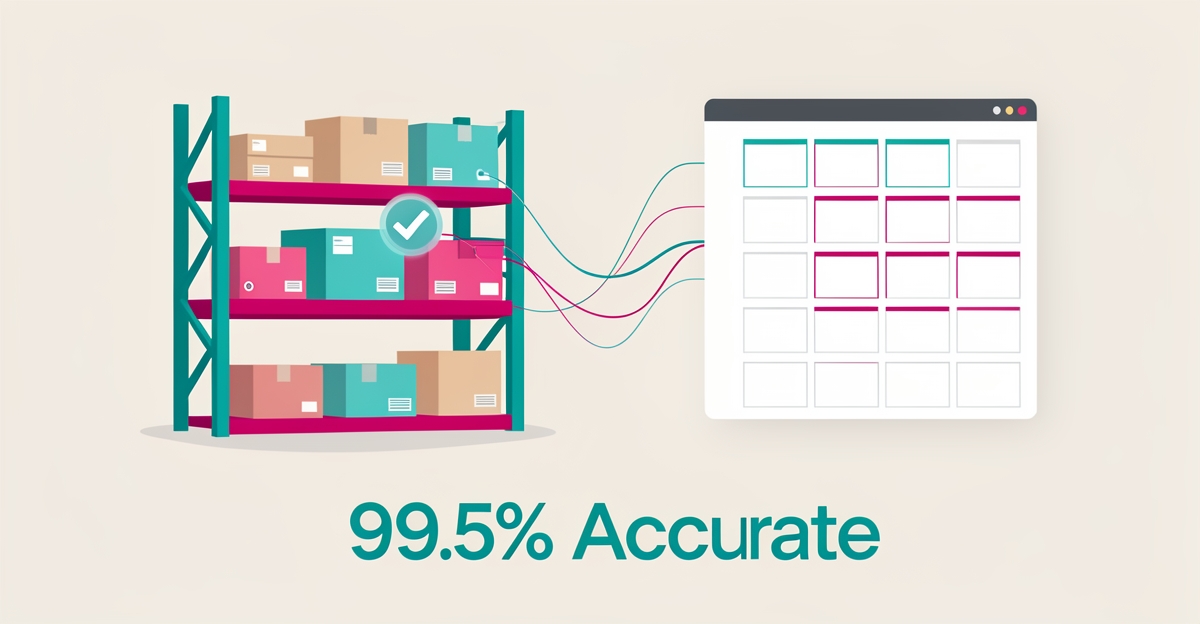
- AI validation can achieve order-to-catalog match rates approaching 99.5% with fallout below 1% across sales channels according to industry analysis
- Businesses adopting AI in order processing have reported error reductions of around 40%, directly cutting return rates according to industry reporting
- Inefficient fulfillment systems can waste up to 3,000 labor hours annually on error correction and reshipments according to operational efficiency analyses
- AI automation can compress order processing from 2-3 days to hours according to order management analysis
- Companies typically save in the range of $5-15 per sales order through automated validation and data entry according to order management analysis
- Only a minority of companies—industry analyses cite figures around 22%—have upgraded to AI order management, leaving a real advantage for early adopters according to adoption data
Hire a team member that works 24/7 — for less than a part-time wage.
AI receptionists, SDRs, dispatchers and 99+ roles. Trained on your business, fully managed.
Not sure where to start? Ask our AI planner
The Hidden Cost of Order Inaccuracy in Office Supply Distribution
Order inaccuracy in office supply distribution carries a hidden financial burden that extends far beyond the cost of a single returned item. When orders are picked incorrectly, the ripple effects include wasted labor, increased shipping expenses, and damaged customer relationships—all of which erode profitability. Research shows that order picking alone consumes between 35% and 75% of a warehouse’s total operating costs, making it one of the most expensive activities in the fulfillment process. Errors at this stage directly translate to returns, which not only reverse revenue but also incur restocking, inspection, and reverse logistics fees.
The operational toll is equally significant. Employees spend valuable time correcting mistakes that could have been prevented earlier in the process, diverting attention from higher-value tasks like inventory optimization or customer engagement. Inefficient fulfillment systems can waste up to 3,000 labor hours annually, as teams grapple with exception handling, reshipments, and customer inquiries stemming from inaccurate orders. This drain on productivity reduces throughput and increases the likelihood of burnout among warehouse staff, further compounding inefficiencies.
Beyond labor and logistics, order inaccuracy undermines customer trust—a critical asset in competitive B2B markets. Incorrect deliveries lead to dissatisfaction, increased service inquiries, and a higher likelihood of customers switching to more reliable suppliers. AI-powered validation addresses this by catching discrepancies at the point of entry—whether orders arrive by email, PDF, or Excel—preventing costly mistakes before they enter the warehouse and transforming order management from a reactive cost center into a proactive safeguard for profitability and customer retention.
- Order picking accounts for 35% to 75% of warehouse operating costs
- AI validation can reduce order errors by roughly 40%, directly lowering return rates
- Inefficient systems can waste up to 3,000 labor hours annually
- Match rates approaching 99.5% are achievable with well-configured validation
- Incorrect deliveries trigger reverse logistics costs and customer dissatisfaction
For office supply distributors seeking to minimize these hidden costs, AI-driven order validation offers a scalable path to greater accuracy. By integrating with existing ERP and CRM systems, AI tools—like the workflow automations built through AIQ Labs’ AI Workflow Builds—can automatically verify product availability, pricing, and order details against real-time inventory data. This ensures that fulfillment begins only with correct, actionable orders—reducing waste, preserving labor efficiency, and strengthening customer confidence in every delivery.
How AI-Powered Validation Prevents Errors Before Fulfillment
AI-powered validation transforms order accuracy by automating data extraction and cross-checking against ERP/CRM systems in real time. This proactive approach catches discrepancies—such as mismatched product codes, incorrect quantities, or pricing errors—before an order enters the fulfillment pipeline. By validating orders at the point of entry, distributors prevent incorrect shipments and reduce the costly cycle of returns and customer dissatisfaction.
Well-configured systems can reach order-to-catalog match rates approaching 99.5% while keeping fallout rates below 1% across sales channels, according to industry analysis. This level of accuracy directly addresses the root cause of fulfillment errors: manual data handling that is prone to oversight. AI eliminates guesswork by ensuring every line item aligns with master catalog data and inventory availability.
Key validation mechanisms include automatic document classification, intelligent data extraction from emails, PDFs, and spreadsheets, and real-time cross-referencing with ERP systems for product validity, customer credit, and pricing rules. When inconsistencies are detected, the system flags them for immediate review or initiates clarification with the customer—stopping errors before they propagate. The result is a streamlined, touchless workflow where only accurate, fulfillable orders advance to picking and packing.
Enhancing Warehouse Accuracy with AI-Driven Operations
Picking errors are where order accuracy breaks down in office supply distribution, and the cost is immediate. Order picking accounts for 35% to 75% of a warehouse's total operating costs according to supply chain research, so even small mistakes create outsized returns and labor waste.
AI moves fulfillment from reactive correction to real-time prevention. Intelligent slotting uses historical, real-time and forecasted data to continuously optimize where goods sit in the warehouse. As SAP’s Kam Ghossaini notes, the system can use historical and real-time data as well as forecasted data to continuously optimize where goods are sitting in the warehouse. That reduces travel time and the chance of picking the wrong SKU.
Optimized picking routes and real-time inventory tracking complete the accuracy loop. AI models can suggest the most efficient routes for product picking, boosting delivery times and employee productivity according to order management analysis. Real-time visibility into stock levels across multiple locations helps prevent stockouts and ensures orders are not released for unavailable items.
Automation also changes how workers interact with the warehouse. When robots take over physically demanding tasks, they allow workers to focus on more complex and rewarding activities according to warehouse industry reporting. That shift supports fewer errors and more efficient fulfillment without increasing headcount.
For distributors, the physical improvements pair with upstream validation. AI can verify order details against product availability, flag discrepancies, and prevent incorrect deliveries before they leave the warehouse. With validation workflows built through AIQ Labs, distributors gain confidence in fulfillment accuracy and reduce return rates through smart, automated checks.
Key warehouse gains from AI-driven operations include:
- AI-driven slotting that continuously repositions fast movers for shorter pick paths
- Optimized picking routes that reduce travel time and picking errors
- Real-time inventory tracking that helps prevent stockouts and mis-picks
- Automated storage and retrieval systems that enhance precision in picking and packing
Industry analyses report that businesses using AI have seen order error reductions of around 40% in order processing studies, and validation systems can achieve order-to-catalog match rates approaching 99.5% with fallout below 1% across channels according to order management analysis.
Together, these capabilities create a tighter fulfillment system where accuracy is built in, not inspected in.
Practical Steps to Implement AI Order Validation with AIQ Labs
Office supply distributors can achieve near-perfect order accuracy by following a structured implementation roadmap. AIQ Labs’ phased approach—combined with flexible payment models—lets distributors automate validation without disruption.
First, define clear objectives by analyzing current error rates and labor-intensive tasks like manual order entry. Industry analyses suggest AI automation can save companies roughly $5 to $15 per sales order while compressing processing time from 2-3 days to hours, making this step critical for ROI-focused planning. Next, choose an approach that integrates with existing ERP and CRM systems to ensure real-time data synchronization—only a minority of companies have upgraded to AI order management, which highlights a real opportunity for early adopters.
Then, implement document classification and data extraction to automatically read orders from email, PDF, or Excel formats. Configure validation rules to cross-check product details, quantities, and pricing against inventory and catalog data, flagging discrepancies before processing. Well-configured validation systems can achieve order-to-catalog match rates approaching 99.5% with fallout rates below 1%, directly reducing incorrect shipments. Finally, automate order generation and enable predictive tracking to monitor fulfillment progress and anticipate delays.
This phased approach allows distributors to start small—targeting the single workflow that costs the most, such as order entry—through an AI Workflow Build at a fixed price, then scale toward a connected AI Operating System as results prove out. Payment is straightforward: Start Monthly, Build in Milestones, or Own It Outright. Each phase includes build, training, tool integration, monitoring, and continuous optimization, and you own the system outright—no rental software, no lock-in. By grounding implementation in these steps, distributors transform order validation from a reactive chore into a proactive accuracy engine.
Still paying for 10+ subscriptions that don’t talk to each other?
We build custom AI systems you own outright. No vendor lock-in. Full control.
Not sure where to start? Ask our AI planner
Frequently Asked Questions
How much can AI reduce order errors for office supply distributors?
What order-to-catalog match rate can AI-powered validation achieve?
How much time can AI save in order processing compared to manual methods?
What percentage of warehouse operating costs is attributed to order picking?
How many labor hours are lost annually due to inefficient fulfillment systems?
How many companies have upgraded to AI order management systems?
Turning Order Accuracy Into a Competitive Advantage
AI-powered order validation transforms a costly pain point into a strategic strength for office supply distributors. By catching errors before they reach the warehouse—through automated data extraction, real-time ERP cross-checking, and intelligent slotting—distributors can substantially cut order errors, recover thousands of wasted labor hours, and protect customer trust in a competitive B2B landscape. The result isn’t just fewer returns; it’s a more agile, profitable operation where every order moves forward with confidence. For distributors ready to move beyond reactive fixes, the next step is clear: take the two-minute Fit Check and then book a free 30-minute strategy call to explore how AIQ Labs can rebuild the workflow that costs you most—on your terms, with a system you own outright.
Make AI your competitive advantage — not just another tool.
Strategy, implementation and ongoing optimization. One partner, end to end.
Not sure where to start? Ask our AI planner