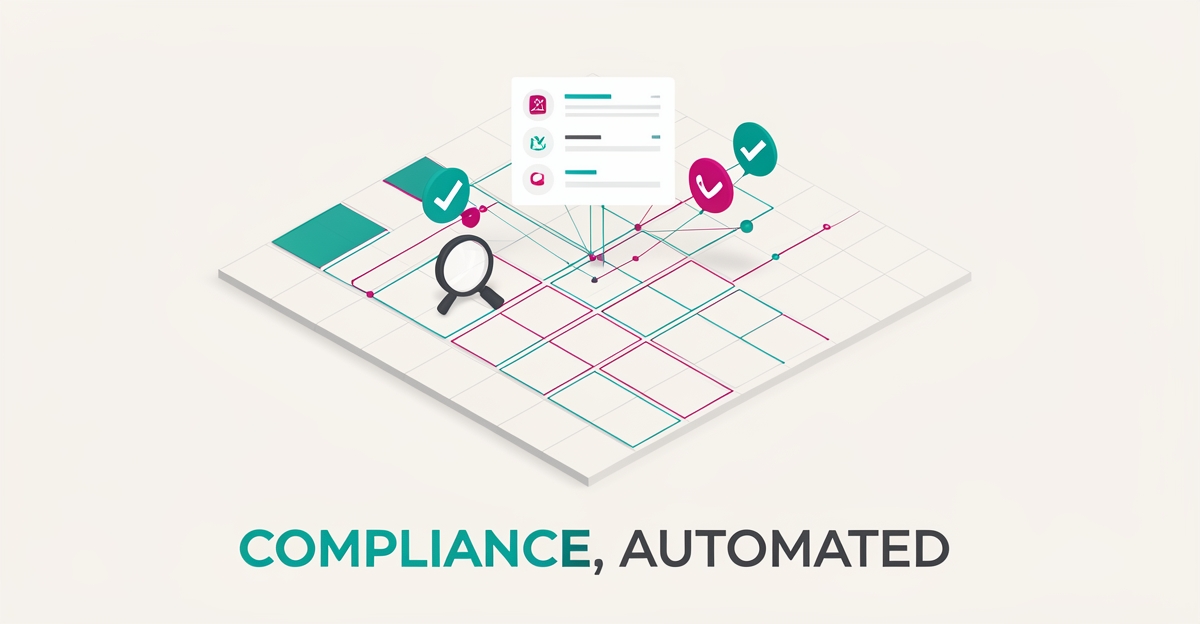
How AI Can Improve Property Compliance Tracking in Real Estate & Land Management
Key Facts
- Manual compliance tracking relies on spreadsheets, email reminders, and periodic audits that typically catch violations after they've already become costly
- AI systems can ingest municipal codes, zoning updates, and environmental regulations continuously and cross-reference them against active projects and portfolio assets
- Traditional title and due diligence work requires reviewing deeds, mortgages, liens, judgments, tax records, easements, probate filings, and entity ownership records across multiple databases
- Custom AI systems can natively integrate compliance and policy controls, strengthening governance posture while reducing manual labor
- AIQ Labs has deployed 200+ multi-agent systems and runs 4 live SaaS products daily
Hire a team member that works 24/7 — for less than a part-time wage.
AI receptionists, SDRs, dispatchers and 99+ roles. Trained on your business, fully managed.
Not sure where to start? Ask our AI planner
The Compliance Gap in Real Estate and Land Management
Most real estate firms still track compliance the way they did a decade ago—spreadsheets, email reminders, and quarterly audits that arrive too late to prevent violations. As environmental regulations multiply and development standards tighten across jurisdictions, this manual approach creates dangerous gaps between what the law requires and what teams can actually monitor.
The core issue isn't effort—it's velocity. When a single commercial development touches zoning codes, environmental impact assessments, building safety standards, and accessibility requirements, manual tracking becomes a bottleneck that slows projects and exposes firms to liability. Regulatory complexity has outgrown what human bandwidth can reliably cover.
Speed determines compliance outcomes. Traditional title research and due diligence require reviewing deeds, mortgages, liens, judgments, tax records, easements, probate filings, and entity ownership records across multiple databases. AI can significantly improve speed, document discovery, and data extraction—but more importantly, it identifies risks while there's still time to address them. The same acceleration applies across every stage of property operations, including compliance verification.
The financial exposure extends beyond fines. Trust erosion costs more than penalties. When stakeholders discover non-compliant developments late in the process, they question every other aspect of the operation. That lag compounds daily as regulations change and manual systems struggle to keep pace.
The operational burden falls heaviest on three areas:
- Monitoring regulatory changes across federal, state, and local jurisdictions in real-time
- Flagging non-compliant developments before they trigger enforcement actions or financing delays
- Maintaining audit-ready records that satisfy lenders, insurers, and regulatory bodies without manual reconstruction
AIQ Labs builds custom AI systems specifically for this challenge—platforms that track compliance automatically and maintain audit trails without manual data entry. Rather than relying on periodic reviews, these systems monitor regulatory feeds continuously, flag discrepancies as they emerge, and generate documentation that satisfies legal and environmental requirements. Custom solutions can natively integrate compliance and policy controls, strengthening governance posture while reducing the manual labor that creates gaps in the first place.
The gap between regulatory change and human response time is where risk lives. Closing that gap requires systems that work at machine speed, not human bandwidth.
How AI Monitors Regulations and Flags Non-Compliance Automatically
Regulatory landscapes shift constantly, and manual tracking leaves gaps that expose firms to fines, project delays, and reputational damage. AI changes the equation by turning compliance from a reactive scramble into a continuous, automated safeguard.
Modern systems ingest municipal codes, environmental regulations, zoning updates, and building standards in real time, cross-referencing them against active projects and portfolio assets. Instead of quarterly audits, firms gain continuous compliance visibility — every permit application, design change, and construction milestone checked against the latest requirements automatically. AI-driven document review typically compresses what used to take hours into minutes while maintaining audit trails that satisfy regulators and investors alike.
- Real-time regulatory ingestion from government feeds, legal databases, and industry bulletins
- Automated risk scoring for every development phase — pre-acquisition through occupancy
- Instant flagging of non-compliant designs, missing permits, or environmental violations
- Audit-ready documentation generated continuously, not assembled at year-end
The practical impact appears in title research and property management workflows. AI-powered title tools screen large volumes of documents for liens, encumbrances, and chain-of-ownership issues using OCR and natural language processing, dramatically cutting manual review while improving risk detection. Meanwhile, AI agents handle lease compliance checks, safety inspection scheduling, and tenant communication automatically—work that would otherwise require dedicated staff. For firms that want this capability without hiring, managed [AI Employees](/ai-employees) cover intake, dispatch, and follow-up roles at a fraction of a human hire's cost.
AIQ Labs builds custom compliance tracking systems that unify these capabilities — monitoring regulatory feeds, screening transactions, and maintaining living audit trails across portfolios. The result: firms stay ahead of legal and environmental requirements without the manual burden that lets critical changes slip through.
From Data to Audit-Ready Operations with Custom AI Systems
Subscription stacks promise compliance but create blind spots between property management platforms, document repositories and regulatory feeds. Custom AI systems replace that fragmentation with owned workflows that monitor, flag and record continuously.
Custom-built compliance tracking starts by connecting the tools you already use. AI agents ingest data from property management systems, permitting databases and municipal notices, then reason across them in real time. That integration replaces manual checks and spreadsheet handoffs with a single source of truth that updates as regulations change.
The market pressure is clear. AI adoption across real estate is accelerating as of late 2026, driven by analytics, forecasting and automation. Firms that own their compliance logic rather than rent point solutions are positioned to capture that efficiency without recurring vendor lock-in.
Automation also changes operational speed. AI compresses the research cycles that underpin compliance decisions—document screening, permit verification, ownership checks—so findings surface in time to act on them.
With custom systems, compliance becomes an active workflow, not a quarterly audit scramble. AI can monitor regulatory changes, flag non-compliant developments, and maintain audit-ready records as part of daily operations. AIQ Labs builds custom AI systems that track compliance automatically, ensuring firms stay ahead of legal and environmental requirements through owned code and data.
Governance is built in from the start. Human-in-the-loop controls, audit trails and role-based approvals ensure decisions remain accountable while reducing manual review. The result is audit-ready operations without the subscription chaos of multiple disconnected tools.
A custom compliance system typically delivers:
- Continuous regulatory monitoring with automated alerts for new or changed rules
- Non-compliance flagging across developments, leases and permits with risk scoring
- Automated audit trail generation for inspections, filings and corrective actions
- Two-way integration with property management platforms for real-time data sync
Ownership changes the economics and risk profile. Instead of paying for multiple subscriptions that silo data, businesses deploy a unified system they control, customize and extend. AIQ Labs delivers these systems as custom builds with true ownership, so compliance workflows remain an asset rather than a recurring expense. For firms that want a broader connected layer across operations, an [AI Operating System](/ai-operating-systems) ties compliance, communications, and reporting into one owned platform built in phases.
The shift from rented tools to owned workflows lets real estate and land management teams move faster, stay compliant and prove it on demand.
Implementation Path for Firms Ready to Automate Compliance
The gap between knowing AI can help and actually deploying it trips up most firms. As AI adoption accelerates across real estate in 2026, waiting for the "perfect time" often means falling behind competitors who start small and scale deliberately.
Before writing a single line of code, map your current exposure. Which regulatory frameworks touch your portfolio—zoning, environmental, tenant safety, or financial reporting? Where do manual processes create the most risk? A structured readiness assessment identifies high-value automation targets and establishes baseline metrics. This diagnostic phase typically reveals whether you need a single workflow fix or a department-wide overhaul. If it's the former, an [AI Workflow Build](/workflow-builds) targets the one workflow that costs you the most, at a fixed price, delivered in phases.
Compliance tracking fails when it lives in a silo. Effective systems connect directly to your CRM, accounting software, and property management platforms to create a single source of truth. AI tools deliver the most value when they automate repetitive tasks within existing workflows rather than forcing teams to learn entirely new systems. Look for solutions that offer two-way API integration with your current infrastructure.
Automation without guardrails creates liability. Define clear escalation paths for when AI flags potential violations, and maintain audit-ready records that document every automated decision. AI should serve as a research aid—not a replacement for licensed professionals making final compliance judgments. Establish governance frameworks that specify which decisions require human sign-off.
Firms ready to move forward typically select one of three engagement models based on their risk tolerance and internal bandwidth:
- Start Monthly: Deploy a managed AI Employee for reception, intake, or property management roles. Flat monthly pricing covers the build, training, integrations, and ongoing optimization—typically around 80% less than the cost of a human hire.
- Build in Milestones: Target one critical workflow, such as automated compliance monitoring or audit trail generation. Pay per phase, approve each stage, and retain everything built if you pause.
- Own It Outright: Commission a complete AI operating system with full ownership of code, agents, and data—ideal for firms treating compliance as a long-term competitive advantage.
AIQ Labs structures engagements around these three payment models, allowing firms to match their investment to their maturity stage. Whether you begin with a two-minute Fit Check or a comprehensive discovery workshop, the goal remains the same: audit-ready records without the administrative burden.
The most successful implementations begin with a bounded pilot—perhaps automating tenant intake compliance or monitoring a single regulatory domain—before expanding across the portfolio. Prove the value in one area, document the ROI, then replicate the model across departments.
Still paying for 10+ subscriptions that don’t talk to each other?
We build custom AI systems you own outright. No vendor lock-in. Full control.
Not sure where to start? Ask our AI planner
Frequently Asked Questions
How does AI actually speed up property compliance tracking compared to spreadsheets?
Can AI really flag non-compliant developments before they cause fines or delays?
What kind of cost or efficiency gains do firms see with AI compliance?
Is AI replacing compliance teams or licensed professionals?
How fast is AI adoption growing in real estate compliance?
Can I start small with AI compliance instead of a full overhaul?
Close the Compliance Gap Before It Closes You Down
Manual spreadsheets and quarterly audits can no longer keep pace with the velocity of regulatory change in real estate and land management. The real risk isn't effort, it's the lag between new rules and human response — the gap where fines, project delays, financing holds, and trust erosion take hold. AI changes that equation by turning compliance into continuous visibility: ingesting zoning, environmental and building standards in real time, flagging non-compliant designs or missing permits as they emerge, and generating audit-ready records without manual reconstruction. Custom systems that unify property data, permitting feeds and regulatory updates replace fragmented subscriptions with owned workflows you control. Map your highest-risk regulatory exposures, connect AI monitoring to the tools you already use, and start with a bounded pilot. Start the Fit Check at https://aiqlabs.ai/apply for a free 30-minute strategy call to identify high-ROI automation opportunities with an AI engineer — if there isn't a clear win, we'll tell you.
Make AI your competitive advantage — not just another tool.
Strategy, implementation and ongoing optimization. One partner, end to end.
Not sure where to start? Ask our AI planner