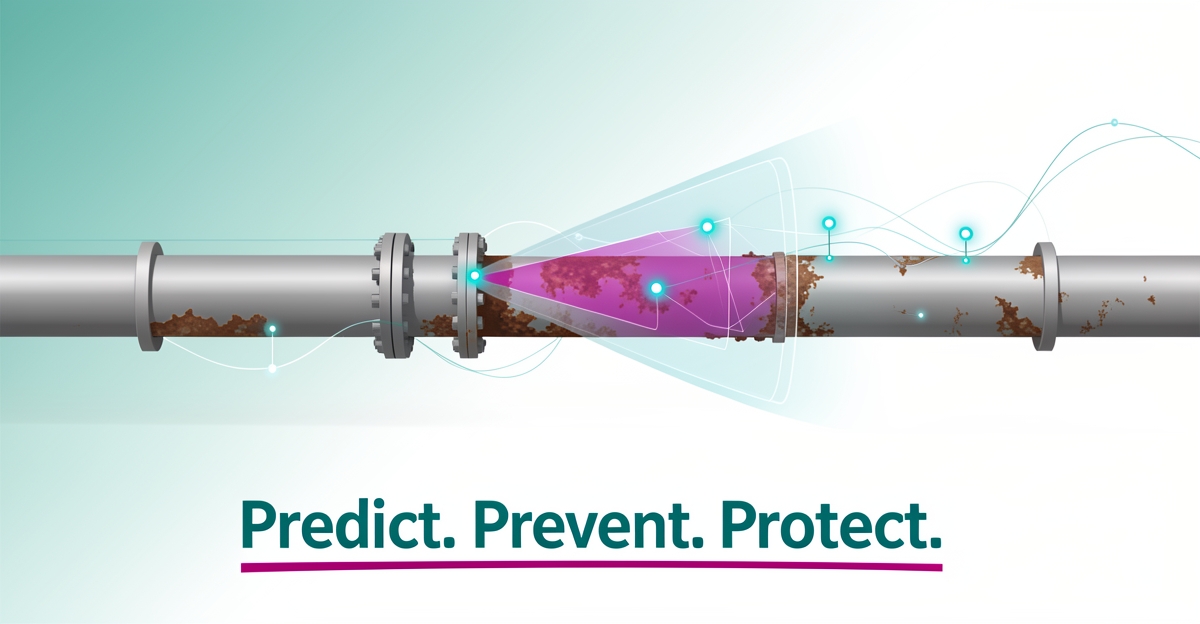
How AI Can Improve Safety Compliance in Pipeline Inspection Workflows
Key Facts
- A single day-long unplanned pipeline outage can cost up to $1 million according to industry research
- Corrosion accounts for an estimated 15% to 25% of pipeline incidents in the oil and gas sector
- US companies reportedly lose $1.4 billion annually to pipeline corrosion damage per industry estimates
- Automated multi-sensor analysis can cut inspection review from months to days according to industry case studies
- Satellite monitoring has helped operators surface a majority of previously overlooked pipeline threats in documented case studies
- US pipeline leaks cost an estimated $7.7 billion between 2005 and 2020 according to industry data
Hire a team member that works 24/7 — for less than a part-time wage.
AI receptionists, SDRs, dispatchers and 99+ roles. Trained on your business, fully managed.
Not sure where to start? Ask our AI planner
The High Cost of Reactive Pipeline Safety Management
Pipeline safety management has long operated on a reactive model, where inspections occur on fixed schedules and incidents trigger costly emergency responses. This approach fails to catch the subtle, developing threats that lead to major failures, creating a dangerous gap between inspection cycles and actual asset conditions. The financial toll of this reactivity is significant: a single day-long unplanned pipeline outage can cost operators up to $1 million in lost production, emergency repairs, and regulatory penalties. When these outages cascade or occur frequently, the operational disruption compounds rapidly, affecting supply chains and eroding stakeholder trust.
Beyond immediate outage costs, traditional methods miss critical micro-anomalies that human inspectors cannot consistently detect. Corrosion is estimated to account for 15% to 25% of all pipeline incidents, and U.S. companies reportedly lose $1.4 billion annually to corrosion-related damage, a figure that represents only the direct financial impact, not including environmental remediation or reputational harm. Manual inspection processes, reliant on periodic visual checks and point-in-time sensor readings, often overlook early-stage degradation because they lack the analytical depth to identify patterns across vast datasets. As a result, small defects evolve undetected until they trigger leaks, ruptures, or service interruptions.
This reactive cycle creates a false sense of security: compliance is measured by inspection completion rather than actual risk reduction. Teams spend significant time documenting past conditions instead of predicting future failures, leaving safety protocols perpetually one step behind emerging threats. The limitations become especially acute in geographically dispersed or hard-to-access pipeline segments, where inspection frequency is inherently lower and response times slower. Without the ability to analyze inspection data continuously and predictively, operators remain vulnerable to the very incidents their safety programs aim to prevent.
- Traditional inspections occur at fixed intervals, creating blind spots between assessments where corrosion and fatigue progress undetected
- Manual data review of complex multi-sensor datasets can take months, delaying actionable insights until after damage has occurred
- Human-limited visual inspection fails to detect micro-anomalies like hairline cracks or early-stage corrosion that precede major failures
- Reactive maintenance drives up long-term costs through emergency repairs, unplanned downtime, and accelerated asset degradation
AIQ Labs helps pipeline operators break this cycle by integrating AI with field inspection data and safety protocols to transform raw information into predictive insights. Rather than waiting for incidents to occur, AI systems analyze historical and real-time data from visual inspections, non-destructive testing, and IoT sensors to identify subtle patterns indicative of developing risks. This shift enables condition-based maintenance, where interventions are timed to actual asset needs rather than arbitrary schedules, reducing both unnecessary work and the likelihood of missed threats. By flagging unsafe conditions before they escalate, AI-driven analysis supports proactive compliance and helps operators maintain safety standards with greater precision and efficiency. For operators starting small, rebuilding the single most expensive workflow first is often the fastest path to measurable results, see AI Workflow Builds.
How AI Transforms Inspection Data into Predictive Safety Intelligence
AI is transforming how pipeline inspection data becomes actionable safety intelligence by detecting threats before they escalate. Machine learning algorithms analyze corrosion patterns from ultrasonic and radiographic testing to predict failure points months in advance, while computer vision systems identify micro-anomalies invisible to human inspectors. This shift from reactive to proactive maintenance allows operators to address structural weaknesses during planned downtime rather than responding to catastrophic failures.
Multi-sensor integration combines data from inline inspection tools, IoT sensors, and satellite imagery to create comprehensive threat assessments. AI systems can process this diverse data dramatically faster than traditional manual review, reducing analysis timelines from months to days in documented cases, while identifying hairline leaks and early-stage corrosion that conventional approaches miss. The technology excels at detecting subtle indicators like heat gradients and condensation patterns that precede measurable leaks, providing timestamped evidence for compliance documentation.
- AI-powered vision and satellite monitoring have surfaced a majority of previously overlooked pipeline threats in documented operator case studies
- Corrosion accounts for an estimated 15% to 25% of pipeline incidents, reportedly costing US companies $1.4 billion annually
- A single day-long unplanned outage can cost up to $1 million in lost revenue and repairs
By integrating AI with field data collection and safety protocols, companies like AIQ Labs help pipeline operators create evidence-based compliance reports while optimizing maintenance schedules based on actual asset conditions. This predictive approach transforms raw inspection data into intelligence that prevents incidents before they occur, shifting safety compliance from a periodic checklist to a continuous operational advantage.
Building an AI-Powered Inspection Workflow: From Sensors to Compliance
Building an AI-powered inspection workflow starts with deploying multi-sensor systems that capture comprehensive data across pipeline assets. Industrial RGB cameras and thermal sensors continuously monitor surfaces and joints, feeding real-time visual and thermal data to AI systems for quality inspection. This layered approach enables detection of subtle anomalies like micro-gloss changes or heat gradients that precede measurable leaks, capabilities traditional methods often miss.
The next step involves configuring AI for real-time object detection and automated alerting. Systems track pipe surfaces while fusing infrared and visible light signals to spot temperature anomalies consistent with fluid seepage, then flag probable leaks with timestamped image snippets for evidence. These alerts route directly to maintenance and EHS teams, enabling rapid response before issues escalate. Integrating these alerts with CMMS/EHS platforms transforms detection into action, confirmed events trigger immediate work orders with attached evidence, streamlining compliance workflows.
For audit readiness, organizations must implement version control, validation protocols, and satellite monitoring for geohazards. Maintaining site-level model versions, confidence thresholds, and calibration runs ensures AI decisions withstand regulatory scrutiny, while satellite-based ground deformation monitoring identifies environmental threats like subsidence that intersect pipeline assets. Finally, establishing data integration pipelines that ingest inline inspection reports regardless of vendor format allows AI to analyze ILI data, corrosion surveys, and repair histories for comprehensive threat analysis, turning raw data into predictive insights that support proactive safety decisions.
AIQ Labs helps pipeline operators build these end-to-end workflows by integrating multi-agent AI systems with field data and safety protocols, creating audit-ready documentation that meets regulatory standards while reducing analysis time from months to days. Operators that want a single connected layer across inspection, maintenance, and compliance, rather than isolated tools, can explore AI Operating Systems, built in phases and owned outright.
Overcoming Implementation Challenges: Data Quality, Integration, and Workforce Readiness
Overcoming implementation hurdles remains critical for realizing AI's full potential in pipeline safety compliance. Data silos, integration complexity, and workforce readiness represent the most significant barriers to adoption, with research showing that incomplete or inaccurate data undermines model reliability and increases false positives in hazard detection. Organizations must address these challenges systematically to build trust in AI systems and ensure they augment rather than disrupt existing safety workflows.
Successful implementation requires a phased approach that prioritizes data quality from the outset. Establishing standardized data collection protocols across inspection teams creates the foundation for accurate AI analysis, while investing in data cleansing and normalization processes helps overcome the "garbage in, garbage out" problem that plagues many early-stage AI initiatives. As noted in industry research, automated multi-sensor analysis can reduce inspection review time from months to days, but only when fed with clean, integrated data from multiple sources including visual inspections, non-destructive testing, and IoT sensors. This acceleration in analysis speed enables faster identification of corrosion patterns, which account for an estimated 15% to 25% of pipeline incidents and reportedly cost US companies $1.4 billion annually in losses. These figures underscore the financial imperative of getting data foundations right before deploying AI models.
Integration with legacy systems presents another major challenge, particularly for pipeline operators with decades-old SCADA and maintenance management platforms. Rather than attempting wholesale replacement, leading organizations use middleware solutions and API gateways to connect AI insights with existing workflows, ensuring that anomaly detection triggers appropriate actions in CMMS or EHS systems without requiring staff to learn entirely new interfaces. Workforce readiness demands equal attention, technicians and inspectors need training not just on how to use AI tools, but on how to interpret their outputs within the context of pipeline integrity management. The most effective programs pair hands-on experience with AI-flagged anomalies alongside mentorship from domain experts who can validate whether AI recommendations align with physical inspection findings and regulatory requirements. This human-in-the-loop approach builds confidence in AI systems while preserving the critical judgment that experienced personnel bring to safety decisions. By addressing these interconnected challenges through structured data governance, pragmatic integration strategies, and targeted upskilling, pipeline operators can transform AI from a pilot project into a sustainable component of their safety compliance framework.
Still paying for 10+ subscriptions that don’t talk to each other?
We build custom AI systems you own outright. No vendor lock-in. Full control.
Not sure where to start? Ask our AI planner
Frequently Asked Questions
How much can AI actually speed up pipeline inspection data analysis?
What does a reactive pipeline safety program really cost?
Can AI detect leaks and defects that human inspectors miss?
Will AI-generated inspection evidence hold up in a regulatory audit?
We have decades-old SCADA and maintenance systems, can AI still work with them?
Will AI replace our inspectors and safety teams?
From Reactive Checks to Proactive Safety: The AI Advantage
The shift from reactive, schedule-based pipeline inspections to AI-driven predictive safety isn't just a technological upgrade, it's a fundamental reimagining of risk management. By transforming raw inspection data into real-time, actionable intelligence, operators can finally close the dangerous gap between assessment cycles and actual asset conditions, catching micro-anomalies like hairline cracks and early-stage corrosion long before they threaten integrity. This approach doesn't just reduce the cost of unplanned outages or the annual burden of corrosion-related damage; it turns compliance from a periodic burden into a continuous operational advantage. For pipeline operators ready to move beyond reactive cycles and build audit-ready, evidence-based safety workflows, the path forward starts with understanding where AI can deliver the highest impact in your specific context. Start with a two-minute Fit Check, then book a free 30-minute strategy call to map your biggest bottlenecks and uncover high-ROI automation opportunities, schedule your call and see how AIQ Labs helps turn inspection data into predictive safety intelligence.
Make AI your competitive advantage — not just another tool.
Strategy, implementation and ongoing optimization. One partner, end to end.
Not sure where to start? Ask our AI planner