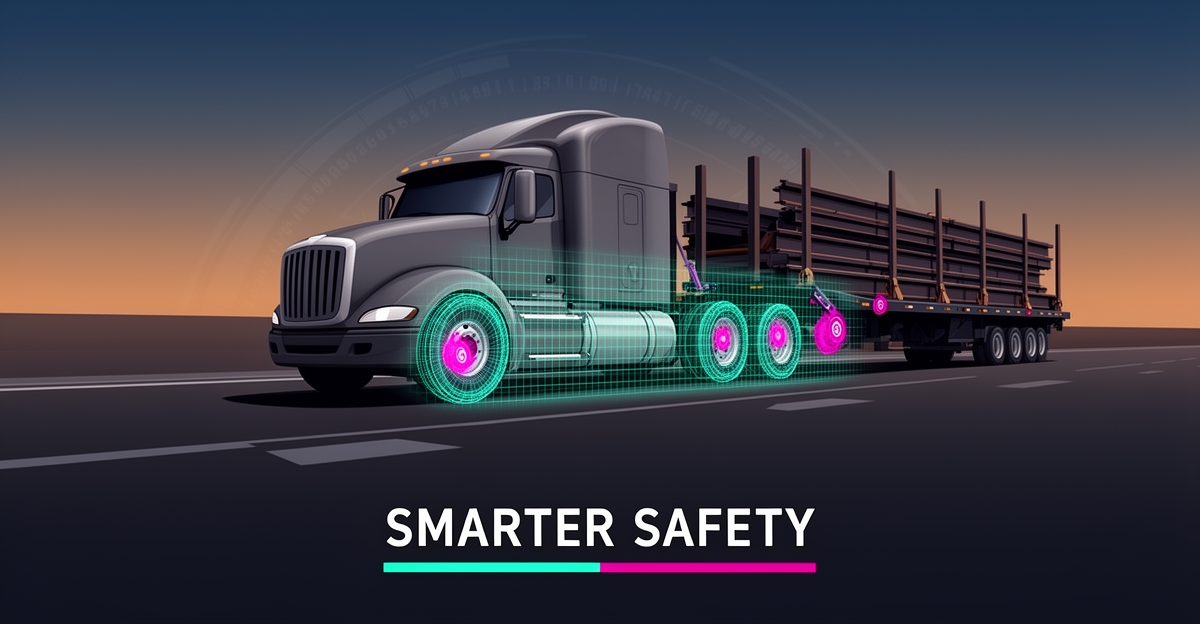
How AI Can Improve Safety Inspections in Heavy Haul Operations
Key Facts
- AI-powered ADAS features have been credited with meaningful reductions in heavy truck accidents according to industry analysis
- Early adopters of targeted AI applications report significant annual time and cost savings based on industry research
- Predictive maintenance programs typically improve failure-prediction accuracy and reduce unplanned downtime across industrial applications
- Only a minority of construction organizations are actively deploying AI in production workflows as of late 2026 per industry analysis
- AI-powered dash cams and connected video are increasingly used to strengthen legal defensibility and worksite safety per technology reports
- OSHA violation penalties can reach tens of thousands of dollars per incident, with maximums exceeding $150,000 for willful or repeat violations according to safety compliance data
- Construction consistently accounts for a disproportionate share of U.S. workplace fatalities each year per occupational safety statistics
Hire a team member that works 24/7 — for less than a part-time wage.
AI receptionists, SDRs, dispatchers and 99+ roles. Trained on your business, fully managed.
Not sure where to start? Ask our AI planner
Why Traditional Safety Inspections Are Hitting Their Limits
Traditional safety inspections in heavy haul operations are struggling to keep pace with the scale and complexity of modern workflows. Manual, periodic checks simply cannot match the velocity of today's fleets, leading to missed hazards and preventable incidents. The stakes are high: OSHA violation penalties can reach tens of thousands of dollars per incident, and construction consistently accounts for a disproportionate share of U.S. workplace fatalities each year.
Despite widespread recognition of AI's potential, most construction and heavy equipment organizations as of late 2026 still run no AI in production or remain stuck in limited pilot programs. This disconnect between awareness and action leaves critical safety processes reliant on human observation, which is inherently prone to fatigue, inconsistency, and oversight. As a result, subtle degradation in vehicle components or early signs of structural wear often go undetected until they escalate into major failures or accidents.
The limitations of periodic inspections become even more pronounced when considering the sheer volume of data generated across heavy haul fleets. Human reviewers cannot efficiently analyze thousands of inspection logs, sensor readings, or visual feeds in real time, meaning patterns that predict risk remain hidden. Without continuous monitoring and intelligent anomaly detection, safety teams are forced into a reactive stance—addressing issues only after they've caused downtime, damage, or worse.
AIQ Labs addresses this challenge by building AI tools that integrate directly with existing inspection workflows, enhancing rather than replacing human expertise. By analyzing inspection logs, flagging anomalies, and recommending preventive maintenance, these systems help close the gap between safety intent and operational reality—turning sporadic checks into a continuous, intelligent safety net.
From Reactive to Proactive: How AI Analyzes Logs and Flags Anomalies
The traditional safety inspection model in heavy haul operations waits for something to break before acting—leading to costly downtime, preventable incidents, and reactive firefighting. AI flips this script by turning inspection logs and real-time sensor data into early warning systems that flag risks before they escalate. This shift from reactive to proactive safety doesn't just improve outcomes—it transforms how teams allocate time, resources, and attention.
AIQ Labs builds the AI solution stack that makes this possible, starting with natural language processing to mine unstructured inspection reports and maintenance logs for hidden patterns. Computer vision then analyzes camera feeds to detect hairline cracks in chassis components, missing PPE on workers, or fluid leaks that escape the naked eye. Machine learning models continuously learn from this data stream, identifying subtle degradation trends in brakes, suspensions, and hydraulic systems long before failure thresholds are reached. Together, these technologies create an "extra set of eyes that never blinks," monitoring vehicle health and operational conditions 24/7 to prevent breakdowns and ensure worker safety.
The impact is measurable. Predictive maintenance programs built on AI typically improve failure-prediction accuracy, reduce unplanned downtime, and cut maintenance costs compared to calendar-based scheduling—results reported across industrial applications. The workflow behind these gains follows a five-step process: continuous IoT sensor data collection, ML-based anomaly detection, failure probability prediction, priority alert generation, and auto-created work orders with assigned technicians, required parts, and deadlines. This closed-loop system ensures that insights don't just sit in a dashboard—they trigger action before a minor wear pattern becomes a roadside failure or safety violation. By integrating with existing compliance standards and inspection workflows, AI becomes a force multiplier for safety teams, not a replacement—amplifying human expertise with relentless, data-driven vigilance.
Real-Time Monitoring and Edge AI for Remote Heavy Haul Routes
A blind spot on a 40-ton hauler isn't a minor inconvenience—it's a fatality waiting for the right conditions. That's why the hardware layer of AI safety inspection matters as much as the algorithms behind it.
Modern systems start with 360-degree cameras purpose-built for heavy equipment. A recent hardware launch demonstrated a full 360-degree view from a single mount point, with pan and zoom capability that works even in harsh weather, giving operators real-time insight into surrounding risks. AI multicam features add a bird's-eye, top-down view of a driver's immediate situation, helping them spot tight clearances or avoid collisions with people and equipment.
Dynamic alerts extend this awareness to the moments of highest danger. Rear Collision Warning and Vehicle in Blind Spot Detection tools deliver audio and visual alerts in real time when a driver is reversing or changing lanes. Two-way voice communication through dash cams keeps drivers connected to dispatchers directly—no smartphones, no distractions, and no dependence on spotty reception in remote areas. These capabilities matter because AI-powered ADAS have been credited with meaningful reductions in heavy truck accidents.
Why edge computing wins on remote routes
Heavy haul routes often cross terrain with no reliable internet. A cloud-only AI architecture fails exactly where these operations live. The contrast is stark:
- Latency: Edge AI enables sub-second anomaly response without cloud delays—critical when an alert must reach a driver mid-maneuver.
- Offline capability: Edge systems process video and sensor data locally, working without connectivity, while cloud AI requires reliable internet.
- Data privacy: Edge processing keeps sensitive operational footage on the vehicle rather than transmitting it to external servers.
- Bandwidth: Local analysis needs minimal bandwidth, versus the high transmission demands of streaming video to the cloud.
Environmental constraints are the other deployment reality. Heavy haul operations run in extreme temperatures, dust, and constant vibration—all of which can degrade sensor performance and reliability. Purpose-built, ruggedized hardware and distributed edge deployments are designed for these conditions, but any AI system in this setting must achieve extremely high reliability rates, since a failure could compromise safety rather than improve it.
This is where integration expertise counts. AIQ Labs builds safety-focused AI tools designed to work with existing inspection workflows and compliance standards, so alerts, camera feeds, and edge-processed data flow into the systems inspection teams already use rather than sitting in a separate silo. For operations evaluating their first deployment, the practical starting point is a single vehicle or route—proving the hardware holds up in your specific conditions before scaling across the fleet.
Implementing AI Inspections Without Disrupting Existing Workflows
Implementing AI inspections without disrupting existing workflows begins with a clear assessment of current processes. Only a minority of construction organizations are actively deploying AI in production workflows as of late 2026, highlighting the need for a structured approach that starts by evaluating inspection frequency, data sources, and pain points according to industry analysis. This step ensures AI tools complement rather than replace established routines, aligning with AIQ Labs' focus on integrating intelligent systems into existing operations.
Deploying sensors and cameras is the next practical step, with hardware like Samsara's 360-degree cameras enabling real-time monitoring of vehicle health and operational conditions as noted in safety technology reports. These devices feed data into AI platforms that analyze patterns and flag anomalies, reducing reliance on manual checks. Integration with existing fleet management and compliance databases—such as OSHA and DOT systems—creates a seamless flow where inspection logs are automatically updated and audit trails are generated for regulatory purposes.
Personnel training follows deployment, focusing on AI alert protocols and human-in-the-loop controls for safety-critical decisions. Staff learn to interpret AI-generated insights, such as predictive maintenance recommendations, while retaining authority over final actions. This approach builds trust and ensures compliance, as AI systems are configured to meet industry-specific requirements. By following this roadmap, heavy haul operations can enhance safety inspections without overhauling workflows, turning data into actionable insights that support both efficiency and regulatory adherence.
Getting Started: Proving ROI Before Scaling Fleet-Wide
Getting started with AI in heavy haul safety doesn't require a fleet-wide overhaul to see value. Early adopters report meaningful time and cost savings by focusing on targeted applications like predictive maintenance on a single fleet segment, alongside fewer accidents where AI-powered ADAS is deployed. These results show that even modest pilots can deliver measurable ROI while building internal confidence in the technology.
Starting small allows teams to validate outcomes, refine workflows, and address change management concerns before scaling. For example, deploying AI to analyze inspection logs and flag maintenance anomalies in one operational unit creates a measurable proof point without disrupting broader processes. This approach aligns with industry trends, where only a minority of construction organizations are actively deploying AI in production workflows as of late 2026, indicating significant room for low-risk experimentation.
AIQ Labs supports this phased strategy through AI Workflow Builds, which rebuild the single workflow that costs you the most at a fixed price, and AI Operating Systems, which connect safety, dispatch, and maintenance into one operating layer built in phases and owned outright. By beginning with a focused pilot—such as predictive maintenance on high-risk vehicles—companies can demonstrate value, secure stakeholder buy-in, and lay the groundwork for fleet-wide adoption.
To take the first step, start with the two-minute Fit Check at https://aiqlabs.ai/apply, then schedule a free 30-minute strategy call at https://aiqlabs.ai/book to assess your current inspection workflows and identify high-impact AI opportunities. This no-obligation session provides clarity on where AI can deliver the fastest return—without pressure or generic pitches.
Still paying for 10+ subscriptions that don’t talk to each other?
We build custom AI systems you own outright. No vendor lock-in. Full control.
Not sure where to start? Ask our AI planner
Frequently Asked Questions
How does AI improve safety inspections in heavy haul operations compared to traditional methods?
What specific technologies does AI use to detect safety risks in heavy haul operations?
Why is edge computing important for AI safety systems on remote heavy haul routes?
Can AI be integrated into existing safety inspection workflows without disrupting operations?
What kind of ROI can companies expect from starting small with AI in heavy haul safety?
How effective are AI-powered ADAS in reducing accidents in heavy haul operations?
From Inspection Logs to Safer Roads
Heavy haul safety is moving from periodic checks and human fatigue to continuous, intelligent vigilance. By mining inspection logs with natural language processing, spotting hairline cracks and fluid leaks with computer vision, and running edge AI on remote routes where connectivity fails, teams can shift from reactive firefighting to proactive prevention. The results are measurable: predictive maintenance typically reduces unplanned downtime and maintenance costs, while AI-powered ADAS have been credited with meaningful accident reductions in modern fleets. The smartest path forward is a focused pilot on one vehicle or route, proving hardware reliability and workflow fit before scaling. AIQ Labs builds safety-focused AI tools that integrate with existing inspection workflows and compliance standards, amplifying human expertise rather than replacing it. Start the two-minute Fit Check at https://aiqlabs.ai/apply, then book a free 30-minute strategy call at https://aiqlabs.ai/book to map your highest-impact safety opportunity.
Make AI your competitive advantage — not just another tool.
Strategy, implementation and ongoing optimization. One partner, end to end.
Not sure where to start? Ask our AI planner