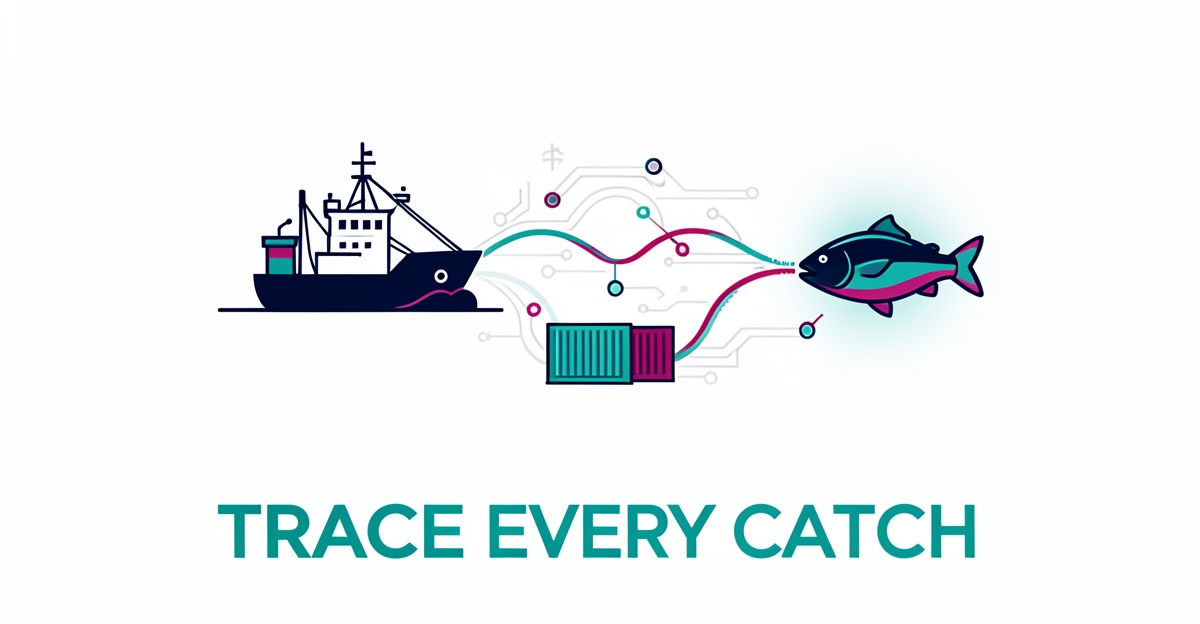
How AI Can Improve Traceability in Seafood Supply Chains
Key Facts
- The seafood industry loses an estimated tens of billions of dollars annually to fraud and illegal, unreported, and unregulated (IUU) fishing, according to supply chain research
- Continuous AI freshness grading can cut product rejections by up to roughly 40% versus periodic manual checks, per industry reports
- The FDA requires sortable traceability records within 24 hours during recalls under the Food Traceability Rule
- FSMA 204 compliance deadline is July 20, 2028 for seafood items on the Food Traceability List
- The rule defines seven Critical Tracking Events, most owned by processors at initial packing and transformation
- Peer-reviewed reviews covering 2015–2025 document a rapidly expanding set of AI applications across the seafood sector
Hire a team member that works 24/7 — for less than a part-time wage.
AI receptionists, SDRs, dispatchers and 99+ roles. Trained on your business, fully managed.
Not sure where to start? Ask our AI planner
The Traceability Problem: Why Seafood Processors Are Exposed
Seafood processors are sitting on a traceability gap that is expensive, risky, and about to become regulatory. Industry research estimates the sector loses tens of billions of dollars annually to fraud and IUU fishing, while species substitution and manual record keeping keep exposing brands to recalls and lost trust.
Manual traceability fails under pressure. Operations teams in processing plants describe freshness grading done by whichever line lead had a free minute, and two-day paper log hunts to trace a shipment quality issue back to a receiving lot. That variability is normal when lot codes are hand-applied, temperatures are logged at intervals, and records live across spreadsheets and stations.
The cost shows up in rejections and response time. Continuous freshness grading with AI can drive up to roughly a 40% reduction in product rejections versus periodic manual checks, per industry reports. In a recall, the FDA requires sortable traceability records within 24 hours, a window that is nearly impossible with paper-based systems.
Regulation is tightening the window. The FDA's Food Traceability Rule sets a hard compliance deadline of July 20, 2028 for seafood on the Food Traceability List, with seven Critical Tracking Events that processors own at initial packing and transformation. The rule requires Key Data Elements captured at each event, not reconstructed after the fact.
Processors are exposed on three fronts:
- Fraud and IUU risk from unverified origin and species substitution
- Inconsistent manual grading that changes with shift and staff availability
- Recall readiness that depends on hours of manual compilation across systems
AI changes the linkage point. By automatically connecting batch numbers, supplier data, and processing steps from catch to consumer, AI systems create a tamper-evident chain that supports faster recall response and stronger consumer trust. AIQ Labs builds these connections through AI Workflow Builds, rebuilding the one traceability workflow that costs you the most, at a fixed price and in phases, so processors can retrieve a sortable record within the FDA window and prove provenance without manual reconstruction.
The pressure is operational, not just compliance. Seafood is one of the most traceability-scrutinized categories in food manufacturing, and the gap between manual logs and automated, lot-tied traceability is where losses accumulate.
How AI Links Batch Numbers, Supplier Data, and Processing Steps Automatically
Seafood processors face mounting pressure to maintain precise traceability from catch to consumer, yet manual systems often fail under the weight of complex supply chains. Automating the linkage of batch numbers, supplier data, and processing steps eliminates human error while creating a digital thread that follows every lot through transformation. This foundation enables faster recalls, verifies sustainability claims, and builds the consumer trust essential for market access in an industry losing billions annually to fraud and illegal fishing.
AI-driven traceability begins with automated lot code generation at initial packing and each transformation event, directly addressing the two most critical tracking events defined under FSMA 204. Unlike hand-applied codes prone to transcription errors, AI systems generate unique identifiers that automatically link to receiving data, supplier certifications, and catch method, creating an immutable record from the moment raw seafood enters the facility. Computer vision freshness grading then ties objective quality assessments to each lot, analyzing color, texture, and appearance with consistent precision across shifts, overcoming the variability of periodic visual checks by staff juggling other duties. This continuous grading can reduce product rejections by up to roughly 40% compared to manual methods, per industry reports, ensuring only compliant seafood advances through processing.
IoT sensors combined with machine learning models enable real-time cold chain monitoring that pinpoints temperature breaks by exact location and time, a capability impossible with interval-based paper or spreadsheet logging. When quality issues arise, processors can retrieve sortable traceability records within the FDA's 24-hour window, turning what once took hours or days into a streamlined compliance action.
- Automated lot code generation at packing and transformation
- Computer vision freshness grading linked to each lot
- IoT/ML cold chain monitoring pinpointing temperature breaks
- Automated record retrieval within the FDA's 24-hour window
- Elimination of manual transcription errors in tracking
This automation creates a resilient, transparent supply chain where every batch tells a verifiable story, from vessel to plate, supporting sustainability goals while protecting brands from the reputational and financial risks of traceability failures.
Meeting FSMA 204: AI-Powered Compliance and Recall Readiness
The FDA's Food Traceability Rule demands that seafood processors capture specific Key Data Elements at seven Critical Tracking Events, with initial packing and transformation being pivotal moments where raw catch becomes a regulated product. AI systems automate this data capture by linking batch numbers, supplier information, and processing steps in real time, ensuring every lot is traceable from vessel to consumer without manual entry errors. This capability directly supports compliance with the July 20, 2028 deadline while building the foundation for rapid response during recalls.
AI-powered traceability solutions enable processors to generate sortable traceability records within the FDA's mandated 24-hour window during outbreak investigations, a critical improvement over legacy systems where compiling such records could take days. Operations teams that have automated freshness grading and tied it to lot codes at receiving report trace-backs that once required two days of sifting through paper logs now taking under an hour. That speed not only meets regulatory expectations but also minimizes financial exposure and reputational risk during crises.
Beyond compliance, AI enhances recall readiness through continuous monitoring that reduces product rejections via consistent freshness grading across shifts and batches. By integrating with Industry 4.0 technologies like IoT sensors and computer vision, these systems maintain cold chain integrity and flag quality issues before products advance further in the supply chain. AIQ Labs builds these systems with deep industry knowledge, ensuring data flows seamlessly into ERP and inventory platforms while aligning with global standards like GDST and TraceASC for interoperable, FAIR-ready traceability. The result is a resilient supply chain where safety, sustainability, and consumer trust are reinforced through verifiable, end-to-end visibility.
From Compliance to Consumer Trust: The Market Advantage of Proven Origin
The seafood industry loses an estimated tens of billions of dollars every year to fraud and IUU fishing, making traceability no longer optional but essential for survival in today's market. Businesses that can prove their seafood's origin, catch method, and journey through the supply chain gain a significant competitive edge by combating mislabeling and supporting verifiable sustainability claims.
AI-powered traceability transforms regulatory compliance into a market advantage by providing retailers with on-demand transparency into product sourcing, right back to the vessel, harvest area, or farm, including feed and hatchery data for certified seafood. This capability enables faster, more accurate responses to supply chain risks and builds consumer trust through tamper-evident records that combat species substitution fraud. Processors benefit from reduced product rejections, with continuous freshness grading via AI and IoT sensors achieving up to roughly a 40% reduction versus periodic manual checks, while ensuring record retrieval within the FDA's 24-hour window during recalls.
- Links vessel and harvest area data to sustainability certifications
- Provides auditable trails for ASC, MSC, and other eco-labels
- Enables real-time monitoring of cold chain integrity
- Automates lot coding at initial packing and transformation events
- Supports FAIR data principles for interoperable systems
By shifting traceability from a cost center to a sales asset, seafood businesses leverage verifiable catch-to-plate data to differentiate their products, meet rising consumer demand for transparency, and secure premium market positioning. AIQ Labs builds the AI systems that automatically link batch numbers, supplier data, and processing steps to create this proven origin advantage.
Implementing AI Traceability: A Practical Roadmap for Processors
Implementing AI traceability in seafood processing starts with a clear, phased approach that builds resilience from the ground up. For small and medium-sized processors, the journey begins with assessing cold chain infrastructure to identify gaps in temperature monitoring that could compromise traceability from catch to consumer. Many SMBs operate with legacy systems that lack real-time data capture, creating blind spots where spoilage or temperature excursions go undetected until it's too late. AIQ Labs helps processors map these vulnerabilities as part of a readiness evaluation, ensuring the foundation supports continuous monitoring before layering on intelligent analytics.
The next steps involve calibrating freshness grading criteria against AI models and automating lot coding at initial packing, a Critical Tracking Event under FSMA 204 where most traceability data originates for processors. By linking every downstream record to a unique lot code tied to receiving data, processors establish a tamper-evident chain that satisfies regulatory demands and enables record retrieval within the FDA's 24-hour window during recalls. This automation eliminates human variability in grading and reduces the risk of transcription errors that plague manual systems, directly addressing the inconsistencies that push teams into days-long paper log hunts.
To de-risk adoption, custom-built AI systems with real-time data pipelines offer SMB processors ownership and control over their traceability infrastructure. Rather than relying on fragmented subscriptions, AIQ Labs' AI Operating Systems approach connects traceability with receiving, inventory, and quality data in one operating layer, built in phases and owned outright, with no vendor lock-in. Staff training completes the cycle, ensuring quality teams can confidently review AI-flagged lots and respond to alerts. Overcoming barriers like high costs and infrastructure gaps requires a partnership mindset, where AI becomes a long-term capability, not a point solution, enabling processors to meet the July 20, 2028 compliance deadline for the FDA's Food Traceability Rule with confidence.
- Assess cold chain infrastructure for real-time monitoring gaps
- Calibrate AI grading to existing quality team standards
- Automate lot coding at initial packing
- Integrate with ERP/inventory systems for data flow
- Train staff on AI-flagged lot review and alert response
Processors gain true ownership of their AI systems, eliminating vendor lock-in and creating a scalable foundation for future innovation in sustainability and consumer trust.
Still paying for 10+ subscriptions that don’t talk to each other?
We build custom AI systems you own outright. No vendor lock-in. Full control.
Not sure where to start? Ask our AI planner
Frequently Asked Questions
How does AI actually improve traceability in seafood supply chains?
What is the FDA's 24-hour traceability rule and can AI help meet it?
Can AI reduce the number of rejected seafood shipments?
When is the FSMA 204 compliance deadline for seafood processors?
Is AI traceability affordable for small and medium seafood processors?
How does AI-powered traceability help build consumer trust?
From Traceability Gap to Market Advantage
Seafood processors are moving from manual logs and shift-dependent grading to automated, lot-tied visibility that links batch numbers, supplier data and processing steps from catch to consumer. AI-driven freshness grading, automated lot coding at initial packing and transformation, and IoT/ML cold chain monitoring create a tamper-evident chain that cuts product rejections, enables sortable recall records within the FDA's 24-hour window, and meets the July 20, 2028 FSMA 204 deadline. That shift turns traceability from a cost center into provenance you can prove, reducing fraud exposure in an industry losing billions annually and building the consumer trust retailers now demand. Processors can start by assessing cold chain gaps, calibrating AI grading to existing quality standards, and automating lot coding at the first Critical Tracking Event. AIQ Labs builds these systems through AI Workflow Builds and AI Operating Systems, phased, fixed-price where it applies, and owned outright. Start the two-minute Fit Check to map your biggest bottleneck and book a free 30-minute strategy call.
Make AI your competitive advantage — not just another tool.
Strategy, implementation and ongoing optimization. One partner, end to end.
Not sure where to start? Ask our AI planner