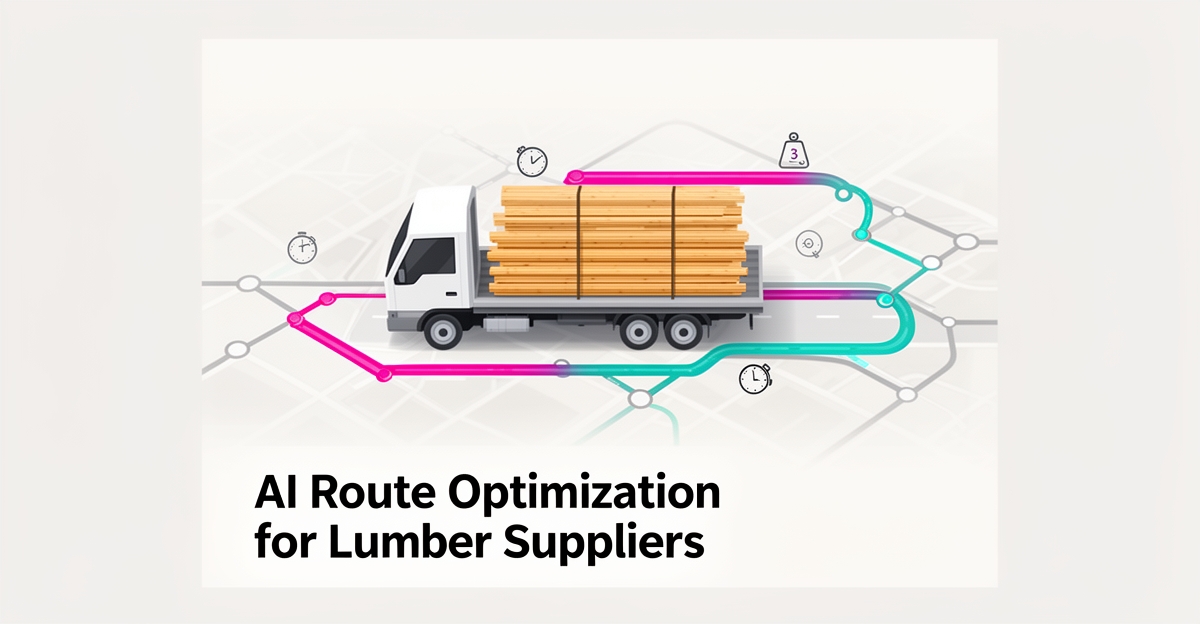
How AI Can Optimize Delivery Routes for Lumber Suppliers
Key Facts
- AI route optimization typically reduces delivery costs by double-digit percentages through fewer miles driven, less idling, and better load consolidation
- Lumber routing is harder than general delivery: heavy shifting loads, road weight limits, and construction-site delivery windows all constrain every trip
- Most AI logistics projects stall in the pilot phase because of weak data pipelines, not weak algorithms
- AI routing integrates with existing fleet management and ERP tools via secure APIs—no rip-and-replace required
- Operational excellence, not model sophistication, is what separates suppliers that win with AI from those that don't
Hire a team member that works 24/7 — for less than a part-time wage.
AI receptionists, SDRs, dispatchers and 99+ roles. Trained on your business, fully managed.
Not sure where to start? Ask our AI planner
The Hidden Cost of Inefficient Lumber Delivery Routes
For lumber suppliers, a delivery truck stuck in traffic is more than a minor annoyance—it's an active drain on profitability. Every hour of delay compounds into wasted fuel, missed construction deadlines, and strained client relationships.
The financial impact of these inefficiencies is often underestimated. Industry analyses of AI-powered route optimization consistently point to double-digit delivery cost reductions—often cited in the 20–25% range—once systems move from static planning to dynamic routing. The exact figure depends on your fleet, territory, and starting point, which is why a measured pilot beats a guess. What's not in dispute is the margin currently being lost to manual planning and static routing methods.
Several specific operational pain points drive these hidden costs:
- Traffic congestion: Unpredictable road conditions force drivers into idle time, burning fuel without covering distance.
- Variable load weights: Heavy, shifting lumber loads alter vehicle fuel efficiency and handling, making standard routes suboptimal.
- Rigid delivery windows: Construction sites operate on strict schedules, leaving little margin for error or delay.
These factors create a complex logistics environment where human planners struggle to account for every variable. The result is a supply chain that reacts to problems rather than anticipating them.
Operational excellence is increasingly the primary competitive advantage in AI adoption, and lumber is no exception. For suppliers, this means the ability to reliably navigate traffic, weight constraints, and deadlines separates market leaders from the rest.
Addressing these hidden costs requires a shift from static planning to dynamic, intelligent systems. By leveraging AI to analyze real-time data on traffic, load weight, and delivery windows, suppliers can transform their logistics from a cost center into a strategic asset.
How AI Route Optimization Solves Lumber-Specific Logistics Challenges
Lumber suppliers face constant pressure to deliver heavy, time-sensitive loads efficiently amid unpredictable traffic and strict site schedules. AI route optimization addresses these lumber-specific challenges by analyzing real-time traffic patterns, dynamic load constraints, and delivery windows to generate the most efficient paths for each truck. This approach minimizes fuel consumption, reduces delivery times, and helps ensure on-time arrivals at construction sites where delays can cascade into costly project setbacks. By integrating with existing fleet management tools, AI systems continuously adapt routes based on changing conditions, turning reactive dispatching into proactive, data-driven logistics.
The effectiveness of AI in lumber logistics stems from its ability to process multiple variables simultaneously—something manual planning cannot achieve at scale. For instance, AI evaluates not just distance but also road weight limits for oversized lumber loads, peak traffic congestion in urban delivery zones, and narrow delivery windows tied to concrete pours or framing schedules. Suppliers operating on thin margins typically see savings from fewer miles driven, less idling in traffic, and better load consolidation that maximizes each truck's capacity without violating safety or regulatory limits.
To ensure reliability and scalability in lumber operations, AI systems need a production-grade foundation built from the ground up. This includes reliable data pipelines for real-time traffic and weather feeds, automated evaluation checkpoints to validate route accuracy, and containerized platforms for consistent performance across fleets. Lumber suppliers benefit from this approach through reduced planning overhead, fewer missed deliveries, and the ability to scale operations during peak building seasons without proportional increases in dispatch staff. AIQ Labs applies this production-grade methodology through AI Workflow Builds—rebuilding the one workflow that costs you the most, at a fixed price and in phases—so lumber clients own systems that integrate with their existing logistics workflows while delivering measurable efficiency gains.
Implementing AI Route Optimization: From Pilot to Operational Excellence
Most AI projects stall in the pilot phase because businesses focus on the algorithm before building the operational foundation. For lumber suppliers, moving from theoretical route optimization to daily fuel savings requires treating implementation as an engineering discipline, not a software installation.
The journey begins with data readiness. Before any AI can calculate optimal routes, you need centralized access to historical delivery logs, real-time vehicle telematics, and customer delivery windows. Establishing reliable data pipelines is the critical first step in moving from experimentation to production. Without clean, accessible data on traffic patterns and load weights, even sophisticated algorithms will generate suboptimal routes.
Next, launch a bounded pilot targeting a single distribution hub or specific lumber product line. This controlled approach allows you to establish evaluation checkpoints and feedback loops before scaling. Operational maturity—not just model sophistication—is what drives competitive advantage. During this phase, focus on building the infrastructure that supports continuous monitoring:
- Automated data pipelines that feed real-time traffic and weather updates into the routing engine
- Containerized deployment platforms that allow updates without disrupting daily dispatch operations
- Secure API integrations with existing fleet management and ERP systems
- Performance dashboards tracking fuel consumption against baseline metrics
Integration complexity often determines success more than algorithmic accuracy. Your AI routing system must communicate bidirectionally with dispatch software, inventory management, and customer notification systems. When these connections function seamlessly, the impact becomes measurable: fewer miles driven, less fuel burned idling, and better delivery window adherence across the fleet.
Change management proves equally critical. Dispatchers and drivers need training not just on new interfaces, but on trusting AI-generated routes that may counter intuitive navigation habits. Establish clear escalation protocols for when human judgment should override algorithmic suggestions, particularly for construction sites with access constraints or hazardous weather conditions.
Finally, treat optimization as a continuous cycle rather than a one-time deployment. Winners in AI adoption are those who operate these systems reliably at scale, not those with the most powerful initial models. Regular evaluation checkpoints ensure the system adapts to seasonal lumber demand fluctuations and evolving traffic patterns.
AIQ Labs structures this transition through a phased approach that prioritizes infrastructure stability before scaling, so lumber suppliers own their routing intelligence outright with no vendor lock-in. For teams that want routing handled end-to-end, AI Employees can run dispatch coordination at roughly 80% less cost than a human hire; for suppliers ready to connect routing to their broader operation, AI Operating Systems build one connected layer across the business. Payment models are straightforward: start monthly, build in milestones, or own it outright—details at aiqlabs.ai/pricing.
Still paying for 10+ subscriptions that don’t talk to each other?
We build custom AI systems you own outright. No vendor lock-in. Full control.
Not sure where to start? Ask our AI planner
Frequently Asked Questions
How much can AI route optimization actually save a lumber supplier on delivery costs?
What makes lumber delivery routing different from regular route optimization?
Do I need to replace my current fleet management software to use AI routing?
Why do so many AI route optimization projects fail or stall?
Will my dispatchers and drivers actually trust AI-generated routes?
How do I get started with AI route optimization without a huge upfront commitment?
Turn Route Planning Into a Strategic Advantage
Inefficient lumber deliveries quietly erode margins through idle time, excess fuel burn, and missed construction windows. AI route optimization changes that by continuously balancing real-time traffic, variable load weights, and strict delivery windows to produce routes that save fuel, protect schedules, and reduce planning overhead. The shift from static planning to dynamic, production-ready systems is what turns logistics from a cost center into a competitive edge. For lumber suppliers, the next step is data readiness first, then a bounded pilot at one hub, with automated pipelines, containerized deployment, and clear evaluation checkpoints before scaling. AIQ Labs builds intelligent routing systems that integrate with existing fleet management tools and are owned outright—no vendor lock-in, no fake pricing. Start the two-minute Fit Check at aiqlabs.ai/apply for a free 30-minute strategy call to map your biggest bottleneck and see if a clear, high-ROI automation path exists, or reach the team at [email protected] with questions.
Make AI your competitive advantage — not just another tool.
Strategy, implementation and ongoing optimization. One partner, end to end.
Not sure where to start? Ask our AI planner