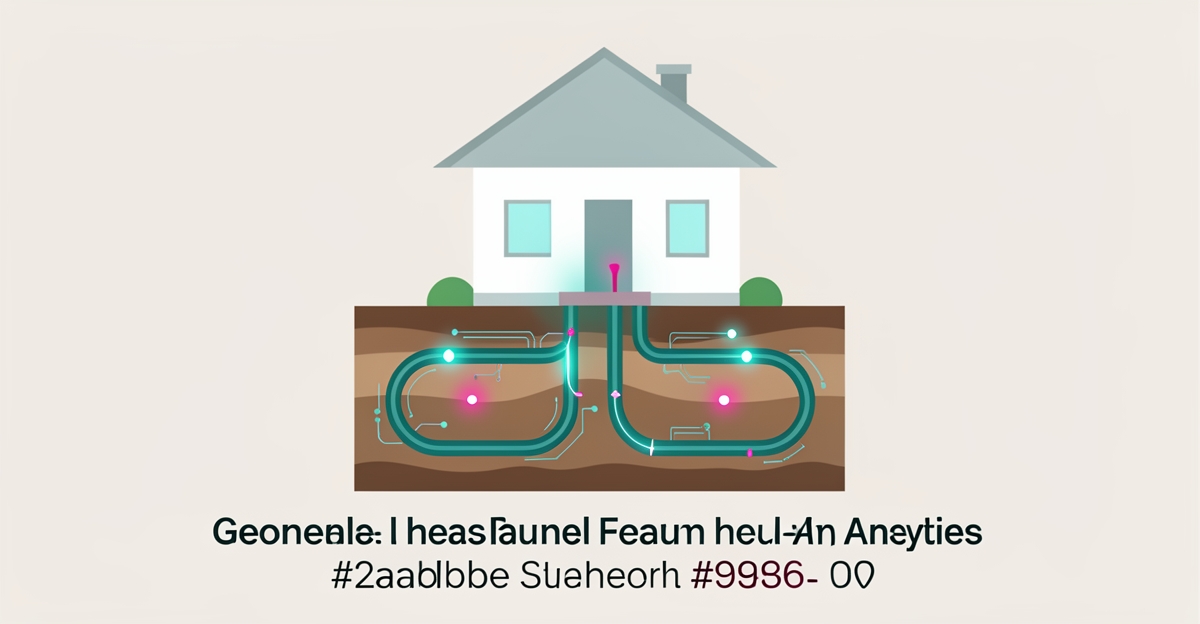
How AI Can Optimize Geothermal System Design for Energy Efficiency
Key Facts
- Ground loop installation typically accounts for 20-40% of total geothermal system costs, making it the single most expensive design decision.
- Typical U.S. geothermal installations often run $20,000 to $40,000, yet generic sizing frequently wastes much of that investment.
- Poorly designed ground loops can meaningfully reduce geothermal system efficiency, eroding the long-term savings homeowners were promised.
- AI analyzes 12-24 months of energy usage patterns plus local climate history to right-size loop configuration, pipe size, and flow rate per home.
- Well-optimized ML-driven systems can deliver substantial performance and energy-efficiency gains over conventional rule-of-thumb approaches.
- AI evaluates many loop configurations in parallel, replacing manual engineering guesswork with data-grounded designs that improve with every installation.
Hire a team member that works 24/7 — for less than a part-time wage.
AI receptionists, SDRs, dispatchers and 99+ roles. Trained on your business, fully managed.
Not sure where to start? Ask our AI planner
The Hidden Cost of One-Size-Fits-All Geothermal Design
Geothermal systems often underperform and cost more than expected because they're designed using generic rules of thumb rather than site-specific data. This one-size-fits-all approach ignores critical variables like local soil composition, groundwater levels, and seasonal temperature swings that directly impact system efficiency. As a result, homeowners frequently install systems that are either oversized, wasting upfront capital, or undersized, forcing the heat pump to work harder and shortening its lifespan.
The financial impact is significant: geothermal installations typically range from $20,000 to $40,000, with 20-40% of that cost coming from ground loop installation alone. When loops are improperly sized or configured due to generic design assumptions, that substantial investment delivers suboptimal returns. Poorly designed loops can meaningfully reduce system efficiency, increasing operational costs and eroding the long-term savings geothermal promises.
This inefficiency isn't just a technical flaw, it's a customer experience failure. Homeowners invest in geothermal for sustainability and savings, only to face higher-than-expected bills and maintenance concerns when the system doesn't perform as advertised. AIQ Labs addresses this gap by using AI to analyze a property's unique energy usage patterns and regional climate history, ensuring the geothermal design matches actual demand rather than outdated averages. By aligning system specifications with real-world conditions, AI-driven design minimizes wasted spending on ground loops while maximizing efficiency and comfort, turning a risky investment into a reliable, high-performing asset.
AI-Powered Design: Matching Systems to Homes Using Energy and Climate Data
Designing a geothermal system used to mean applying rules of thumb to a generic home. That approach leaves efficiency on the table and drives up the cost of the most expensive part of the install.
AI changes the starting point from assumptions to data. By analyzing a customer's energy usage patterns and local climate history, AI models can recommend the optimal ground loop configuration, pipe size, and flow rate for that specific home. This ground loop-focused design targets the portion of a project where 20-40% of geothermal system costs are typically attributed to ground loop installation.
Traditional design relies on manual load calculations, standard loop layouts, and limited climate averages. It is established and well understood, but it struggles with variability between homes and seasons. AI-optimized design improves efficiency and reduces costs by matching system parameters to real consumption profiles instead of averages.
The contrast shows up in three practical areas:
- Energy usage patterns drive sizing, not just square footage
- Climate history informs loop depth, length, and flow rate selection
- Configuration recommendations are home-specific, not template-based
With typical installed geothermal systems in the U.S. ranging from $20,000 to $40,000, even modest efficiency gains translate into meaningful long-term savings and higher customer satisfaction.
AIQ Labs applies this personalization logic through custom AI models that tailor system design for each home. The approach aligns with customer journey optimization, where analysis of usage and climate data informs a recommendation that is both technical and customer-centric.
AI also brings scalability to design work. Where traditional methods require extensive manual engineering time per project, an AI system can evaluate multiple configurations quickly and consistently. That speed supports higher efficiency without adding headcount.
The result is a design process that is data-grounded and repeatable. Homes receive a ground loop configuration tuned to their actual heating and cooling demand and the local ground conditions implied by climate history. Performance improves, installation risk declines, and owners see the value of a renewable system sooner.
For SMBs delivering geothermal solutions, this is a clear example of how AI can move customer relationship management from generic proposals to personalized, high-value recommendations that drive adoption and retention.
From Data to Dollars: The Efficiency and Savings Payoff
Geothermal systems represent a significant investment, with ground loop installation typically accounting for 20-40% of total system costs and typical U.S. installations ranging from $20,000 to $40,000. AIQ Labs leverages AI to analyze customer energy usage patterns and climate history, enabling right-sized loop designs that avoid over-engineering while meeting actual thermal demands. This data-driven approach directly addresses the high upfront costs that often deter adoption of renewable heating and cooling solutions.
By optimizing pipe size, flow rate, and loop configuration based on real-world usage data rather than generic rules of thumb, AI-optimized designs can achieve measurable efficiency gains. Well-optimized ML-driven systems have shown substantial performance and energy-efficiency improvements in comparable applications, translating to lower operational energy consumption and reduced utility bills over the system's 25+ year lifespan. These gains are particularly impactful in climates with extreme seasonal variations, where precise load matching prevents short-cycling and enhances compressor longevity.
The financial payoff extends beyond monthly savings. Right-sizing ground loops through AI analysis reduces excavation materials, labor, and drilling time, directly lowering installation costs without compromising performance. For homeowners, this means accessing geothermal benefits at a more accessible entry point while still realizing long-term savings from superior efficiency. AIQ Labs' custom models ensure each system is tailored to the property's unique energy profile, turning design complexity into a competitive advantage for both installers and homeowners seeking sustainable, cost-effective comfort.
How to Implement AI-Optimized Geothermal Design: A Practical Roadmap
Designing a geothermal system without data is expensive guesswork. With AI, the design process shifts from rule-of-thumb sizing to precise, home-specific optimization that improves efficiency and shortens the sales cycle.
Start by gathering the inputs that drive performance. Pull 12–24 months of customer energy usage patterns alongside local climate history, soil conditions and building envelope data. AI models analyze these signals to recommend optimal geothermal configurations, ground loop layout, pipe size and flow rate. This data-first approach supports higher efficiency, customer satisfaction and long-term savings.
The financial case is clear. Industry guidance suggests 20-40% of geothermal system costs are attributed to ground loop installation, with typical installed systems in the U.S. ranging from $20,000 to $40,000. Reducing oversizing and rework directly protects margin on the most expensive part of the project.
Next, select loop configuration and sizing with simulation. AI evaluates vertical versus horizontal options, bore depth and spacing against thermal load profiles and seasonal demand. The model flags the most suitable ground loop configuration, pipe size and flow rate for the specific site, avoiding both underperformance and unnecessary drilling.
A practical roadmap for implementation looks like this:
- Audit energy usage and climate data to build a site-specific thermal profile
- Run AI simulations to compare loop configurations, bore depth and flow rates
- Generate a personalized design recommendation and quote package for the homeowner
- Automate follow-up, approvals and installation scheduling across the customer journey
Automation is where design meets revenue. AI can optimize distribution channels, processes and performance by analyzing market trends and customer preferences to enhance decision-making. Applied to geothermal sales, that means streamlining the customer journey from quote to installation with automated proposal generation, document collection and installer dispatch. AIQ Labs' AI Workflow Builds are built for exactly this kind of rebuild: one fixed-price engagement that fixes the workflow costing you the most, delivered in phases.
AIQ Labs builds custom design-recommendation models that personalize system design for each home within this customer journey context. The models ingest usage and climate data, output configuration options and feed directly into quoting and CRM workflows, reducing manual engineering time and improving close rates.
The efficiency gains compound. Running simulations on hardware and infrastructure tuned for ML workloads can deliver significant performance and energy-efficiency improvements, and choosing clean-energy compute locations further reduces the carbon footprint of the design process itself. For geothermal firms, that translates to faster, more accurate designs and a greener value story for customers.
End with deployment and learning. Install the system, monitor actual performance versus predicted load and feed results back into the model. Over time the recommendation engine improves, quote accuracy rises and customer satisfaction increases as promised savings materialize.
Getting Started: Personalizing Geothermal Design with the Right AI Partner
Geothermal system design is no longer a one-size-fits-all engineering challenge, it's a deeply personal optimization problem that demands data-driven precision. Homeowners have unique energy usage patterns, local climate histories, and property-specific constraints that standard design approaches often overlook, leading to oversized or undersized systems that waste money and underperform. AI changes this by turning raw data into tailored recommendations that match each home's exact thermal load and ground conditions.
To unlock this potential, businesses need an AI partner that goes beyond generic algorithms and understands the nuances of geothermal design. The right partner must first assess data readiness, typically requiring at least 12 months of utility bills, HVAC runtime logs, and local weather station data to train accurate models. They should also provide access to sufficient computational resources for running simulations that evaluate many ground loop configurations, pipe diameters, and flow rates in parallel. Most critically, the partnership must include clear ownership terms: clients retain full rights to the custom AI models, training data, and system designs, ensuring no vendor lock-in and long-term control over their energy efficiency investments.
AIQ Labs delivers exactly this through its AI Operating Systems work, one connected operating layer for your business, built in phases and owned outright. By analyzing a customer's energy usage patterns and climate history, our custom models recommend the most suitable ground loop configuration, pipe size, and flow rate for maximum efficiency. This approach directly addresses the 20-40% of geothermal system costs typically tied to ground loop installation, reducing waste while improving performance. Unlike off-the-shelf tools, our models are trained on your specific data and deployed as owned assets, enabling continuous refinement as new usage data comes in. With 200+ multi-agent systems deployed and four live SaaS products we run daily, this is work we do at scale, not in theory.
True ownership means you control the IP, the code, and the future evolution of your geothermal design AI, no subscriptions, no hidden fees, no dependency on third-party platforms. Payment is straightforward: start monthly, build in milestones, or own it outright, see how pricing works. Engineering excellence ensures every model is built for scalability and integration with your existing CRM or project management tools, turning insights into actionable design specs. For businesses ready to move beyond generic recommendations, AIQ Labs offers a clear path forward: start with a free strategy call to map your data readiness and identify high-ROI opportunities in geothermal personalization.
- Assess data availability: 12+ months of energy usage and climate history
- Validate computational capacity for multi-variable system simulations
- Confirm ownership terms for AI models, data, and design outputs
- Evaluate integration potential with existing operational tools
- Plan for ongoing model refinement with new performance data
The result is a geothermal system that's not just efficient, but uniquely optimized for the home it serves, delivering long-term savings, higher satisfaction, and a foundation for scalable, AI-driven energy solutions. Ready to see how your data can transform geothermal design? Start the 2-minute Fit Check, then schedule your free 30-minute strategy call to explore what's possible.
Still paying for 10+ subscriptions that don’t talk to each other?
We build custom AI systems you own outright. No vendor lock-in. Full control.
Not sure where to start? Ask our AI planner
Frequently Asked Questions
How does AI improve geothermal system design compared to traditional methods?
What percentage of geothermal system costs come from ground loop installation?
Can AI-optimized geothermal designs really improve system efficiency?
What data is needed to implement AI-powered geothermal design?
Is AI geothermal design only for new installations, or can it help existing systems?
How does AI reduce the financial risk of geothermal investments?
Turning Geothermal Guesswork into Reliable Performance
AI-optimized geothermal design transforms a costly guessing game into a precision-engineered solution that aligns system specifications with real-world energy usage and climate data. By moving beyond generic rules of thumb, businesses can right-size ground loop installations, which typically account for 20-40% of total system costs, reducing upfront waste while boosting long-term efficiency and homeowner satisfaction. This data-driven approach not only cuts installation expenses and operational risks but also strengthens customer trust by delivering on the promise of sustainable, affordable comfort. For geothermal providers ready to scale smarter, the path forward begins with understanding your data readiness and identifying where AI personalization can unlock the highest ROI. Start the Fit Check to explore how your existing energy and climate data can become the foundation for custom AI models you own outright, no vendor lock-in, just measurable performance gains.
Make AI your competitive advantage — not just another tool.
Strategy, implementation and ongoing optimization. One partner, end to end.
Not sure where to start? Ask our AI planner