How AI Can Optimize Scheduling Around Seasonal Demand in Mini-Split Installations
Key Facts
- Industry analyses widely project a shortfall of millions of skilled construction and trades workers by 2030, putting sustained pressure on field service capacity
- Construction and field service productivity has stagnated for decades, leaving many businesses trapped in reactive workflows
- AI-powered review and planning tools consistently outperform manual processes on complex, rule-heavy tasks like scheduling and sequencing
- AI can flag risks before they materialize, letting contractors adjust staffing and inventory before bottlenecks form
- Poor data quality and fragmented systems mean many HVAC companies cannot accurately forecast their own capacity, leading to double-booked crews
- AI scheduling engines continuously optimize job sequencing in real time, automatically reshuffling appointments when cancellations occur or emergency installations arise
Hire a team member that works 24/7 — for less than a part-time wage.
AI receptionists, SDRs, dispatchers and 99+ roles. Trained on your business, fully managed.
Not sure where to start? Ask our AI planner
The Seasonal Scheduling Crisis in HVAC Installation
Every summer, mini-split installers face a predictable crisis: the phones ring off the hook as temperatures soar, yet there simply aren't enough technicians to meet the surge. This seasonal whiplash, alternating between overwhelming demand and costly downtime, remains one of the most persistent operational failures in the HVAC industry.
The root cause extends beyond typical growing pains. Skilled-trade labor keeps getting scarcer, and industry projections point to a widening shortfall of qualified workers through the end of the decade. For mini-split installers, this shortage transforms seasonal spikes from revenue opportunities into logistical nightmares, forcing companies to turn away profitable work during the exact weeks when demand peaks.
Traditional scheduling methods collapse under this pressure because they rely on static assumptions rather than dynamic reality. Manual dispatching and spreadsheet-based planning cannot account for the complex variables that drive installation demand, weather volatility, equipment lead times, and the specialized certification requirements that limit which technicians can handle specific heat pump configurations. The result is a cascade of inefficiencies:
- Emergency overtime premiums that erode profit margins during peak cooling and heating seasons
- Technician burnout from unsustainable summer schedules, followed by underutilization during shoulder months
- Missed revenue opportunities when installation slots fill faster than human dispatchers can optimize routes
- Customer defections to competitors who promise faster turnaround times
This stagnation reflects a broader industry pattern. Construction and field service productivity has barely moved in over two decades, leaving businesses trapped in reactive workflows while other sectors accelerate. When your scheduling system cannot distinguish between a routine maintenance visit and a complex multi-zone installation requiring electrical upgrades, every calendar conflict becomes a potential customer service failure.
The financial bleeding extends beyond obvious overtime costs. Poor data quality and fragmented systems mean that many HVAC companies cannot even accurately forecast their own capacity, leading to double-booked crews or idle trucks during critical weather events. Without historical pattern analysis, businesses repeatedly misallocate their most experienced technicians to low-complexity jobs while junior staff struggle with advanced installations.
AIQ Labs approaches this crisis by building intelligent scheduling systems that anticipate seasonal fluctuations before they paralyze operations. Rather than reacting to the next heatwave, AI-driven systems analyze years of service data to predict when and where demand will spike, ensuring that your workforce allocation matches the rhythm of the market rather than fighting against it.
How AI Predicts and Adapts to Seasonal Demand Patterns
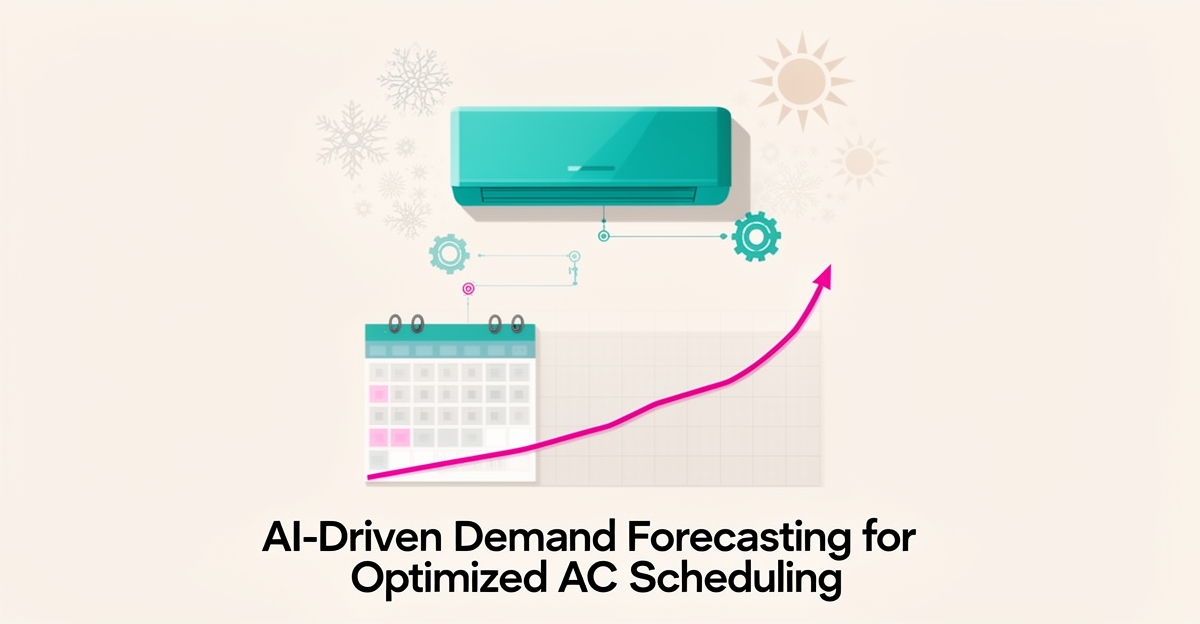
Imagine knowing precisely when your mini-split installation schedule will hit capacity, weeks before the phones start ringing. AI-powered scheduling tools analyze historical installation data alongside weather trends and regional climate patterns to forecast demand surges, transforming reactive scrambling into proactive planning.
These systems work by ingesting years of past job data to identify patterns invisible to manual review. They correlate installation volume with external factors like temperature swings and seasonal shifts, creating predictive models that anticipate when cooling or heating demand will spike. AI can flag risks before they happen, allowing contractors to adjust staffing and inventory before bottlenecks form.
The technology draws from proven construction planning methodologies adapted for field service operations. Scenario-simulation tools model multiple project sequences to identify optimal schedules, while AI-powered review tools consistently catch issues that human reviewers miss, demonstrating the precision these systems bring to complex, rule-heavy scheduling logic.
For mini-split installers, this translates into dynamic resource allocation that responds to forecasted demand. The system evaluates:
- Historical seasonal patterns and weather correlations
- Technician availability and skill sets
- Geographic clustering of installation sites
- Equipment inventory and supply chain timing
With skilled-trade labor getting harder to find each year, maximizing existing workforce efficiency becomes critical. AI scheduling engines address this by continuously optimizing job sequencing in real time, automatically reshuffling appointments when cancellations occur or emergency installations arise.
AIQ Labs builds these intelligent scheduling systems, whether as a standalone workflow rebuild or as part of a broader connected operating layer, to help contractors anticipate demand spikes and allocate technicians efficiently. By processing complex variables simultaneously, something manual dispatching cannot achieve, these systems ensure crews are positioned where they are needed most before seasonal rushes begin.
The result is a self-adjusting schedule that breaks the pattern of decades-long productivity stagnation. Rather than reacting to seasonal chaos, installers gain a forward-looking operational rhythm that stabilizes revenue and reduces overtime costs.
Implementing AI Scheduling: From Data Readiness to Technician Optimization
Implementing AI scheduling for mini-split installations begins with ensuring your data is ready to support intelligent decision-making. The foundation of any effective AI system lies in clean, integrated, and accurate data, especially when predicting seasonal demand spikes for cooling or heating needs. Without this groundwork, even the most advanced scheduling tools will struggle to deliver reliable results.
Start by auditing and standardizing your CRM data, focusing on opportunity fields, duplicate accounts, and required data entry points. Cleaning up CRM data is the first critical step in preparing for AI, enabling accurate forecasting and reducing errors in job assignment. Next, integrate your CRM with calendar and dispatch tools using API connections to create a unified operational view. This allows AI systems to access real-time technician availability, job locations, and service history, key inputs for dynamic scheduling.
Once data is unified, pilot a focused use case, such as automated job assignment based on technician skill, location, and urgency. AIQ Labs supports this through AI Employee roles like Dispatcher or Service Scheduler, which can intelligently match jobs to technicians while learning from performance data over time. Begin with a small pilot, perhaps one service zone or technician team, to validate accuracy and refine the model before scaling. If scheduling is the workflow costing you the most, a fixed-price Workflow Build is often the fastest path to a working system.
Continuous improvement is essential. Monitor key metrics like job completion time, technician utilization, and customer satisfaction, then retrain the AI model with new data to adapt to changing patterns. This iterative approach ensures the system evolves with your business, maintaining efficiency through seasonal shifts. By following these steps, data cleanup, integration, targeted piloting, and ongoing optimization, mini-split businesses can build a resilient, AI-driven scheduling engine that anticipates demand and maximizes workforce productivity.
Still paying for 10+ subscriptions that don’t talk to each other?
We build custom AI systems you own outright. No vendor lock-in. Full control.
Not sure where to start? Ask our AI planner
Frequently Asked Questions
How can AI predict when my mini-split installation demand will spike?
Why do traditional scheduling methods break down during peak cooling and heating season?
Is AI scheduling worth it when skilled technician shortages are the real problem?
What do I need to have in place before implementing AI scheduling?
How do I roll out AI scheduling without disrupting my whole operation?
Can AI scheduling actually handle complex jobs differently from routine maintenance visits?
Turn Seasonal Chaos Into Predictable Growth
Seasonal spikes don't have to mean overtime, burnout, and lost revenue. AI moves mini-split scheduling from reactive scrambling to proactive planning by forecasting demand from weather and historical patterns, matching jobs to technician skills and location, and continuously reshuffling in real time. That shift stabilizes revenue, protects margins, and makes the most of your existing crew in an industry where skilled labor keeps getting harder to find. The foundation is clean, integrated data and a focused pilot, such as automated job assignment, before scaling. If you're ready to test what intelligent scheduling could do for your operation, start the Fit Check at aiqlabs.ai/apply for a free 30-minute strategy call to map your biggest bottleneck and identify high-ROI automation opportunities with AIQ Labs.
Make AI your competitive advantage — not just another tool.
Strategy, implementation and ongoing optimization. One partner, end to end.
Not sure where to start? Ask our AI planner