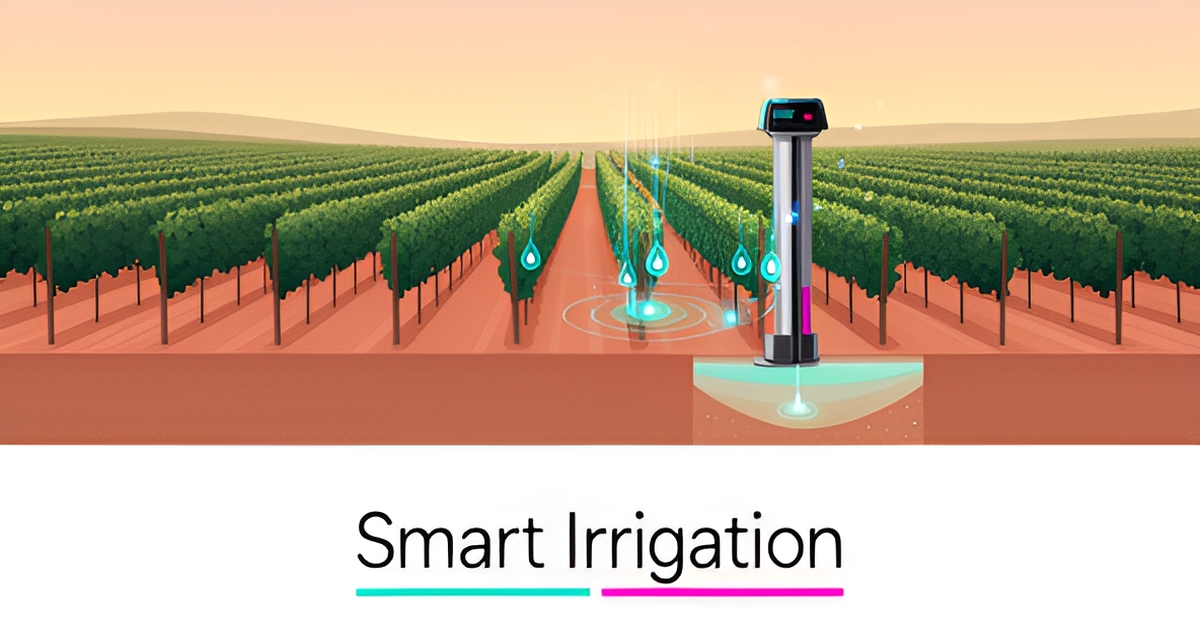
How AI Can Optimize Vineyard Irrigation Based on Real-Time Soil Data
Key Facts
- Vineyard AI platforms typically integrate with industry-standard sensors for soil moisture, humidity, pH, and temperature to enable microzone monitoring Neuro Vine
- AI recommendation engines analyze sensor data to optimize irrigation, predict disease risks, and fine-tune harvest timing Neuro Vine
- Modern agronomic AI stacks are commonly built on cloud ML platforms for model orchestration, data warehousing, and storage Google Cloud
- Vineyard AI systems are typically validated in operational vineyards before broader commercial rollout Neuro Vine
- AIQ Labs builds custom AI systems that integrate with existing farm sensors and irrigation controllers for precision irrigation AIQ Labs
- Precision irrigation is a continuous, sensor-informed decision process that protects both crop and resource Neuro Vine
- Soil moisture and weather data are collected continuously from field sensors and stations for real-time irrigation decisions Neuro Vine
Hire a team member that works 24/7 — for less than a part-time wage.
AI receptionists, SDRs, dispatchers and 99+ roles. Trained on your business, fully managed.
Not sure where to start? Ask our AI planner
The Water Waste Problem: Why Traditional Vineyard Irrigation Falls Short
Vineyard water is expensive, and traditional irrigation methods waste a lot of it. Managers still rely on fixed schedules, visual checks, and intuition that cannot keep up with how quickly soil conditions change block to block.
Conventional systems treat a vineyard as one uniform zone. That assumption ignores microclimate variation, soil type shifts, and vine stress signals that differ within the same row. The result is a cycle of overwatering and underwatering that stresses vines and dilutes quality.
Overwatering leaches nutrients, promotes disease pressure, and drives up pumping costs for water that never reaches the root zone. Underwatering does the opposite, forcing vines into water stress during critical phenological stages and reducing berry development. Both errors are invisible until yield and quality are already compromised.
Static schedules also cannot react to real-time weather. A planned irrigation event can become wasteful after an unexpected rain, or insufficient before a heat spike. Without live feedback, managers are always correcting late.
Real-world platforms are showing how sensor density changes the picture. Neuro Vine integrates with industry-standard sensors for humidity, pH, temperature, and soil moisture and partners with METOS® stations for real-time environmental and soil data. High-density sensor networks like these allow vineyards to be managed as intelligent microzones rather than single uniform blocks.
The same platform uses ROSA, an intelligent recommendation engine that analyzes data to optimize irrigation, predict disease risks, and fine-tune harvest timing. The system is built on cloud AI infrastructure and, as of late 2026, is being tested in operational vineyards in Europe with early-stage rollout plans in additional markets.
Traditional irrigation limitations show up as:
- Uniform scheduling that ignores block-level soil moisture and microclimate
- Delayed response to weather events because data is manual or absent
- No predictive insight into vine stress before visible symptoms appear
- Wasted water and energy from over-irrigation in low-need zones
This is where AI-driven analytics changes the decision loop. AIQ Labs builds custom AI systems that integrate with existing farm sensors and irrigation controllers, analyzing real-time soil moisture and weather data to optimize irrigation schedules and prevent overwatering. The approach mirrors how vineyard-focused AI platforms move from raw sensor streams to daily, block-specific recommendations — and it is exactly the kind of single high-cost workflow we rebuild through [AI Workflow Builds](/workflow-builds).
When soil data is continuous and contextualized with weather forecasts, irrigation becomes a precise intervention rather than a calendar event. Vines receive water when and where it is needed, reducing stress, conserving resources, and protecting grape quality across the season.
How AI Transforms Soil Sensor Data into Precision Irrigation Decisions
Vineyards are no longer managed by the block — they are managed by the sensor. Real-time soil and weather data now drive daily irrigation decisions that protect yield, water use, and grape quality.
AI platforms ingest continuous streams from soil moisture probes, weather stations, and environmental monitors and translate them into actionable irrigation recommendations. Neuro Vine’s platform utilizes real-time data from soil and weather sensors combined with agronomic models to provide precise daily recommendations for irrigation, disease risk, and harvest timing. The system is designed to help vineyard managers make better decisions with real-time data, predictive insights and scalable technology.
At the core is an intelligent recommendation engine that turns raw measurements into microzone actions. ROSA, Neuro Vine’s AI engine, analyzes data to optimize irrigation, predict disease risks, and fine-tune harvest timing. The engine processes inputs from a distributed sensor network to create intelligent microzones within vineyards, enabling precision watering tailored to each block’s specific needs rather than treating the entire vineyard uniformly.
Sensor integration is built for scale and interoperability. The platform integrates with industry-standard sensors for humidity, pH, temperature, and soil moisture, and partners with METOS® for real-time environmental and soil data. That density allows the model to distinguish subtle variation in water holding capacity, vine stress, and microclimate across rows.
Daily recommendations emerge from a continuous loop of observation, prediction, and control:
- Soil moisture and weather data are collected continuously from field sensors and stations
- Cloud-based AI infrastructure processes and stores the incoming data streams
- Agronomic models generate block-level irrigation advice and risk alerts
- Recommendations are delivered daily to enable precise, timely watering
The approach is already moving from pilot to practice. Neuro Vine’s MVP is being tested in operational vineyards, with early-stage rollout planned in additional countries. The system transforms vineyards into intelligent microzones by analyzing data from various sensors, replacing uniform schedules with data-driven precision.
This is the type of real-time soil and weather analytics that AI data and business intelligence teams are applying to agriculture. AIQ Labs builds custom AI systems that integrate with existing farm sensors and irrigation controllers, turning raw field data into owned, production-ready decision workflows. The result is less overwatering, better water use, and irrigation that responds to the vineyard as it changes day to day.
Precision irrigation is no longer an estimate. It is a continuous, sensor-informed decision process that protects both crop and resource.
Real-World Implementation: From Pilot Programs to Production Vineyards
Real-world implementation of AI-driven irrigation is moving beyond pilots into operational vineyards, with platforms like Neuro Vine actively testing their systems in working vineyards. The technology integrates real-time soil and weather data from industry-standard sensors such as METOS iMETOS stations, which typically support large numbers of sensor inputs for comprehensive environmental monitoring. These inputs feed into cloud-based analytics engines that process information to generate precise, daily irrigation recommendations tailored to specific vineyard microzones.
The technical infrastructure typically relies on a cloud ML platform for model orchestration, a data warehouse for scalable storage and querying, and object storage for managing large datasets collected from vineyard sensors. This architecture enables the platform to analyze complex interactions between soil moisture, temperature, humidity, and forecasted weather to optimize water application schedules. As of late 2026, Neuro Vine’s MVP is being validated in working vineyards, with plans for early-stage rollout in additional countries.
This progression from experimental pilots to scalable commercial use reflects a broader trend in agricultural AI, where success depends on seamless integration with existing farm infrastructure. Systems must connect not only to sensors but also to irrigation controllers and farm management software to automate valve adjustments based on AI-generated insights. For businesses looking to implement similar AI data analytics solutions, AIQ Labs provides end-to-end development and integration services that build custom platforms capable of processing real-time agronomic data while ensuring true ownership of the technology stack. By combining cloud-native AI tools with proven sensor networks, vineyards are transitioning from reactive irrigation to predictive, resource-efficient water management.
Building Your AI Irrigation System: Integration, Sensors, and Custom Development
Moving from pilot data to a vineyard-wide system starts with the right sensors and a clear integration plan. Operators who skip this step end up with siloed readings and irrigation decisions that lag behind field conditions.
Sensor selection determines what the AI can actually see. Neuro Vine's vineyard platform integrates with industry-standard sensors for humidity, pH, temperature, and soil moisture. Real-time data from soil and weather sensors combined with agronomic models enables precise, daily irrigation recommendations. Weather and soil monitoring stations used in deployments like these typically support dozens to hundreds of sensor inputs, allowing microzone coverage across varied blocks.
Placement matters as much as type. Soil moisture probes go at multiple depths to capture root-zone dynamics, while humidity and temperature sensors capture canopy stress. pH sensors support nutrient uptake modeling that influences water demand. Centralizing these streams into one data layer prevents conflicting signals and gives the AI a consistent view of each block.
Integration with existing irrigation controllers is the next practical step. Most vineyards already run valves, pumps, and flow meters from established brands. A custom AI layer connects via API or industrial protocols to read controller status and push schedule adjustments without replacing hardware. This preserves capital investment and reduces downtime during the transition.
The build decision hinges on ownership and flexibility. Off-the-shelf platforms deliver speed but limit customization and data control. Custom-built systems let operators define logic for water budgets, weather triggers, and block-specific rules, and keep full ownership of the data and code. That ownership-first approach is the same principle behind [AI Operating Systems](/ai-operating-systems): one connected operating layer, built in phases, owned outright.
A practical implementation checklist includes:
- Audit current sensors and controllers for compatibility and data export options
- Map vineyard microzones and define sensor density per block
- Select integration points for irrigation controllers and farm management software
- Pilot the AI recommendations in one block before scaling
Neuro Vine's MVP is being tested in operational vineyards, with early-stage rollout planned in additional countries. Their intelligent recommendation engine ROSA analyzes data to optimize irrigation, predict disease risks, and fine-tune harvest timing, running on cloud AI infrastructure.
AIQ Labs builds custom AI systems that integrate with existing farm sensors and irrigation controllers, offering ownership and customization that generic platforms cannot match. The approach mirrors production-tested architectures where real-time soil moisture and weather data drive automated scheduling. That combination of tailored development and infrastructure continuity helps vineyard operators save water and prevent overwatering while keeping control of their operational assets.
Still paying for 10+ subscriptions that don’t talk to each other?
We build custom AI systems you own outright. No vendor lock-in. Full control.
Not sure where to start? Ask our AI planner
Frequently Asked Questions
How does AI actually decide when to water my vineyard?
Will this work with my existing sensors and irrigation controllers?
Why is my current fixed schedule wasting water and money?
Is this technology proven in real vineyards or still experimental?
How many sensors do I need for effective AI irrigation?
What's the difference between buying a platform and building a custom AI system?
From Calendar Irrigation to Vineyard Intelligence
Vineyard irrigation is shifting from fixed schedules and visual checks to continuous, sensor-informed decisions. Real-time soil moisture, weather, and environmental data — captured at block and microzone level — let AI move irrigation from a calendar event to a precise intervention that reduces overwatering, protects vine health, and preserves grape quality. Platforms like Neuro Vine demonstrate this with intelligent recommendation engines that turn distributed sensor inputs into daily, block-specific guidance, built on cloud-native AI and tested in operational vineyards. For growers ready to move from pilot to production, the path starts with auditing existing sensors and controllers, mapping microzones, and integrating data into an owned decision workflow that automates scheduling without replacing hardware. AIQ Labs builds custom AI systems that integrate with farm sensors and irrigation controllers to turn live field data into production-ready irrigation workflows you own. Start the 2-minute Fit Check at https://aiqlabs.ai/apply, then book a free 30-minute strategy call at https://aiqlabs.ai/book to map your biggest bottleneck and identify high-ROI automation opportunities. Questions first? Email [email protected].
Make AI your competitive advantage — not just another tool.
Strategy, implementation and ongoing optimization. One partner, end to end.
Not sure where to start? Ask our AI planner