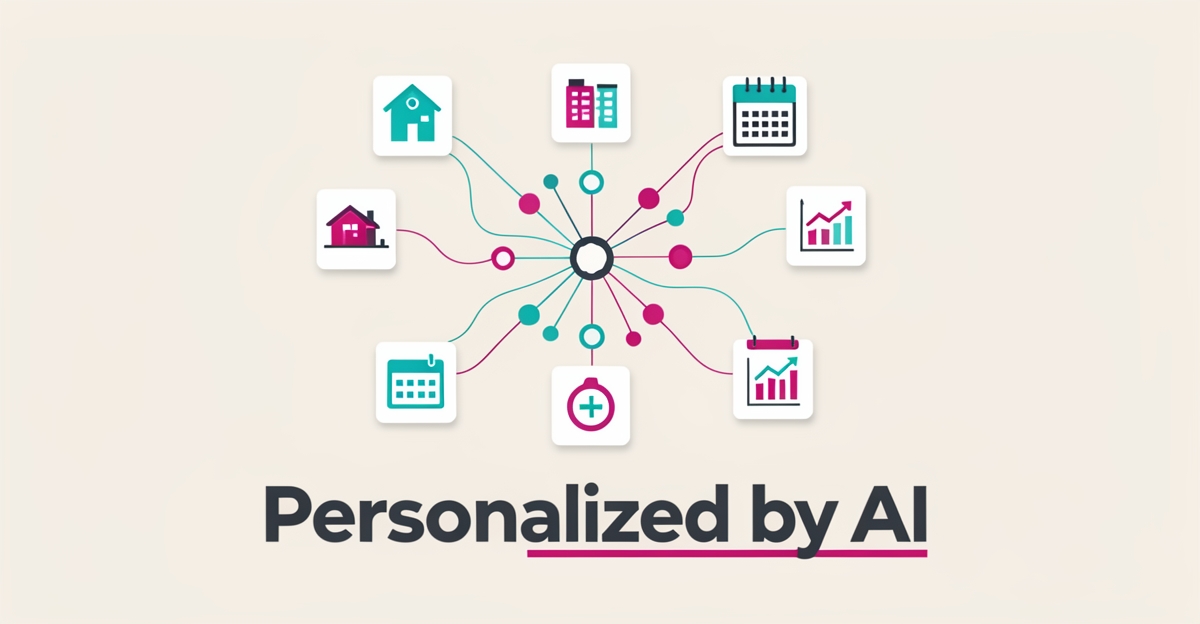
# How AI Can Personalize Service Offers to Different Customer Segments
**Quick Answer:** AI analyzes customer data, location, property type, and behavior, to deliver tailored service offers like seasonal cleanings or commercial packages. Most customers prefer interactions aligned with their needs, and AIQ Labs builds personalization systems that turn that preference into higher conversion through custom AI-driven outreach.
## Key Facts
- Most customers prefer interactions aligned with their needs and expectations, making relevance a major driver of conversion.
- AI segments customers by location, property type, and past behavior to tailor service offers automatically.
- AI-powered sales outreach intelligence automates prospect research and message generation, improving response rates while cutting research time.
- Transparency about AI usage and data privacy alleviates customer concerns about AI-driven interactions.
- AI can improve customer service by automating tasks, personalizing interactions, and resolving issues faster.
## Table of Contents
- [Why Generic Service Offers Fail to Convert](#why-generic-service-offers-fail-to-convert)
- [How AI Analyzes Customer Data to Enable True Personalization](#how-ai-analyzes-customer-data-to-enable-true-personalization)
- [From Insight to Action: Building AI-Powered Personalized Outreach](#from-insight-to-action-building-ai-powered-personalized-outreach)
- [Measuring Impact: Scaling Personalization Without Losing the Human Touch](#measuring-impact-scaling-personalization-without-losing-the-human-touch)
## Why Generic Service Offers Fail to Convert
Generic service offers often miss the mark because they ignore the unique needs and expectations of individual customers. When businesses deliver the same package to everyone, whether it's a seasonal cleaning plan or a commercial maintenance contract, they risk disengagement from customers who feel the offer doesn't reflect their situation. This misalignment is especially costly in service industries where relevance drives conversion, and one-size-fits-all approaches fail to resonate across diverse segments like homeowners, property managers, or retail operators.
Customer service research consistently finds that most customers prefer interactions that are well aligned with their needs and expectations, highlighting how critical personalization is to engagement. When offers don't match a customer's property type, location, or past behavior, such as pushing a high-frequency service to a low-usage client or overlooking seasonal demands, response rates drop and trust erodes. Without data-driven segmentation, businesses waste resources on outreach that feels irrelevant or even intrusive.
AIQ Labs helps overcome this through [AI Workflow Builds](/workflow-builds) that analyze customer data to dynamically tailor service offers, like adjusting cleaning schedules based on foot traffic or recommending commercial packages tied to lease cycles. These systems enable personalized outreach at scale, turning generic promotions into timely, relevant suggestions that reflect real customer patterns. By grounding offers in actual behavior and context, AI reduces the guesswork that leads to low conversion and replaces it with precision that drives action.
## How AI Analyzes Customer Data to Enable True Personalization
AI can transform raw customer data into highly targeted service offers by analyzing patterns across location, property type, and behavior. Modern personalization engines, cloud recommendation services and custom-built models alike, can process large behavioral datasets and generate recommendations in real time. This capability ensures that service recommendations, whether for seasonal cleanings or commercial maintenance packages, are aligned with each customer's unique context and history.
AIQ Labs builds systems that leverage these capabilities to segment customers intelligently, using multi-agent workflows to interpret behavioral signals and property characteristics. By integrating data from CRM platforms, service histories, and geographic inputs, AI identifies high-propensity segments for specific service bundles. For example, customers in coastal regions with older properties may receive targeted offers for mold prevention services, while urban commercial clients get tailored proposals for quarterly deep cleaning contracts.
This data-driven approach supports the creation of dynamic outreach content that speaks directly to customer needs. AI-generated recommendations are not generic; they are informed by actual usage patterns, seasonal trends, and service responsiveness. As a result, businesses can deliver personalized experiences that feel intuitive and timely, increasing the likelihood of engagement and conversion.
- AI segments customers by location, property type, service history, and past behavior
- Personalization engines process large behavioral datasets to serve real-time recommendations
- Segment-specific offers
AI Employees
Hire a team member that works 24/7 — for less than a part-time wage.
AI receptionists, SDRs, dispatchers and 99+ roles. Trained on your business, fully managed.
See If You’re a Fit — AI Employees from $700/mo
Not sure where to start? Ask our AI planner
reflect usage patterns, seasonal trends, and service responsiveness
By grounding personalization in measurable data, AI moves beyond assumptions to deliver service offers that are both relevant and timely. This shift not only improves customer satisfaction but also increases the efficiency of marketing and sales efforts, ensuring resources are focused on the segments most likely to respond. For businesses looking to scale personalized service delivery without proportional increases in manual work, AI provides the analytical foundation and automation needed to execute at scale.
## From Insight to Action: Building AI-Powered Personalized Outreach
Insight turns into revenue when outreach feels like it was written for one person, not a segment. AI makes that scale possible by turning customer data into tailored service offers that match location, property type, and past behavior.
AIQ Labs builds personalization through custom AI workflows that analyze behavior and generate outreach that aligns with individual needs. The system scores leads in real time, creates segment-specific content, and distributes it across channels without manual handoffs.
Personalization drives preference. Customer service research consistently finds that most customers prefer interactions that are well aligned with their needs and expectations. Meeting that expectation consistently requires analyzing behavior and recommending services likely to be of interest.
Lead scoring forms the first layer of precision. Industry reporting on AI email marketing systems suggests teams can achieve substantially higher output with significantly less manual effort. Scoring models prioritize prospects based on history, engagement, and fit so outreach focuses where conversion is highest.
From score to message, content generation keeps tone and offer relevant. AI systems can be briefed with audience details, brand voice, and desired outcome, then produce personalized copy for each segment. The workflow adapts messaging and tone to individual preferences and offers tailored packages such as seasonal cleanings or commercial plans based on property type and location.
Multi-channel execution closes the loop. Once content is generated, AI orchestrates delivery via email, SMS, voice, and chat with timing recommendations and objection handling built in. **AI-powered sales outreach intelligence** can automate prospect research and personalized message generation, improving response rates while cutting research time.
A practical build for personalized outreach typically includes:
- Custom lead scoring system trained on your sales history and behavioral signals
- Content generation agents that create segment-specific offers and copy variations
- Multi-channel orchestration for email, SMS, voice, and chat with automated follow-up
- Feedback loop that refines segments as new interaction data arrives
Scale requires data handling capacity. Cloud personalization services like Amazon Personalize are built to process large behavioral datasets per region and serve high volumes of recommendation requests, illustrating how modern personalization engines handle real-time offers at scale.
When insight is operationalized through owned workflows, personalization becomes a repeatable system rather than a campaign. AIQ Labs designs these systems as production-ready assets clients own outright, integrating with CRM, accounting, and operations tools for end-to-end execution. For businesses that want a full connected layer rather than a single workflow, [AI Operating Systems](/ai-operating-systems) extend personalization across the whole customer journey.
## Measuring Impact: Scaling Personalization Without Losing the Human Touch
Scaling personalization only works when teams can prove it improves experience without eroding trust. Measurement creates that proof, and it starts with transparent systems that customers understand and control.
Businesses that personalize well see clear demand. Customer service research consistently finds that most customers prefer interactions that are well aligned with their needs and expectations. That preference translates into loyalty when offers feel relevant, not intrusive.
Impact shows up in operations as well as sentiment. AI email marketing systems typically let small teams produce far more output with far less manual effort. Efficiency gains like this fund continuous improvement rather than one-off campaigns.
Sustainable scale requires guardrails built in from the start. **Transparency about how AI is used** and ensuring data privacy alleviate concerns about AI-driven interactions. Teams that explain what data informs an offer and give opt-out control preserve the human element while automating relevance.
Continuous improvement is a practice, not a project. Personalization engines improve when feedback loops are closed between outreach, response, and service delivery. AI can analyze customer data to offer tailored service packages based on
AI Development
Still paying for 10+ subscriptions that don’t talk to each other?
We build custom AI systems you own outright. No vendor lock-in. Full control.
See If You’re a Fit — AI Employees from $700/mo
Not sure where to start? Ask our AI planner
location, property type, or past behavior, then refine recommendations as new signals arrive.
Implementation best practices that protect trust while scaling include:
- Define audience segments with specific details before generating copy, so AI briefs reflect brand voice and desired outcome
- Use AI to analyze customer data and segment groups, then offer personalized product recommendations and exclusive discounts
- Maintain human-in-the-loop controls for sensitive decisions and escalations
- Audit data privacy and security practices regularly and communicate them clearly to customers
AIQ Labs builds AI systems that generate personalized outreach content and improve conversion by combining multi-agent research with personalization engines. The approach mirrors how AI can analyze customer behavior and recommend products, content, and services likely to be of interest.
Measurement should track both business and experience metrics. Monitor engagement rates, conversion lift, and cost per acquisition alongside satisfaction scores and opt-out rates. When personalization is transparent and privacy-respecting, **customers accept automation** because it simplifies interactions and delivers value.
Scaling personalization without losing the human touch means pairing data-driven relevance with clear governance, ongoing refinement, and explicit consent.
## Frequently Asked Questions
**Why don't generic service offers convert as well as personalized ones?**
Generic offers ignore each customer's property type, location, and behavior, so outreach feels irrelevant and response rates drop. Most customers prefer interactions aligned with their needs and expectations, making relevance a major driver of conversion.
**How does AI actually personalize service offers for different customer segments?**
AI analyzes customer data like location, property type, service history, and past behavior to tailor packages, for example, mold prevention offers for coastal properties or quarterly deep-cleaning contracts for urban commercial clients. Modern personalization engines process large behavioral datasets to serve real-time offers at scale.
**Can AI-powered outreach really reduce marketing costs?**
Yes, AI lead scoring and automated content generation focus effort on the segments most likely to convert, letting small teams produce far more outreach with far less manual effort. AIQ Labs can also deploy [AI Employees](/ai-employees) that handle outreach roles at a fraction of the cost of a human hire.
**Will AI personalization make my business feel impersonal or robotic to customers?**
Not if it's done with guardrails, transparency about how AI is used, data privacy protections, and human-in-the-loop controls for sensitive decisions preserve trust. When personalization is transparent and privacy-respecting, customers tend to accept automation because it simplifies interactions and delivers relevant value.
**What does a typical AI personalized outreach system include?**
A practical build includes a custom lead scoring system trained on your sales history, content generation agents that create segment-specific offers, multi-channel orchestration across email, SMS, voice, and chat, and a feedback loop that refines segments as new data arrives. AIQ Labs builds these as production-ready systems clients own outright, integrated with their CRM and operations tools.
**How do I write effective briefs so AI-generated marketing copy actually sounds like my brand?**
Treat AI like a junior writer that needs direction, define your audience with specific details, outline your brand voice and desired outcome, then refine the output. Most people give AI less information than they would give an intern, and the problem is usually what's missing from the brief.
## Turn Personalization Into a Repeatable Revenue System
Generic service offers waste budget and erode trust because they ignore property type, location, and behavior. AI changes that by turning raw customer data into timely, segment-specific recommendations, from seasonal cleanings for coastal homes to quarterly maintenance tied to lease cycles, and delivering them across email, SMS, voice and chat without manual handoffs. When insight is operationalized through lead scoring, dynamic content generation, and feedback loops, relevance becomes repeatable and measurable, not a one-off campaign.
If you want to scale personalized outreach without adding headcount, start by defining your core segments with clear signals, then build a workflow that scores, writes, and distributes offers as a production system you own. AIQ Labs builds these personalization workflows as owned, production-ready assets that integrate with your CRM and operations.
Start with the two-minute [Fit Check](/apply), then [book a free 30-minute strategy call](/book) to map your biggest bottleneck and high-ROI automation opportunities. If there isn't a clear win, we'll tell you. You can also reach us anytime at [email protected].
AI Transformation Partner
Make AI your competitive advantage — not just another tool.
Strategy, implementation and ongoing optimization. One partner, end to end.
See If You’re a Fit — AI Employees from $700/mo
Not sure where to start? Ask our AI planner