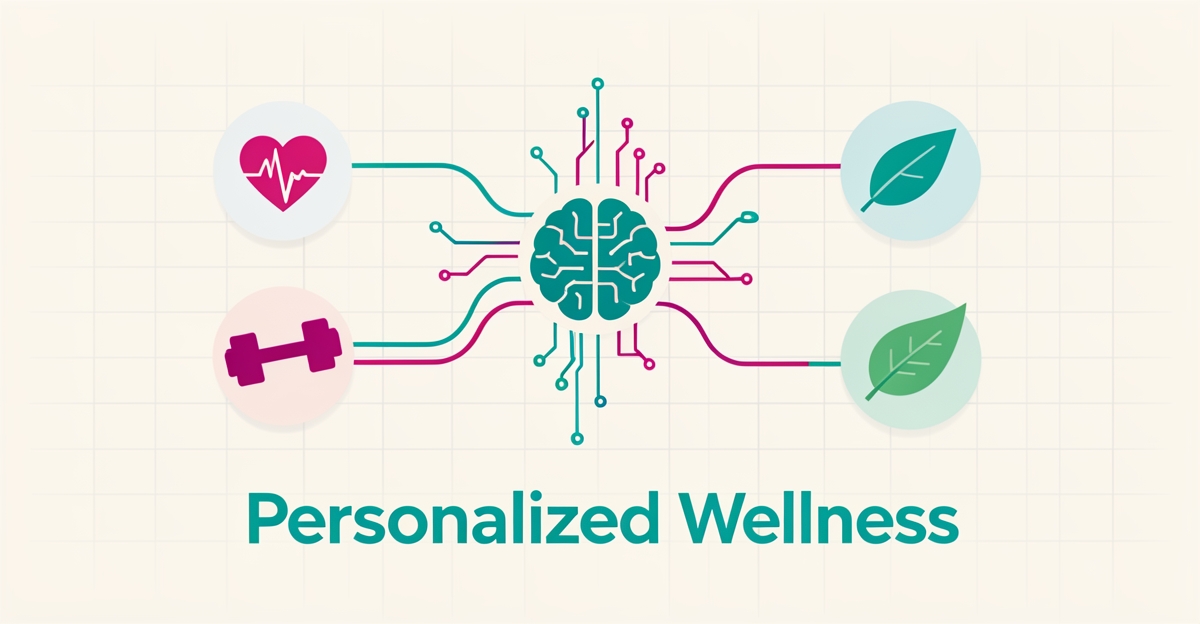
How AI Can Personalize Wellness Plans for Each Member
Key Facts
- Industry research on AI-driven personalization reports substantial gains in user retention and fitness outcomes when plans adapt to individual behavior, figures vary by implementation, so treat specific percentages as directional rather than guaranteed.
- The global AI in fitness and wellness market is widely projected to grow at a strong double-digit compound annual rate through the 2030s, with AI-enabled fitness apps accounting for a major share.
- Corporate wellness programs using AI-powered plans have reported meaningful reductions in employee absenteeism alongside productivity gains in documented implementations.
- Personalized fitness recommendations are expected to be among the fastest-growing segments of the AI wellness market.
- Static wellness initiatives commonly suffer high dropout rates, often cited at roughly 60%, as members lose interest when plans do not adapt.
Hire a team member that works 24/7 — for less than a part-time wage.
AI receptionists, SDRs, dispatchers and 99+ roles. Trained on your business, fully managed.
Not sure where to start? Ask our AI planner
Why One-Size-Fits-All Wellness Fails Members
Generic wellness programs treat all members the same, ignoring individual differences in behavior, preferences, and health metrics. This one-size-fits-all approach fails to engage users, leading to poor retention and wasted investment. Industry analyses commonly cite dropout rates around 60% for static wellness initiatives, as members lose interest when plans don't adapt to their evolving needs or personal goals.
These programs lack the flexibility to respond to real-time changes in activity levels, stress, or motivation, resulting in generic recommendations that feel irrelevant over time. Without personalization, members struggle to connect with the content, reducing adherence and diminishing health outcomes. The inability to tailor interventions based on individual data undermines the core purpose of wellness initiatives.
Research on AI-driven personalization in wellness consistently reports that adaptive, data-driven plans outperform static programs on both retention and fitness outcomes, specific percentage gains vary by study and implementation, but the direction of the evidence is clear. When wellness plans evolve with the individual, engagement and results improve significantly.
- Ignores individual behavior patterns and preferences
- Fails to adapt to changing health metrics or goals
- Delivers static, non-responsive recommendations
- Leads to disengagement and high dropout rates
- Wastes organizational investment in underutilized programs
AIQ Labs builds intelligent systems that analyze member behavior to recommend tailored wellness programs, workouts, and mental health resources, whether as a single [workflow build](/workflow-builds) or as part of a broader [AI operating system](/ai-operating-systems). By leveraging AI to continuously adapt to individual needs, organizations can transform wellness from a generic obligation into a personalized journey that sustains engagement and delivers measurable health benefits.
How AI Analyzes Behavior to Build Truly Personal Plans
AI-powered wellness plans succeed by continuously learning from how members actually live. Wearables stream real-time activity, sleep, and heart rate data, while app interactions reveal workout preferences and nutrition choices, and self-reported mood or energy levels add critical context. This constant flow of behavioral signals allows AI systems to detect subtle patterns, like consistent midday energy dips or weekend workout adherence, that static plans miss entirely. This behavioral analysis forms the foundation for truly adaptive recommendations.
Multi-agent AI systems then synthesize these diverse data streams into coherent insights. One agent might analyze workout adherence patterns to identify optimal training times, another evaluates nutrition logs for micronutrient gaps, while a third tracks mood correlations with activity levels to suggest timely mental health resources. This specialized collaboration enables nuanced understanding, for instance, recognizing that a member skips evening workouts not due to lack of motivation but because high stress disrupts sleep quality. The system then dynamically adjusts recommendations, swapping intense evening sessions for morning yoga and guided meditation when stress markers rise. This layered approach transforms raw data into actionable, personalized guidance.
The result is a wellness plan that evolves with the member, not a static prescription but a living program that responds to life's fluctuations. When adherence drops, the AI investigates root causes rather than simply pushing harder; when progress stalls, it modifies variables like intensity or recovery time based on individual response patterns. For organizations implementing these systems, this translates to sustained engagement and measurable health gains without constant manual intervention. AIQ Labs has deployed 200+ multi-agent systems and applies this same behavioral intelligence framework to build wellness solutions that learn and grow with each member's journey.
From Corporate Wellness to Fitness Apps: Where AI Delivers Measurable Results
The wellness industry is experiencing a major shift as artificial intelligence moves from experimental novelty to measurable performance driver. Organizations that once relied on generic health initiatives are now deploying intelligent systems that deliver quantifiable results across corporate, consumer, and clinical environments.
Market analysts project the global AI in fitness and wellness market to grow at a strong double-digit compound annual rate through the 2030s, with published forecasts pointing to a market worth tens of billions of dollars by the mid-2030s. This growth reflects a broader recognition that personalized approaches outperform one-size-fits-all programming.
Enterprise wellness programs illustrate AI's tangible business impact. Documented corporate implementations have reported meaningful reductions in employee absenteeism, figures around 30% have been cited, alongside productivity gains from AI-powered personalized wellness plans. Treat any single figure as a signal of what's achievable rather than a promise.
These systems analyze employee health metrics, stress indicators, and lifestyle patterns to deliver individualized interventions. Unlike static annual health fairs or generic gym subsidies, AI adapts recommendations in real-time as employee needs evolve, addressing burnout and physical inactivity with precision.
Consumer fitness applications represent the largest segment of the AI wellness market, with personalized fitness recommendations projected to witness particularly rapid growth. These platforms leverage machine learning to transform raw user data into adaptive workout and nutrition guidance.
Key capabilities driving this dominance include:
- Dynamic workout plans that adjust based on performance and recovery metrics
- Nutritional recommendations that evolve with dietary preferences and goals
- Behavioral nudges timed to individual engagement patterns
- Integration with wearable devices for continuous biometric feedback
The evidence consistently indicates that AI-powered personalized wellness plans outperform traditional static programs on both retention and fitness outcomes, though the magnitude of improvement varies by implementation.
Clinical environments are leveraging AI wellness plans to shift from reactive treatment to proactive health management. These systems analyze genetic information, lifestyle habits, and health records to identify risk factors before they manifest as chronic conditions.
This preventive capability represents a fundamental departure from traditional wellness approaches. While conventional programs offer generic advice with limited effectiveness, AI-driven plans provide dynamic adaptability that evolves with changing health metrics and goals.
The contrast between AI-powered and traditional wellness approaches reveals why organizations are transitioning to intelligent systems:
| Aspect | AI-Powered Personalized Plans | Traditional Wellness Programs |
|---|---|---|
| Personalization | Analyzes individual data points for customized strategies | Generic, one-size-fits-all advice |
| Adaptability | Evolves in real-time with changing metrics and goals | Static content, fixed protocols |
| Efficiency | Automates data analysis and recommendations | Manual assessment and generic distribution |
| Engagement | High retention through relevance | Limited engagement due to generic approach |
This adaptability gap explains why forward-thinking organizations are replacing legacy wellness infrastructure with intelligent systems. AIQ Labs builds custom AI solutions that analyze member behavior to recommend tailored wellness programs, workouts, and mental health resources, creating the responsive, individualized experiences that modern health management requires.
As these applications demonstrate, AI personalization has moved beyond theoretical promise to deliver documented improvements in retention, health outcomes, and organizational performance across every major wellness sector.
Implementing AI Personalization: A 6-Step Framework for Wellness Providers
Implementing AI personalization in wellness requires a structured approach to deliver tailored experiences that drive engagement and outcomes. Wellness providers can follow a six-step framework to translate research into actionable results. First, define member-level objectives such as improving fitness adherence, reducing stress, or increasing program retention, clear goals guide tool selection and data strategy. Next, select privacy-compliant AI tools that align with these objectives and integrate securely with existing systems, ensuring adherence to regulations like HIPAA or GDPR when handling sensitive health data. Then, unify fragmented data sources including wearable metrics, appointment history, and self-reported wellness inputs to create a holistic member profile for analysis.
With data consolidated, train machine learning models on engagement signals, like workout completion rates, and outcome indicators such as improved biometrics or self-reported mood shifts to generate dynamic recommendations. Launch the program with human-in-the-loop oversight, where wellness coaches review AI suggestions before delivery, maintaining trust and allowing for clinical judgment. Finally, optimize continuously through A/B testing of recommendation variants and feedback loops that refine algorithms based on real-world member responses. This iterative process ensures plans evolve with individual needs, supporting long-term adherence and measurable health improvements. AIQ Labs supports providers through each phase, typically starting with a fixed-price [workflow build](/workflow-builds) that targets the one process costing you the most, and expanding in phases as results justify it, ensuring AI enhances rather than replaces human expertise in wellness delivery.
Avoiding the Pitfalls: Privacy, Transparency, and the Human-in-the-Loop Imperative
Personalization at scale only works when members trust the system behind it. As AI analyzes member behavior to recommend tailored wellness programs, workouts, and mental health resources, the risks of data overload, opaque algorithms, and over-reliance on automation become competitive liabilities.
The retention and outcome gains attributed to AI-powered personalized wellness plans erode quickly if members feel surveilled or misunderstood. Responsible design treats privacy, transparency, and human oversight as core features, not afterthoughts.
Data overload is a documented pitfall. Collecting excessive data without clear objectives can lead to inefficiencies and privacy concerns. Minimal viable data collection keeps the focus on signals that directly improve recommendations for fitness, nutrition, and mental health, while respecting compliance with privacy regulations.
Opaque recommendations also damage trust. Users may distrust AI systems if they don't understand how recommendations are generated. Explainable recommendation surfaces translate model outputs into plain-language rationale, showing why a workout or mental health resource was suggested and what member behavior triggered it.
Over-reliance on technology is another top risk. AI should complement human expertise, not replace it entirely. Hybrid AI/human coaching workflows preserve the empathy and judgment that members expect from wellness brands.
Practical mitigations that protect trust and outcomes include:
- Minimal viable data collection tied to defined wellness objectives
- Explainable recommendation surfaces with clear rationale for each plan change
- Hybrid AI/human coaching workflows with configurable escalation for sensitive decisions
- Continuous monitoring and optimization based on member feedback and performance metrics
The market context reinforces the stakes. The AI in fitness and wellness market is projected to grow strongly through the 2030s, and brands that embed governance early differentiate on safety and trust.
AIQ Labs builds intelligent systems that adapt to individual preferences, improving engagement and satisfaction, and applies the same production discipline it uses in the four live SaaS products it runs daily. That experience informs how responsible AI is positioned as a competitive differentiator for wellness brands navigating personalization at scale.
Documented corporate implementations have reported absenteeism reductions of roughly 30% alongside productivity gains. Those results are sustainable only when members understand, control, and consent to how their data shapes their plan.
Still paying for 10+ subscriptions that don’t talk to each other?
We build custom AI systems you own outright. No vendor lock-in. Full control.
Not sure where to start? Ask our AI planner
Frequently Asked Questions
How does AI actually personalize wellness plans instead of just giving generic advice?
What proof is there that AI-powered wellness plans actually improve retention and fitness outcomes?
Can AI wellness plans really reduce absenteeism in corporate settings, or is that just marketing hype?
I'm worried about privacy, how do AI wellness systems handle sensitive health data without violating regulations like HIPAA or GDPR?
Won't relying on AI for wellness recommendations make the experience feel robotic or impersonal?
Is investing in AI-powered wellness worth it for small businesses, or is it only for big corporations with large budgets?
Turning Wellness Data Into Lasting Member Engagement
The shift from generic programming to AI-powered personalization represents more than a technological upgrade, it is a fundamental reimagining of how wellness providers build lasting member relationships. By analyzing behavioral patterns, adapting in real time to changing health metrics, and maintaining trust through transparent, human-in-the-loop design, organizations can achieve the retention and outcome gains that static programs simply cannot match. Whether you operate a corporate wellness initiative, a fitness platform, or a clinical program, the implementation framework outlined here provides a clear path from fragmented data to adaptive, member-centric experiences. For wellness providers ready to move beyond one-size-fits-all limitations, AIQ Labs builds custom AI systems that integrate with your existing operations, starting with a two-minute [Fit Check](/apply) to identify your highest-impact opportunities, followed by a free 30-minute strategy call. No obligation, just clarity on your next strategic move.
Make AI your competitive advantage — not just another tool.
Strategy, implementation and ongoing optimization. One partner, end to end.
Not sure where to start? Ask our AI planner