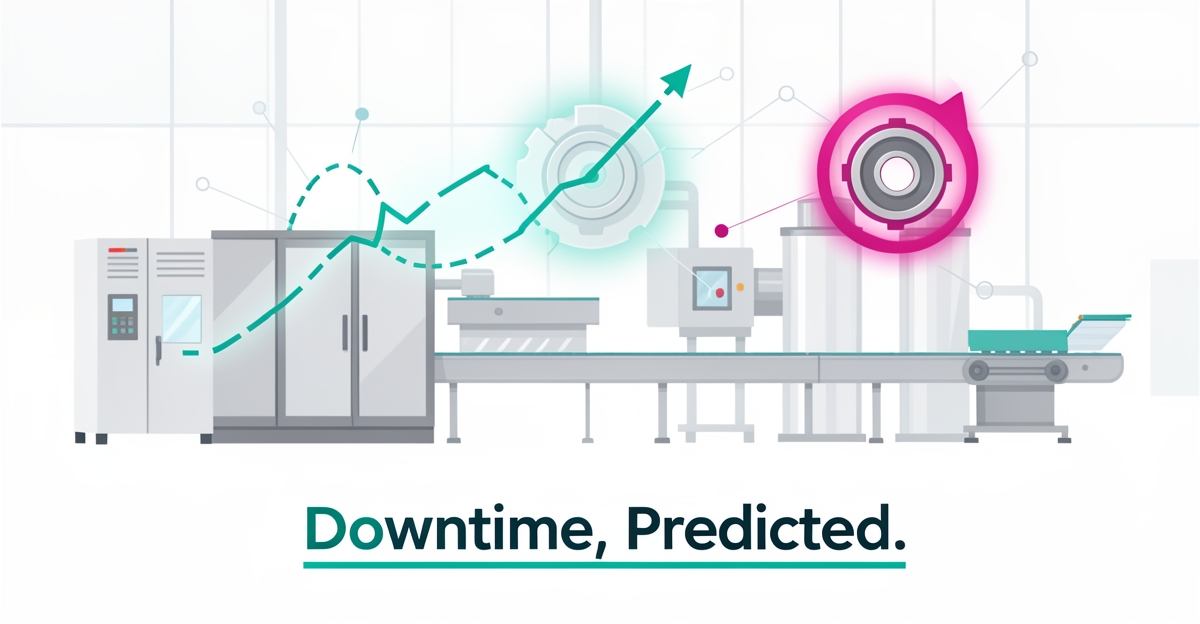
How AI Can Predict Equipment Downtime in Meat Processing Plants
Key Facts
- Unplanned downtime is consistently ranked among the most expensive operational risks in manufacturing, with hourly losses in the hundreds of thousands of dollars for many verticals.
- Industry analyses from recent years suggest AI-driven predictive maintenance can reduce unplanned downtime by roughly 20% and maintenance costs by 25–30%.
- AI systems monitor vibration, temperature, and wear patterns to flag failures before breakdowns occur.
- In meat processing, downtime compounds fast: halted production, cold-chain risk, spoilage, and re-inspection all stack on the same stoppage.
- Transparency and human-in-the-loop oversight are essential to maintain worker trust in AI predictive systems.
Hire a team member that works 24/7 — for less than a part-time wage.
AI receptionists, SDRs, dispatchers and 99+ roles. Trained on your business, fully managed.
Not sure where to start? Ask our AI planner
The Cost of Unplanned Downtime in Meat Processing
When a critical piece of equipment stops mid-shift in a meat processing plant, the losses begin accumulating within minutes, not just in halted production, but in product quality, cold-chain integrity, and worker safety. Unplanned downtime is one of the most expensive operational risks any manufacturer faces, and high-precision processing environments feel that pain acutely.
The scale of the problem is well documented across manufacturing. Industry studies in recent years have estimated average downtime costs in the hundreds of thousands of dollars per hour across verticals, with figures climbing far higher in sectors with comparable precision and throughput demands. Exact numbers vary by study and plant, but the pattern is consistent: an hour of stopped production is one of the most expensive hours a facility can have.
For context on how severe these costs become in demanding production environments:
- Automotive production has been estimated at millions of dollars in losses per hour of downtime
- Oil and gas operations face similarly steep per-hour losses
- Pharmaceutical and electronics facilities report six-figure hourly costs when lines stop
Meat processing plants operate under a unique combination of pressures that magnify these costs. Production lines run at high speed with tight tolerances, and a single failure, whether in a cutting line, a grinder, or a packaging system, can stall an entire shift. Perishable inventory adds another layer of exposure: product sitting idle during a breakdown risks spoilage, and restarting lines often triggers re-inspection and waste.
Beyond production loss, equipment failures carry serious safety implications. Malfunctioning machinery in a processing environment can endanger workers, which is why preventing failures before they occur is both a financial and a human priority. Research on predictive maintenance consistently highlights improved worker safety as a core benefit of catching issues early.
The financial case for prevention is well established. Industry analyses from recent years suggest manufacturers using AI for predictive maintenance have reduced unplanned downtime by roughly 20% and cut maintenance-related costs by 25–30%. Your plant's numbers will depend on equipment age, data quality, and how maintenance is run today, but the direction of the benefit is consistent.
This is where modern approaches diverge from traditional maintenance schedules. Fixed-interval servicing reacts to the calendar; AI-driven systems react to the machine. By analyzing real-time sensor data, vibration, temperature, wear patterns, alongside maintenance logs, predictive models flag developing problems before they cause failures. AIQ Labs builds these predictive systems specifically for high-precision processing environments, helping operations shift from reactive repairs to planned interventions.
The takeaway is simple: in an environment where every hour of stopped production compounds costs across output, safety, and supply, the ability to predict failure before it happens is no longer a luxury, it is an operational necessity.
How AI-Powered Predictive Maintenance Works
Unplanned downtime in meat processing doesn't just pause production, it risks product safety, cold-chain integrity, and labor utilization. AI-powered predictive maintenance shifts the model from waiting for failure to spotting the precursors of failure while equipment is still running.
The system works by continuously ingesting real-time sensor streams and historical maintenance logs. Vibration, temperature, pressure, and wear patterns from motors, conveyors, robotic arms, and packaging lines are monitored alongside past work orders and failure records. AI models learn normal operating baselines and flag subtle deviations that precede breakdowns.
Unlike traditional maintenance schedules that rely on fixed intervals, this approach monitors real-time data to identify potential issues before they lead to failures. AI analysis of sensor data can predict when a machine is likely to fail, allowing companies to perform maintenance before breakdowns occur. That early detection enables maintenance teams to schedule interventions during planned windows rather than reacting to a stoppage.
The business impact is measurable. Industry research from recent years suggests manufacturers using AI for predictive maintenance have cut unplanned downtime by roughly 20%, with maintenance costs down 25–30%. In high-throughput environments, avoiding a single hour of unplanned stoppage protects both output and margin.
In practice, the workflow looks like this:
- Sensor data collection from equipment such as motors, conveyors, and refrigeration units
- Log integration from maintenance records, parts replacements, and operator notes
- Pattern recognition to detect early failure signatures like rising vibration or thermal drift
- Alert generation with recommended actions and priority scoring for maintenance teams
This is where predictive analytics and forecasting create operational value for high-precision processing environments. AIQ Labs builds predictive models using sensor and maintenance logs to support uptime and reduce operational costs, aligning data analysis with production realities.
Reactive maintenance looks cheap on paper but is inherently reactive and often leads to costly emergency repairs. Predictive maintenance delivers reduced downtime, optimized maintenance schedules, and improved safety, though it requires real investment in data infrastructure and benefits from human oversight. Transparency and accountability remain essential to maintain trust among workers, operators should always be able to see why a model flagged an issue and override recommendations when context demands it.
The result is a maintenance program that frees human workers to focus on higher-value tasks while equipment runs more reliably, safely, and predictably.
Implementing AI Predictive Models with AIQ Labs
AIQ Labs builds predictive maintenance capabilities for meat processing equipment by integrating real-time sensor data with maintenance logs, delivered through AI Workflow Builds, a fixed-price, phased engagement that rebuilds the one workflow costing you the most. For plants that want maintenance prediction as part of a broader connected operation, AI Operating Systems layer it into one operating platform, built in phases and owned outright. This approach lets plants shift from reactive repairs to anticipatory interventions, preserving operational continuity in high-precision environments where unplanned shutdowns carry significant financial and safety risks.
The system continuously analyzes vibration, temperature, and wear patterns from processing machinery, such as slicers, grinders, and packaging lines, to detect early signs of degradation. These insights feed into a centralized model that forecasts failure probabilities with actionable lead times, enabling maintenance teams to schedule interventions during planned downtime. AIQ Labs delivers full ownership of the developed system, giving clients complete control over customization, data, and future updates without vendor lock-in.
Human-in-the-loop controls are embedded throughout the workflow, allowing operators to validate AI-generated alerts, override recommendations when contextual factors apply, and refine model accuracy through feedback. This balance of automation and oversight addresses critical concerns about over-reliance on AI while maintaining trust among frontline staff. Transparency and accountability are essential to sustaining worker confidence in AI-driven systems.
With real-time data pipelines and explainable outputs, AIQ Labs delivers a production-ready solution that aligns with compliance requirements in food processing environments. The model evolves continuously through retraining on new operational data, ensuring long-term relevance as equipment ages or production lines change. This end-to-end approach turns predictive maintenance from a technical capability into a reliable, auditable process that supports both uptime and regulatory adherence. With 200+ multi-agent systems deployed, AIQ Labs has the track record to make this work in a real plant, not a slide deck.
Still paying for 10+ subscriptions that don’t talk to each other?
We build custom AI systems you own outright. No vendor lock-in. Full control.
Not sure where to start? Ask our AI planner
Frequently Asked Questions
How much can AI predictive maintenance actually reduce downtime in meat processing plants?
What's the real cost of unplanned downtime for a meat processing plant?
How does AI predictive maintenance differ from our current scheduled maintenance approach?
Will AI replace our maintenance team or make their jobs obsolete?
What kind of data do we need to get started with AI predictive maintenance?
How does AIQ Labs ensure we're not locked into a vendor-dependent system?
Turning Predictive Maintenance Into a Competitive Edge
AI-powered predictive maintenance is no longer a futuristic concept, it's a practical strategy for meat processing plants to cut unplanned downtime and maintenance costs while enhancing safety and operational continuity. By shifting from reactive fixes to data-driven interventions, processors protect product integrity, worker well-being, and bottom-line performance. The path forward starts with assessing your equipment data and maintenance workflows to identify where AI can deliver the fastest impact. Take the 2-minute Fit Check, then book a free 30-minute strategy call, no obligation, just clarity on where predictive maintenance fits in your plant.
Make AI your competitive advantage — not just another tool.
Strategy, implementation and ongoing optimization. One partner, end to end.
Not sure where to start? Ask our AI planner