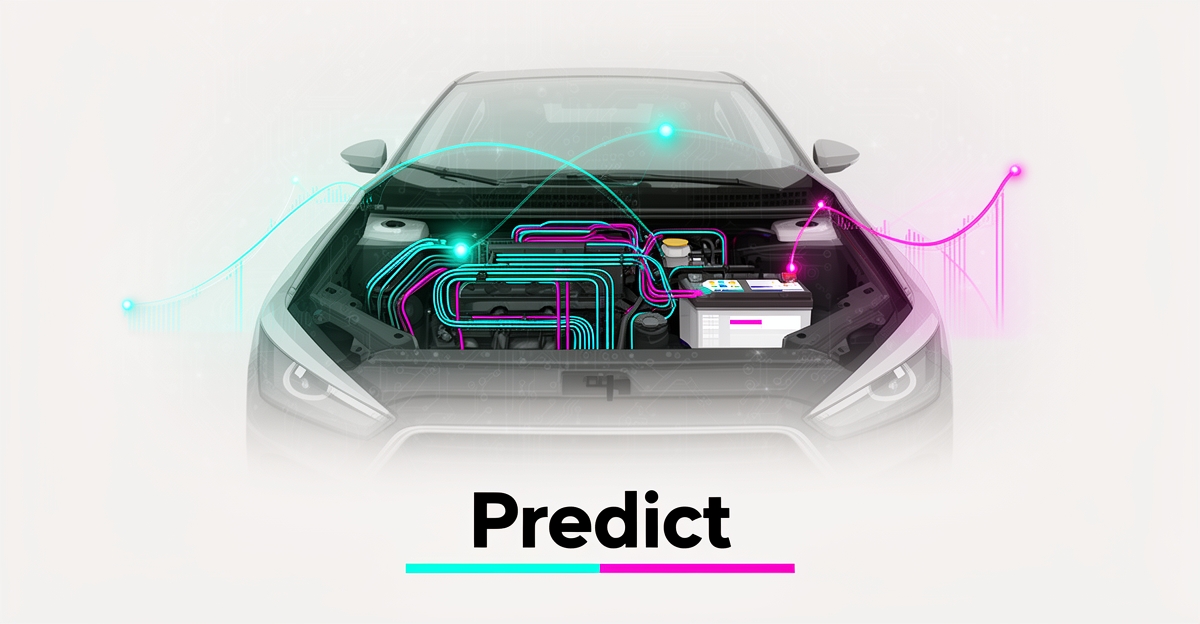
How AI Can Predict Equipment Failures in Auto Electrical Systems
Key Facts
- AI predictive maintenance programs typically report 30-50% reductions in unplanned downtime, according to industry research as of late 2026
- Maintenance costs can drop 18-25% with AI-powered predictive programs, per commonly cited industry figures
- Equipment lifespan often extends 20-40% when failures are prevented rather than repaired
- AI models for equipment failure prediction are commonly reported in the 80-97% accuracy range
- Machine learning approaches generally outperform periodic manual inspections for early fault detection
- The largest barrier to implementation is data quality, not model sophistication
Hire a team member that works 24/7 — for less than a part-time wage.
AI receptionists, SDRs, dispatchers and 99+ roles. Trained on your business, fully managed.
Not sure where to start? Ask our AI planner
Why Traditional Auto Electrical Maintenance Falls Short
A single dead battery or alternator failure can sideline a vehicle for hours, turning a routine service call into an expensive emergency. For auto shops relying on reactive repairs or rigid maintenance schedules, this scenario plays out daily, draining revenue and eroding customer trust.
Reactive maintenance, the wait-until-it-breaks approach, imposes severe financial penalties. When electrical systems fail unexpectedly, shops face unplanned downtime that industry research suggests can cut operational efficiency by 30-50%. These failures force technicians into emergency diagnostics, often requiring overnight parts shipping and rushed labor that inflates costs substantially compared to planned interventions.
Preventive maintenance offers marginal improvement but introduces its own inefficiencies. Scheduled replacements based on mileage or time intervals often discard components with significant remaining lifespan, wasting parts and labor. Worse, these generic timelines fail to account for individual vehicle usage patterns, meaning critical electrical issues can develop between service windows and go undetected until catastrophic failure occurs.
The limitations of traditional approaches create a cascade of operational challenges:
- Unplanned downtime that disrupts service schedules and delays customer deliveries
- Emergency repair premiums that inflate maintenance budgets
- Premature replacement of functional parts, increasing waste and reducing profit margins
- Inability to predict failures before they strand drivers or damage related systems
Without real-time visibility into battery health, alternator output, and wiring integrity, shops operate in the dark. They miss early warning signs like voltage irregularities or parasitic draws that precede complete electrical failure. This diagnostic gap forces technicians to rely on customer complaints or breakdown events rather than data-driven intervention.
The financial impact extends beyond immediate repair costs. Repeated electrical failures damage shop reputations and erode customer loyalty, while inefficient resource allocation strains technician capacity. Traditional maintenance strategies leave significant cost savings unclaimed, with shops overspending on both emergency responses and unnecessary preventive services.
AIQ Labs helps automotive businesses bridge this gap by transforming raw vehicle data into actionable maintenance intelligence. Through AI Workflow Builds, the one workflow that costs your shop the most, unplanned electrical failures, gets rebuilt around data instead of guesswork. This approach prioritizes data-driven decision making over calendar-based scheduling.
As vehicles become increasingly electrified and software-dependent, the gap between traditional maintenance and actual equipment needs continues to widen. Shops that rely solely on reactive fixes or rigid schedules face mounting costs and competitive disadvantage in an industry where AI-driven approaches consistently outperform manual inspections for early fault detection.
How AI Turns Vehicle Data Into Failure Forecasts
AI predictive maintenance transforms raw vehicle data into actionable failure forecasts through a three-step workflow. Sensor data from auto electrical systems, including voltage fluctuations, current draw patterns, and temperature readings, is continuously collected and streamed to analytics platforms. Machine learning algorithms then analyze this data to identify subtle patterns and anomalies that precede electrical failures, such as alternator degradation or wiring harness stress. These insights are converted into failure probability scores that help technicians prioritize maintenance interventions before breakdowns occur. Published research as of late 2026 commonly reports accuracy in the 80-97% range for equipment failure prediction, enabling shops to address issues during scheduled service windows rather than emergency repairs.
The predictive analytics process follows a structured sequence that maximizes early warning capabilities. First, historical and real-time sensor data is normalized and fed into AI models trained on known failure signatures from similar vehicle electrical systems. Second, the algorithms detect deviations from baseline performance that indicate developing faults, even when individual sensor readings remain within normal operating ranges. Third, the system calculates a risk score combining failure likelihood, potential impact, and recommended maintenance urgency. This scoring mechanism allows auto shops to move beyond fixed-interval maintenance to condition-based servicing, where interventions occur precisely when data indicates emerging problems. Machine learning approaches generally deliver stronger early-detection performance than periodic manual inspections, which by definition only catch problems at service time.
Implementing this workflow delivers measurable operational benefits for automotive service providers. Shops using AI predictive maintenance typically report meaningful reductions in unplanned equipment downtime by catching electrical issues before they cause vehicle breakdowns. The technology also enables more efficient parts inventory management, as technicians can order specific components only when failure probability scores indicate imminent need. Additionally, predictive insights help optimize labor scheduling by grouping similar electrical system repairs during dedicated service blocks. Industry figures as of late 2026 point to downtime reductions of 30-50%, maintenance cost savings of 18-25%, and equipment lifespan extensions of 20-40%, benefits that translate directly to improved service reliability and customer satisfaction in auto repair operations. AIQ Labs applies this same workflow to auto electrical systems, helping shops transform reactive repairs into proactive maintenance strategies.
- Continuous sensor data collection from vehicle electrical systems
- AI pattern recognition of failure precursors
- Failure probability scoring for maintenance prioritization
From Prediction to Prevention: The Shop Workflow Shift
An alert is only useful if the shop acts on it before the customer is stranded. Moving from AI prediction to real prevention requires a workflow shift where data becomes a scheduled task, not a surprise.
Technicians need to trust the signal before they change the schedule. AI models analyze vehicle data and service history to flag patterns that precede electrical failures, with published research commonly reporting accuracy in the 80-97% range. When the system explains why an alternator or control module is at risk, adoption rises and overrides fall.
Customer communication changes from reactive apologies to proactive planning. Instead of selling a repair after a failure, advisors present a risk window and a prevention option. That conversation builds retention and reduces emergency bookings that disrupt the bay schedule.
The workflow shift looks like this in practice:
- AI alert triage in the morning huddle, with risk score and recommended inspection date
- Automated customer outreach with clear failure probability and cost comparison
- Preventive work scheduled during routine service to avoid a second visit
- Post-service feedback loop that refines the model with actual outcomes
ROI becomes measurable quickly. Industry figures as of late 2026 point to 18-25% lower maintenance costs and 20-40% longer component life when failures are prevented rather than repaired. Shops also typically see unplanned downtime drop meaningfully with AI-enabled programs.
Trust is reinforced by human-AI collaboration. Technicians validate alerts, add context from the lift, and confirm the fix. That loop improves model accuracy and keeps the team in control of the final decision.
For auto electrical systems, the shift means fewer no-starts, fewer comeback jobs, and more predictable parts usage. AIQ Labs approaches this through AI Workflow Builds, rebuilding the specific failure-handling workflow that costs your shop the most, at a fixed price and in phases, so the shop stays in control throughout.
The result is a shop that sells certainty instead of urgency. Preventive maintenance saves money and prevents costly breakdowns, and the workflow change makes that promise repeatable every day.
Implementing AI Predictive Maintenance Without Overhauling Operations
Repair shops can adopt AI predictive maintenance incrementally without disrupting daily operations. A phased approach begins with auditing existing service records and sensor data to assess quality and identify gaps, critical since poor data quality is consistently cited as a top barrier to effective AI implementation. Shops can then clean and structure historical repair logs, battery tests, and wiring diagnostics to create a reliable foundation for modeling.
Next, AI models are trained on this curated service history to recognize patterns preceding electrical failures, such as voltage fluctuations or intermittent fault codes. Even modest datasets can yield actionable insights when the model is scoped to a single workflow. AIQ Labs supports this phase by developing custom models that integrate with existing diagnostic tools, avoiding the need for costly new hardware investments.
Finally, the trained model integrates with the shop's current dealer management system (DMS) to flag at-risk vehicles during routine check-ins. This integration addresses concerns about workflow disruption and upfront costs: with the Build in Milestones payment model, shops pay for incremental development in phases and retain full ownership of the AI system. For shops that want predictive maintenance woven into a broader connected operation, an AI Operating System can be built in phases and owned outright. Throughout the process, technicians remain central: they validate AI predictions, refine thresholds based on real-world outcomes, and use alerts to prioritize preventive work, ensuring human expertise guides AI-driven decisions. This collaborative approach builds trust and maximizes the technology's practical value in daily shop operations. The first step is a two-minute Fit Check, followed by a free 30-minute strategy call to map the highest-ROI opportunity.
Still paying for 10+ subscriptions that don’t talk to each other?
We build custom AI systems you own outright. No vendor lock-in. Full control.
Not sure where to start? Ask our AI planner
Frequently Asked Questions
How accurate is AI at predicting auto electrical failures?
Will AI actually reduce unplanned downtime in my shop?
Can I implement AI without replacing my current diagnostic tools?
How much can predictive maintenance save on costs?
What does the workflow change look like for technicians?
Do I need perfect data to get started with AI?
From Guesswork to Growth: Turning Electrical Failures into Opportunities
AI predictive maintenance transforms how auto shops handle electrical system failures, shifting from reactive scrambling to strategic prevention. By analyzing real-time sensor data and service history, AI models identify failure patterns before they strand a customer, enabling shops to reduce unplanned downtime, cut maintenance costs, and extend component lifespan. This data-driven approach eliminates wasteful part replacements, optimizes labor scheduling, and builds customer trust through proactive communication. For shops ready to move beyond guesswork, the path forward starts with understanding their specific data readiness and workflow needs. AIQ Labs helps automotive businesses take that first step: complete the two-minute Fit Check and book a free 30-minute strategy call to map high-ROI opportunities, no obligation, just clarity on how predictive modeling can turn service history into scheduled prevention and stronger customer relationships.
Make AI your competitive advantage — not just another tool.
Strategy, implementation and ongoing optimization. One partner, end to end.
Not sure where to start? Ask our AI planner