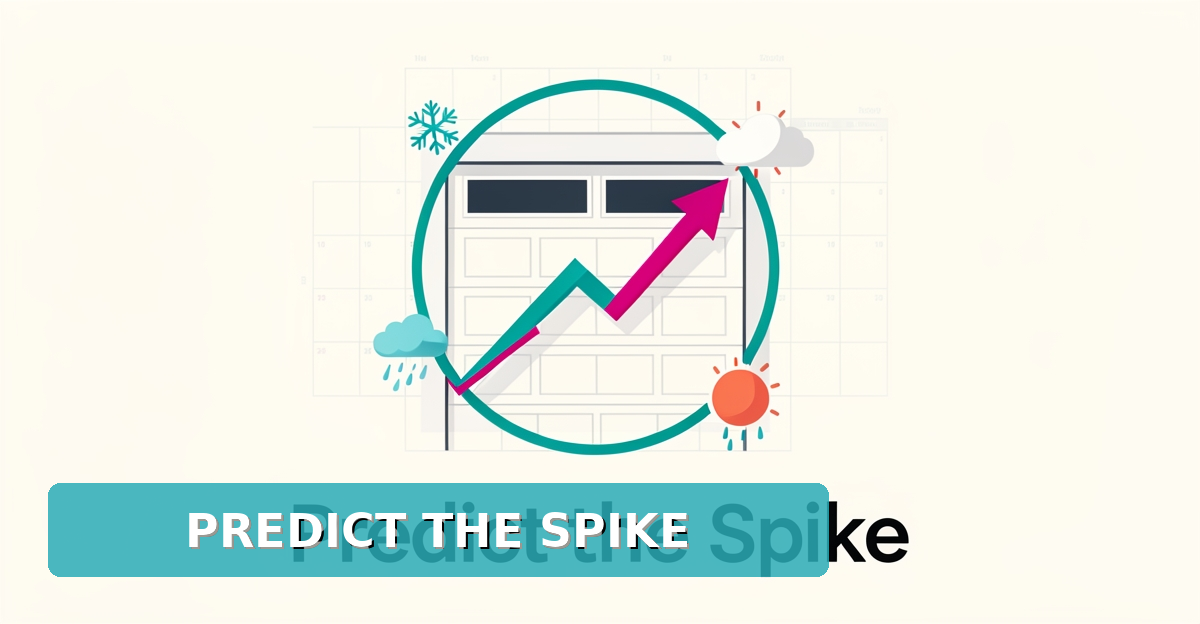
How AI Can Predict High-Demand Seasons for Garage Door Repairs
Key Facts
- AI forecasting tools typically improve demand-prediction accuracy over traditional statistical methods, especially in volatile, weather-driven service categories.
- Garage door repair demand follows identifiable seasonal drivers: post-holiday discovery, freeze and storm damage, spring cleanup, and moving seasons.
- Data quality matters more than model sophistication, clean, consistent historical bookings and revenue records are the foundation of any reliable forecast.
- Open-source forecasting tools can be set up quickly for seasonal time-series work, while managed cloud services offer scalable infrastructure for larger operations.
- Forecasts become actionable when connected to scheduling, inventory, and staffing systems through APIs and automated alerts.
Hire a team member that works 24/7 — for less than a part-time wage.
AI receptionists, SDRs, dispatchers and 99+ roles. Trained on your business, fully managed.
Not sure where to start? Ask our AI planner
The Hidden Cost of Reactive Garage Door Repair Planning
Reactive planning turns predictable demand into expensive surprises for garage door repair teams. When staffing and parts decisions rely on intuition or basic historical averages, businesses are always catching up to the season instead of preparing for it.
The cost shows up first in service capacity. Teams scramble to add technicians during post-holiday call spikes and freeze events, leading to longer wait times, overtime premiums, and customer churn. AI-driven planning tools help businesses predict seasonal demand more accurately, so marketing, staffing, and promotions are planned ahead rather than improvised at the last minute.
Inventory misalignment compounds the problem. Parts stockouts during extreme weather windows force rescheduling and lost revenue, while overstocking in slow months ties up cash. AI forecasting typically improves accuracy over traditional statistical methods, which directly reduces both stockouts and excess inventory.
Scheduling inefficiencies also erode margins. Without visibility into days of the week with higher demand or periods when cancellations are more common, dispatchers overbook some slots and leave others empty. That volatility increases technician idle time and burns out crews during unpredictable surges.
Garage door repair demand follows identifiable seasonal drivers that intuition misses:
- Post-holiday periods when homeowners discover issues with gifts, decorations, or increased door usage
- Extreme weather seasons when doors freeze, jam, or suffer storm-related damage
- Spring cleaning season after winter damage becomes visible
- Moving seasons in spring and summer that drive installation and repair requests
Relying on averages also hides revenue risk. Booking volume alone does not show transaction value, and businesses can miss months with higher average ticket sizes or premium service uptake. Reporting that connects booking activity with revenue changes throughout the year makes those seasonal revenue patterns visible.
Proactive planning requires connecting historical service data with external signals like regional climate and weather patterns. Using historical service data to predict seasonal spikes, such as post-holiday or extreme weather periods, helps businesses plan staffing, inventory, and scheduling proactively. AIQ Labs' AI Workflow Builds rebuild the one workflow that costs you the most, at a fixed price and in phases, and demand forecasting is often that workflow for seasonal service businesses.
The hidden cost of reactive planning is not a single bad week. It is repeated margin leakage from missed appointments, emergency parts ordering, and technician turnover driven by feast-or-famine workloads.
How AI Forecasting Transforms Seasonal Demand Prediction for Service Businesses
Garage door repair companies have long relied on gut feel and last year's calendar to staff for busy weeks, but demand is rarely that simple. AI-driven forecasting changes the game by turning historical service records and external signals into a clear seasonal picture.
Modern models ingest years of bookings, revenue, and customer activity to surface patterns humans miss, such as months with consistently higher demand, days of the week with peak service needs, and periods when cancellations spike. AI forecasting tools typically improve accuracy over traditional statistical methods, and that lift matters most in volatile service categories like garage door repair.
For garage door repair, the value comes from combining service data with real-world drivers. The systems analyze not just past trends but also real-time inputs like weather patterns, regional economic indicators, and local activity to anticipate demand. This is particularly useful for post-holiday periods when homeowners discover issues with gifts or decorations, and for extreme weather seasons when doors freeze, jam, or suffer weather-related damage.
AI forecasting also delivers capabilities beyond simple history matching. Tools can perform anomaly detection to flag unusual patterns, provide service-type-level insights, and offer probabilistic forecasting with confidence intervals, so you know not just what demand will be, but how confident to be in the number.
The practical workflow for service businesses typically includes:
- Analyzing past booking trends to forecast busy periods and slow seasons
- Adjusting marketing messaging and automating promotional scheduling ahead of predicted spikes
- Preparing staffing and scheduling for high-demand periods to reduce wait times and burnout
- Integrating weather data and regional climate patterns to anticipate freeze, heat, and storm-related calls
Integration is what makes the forecast actionable. Effective platforms handle time series data well, support multiple forecasting horizons, and provide API availability for connection to scheduling, inventory, and staff platforms. That enables proactive planning for parts inventory and technician coverage instead of reactive scrambling. Over time, businesses that want forecasting, dispatch, and customer communication running as one connected layer often move toward an AI Operating System built in phases and owned outright.
With data quality as the foundation, clean and consistent historical data matters more than model sophistication. When models are regularly retrained with new data and monitored for accuracy, forecast accuracy improves over time and seasonal planning shifts from guesswork to evidence-based operations.
Implementing AI Forecasting in Garage Door Repair Operations: A Step-by-Step Guide
Garage door repair businesses can transform their operations by implementing AI forecasting to anticipate seasonal demand spikes with greater accuracy. This proactive approach enables smarter staffing, inventory planning, and scheduling, turning reactive scrambles into strategic preparation. By leveraging historical service data alongside weather patterns and regional climate trends, AI tools identify predictable fluctuations that intuition alone often misses.
The implementation begins with data preparation: gathering clean, consistent historical records of bookings, revenue, and service activities from appointment systems or invoices. Data quality remains the biggest determinant of forecast accuracy, clean, consistent historical data matters more than model sophistication. Once data is standardized, businesses can select an appropriate forecasting approach based on their needs. Open-source time-series tools can be set up quickly and handle seasonal data effectively, while managed cloud services offer scalable infrastructure for larger volumes of data. For teams without the time or technical staff to build this themselves, AIQ Labs delivers forecasting workflows as fixed-price, milestone-based builds, no open-ended consulting retainers.
Integration with existing operational systems is critical for actionable insights. AI forecasting should connect with appointment scheduling platforms to align technician availability with predicted demand, inventory management systems to optimize parts stocking, and payroll or scheduling tools to adjust staff levels ahead of peak periods. Setting up automated alerts for when predicted demand exceeds normal thresholds allows businesses to prepare staffing and inventory in advance, particularly valuable for anticipating post-holiday wear or extreme weather-related damage. Regular model retraining with new data ensures ongoing accuracy, while continuous monitoring against actual outcomes helps refine predictions over time. This end-to-end process empowers garage door repair services to move from guesswork to data-driven readiness for every seasonal shift.
Still paying for 10+ subscriptions that don’t talk to each other?
We build custom AI systems you own outright. No vendor lock-in. Full control.
Not sure where to start? Ask our AI planner
Frequently Asked Questions
How does AI actually predict when garage door repair demand will spike?
Is AI forecasting really more accurate than traditional methods?
What specific seasonal patterns can AI identify for garage door businesses?
Do I need perfect data or expensive tools to start using AI forecasting?
How do I integrate AI forecasting with my existing scheduling and inventory systems?
What are the costs and time requirements for implementing AI forecasting?
From Guesswork to Seasonal Readiness
Reactive planning turns predictable demand into margin leakage, longer waits, overtime, stockouts, and burned-out crews. AI forecasting changes that by turning historical service records and external signals like weather and regional climate into a clear seasonal picture, typically improving accuracy over traditional methods in volatile service categories. For garage door repair, that means seeing post-holiday discovery spikes, freeze and storm damage windows, spring cleaning surges, and moving-season demand before they hit, so staffing, parts, and scheduling can be set proactively instead of scrambled reactively. Data quality remains the foundation, and models improve over time as they are retrained on new bookings, revenue, and weather inputs. If you want to move from feast-or-famine workloads to evidence-based operations, start with a clean view of your historical service data and external drivers. Take the two-minute Fit Check at https://aiqlabs.ai/apply, then book a free 30-minute strategy call to map your biggest bottleneck and see if a tailored predictive model for your region is a clear win.
Make AI your competitive advantage — not just another tool.
Strategy, implementation and ongoing optimization. One partner, end to end.
Not sure where to start? Ask our AI planner