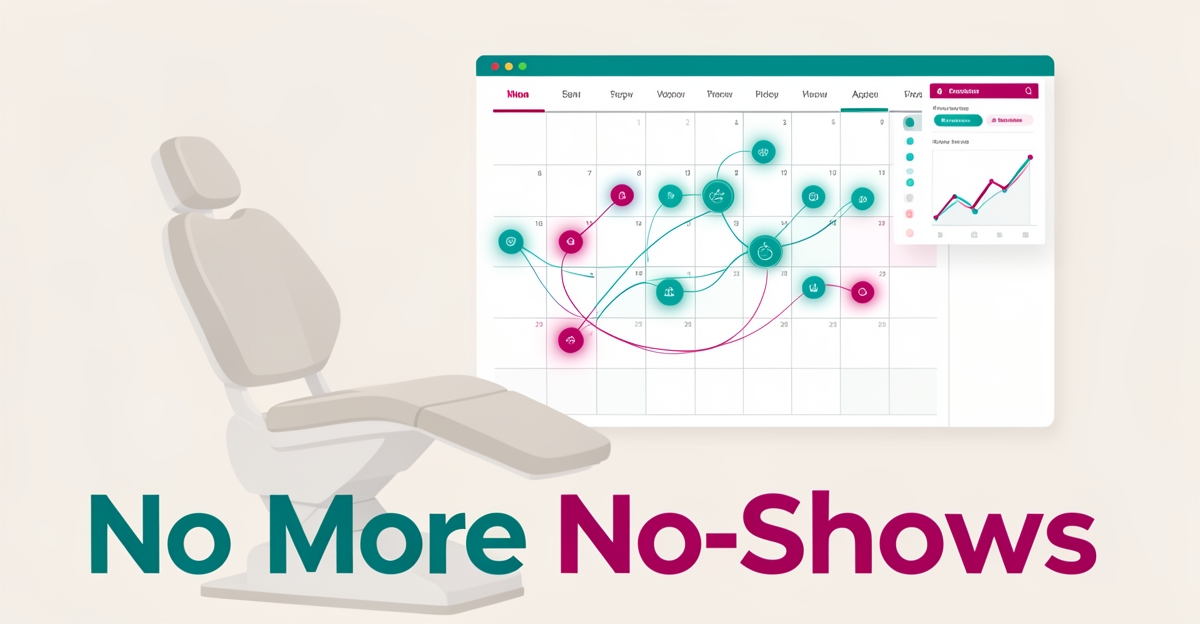
How AI Can Predict Patient No-Shows in Denture Clinics Using Historical Data
Key Facts
- AI predictive models reduced patient deterioration events by 10.4% in a Stanford Medicine study using real-time risk scoring according to Stanford Medicine
- 80% of FDA-cleared AI tools in healthcare are imaging-based, while predictive analytics for patient behavior is rapidly expanding per industry analysis
- AIQ Labs deploys AI analytics directly within clinic management dashboards to surface no-show risk scores in real time alongside daily schedules
- Predictive models analyze historical attendance patterns, booking lead times, and reminder response rates to calculate patient no-show risk scores
- AI Employees from AIQ Labs cost 75–85% less than human employees in equivalent roles while providing 24/7/365 availability with zero missed calls Learn more
Hire a team member that works 24/7 — for less than a part-time wage.
AI receptionists, SDRs, dispatchers and 99+ roles. Trained on your business, fully managed.
Not sure where to start? Ask our AI planner
The Hidden Revenue Leak of Denture Clinic No-Shows
Every empty dental chair represents more than wasted time, it's a quiet leak in the clinic's revenue that compounds week after week. For denture clinics, where each appointment involves lab work, materials, and highly skilled chair time, a missed patient isn't just an inconvenience; it's a sunk cost that can never be recovered.
The scale of the problem is easy to underestimate. No-shows create a cascade of losses that go well beyond the missing appointment itself, including:
- Lost chair time that cannot be resold at short notice
- Staff hours spent on reminder calls and manual rescheduling
- Idle lab capacity for denture work that was scheduled against the visit
- Longer wait times for patients who could have filled the slot
Traditional methods of managing this problem, reminder phone calls, paper-based follow-ups, and manual scheduling, simply don't work well. They treat every patient identically, even though the likelihood of a no-show varies enormously from one patient to the next. A comparison of manual and AI-driven approaches in dentistry highlights the gap: manual methods are slower at analyzing large amounts of data and less accurate at predicting patient behavior, while AI-powered analytics deliver higher accuracy at lower cost.
The broader shift in healthcare shows why prediction matters. Stanford Medicine researchers found that an AI prediction model pulling vital signs, electronic health record data, and lab results in near-real time was associated with a 10.4% decrease in deterioration events among patients with risk scores, proof that anticipating problems beats reacting to them. As Ron Li, MD, explained, "The algorithm is a prediction model that pulls data, such as vital signs, information from electronic health records and lab results, in near-real time to predict whether a patient in the hospital is about to suffer a health decline."
The same anticipatory logic applies to scheduling. Rather than discovering an empty chair at appointment time, clinics can flag at-risk patients days in advance and act, with targeted confirmations, overbooking strategies, or waitlist backfills. Predictive models analyze historical appointment patterns to identify which patients are likely to miss their visits, enabling better resource planning and reduced lost revenue. AIQ Labs deploys AI-powered analytics tools that work directly within clinic management dashboards, surfacing these risk scores alongside the daily schedule.
The result is a shift from reactive scrambling to proactive management, fewer surprises, fuller chairs, and a schedule that reflects reality rather than optimism.
How AI Predicts No-Shows from Historical Clinic Data
Every missed denture appointment represents more than an empty chair, it's lost revenue, wasted staff time, and delayed care for a patient who needs it. The question facing clinic owners is no longer whether no-shows can be predicted, but how accurately.
The answer lies in historical data. AI-powered predictive models analyze past appointment patterns, cancellation history, booking lead times, seasonal trends, and demographic factors, to calculate a risk score for each upcoming visit. Unlike traditional reminder systems that treat every patient identically, these models distinguish between a reliably punctual long-term patient and someone whose record shows a pattern of repeated missed visits. According to comparative research on AI versus manual methods in dentistry, AI-powered analytics deliver higher accuracy and faster analysis of large data volumes than traditional approaches, while also operating at lower cost.
What makes modern prediction genuinely powerful is the breadth of data it draws from. The principle is well established in healthcare: Stanford Medicine researchers describe prediction algorithms that pull data, vital signs, electronic health record information, and lab results, in near-real time to anticipate patient decline before it happens. Denture clinics can apply the same logic using the data they already collect.
A typical no-show risk model incorporates signals such as:
- Historical attendance patterns, including cancellations and rescheduling frequency
- Electronic health record details such as appointment type and treatment stage
- Booking behavior, including lead time between scheduling and the appointment date
- Engagement signals, such as response rates to prior reminders
The clinical evidence for this approach is compelling. A Stanford study found a 10.4% decrease in deterioration events among patients whose risk scores triggered early intervention, proof that when predictive scores surface in time, clinics can act before problems occur. In a denture clinic, "acting" might mean a targeted confirmation call, a same-day backup slot, or adjusted staffing for high-risk days.
Accuracy continues to improve as the underlying technology matures. The most practical deployments embed these predictions directly into daily workflows, AIQ Labs deploys AI-powered analytics tools that work within clinic management dashboards, surfacing risk alerts in real time so front-desk teams can prioritize outreach without switching systems.
Two considerations deserve honest attention. Models require high-quality historical data to perform well, and clinics must watch for bias that could skew predictions against certain patient groups. Transparency in how risk scores are generated matters equally, giving staff confidence in the alerts they act on. Handled well, these safeguards turn prediction from a black box into a dependable operational tool that improves both resource planning and the patient experience.
From Prediction to Action: Reducing No-Shows and Optimizing Resources
Turning AI predictions into operational actions transforms how denture clinics manage daily workflows and protect revenue streams. By identifying patients at high risk of no-shows, clinics can deploy targeted interventions that reduce waste and improve scheduling efficiency. AI-powered analytics tools, such as those integrated by AIQ Labs, enable real-time alerts directly within clinic management dashboards, allowing staff to act on insights immediately. For example, clinics using predictive models have reported a 10.4% decrease in deterioration events among patients with risk scores within a regression discontinuity window, demonstrating the tangible impact of data-driven foresight on patient outcomes and resource use according to Stanford Medicine.
Operational responses to AI predictions include sending personalized reminders via SMS or phone to flagged patients, adjusting appointment slots through strategic overbooking based on historical no-show rates, and dynamically reallocating staff and equipment to high-demand periods. These actions contrast sharply with traditional methods, which rely on static schedules and reactive follow-ups. AI-powered analytics deliver higher accuracy in predicting patient behavior, faster analysis of large datasets, and lower long-term costs compared to manual tracking or rule-based systems based approaches. This efficiency allows clinics to minimize idle chair time and maximize utilization of dental technicians and prosthetists.
To ensure responsible implementation, clinics must address data quality, model bias, and explainability. Predictive models are only as reliable as the historical data they consume, missing entries, inconsistent coding, or skewed demographics can undermine accuracy. Transparency in how risk scores are generated helps build trust among staff and supports ethical decision-making. By grounding actions in explainable AI, clinics can balance operational gains with fairness, ensuring that reminder strategies or overbooking tactics do not disproportionately affect vulnerable patient groups. This holistic approach turns prediction into proactive, equitable care management.
Implementing No-Show Prediction Inside Your Denture Clinic Workflow
No-shows quietly drain denture clinics through empty chairs, delayed impressions, and staff idle time. Predictive analytics turns historical appointment patterns into an early warning system that lets you act before a missed visit costs revenue.
Implementation starts with connecting AI analytics to the dashboard you already use. AIQ Labs deploys AI-powered analytics tools that work directly within clinic management dashboards, surfacing risk scores alongside patient records without forcing staff to switch systems. Data flows in near-real time, just as prediction models in hospital settings pull vital signs and electronic health records to forecast decline, according to Stanford Medicine reporting on AI patient care.
Historical data becomes the training foundation. Appointment logs, confirmation responses, travel distance, time of day, and prior no-show history are combined to identify repeat patterns. A risk scoring approach similar to that studied at Stanford showed a 10.4% decrease in deterioration events among patients with risk scores within a regression discontinuity window, illustrating how targeted alerts change outcomes.
Once the model is live, the workflow shifts from reactive calling to proactive intervention. Staff see which patients are likely to miss and why, then apply the right nudge at the right time.
Practical steps clinics use to embed prediction:
- Integrate AI analytics into existing clinic management dashboards for real-time insights and alerts
- Train models on historical data including no-show history, appointment timing, and patient demographics
- Monitor performance weekly and retrain as patient behavior and seasonality change
- Create automated follow-ups for high-risk patients such as reminders and flexible rescheduling
Accuracy improves as the system learns. AI tools in healthcare are advancing quickly, with industry analysis noting 96% accuracy on MedQA, a new gold standard for diagnostic reasoning with large language models. While 80% of FDA-cleared AI tools are imaging-based, predictive analytics for behavior is expanding fast in dentistry.
Resource planning improves when no-shows are anticipated. Clinics can overbook strategically, reallocate technician time, and reduce chair downtime. Predictive models, such as those used in AIQ Labs’ analytics tools, can analyze historical data to predict which patients are likely to miss their appointments, enabling clinics to improve resource planning and reduce lost revenue.
Ongoing governance keeps the model fair and explainable. High-quality data, bias checks, and transparent decision logic are essential for trust with both staff and patients. With the right integration and monitoring, no-show prediction becomes a routine part of daily operations rather than an experiment.
Still paying for 10+ subscriptions that don’t talk to each other?
We build custom AI systems you own outright. No vendor lock-in. Full control.
Not sure where to start? Ask our AI planner
Frequently Asked Questions
Can AI really predict which denture patients will no-show?
What data does a no-show prediction model actually use?
Is AI more accurate than manual reminder calls for reducing no-shows?
Has predictive AI shown real results in healthcare settings?
How accurate is healthcare AI today?
What should I watch out for when implementing no-show prediction?
From Empty Chairs to Proactive Scheduling
No-shows are a compounding revenue leak in denture clinics, but historical appointment patterns can be turned into an early warning system. AI models analyze attendance history, booking lead times, engagement signals and treatment stage to score risk for each upcoming visit, allowing you to move from reactive calling to targeted confirmations, strategic overbooking and dynamic staff reallocation. As seen in broader healthcare, anticipatory use of risk scores is linked to measurable improvements, with Stanford Medicine reporting a 10.4% decrease in deterioration events among patients with risk scores within a regression discontinuity window. The next step is practical: connect predictive analytics to the dashboard you already use, train on clean historical data, monitor performance weekly and build explainable, bias-checked workflows so staff trust the alerts. AIQ Labs deploys AI-powered analytics tools that work directly within clinic management dashboards to surface these risk scores in real time. Start the Fit Check at https://aiqlabs.ai/apply for a free 30-minute strategy call at https://aiqlabs.ai/book to map your biggest scheduling bottleneck and identify a high-ROI automation plan.
Make AI your competitive advantage — not just another tool.
Strategy, implementation and ongoing optimization. One partner, end to end.
Not sure where to start? Ask our AI planner