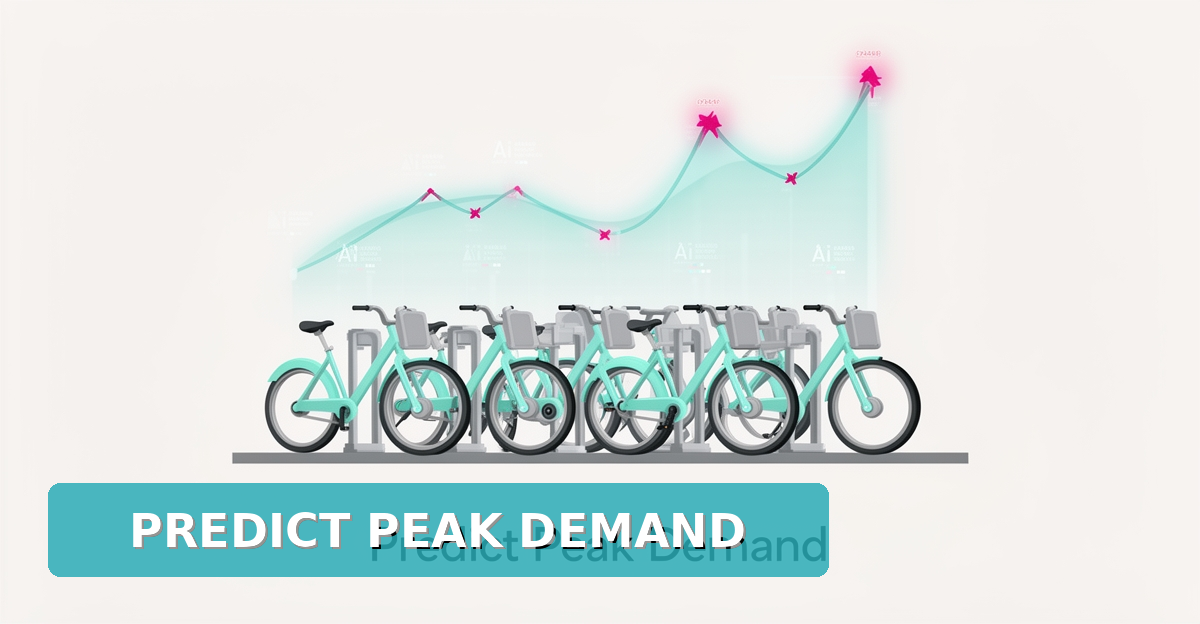
How AI Can Predict Peak Rental Times to Optimize Bike Inventory
Key Facts
- Bike rental demand is driven by weather, weekends, holidays, and local events—variables traditional rolling averages can't handle together
- Stockouts during peak days typically cost far more than the value of the inventory itself once lost sales and lost customer loyalty are counted
- AI models analyze historical rentals, weather forecasts, and local event calendars simultaneously to predict demand spikes days in advance
- Proactive allocation shifts rental operations from reactive scrambling to strategic optimization based on real-time demand forecasts
- AIQ Labs has deployed 200+ multi-agent systems and runs 4 live SaaS products daily, building forecasting systems businesses own outright
Hire a team member that works 24/7 — for less than a part-time wage.
AI receptionists, SDRs, dispatchers and 99+ roles. Trained on your business, fully managed.
Not sure where to start? Ask our AI planner
The Cost of Guessing: Why Bike Rentals Run Out (or Sit Idle)
Every bike rental operator knows the feeling: a sunny Saturday rolls in, the line stretches out the door, and the fleet is gone by 10 a.m. Then Tuesday brings gray skies, and a dozen bikes sit in the rack earning nothing. This whiplash isn't bad luck — it's the predictable result of forecasting with tools that can't handle how demand actually behaves.
Bike rentals are driven by forces that shift constantly: weather, weekends, holidays, and local events. Traditional methods like rolling averages and linear regression rely on historical patterns and struggle with complex, dynamic conditions. They simply weren't built to predict a sudden demand spike when a festival is announced three blocks from your shop.
The cost of guessing wrong is steep — and it cuts both ways.
- Stockouts during peaks: Every turned-away customer is revenue lost today plus a competitor's future customer gained. Once you factor in diminished loyalty, a single sold-out weekend can cost far more than the value of the bikes you didn't have.
- Idle inventory during lulls: Bikes sitting unused tie up cash in assets that depreciate, while carrying costs quietly accumulate.
- Reactive management: When you adjust inventory only after demand shifts, you're always a day late — over-allocated on slow days and under-allocated when it matters most.
The core problem is that traditional forecasting requires manual adjustments and human intervention, while demand for bikes moves in real time. A warm front on Thursday changes Saturday's fleet needs. A concert announcement changes next weekend's. Moving beyond reactive inventory management to a proactive approach is precisely the shift rental operators need.
This is where predictive analytics changes the equation. AI models can analyze historical rental data, weather patterns, and local events simultaneously to identify intricate patterns and forecast demand spikes with far greater accuracy than statistical methods alone. Rather than discovering a shortage when customers show up, operators can pre-allocate bikes ahead of predicted peaks and rebalance during predicted lulls.
AIQ Labs builds predictive models that run in real time, giving rental business owners forward visibility into demand instead of rearview-mirror averages. The result is fewer turned-away customers, fewer idle bikes, and inventory decisions grounded in data rather than gut feel. For operators who want the forecasting handled end to end, an AI Workflow Build targets the one inventory workflow that costs the most to get wrong.
Beyond Rolling Averages: How AI Sees Demand Spikes Coming
For decades, rental businesses have relied on rolling averages and gut instinct to predict demand, but these traditional methods often fall short when faced with today's volatile market conditions. While a simple moving average might tell you that last July was busy, it cannot account for the specific convergence of a heatwave, a local festival, and a sudden surge in tourism that will leave your racks empty next Tuesday.
Traditional forecasting methods like ARIMA and linear regression struggle with complex, multi-variable environments. They rely heavily on historical patterns and often require manual adjustments when conditions shift unexpectedly. In contrast, AI-powered demand forecasting ingests vast datasets simultaneously—analyzing historical rental patterns alongside real-time weather forecasts, local event calendars, and even social media sentiment—to identify intricate correlations that human analysts might miss.
The financial stakes of inaccurate forecasting are significant. When you underestimate demand during a peak weekend, the damage isn't just a few missed rentals; it erodes profitability and damages brand reputation, because stockouts typically cost businesses a multiple of the inventory value itself once lost sales and lost loyalty are counted.
AI transforms this reactive approach into proactive strategy by processing diverse data streams through machine learning algorithms. These systems continuously learn from new information, adapting to sudden shifts in consumer behavior without requiring manual recalibration.
Modern AI forecasting platforms synthesize multiple data inputs to generate precise demand predictions:
- Historical rental transaction data and seasonal trends
- Hyperlocal weather forecasts and temperature fluctuations
- Community event schedules, concerts, and festivals
- Real-time booking velocity and cancellation patterns
By weighing these variables dynamically, AI can predict that a sunny Saturday coinciding with a marathon will require significantly more inventory at specific docking stations, while a rainy Tuesday will see demand plummet. This granular insight allows rental operators to pre-position bikes exactly where and when they are needed, rather than distributing inventory evenly based on last month's averages.
AIQ Labs builds these predictive models to run in real time, giving rental businesses the agility to adjust inventory allocation dynamically as conditions change. Unlike static spreadsheets, these systems improve continuously, becoming more accurate with each season of data they process.
The result is a shift from reactive scrambling to strategic optimization. When you can see demand spikes coming days or weeks in advance, you transform inventory management from a guessing game into a competitive advantage.
From Forecast to Fleet: Pre-Allocating Bikes Before the Rush
Predictions only matter when bikes are in the right place before demand arrives. Turning forecast signals into fleet actions is where rental operations gain margin, service, and reliability.
AI models that analyze historical rentals, weather trends, and local events can flag surges hours to days ahead. That lead time lets teams pre-position inventory instead of chasing shortages.
Repositioning becomes systematic when forecasts feed daily fleet planning. Bikes move from low-demand docks to hotspots before the rush, readiness checks are scheduled around predicted peaks, and replenishment triggers automatically. This proactive stance shifts the business from reactive restocking to predictive allocation.
Efficiency gains compound across the network. Fewer missed rentals, lower idle fleet time, and steadier cash flow are the visible outcomes when allocation decisions are tied to external signals rather than last week's sales.
In practice, forecast-to-fleet execution looks like:
- Dynamic rebalancing across locations based on predicted demand windows
- Automated readiness and maintenance scheduling ahead of spikes
- Real-time replenishment orders triggered by confidence thresholds
- Exception alerts when weather or event data shifts the forecast
AIQ Labs builds predictive models that run in real time for this exact use case, helping owners move from insight to action without manual spreadsheet work. Rental businesses that need inventory decisions tied to external signals—not just last week's sales—are a natural fit for a phased AI Operating System that connects forecasting, booking, and fleet operations in one owned layer.
The result is a fleet that feels abundant to customers and lean to operators. Stockouts fall, service levels rise, and carrying costs shrink as bikes spend more time rented and less time idle.
Implementing Predictive Demand Forecasting in Your Rental Business
Peak demand rarely announces itself, and for bike rental businesses a single sold-out weekend can cost more than the bikes themselves. Proactive forecasting is what separates smooth operations from lost revenue.
Implementing predictive demand forecasting starts with treating data as an operational asset, not an afterthought. AI excels at identifying intricate patterns and adapting to changing conditions by analyzing vast datasets, including historical sales, weather patterns, social media trends, and economic indicators. That real-time adaptability is the key differentiator from traditional linear regression or rolling averages.
A practical rollout follows a clear sequence that rental operators can execute without replacing their entire stack.
- Collect internal data on rentals, inventory levels, and bookings, then layer external signals like weather, local events, and seasonality.
- Integrate data with a forecasting system that connects to existing booking and inventory tools for seamless flow.
- Train models on your history so the system learns demand patterns specific to your locations and bike types.
- Deploy real-time predictions to pre-allocate bikes and adjust pricing before spikes hit.
- Monitor performance continuously and retrain as new data arrives to maintain accuracy.
Data quality, integration friction, and cost are the most common hurdles. AI models require large amounts of high-quality data to function effectively, and incomplete inputs lead to poor predictions. Legacy booking systems can also create integration challenges that slow adoption. A custom-built, owned system avoids subscription lock-in and allows deep two-way API integrations with CRM, booking, and operations tools.
AIQ Labs builds predictive models that run in real time, helping owners make smarter inventory decisions by analyzing historical data, weather trends, and local events to predict when bike demand will spike. The result is proactive allocation instead of reactive scrambling, fewer stockouts on high-demand days, and better utilization across the fleet. If you'd rather have managed capacity handling bookings and customer questions around the forecast, AI Employees cover roles like receptionists and dispatchers at a fraction of a human hire's cost.
With continuous monitoring and adjustment, forecasting becomes a living capability that improves with every rental season.
What Peak-Ready Inventory Is Worth to Your Bottom Line
Peak-ready inventory turns operational efficiency into measurable profit by ensuring bikes are available exactly when demand surges. The gains stem from AI's ability to continuously analyze historical rentals, weather shifts, local events, and even social trends to anticipate demand spikes before they happen. That predictive precision doesn't just streamline operations—it directly protects revenue by minimizing lost sales from stockouts, which typically cost a multiple of the inventory value itself once lost loyalty is factored in.
- Eliminate last-minute scrambles to redistribute bikes during unexpected demand surges
- Reduce overstocking during low-demand periods, freeing up capital tied in idle inventory
- Improve asset utilization by aligning fleet size with predicted usage patterns
- Enhance customer satisfaction by consistently meeting demand without delays or substitutions
- Strengthen cash flow through optimized inventory turnover and lower holding costs
For bike rental businesses, this level of forecasting agility isn't just about avoiding empty docks—it's about building a resilient, profit-maximizing operation where every bike earns its keep. AIQ Labs develops custom predictive models that run live on your data, giving you full ownership of the system and the insights it generates. Unlike generic tools, these models are built to reflect your unique market rhythms, event calendars, and operational constraints. To see how this approach could unlock your highest-ROI forecasting opportunity, start with a free strategy call to map your specific use case and projected impact. Begin with the two-minute Fit Check at aiqlabs.ai/apply, then schedule your no-obligation session at aiqlabs.ai/book.
Still paying for 10+ subscriptions that don’t talk to each other?
We build custom AI systems you own outright. No vendor lock-in. Full control.
Not sure where to start? Ask our AI planner
Frequently Asked Questions
How much can stockouts actually cost a bike rental business compared to the value of the bikes themselves?
What kind of data does AI use to predict bike rental demand spikes?
Can AI really reduce carrying costs for bike rental fleets?
Is implementing AI demand forecasting complicated for small bike rental businesses?
What operational improvements can bike rental businesses expect from AI-powered inventory management?
How does AI help bike rental businesses move from reactive to proactive inventory management?
Turn Forecasts Into Fleet Advantage
From predicting demand spikes to pre-positioning bikes before the rush, AI transforms inventory from a guessing game into a strategic advantage. By analyzing historical rentals, weather, and local events, rental operators can eliminate stockouts, reduce idle inventory, and shift from reactive scrambling to proactive allocation—directly improving service levels and protecting revenue. The result is a fleet that earns its keep. To see how predictive forecasting could unlock your highest-ROI opportunity, start with a free two-minute Fit Check at aiqlabs.ai/apply, then schedule a no-obligation strategy call to map your specific use case and projected impact.
Make AI your competitive advantage — not just another tool.
Strategy, implementation and ongoing optimization. One partner, end to end.
Not sure where to start? Ask our AI planner