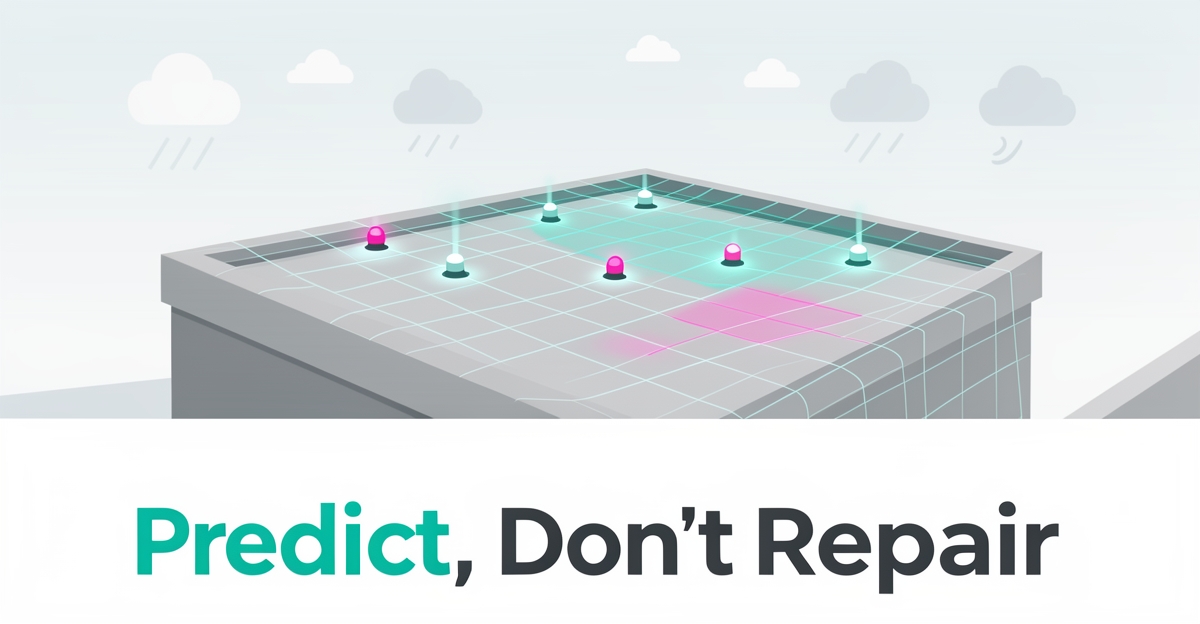
How AI Can Predict Roof Repair Needs Before They Happen
Key Facts
- AI models typically analyze historical inspection records and weather patterns to forecast roof repair needs
- Proactive roof maintenance typically reduces emergency dispatches and protects client retention through timely interventions
- AI forecasting can identify subtle deterioration signals, like micro-cracking progression, that manual checks often miss
- Owned AI systems integrate with CRM platforms to create a single source of truth for inspections and service history
- Predictive maintenance typically extends roof life and reduces material waste by avoiding repeat mobilizations
- AIQ Labs has deployed 200+ multi-agent systems and runs 4 live SaaS products daily, applying that production experience to forecasting workflows
Hire a team member that works 24/7 — for less than a part-time wage.
AI receptionists, SDRs, dispatchers and 99+ roles. Trained on your business, fully managed.
Not sure where to start? Ask our AI planner
The Hidden Cost of Reactive Roof Maintenance
A leaky roof rarely announces itself months in advance. By the time water stains appear on a ceiling, the damage is already expensive and the disruption is already underway.
Traditional inspection schedules force property managers and home services teams into reactive cycles. Inspections happen on fixed calendars, not in response to actual risk. That means wear patterns, micro-damage, and weather stress build silently between visits until a failure triggers an emergency call.
Reactive maintenance creates a cascade of business costs that are hard to see until they hit the P&L. Emergency repairs command premium pricing and force crews to drop planned work. Tenants and homeowners experience downtime, noise, and displacement that erodes trust. Revenue loss follows when units are offline or service appointments slip.
Consumer-facing roof tools show how early interest in AI-assisted roof analysis is forming, even as adoption is uneven. App-store visualizers attract curiosity, but curiosity is not reliability. Businesses need predictive models built on their own inspection and service data, not standalone consumer apps.
Weather and wear are the signals reactive programs miss. AI can analyze past inspections and weather data to forecast when a roof may need repairs, shifting teams from calendar-driven checks to risk-driven action. That approach aligns with how predictive analytics is being applied across property management and home services, where AIQ Labs builds forecasting systems that help businesses schedule proactive services.
Reactive approaches typically fail because they:
- Wait for visible damage instead of early indicators
- Treat all roofs the same regardless of age, material, or exposure
- Lack integration between inspection notes and weather history
- Respond after tenant complaints rather than before
Proactive scheduling reduces emergency dispatches and protects client retention. When service teams can intervene before failure, repair costs stay lower and crews stay on plan. Predictive models also create a clear service narrative for property owners, turning maintenance from a cost center into a retention driver.
Sustainability pressure adds another layer. Extending roof life through timely repairs reduces material waste and avoids repeat mobilizations, fewer truck rolls, fewer tear-offs, less debris. Predictive maintenance is one of the more practical sustainability wins available to home services operators today.
Businesses that stay reactive pay for the same problem twice: once in the emergency fix, and again in lost goodwill. Predictive analytics changes the timing of that spend.
How AI Forecasts Roof Failures Using Historical and Environmental Data
Roof failures rarely announce themselves until water is already inside. AI changes that by reading early deterioration signals from historical inspections, weather exposure and material aging curves before visible damage appears.
Predictive modeling builds a failure probability timeline for each roof by correlating past inspection records with local environmental stressors. The system learns how specific materials age under seasonal heat, freeze-thaw cycles and wind-driven rain, then flags subtle deviations that manual checks miss.
AIQ Labs applies its technical foundation in multi-agent systems and forecasting models to this problem space. Agents specialize in data ingestion, pattern recognition and risk scoring, collaborating through stateful workflows to turn fragmented records into actionable repair forecasts.
The same orchestration patterns are proven in production. AIQ Labs has deployed 200+ multi-agent systems and runs 4 live SaaS products daily, the forecasting and risk-scoring approach described here is adapted from systems already handling continuous monitoring workloads.
Models are trained on multiple data streams that reveal hidden deterioration:
- Historical inspection records and maintenance logs for defect frequency and repair history
- Local weather patterns including hail events, UV exposure, wind loads and precipitation intensity
- Material aging curves tied to shingle type, installation year and manufacturer specifications
- Seasonal stressors such as thermal cycling and moisture accumulation in vulnerable zones
By combining these inputs, the forecast engine identifies subtle deterioration signals invisible to manual checks, like micro-cracking progression or granule loss acceleration after specific storm events.
The output is a prioritized repair schedule rather than a reactive work order. Businesses can schedule proactive services during optimal weather windows, reducing emergency callouts and increasing client retention and revenue.
This predictive analytics capability sits within AI data analytics and business intelligence, where forecasting models help businesses move from breakdown response to prevention. The same multi-agent orchestration used in production platforms for content personalization and marketing automation is adapted to continuous roof risk monitoring.
Applied to roofing, the sustainability angle is straightforward: fewer material waste events, longer asset life and more efficient deployment of crews.
For SMBs in roofing, home services and property management, the result is a shift from guesswork to data-backed timing. Forecasts turn inspection data into a service revenue engine while protecting customers from costly interior damage.
Turning Predictions into Proactive Service: Implementation and Business Impact
Predictive insight only creates value when it moves from a dashboard to a dispatched crew. Roofing and property management teams need predictions that trigger action, not just reports, and AI systems built as owned assets can close that gap.
AIQ Labs converts roof condition forecasts into operational workflows through AI Workflow Builds and managed AI Employees. Models trained on past inspections and weather data identify roofs approaching failure risk, enabling proactive service scheduling that supports client retention and revenue growth.
When a risk score crosses a threshold, the system can automatically create work orders, prioritize technicians by proximity and skill, and push updates to CRM platforms. This removes manual triage and reduces emergency callouts that compress margins.
Deployment follows one of three entry points. An AI Workflow Build rebuilds the single workflow that costs you the most, say, inspection-to-dispatch, at a fixed price, in phases. AI Employees handle the day-to-day execution: qualifying leads, booking inspections, and following up on recommended repairs. For companies ready to connect forecasting, dispatch, CRM, and billing into one layer, an AI Operating System ties it together, built in phases and owned outright.
Operational impact shows up in three areas:
- Proactive outreach that increases client retention by scheduling service before leaks occur
- Prioritized dispatch that reduces emergency costs and improves technician utilization
- Predictable revenue streams from scheduled maintenance programs rather than reactive repairs
Sustainability pressure reinforces the business case. Predictive maintenance reduces material waste, avoids water damage, and extends roof life, outcomes that matter to property owners and regulators alike.
Owned AI systems ensure businesses control data and workflows without vendor lock-in. Integration with CRM platforms creates a single source of truth for inspections, risk scores, and service history. Continuous learning improves accuracy as new inspection photos and weather events feed back into the model. Payment is flexible: start monthly, build in milestones, or own it outright.
The result is a shift from reactive repair to proactive care. Teams spend less time chasing emergencies and more time executing planned work that clients value and pay for.
From Leaky Ceilings to Predictable Revenue
The pattern is clear: reactive roof maintenance costs businesses twice, once in emergency repairs and again in eroded client trust. Predictive analytics flips that equation. By combining historical inspection records, weather exposure, and material aging data, AI can flag deterioration before water ever reaches a ceiling, turning fixed-calendar inspections into risk-driven service schedules. For roofing, home services, and property management companies, the opportunity is to move from dashboards to dispatched crews, where a risk score automatically triggers a work order, a prioritized technician, and a proactive outreach call. That shift converts maintenance from a cost center into a retention and revenue engine. If you're ready to explore what a predictive service model could look like for your business, start with AIQ Labs' two-minute Fit Check and book a free 30-minute strategy call, a working session with an AI engineer, not a sales pitch. If there's no clear win, we'll tell you that too.
Make AI your competitive advantage — not just another tool.
Strategy, implementation and ongoing optimization. One partner, end to end.
Not sure where to start? Ask our AI planner